

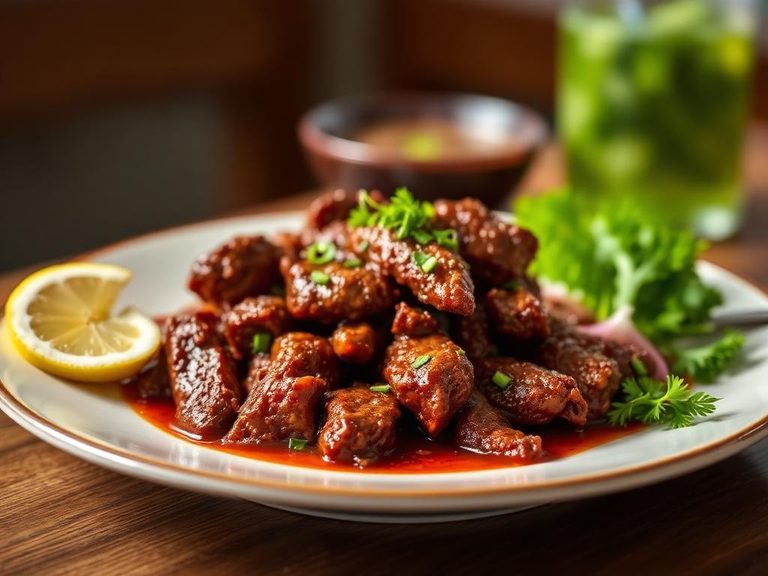
Beef, brisket, flat half, separable lean and fat, trimmed to 0" fat, all grades, cooked, braised
Whole food · Beef Products

Photo: Wikipedia
This is the lean, flat portion of a beef brisket, slow-braised until fork-tender with a rich, beefy flavor and a melt-in-your-mouth texture from the rendered intramuscular fat. It's a high-protein, zero-carb staple, delivering over 32 grams of protein per 100 grams, making it a powerhouse for muscle maintenance. The braising process transforms the tough connective tissue into succulent gelatin, creating a deeply satisfying mouthfeel.
Calorie split: 65% protein · 0% carbs · 35% fat
↓ Full nutrition💚 Why it's loved
People cherish braised brisket for its profound, savory flavor and the comforting, tender texture that results from low-and-slow cooking. It's a centerpiece of communal meals and holiday feasts across many cultures, symbolizing patience and hearty hospitality.
⚠️ Watch-outs & how to enjoy it better
The cut can be high in sodium, especially when prepared with brines or seasoned rubs, which may concern those monitoring blood pressure. To counteract this, choose low-sodium seasonings, rinse the meat after cooking if desired, and pair it with potassium-rich vegetables like potatoes or leafy greens. The fat content, while flavorful, is significant; practicing portion control and trimming any external fat before cooking can help manage intake.
Key benefits
- Excellent source of complete protein for muscle repair and satiety.
- Contains iron and B vitamins like B12, essential for energy metabolism.
- Zero carbohydrates and sugars, suitable for ketogenic and carnivore diets.
- Rich in collagen from connective tissue, beneficial for joint and skin health.
🍽️ Popular dishes
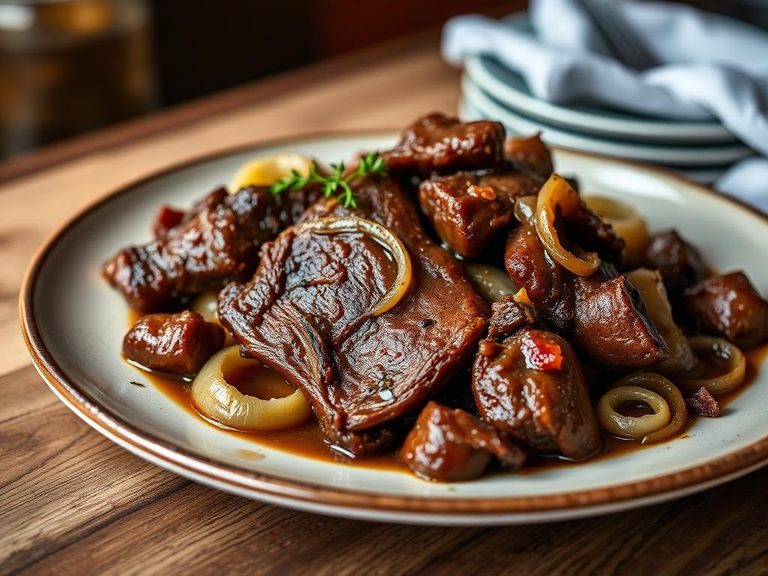

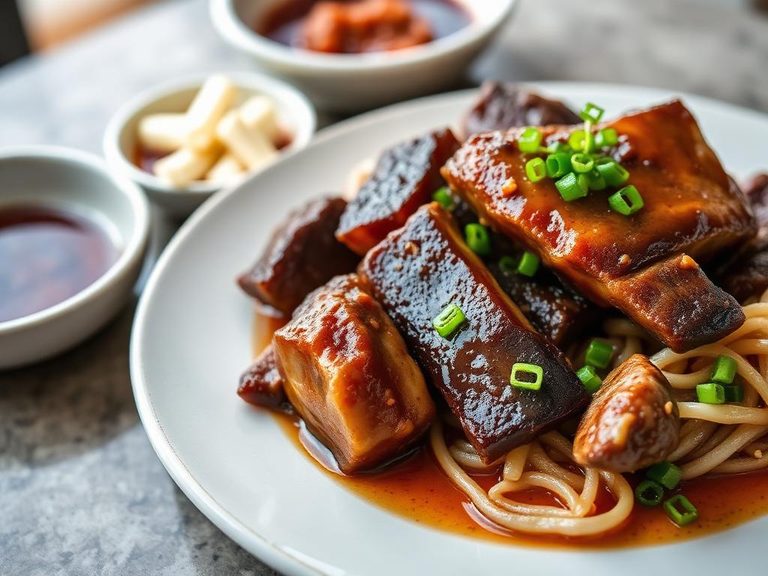
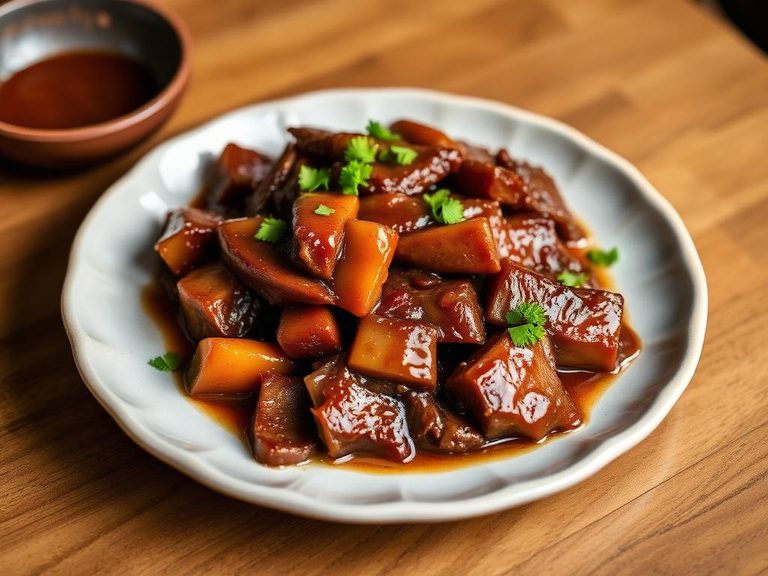
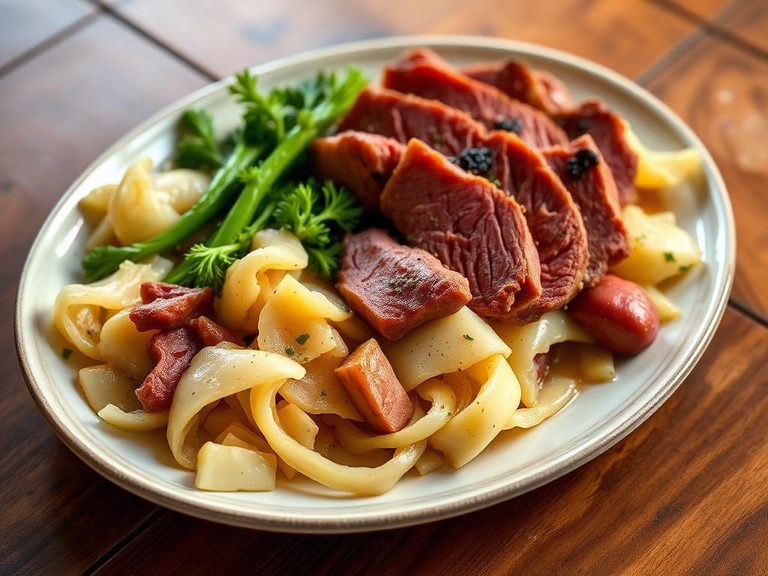
🌍 Where it's eaten
💡 Did you know?
The 'flat half' is anatomically the deeper muscle of the brisket, which is why it slices more uniformly than the fattier 'point' half, making it the preferred cut for classic deli-style sandwiches.
Full nutrition (USDA data · scales with serving)
| Water | 58.9 g |
| Energy | 213 kcal |
| Energy | 890 kj |
| Protein | 32.9 g |
| Total lipid (fat) | 8.0 g |
| Ash | 1.0 g |
| Carbohydrate, by difference | 0.00 g |
| Fiber, total dietary | 0.00 g |
| Total Sugars | 0.00 g |
| Calcium, Ca | 19.0 mg |
| Iron, Fe | 2.8 mg |
| Magnesium, Mg | 21.0 mg |
| Phosphorus, P | 200 mg |
| Potassium, K | 264 mg |
| Sodium, Na | 54.0 mg |
| Zinc, Zn | 7.6 mg |
| Copper, Cu | 0.11 mg |
| Manganese, Mn | 0.01 mg |
| Selenium, Se | 30.9 ug |
| Vitamin C, total ascorbic acid | 0.00 mg |
| Thiamin | 0.07 mg |
| Riboflavin | 0.20 mg |
| Niacin | 4.7 mg |
| Pantothenic acid | 0.65 mg |
| Vitamin B-6 | 0.32 mg |
| Folate, total | 10.0 ug |
| Folic acid | 0.00 ug |
| Folate, food | 10.0 ug |
| Folate, DFE | 10.0 ug |
| Choline, total | 125 mg |
| Betaine | 16.5 mg |
| Vitamin B-12 | 2.4 ug |
| Vitamin B-12, added | 0.00 ug |
| Vitamin A, RAE | 0.00 ug |
| Retinol | 0.00 ug |
| Carotene, beta | 0.00 ug |
| Carotene, alpha | 0.00 ug |
| Cryptoxanthin, beta | 0.00 ug |
| Vitamin A, IU | 0.00 iu |
| Lycopene | 0.00 ug |
| Lutein + zeaxanthin | 0.00 ug |
| Vitamin E (alpha-tocopherol) | 0.44 mg |
| Vitamin E, added | 0.00 mg |
| Tocopherol, beta | 0.00 mg |
| Tocopherol, gamma | 0.00 mg |
| Tocopherol, delta | 0.00 mg |
| Vitamin K (phylloquinone) | 1.6 ug |
| Alcohol, ethyl | 0.00 g |
| Caffeine | 0.00 mg |
| Theobromine | 0.00 mg |
Fat & fatty acid profile (per 100g)
| Fatty acids, total saturated | 3.2 g |
| SFA 4:0 | 0.00 g |
| SFA 6:0 | 0.00 g |
| SFA 8:0 | 0.00 g |
| SFA 10:0 | 0.02 g |
| SFA 12:0 | 0.02 g |
| SFA 14:0 | 0.25 g |
| SFA 16:0 | 1.9 g |
| SFA 18:0 | 0.94 g |
| Fatty acids, total monounsaturated | 3.4 g |
| MUFA 16:1 | 0.33 g |
| MUFA 18:1 | 3.1 g |
| MUFA 20:1 | 0.01 g |
| MUFA 22:1 | 0.00 g |
| Fatty acids, total polyunsaturated | 0.30 g |
| PUFA 18:2 | 0.20 g |
| PUFA 18:3 | 0.08 g |
| PUFA 18:4 | 0.00 g |
| PUFA 20:4 | 0.01 g |
| PUFA 20:5 n-3 (EPA) | 0.00 g |
| PUFA 22:5 n-3 (DPA) | 0.00 g |
| PUFA 22:6 n-3 (DHA) | 0.00 g |
| Cholesterol | 92.0 mg |
Amino acid profile (per 100g)
| Tryptophan | 0.22 g |
| Threonine | 1.3 g |
| Isoleucine | 1.5 g |
| Leucine | 2.6 g |
| Lysine | 2.8 g |
| Methionine | 0.86 g |
| Cystine | 0.42 g |
| Phenylalanine | 1.3 g |
| Tyrosine | 1.0 g |
| Valine | 1.6 g |
| Arginine | 2.1 g |
| Histidine | 1.1 g |
| Alanine | 2.0 g |
| Aspartic acid | 3.0 g |
| Glutamic acid | 4.9 g |
| Glycine | 2.0 g |
| Proline | 1.6 g |
| Serine | 1.3 g |
| Hydroxyproline | 0.35 g |
FAQ
What's the difference between braised and smoked brisket?
Braising involves cooking the brisket submerged or partially submerged in liquid (like broth or wine) in a covered pot, resulting in a moist, tender texture. Smoking uses indirect heat and wood smoke over many hours, creating a distinct smoky flavor and a firm, smoky crust called a 'bark'.
How do I prevent braised brisket from becoming dry?
Ensure the braising liquid comes at least halfway up the side of the meat, cook at a low, steady temperature (around 300-325°F / 150-160°C), and always let the brisket rest for 15-20 minutes after cooking to allow juices to redistribute.
Is this cut suitable for a low-fat diet?
While trimmed to 0" fat, the braised brisket still contains intramuscular fat (marbling) that renders during cooking, contributing to its 8g of fat per 100g. It can fit into a moderate-fat diet, but those on strict low-fat regimens should consider leaner cuts like eye of round.
Nutrient density (calculated · NRF9.3)
Nutrient Rich Foods index: beneficial nutrients (protein, fiber, vitamins, minerals) minus saturated fat, added sugar & sodium, per 100 kcal.
NRF9.3 index — Fulgoni, Keast & Drewnowski, 2009. Computed from USDA nutrients.
Weight-loss friendliness (composite index)
Energy density 2.13 kcal/g · 62% calories from protein · 0.0 g fiber · 0.0 g sugar per 100 g.
Composite of energy density (Rolls et al., 1999), protein & fiber satiety, minus sugar. A calculated heuristic — ranks satiety-per-calorie, not a clinical measure.
Dietary load (calculated from USDA values)
Potential renal acid load. Positive = acid-forming, negative = alkaline-forming.
Sodium-to-potassium ratio: 0.20 (lower is better — aim for ≤ 1)
Sodium:potassium per WHO potassium guidance. Computed from USDA nutrients.