

Beans, snap, yellow, frozen, all styles, unprepared
Whole food · Vegetables and Vegetable Products
These are bright yellow snap beans, harvested young for a tender snap, then quickly frozen to lock in their crisp texture and sweet, grassy flavor. Nutritionally, they are a low-calorie, high-fiber vegetable, offering a good source of vitamin C and a modest amount of plant-based protein.
Calorie split: 18% protein · 77% carbs · 5% fat
↓ Full nutrition💚 Why it's loved
People love them for their vibrant color, satisfying crunch, and mild sweetness that pairs with almost anything. They are a convenient, year-round staple for quick stir-fries, steamed sides, and casseroles.
⚠️ Watch-outs & how to enjoy it better
The main downside is their potential to cause digestive gas (like all beans) due to oligosaccharides. To counteract this, cook them thoroughly and introduce them to your diet gradually. Some frozen varieties may contain added salt; choose 'no salt added' versions or rinse after cooking to reduce sodium.
Key benefits
- Excellent source of dietary fiber for digestive health
- Very low in calories, supporting weight management
- Good source of vitamin C, an antioxidant that supports immune function
- Provides plant-based protein and minerals like manganese
- Freezing preserves nutrients often lost in fresh transport
🍽️ Popular dishes
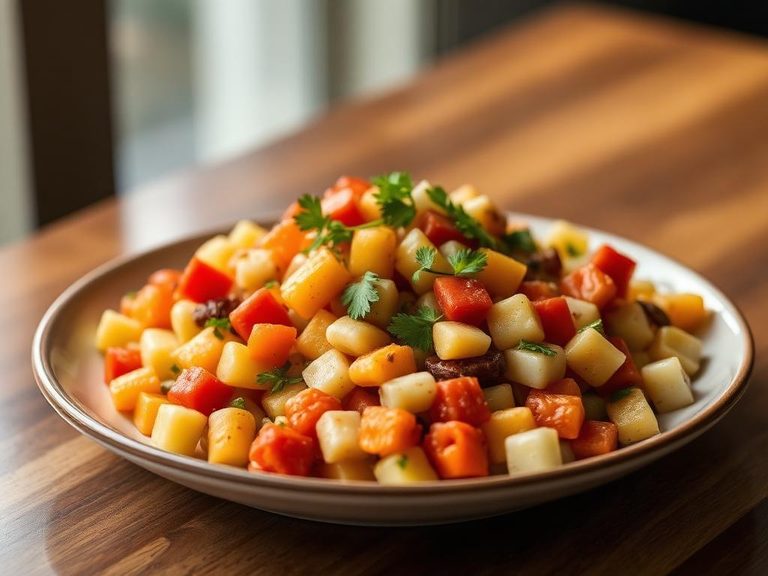
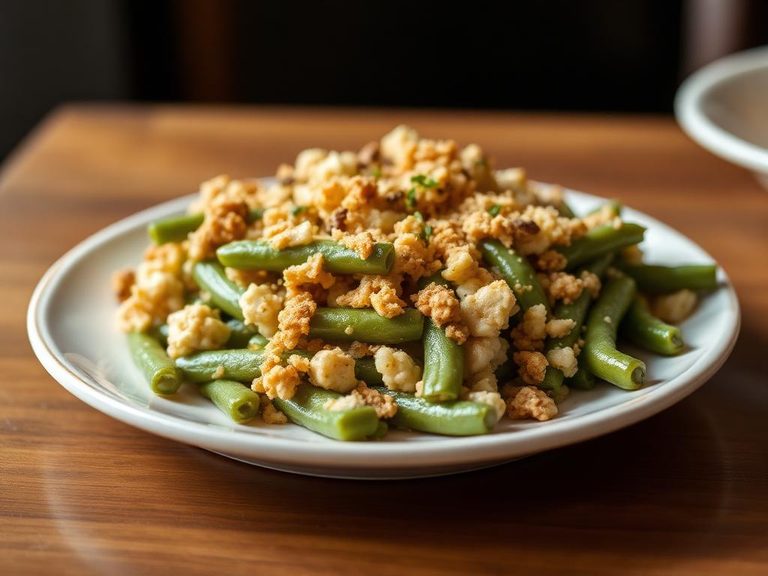

🌍 Where it's eaten
💡 Did you know?
Yellow snap beans get their color from a natural lack of chlorophyll, the pigment that makes green beans green, revealing underlying yellow carotenoid pigments.
Full nutrition (USDA data · scales with serving)
| Water | 89.9 g |
| Energy | 33.0 kcal |
| Energy | 139 kj |
| Protein | 1.8 g |
| Total lipid (fat) | 0.21 g |
| Ash | 0.53 g |
| Carbohydrate, by difference | 7.6 g |
| Fiber, total dietary | 2.8 g |
| Total Sugars | 2.2 g |
| Calcium, Ca | 42.0 mg |
| Iron, Fe | 0.86 mg |
| Magnesium, Mg | 22.0 mg |
| Phosphorus, P | 32.0 mg |
| Potassium, K | 186 mg |
| Sodium, Na | 3.0 mg |
| Zinc, Zn | 0.26 mg |
| Copper, Cu | 0.05 mg |
| Manganese, Mn | 0.39 mg |
| Selenium, Se | 0.40 ug |
| Vitamin C, total ascorbic acid | 12.9 mg |
| Thiamin | 0.10 mg |
| Riboflavin | 0.09 mg |
| Niacin | 0.50 mg |
| Pantothenic acid | 0.09 mg |
| Vitamin B-6 | 0.04 mg |
| Folate, total | 15.0 ug |
| Folic acid | 0.00 ug |
| Folate, food | 15.0 ug |
| Folate, DFE | 15.0 ug |
| Choline, total | 15.9 mg |
| Vitamin B-12 | 0.00 ug |
| Vitamin B-12, added | 0.00 ug |
| Vitamin A, RAE | 7.0 ug |
| Retinol | 0.00 ug |
| Carotene, beta | 71.0 ug |
| Carotene, alpha | 17.0 ug |
| Cryptoxanthin, beta | 0.00 ug |
| Vitamin A, IU | 132 iu |
| Lycopene | 0.00 ug |
| Lutein + zeaxanthin | 666 ug |
| Vitamin E (alpha-tocopherol) | 0.05 mg |
| Vitamin E, added | 0.00 mg |
| Vitamin D (D2 + D3), International Units | 0.00 iu |
| Vitamin D (D2 + D3) | 0.00 ug |
| Vitamin K (phylloquinone) | 45.0 ug |
| Alcohol, ethyl | 0.00 g |
| Caffeine | 0.00 mg |
| Theobromine | 0.00 mg |
Fat & fatty acid profile (per 100g)
| Fatty acids, total saturated | 0.05 g |
| SFA 4:0 | 0.00 g |
| SFA 6:0 | 0.00 g |
| SFA 8:0 | 0.00 g |
| SFA 10:0 | 0.00 g |
| SFA 12:0 | 0.00 g |
| SFA 14:0 | 0.00 g |
| SFA 16:0 | 0.04 g |
| SFA 18:0 | 0.01 g |
| Fatty acids, total monounsaturated | 0.01 g |
| MUFA 16:1 | 0.00 g |
| MUFA 18:1 | 0.01 g |
| MUFA 20:1 | 0.00 g |
| MUFA 22:1 | 0.00 g |
| Fatty acids, total polyunsaturated | 0.11 g |
| PUFA 18:2 | 0.04 g |
| PUFA 18:3 | 0.07 g |
| PUFA 18:4 | 0.00 g |
| PUFA 20:4 | 0.00 g |
| PUFA 20:5 n-3 (EPA) | 0.00 g |
| PUFA 22:5 n-3 (DPA) | 0.00 g |
| PUFA 22:6 n-3 (DHA) | 0.00 g |
| Fatty acids, total trans | 0.00 g |
| Cholesterol | 0.00 mg |
Amino acid profile (per 100g)
| Tryptophan | 0.02 g |
| Threonine | 0.08 g |
| Isoleucine | 0.07 g |
| Leucine | 0.11 g |
| Lysine | 0.09 g |
| Methionine | 0.02 g |
| Cystine | 0.02 g |
| Phenylalanine | 0.07 g |
| Tyrosine | 0.04 g |
| Valine | 0.09 g |
| Arginine | 0.07 g |
| Histidine | 0.03 g |
| Alanine | 0.08 g |
| Aspartic acid | 0.25 g |
| Glutamic acid | 0.19 g |
| Glycine | 0.07 g |
| Proline | 0.07 g |
| Serine | 0.10 g |
FAQ
Are frozen yellow beans as nutritious as fresh?
Often more so. They are typically flash-frozen at peak ripeness, which preserves vitamins (like vitamin C) that degrade over time in fresh produce during transport and storage.
How do I cook them from frozen?
No need to thaw. Steam, boil, sauté, or roast them directly from frozen. Cooking time is usually 4-7 minutes until tender-crisp. Overcooking will make them mushy.
What's the difference between yellow and green snap beans?
They are the same species (Phaseolus vulgaris), just different cultivars. Yellow beans tend to have a slightly milder, sweeter flavor and a more buttery texture when cooked, while green beans are more grassy.
Nutrient density (calculated · NRF9.3)
Nutrient Rich Foods index: beneficial nutrients (protein, fiber, vitamins, minerals) minus saturated fat, added sugar & sodium, per 100 kcal.
NRF9.3 index — Fulgoni, Keast & Drewnowski, 2009. Computed from USDA nutrients.
Weight-loss friendliness (composite index)
Energy density 0.33 kcal/g · 22% calories from protein · 2.8 g fiber · 2.2 g sugar per 100 g.
Composite of energy density (Rolls et al., 1999), protein & fiber satiety, minus sugar. A calculated heuristic — ranks satiety-per-calorie, not a clinical measure.
Dietary load (calculated from USDA values)
Potential renal acid load. Positive = acid-forming, negative = alkaline-forming.
Sodium-to-potassium ratio: 0.02 (lower is better — aim for ≤ 1)
Sodium:potassium per WHO potassium guidance. Computed from USDA nutrients.