

Beans, black, mature seeds, raw
Whole food · Legumes and Legume Products
Black beans are small, oval legumes with a dense, creamy texture and a deep, earthy, slightly sweet flavor. When cooked, their dark purple-black skin contrasts with a pale interior, and they hold their shape well. Nutritionally, they are a powerhouse, packing over 21 grams of protein and 15.5 grams of fiber per 100 grams of dry seeds.
Calorie split: 25% protein · 72% carbs · 4% fat
↓ Full nutrition💚 Why it's loved
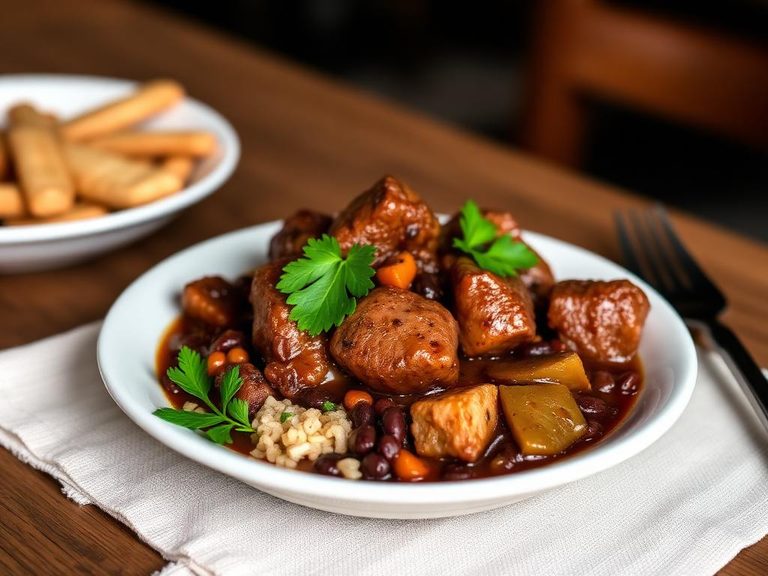
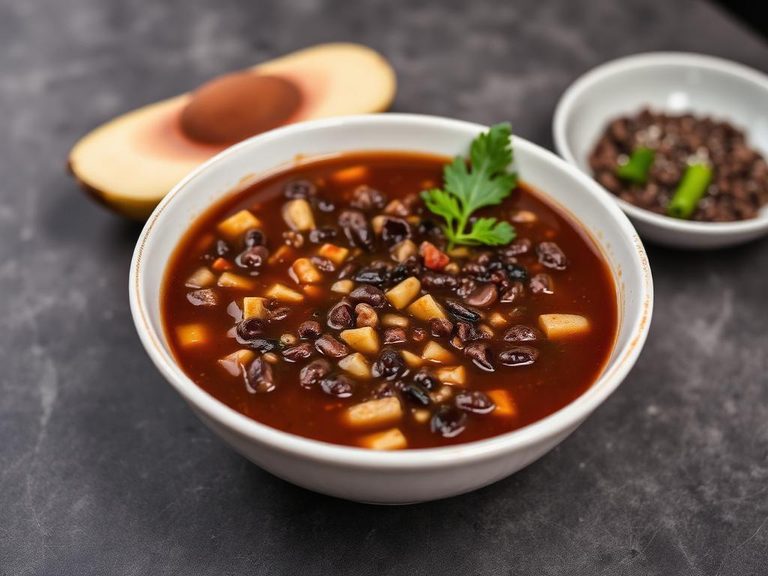
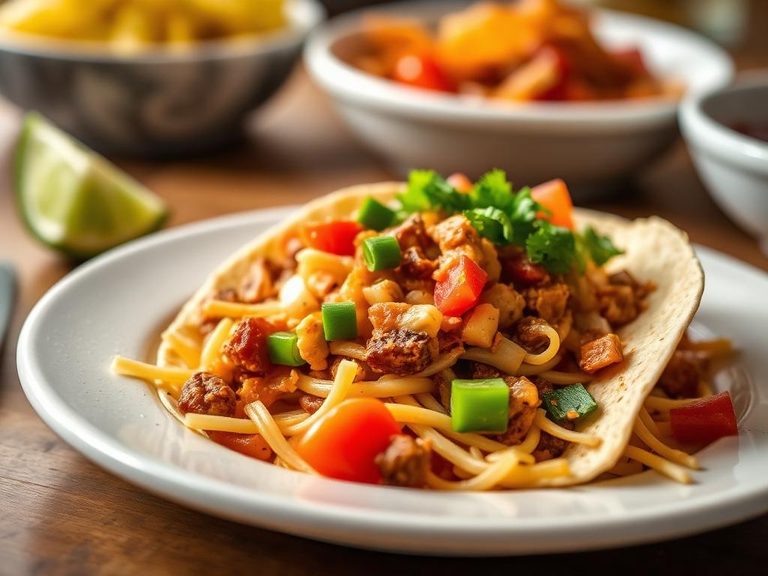
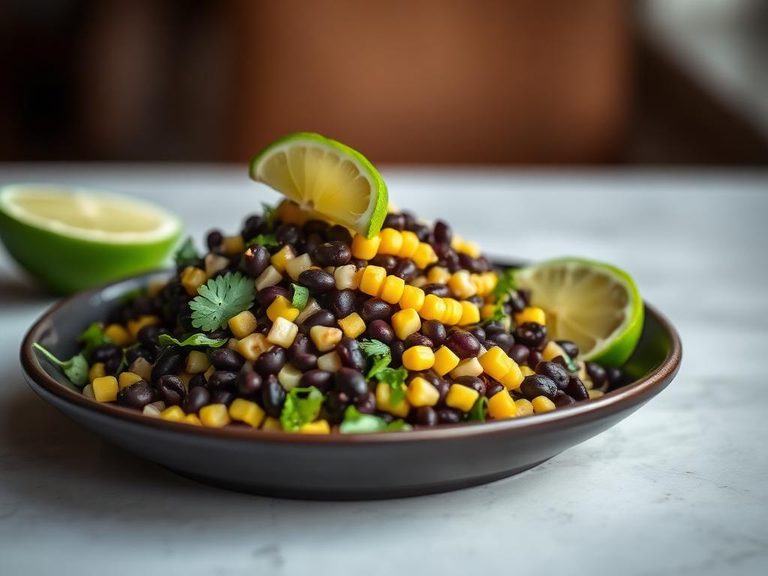
People love black beans for their rich, hearty flavor that forms the backbone of countless comforting dishes. Their ability to absorb surrounding spices while maintaining a satisfying, creamy bite makes them incredibly versatile in everything from soups to tacos.
⚠️ Watch-outs & how to enjoy it better
Like many legumes, black beans contain oligosaccharides, which can cause gas and bloating in some individuals. To counteract this, soak dried beans for 8-12 hours, discard the soaking water, and cook them thoroughly. Those monitoring blood sugar should pair them with non-starchy vegetables and healthy fats to further slow carbohydrate absorption.
Key benefits
- Excellent source of plant-based protein for muscle and tissue maintenance.
- Very high in dietary fiber, promoting digestive health and sustained energy.
- Rich in complex carbohydrates for steady blood sugar levels.
- Naturally low in fat and contains no cholesterol.
- Good source of folate, iron, magnesium, and antioxidants.
🍽️ Popular dishes
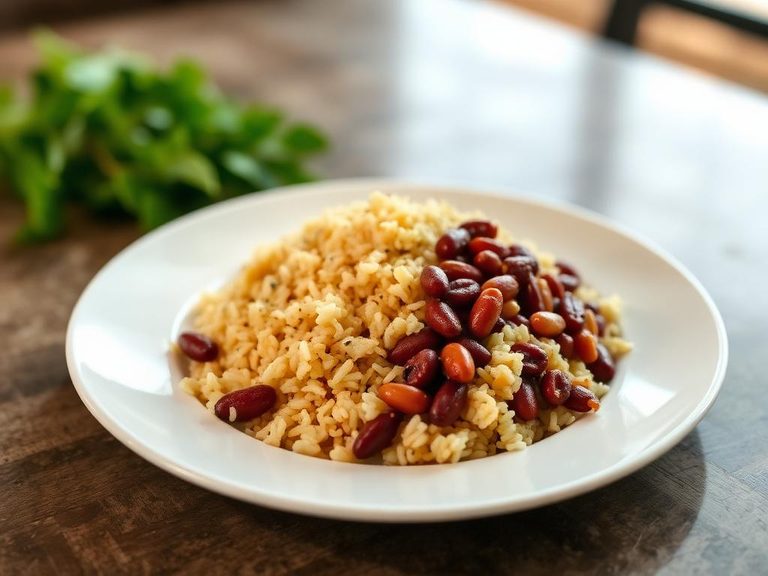
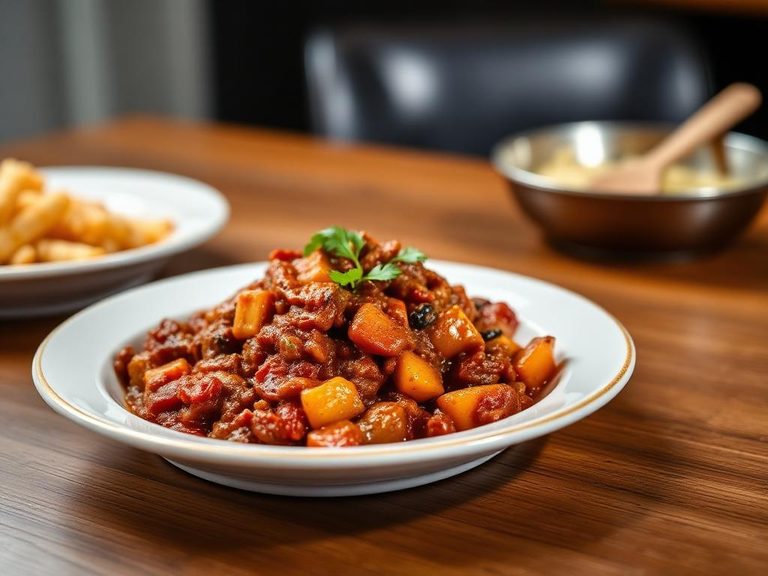
🌍 Where it's eaten
💡 Did you know?
The dark pigment in black bean skins is from anthocyanins, the same powerful antioxidants found in blueberries and red wine.
Full nutrition (USDA data · scales with serving)
| Water | 11.0 g |
| Energy | 341 kcal |
| Energy | 1425 kj |
| Protein | 21.6 g |
| Total lipid (fat) | 1.4 g |
| Ash | 3.6 g |
| Carbohydrate, by difference | 62.4 g |
| Fiber, total dietary | 15.5 g |
| Total Sugars | 2.1 g |
| Calcium, Ca | 123 mg |
| Iron, Fe | 5.0 mg |
| Magnesium, Mg | 171 mg |
| Phosphorus, P | 352 mg |
| Potassium, K | 1483 mg |
| Sodium, Na | 5.0 mg |
| Zinc, Zn | 3.6 mg |
| Copper, Cu | 0.84 mg |
| Manganese, Mn | 1.1 mg |
| Selenium, Se | 3.2 ug |
| Vitamin C, total ascorbic acid | 0.00 mg |
| Thiamin | 0.90 mg |
| Riboflavin | 0.19 mg |
| Niacin | 2.0 mg |
| Pantothenic acid | 0.90 mg |
| Vitamin B-6 | 0.29 mg |
| Folate, total | 444 ug |
| Folic acid | 0.00 ug |
| Folate, food | 444 ug |
| Folate, DFE | 444 ug |
| Choline, total | 66.4 mg |
| Vitamin B-12 | 0.00 ug |
| Vitamin B-12, added | 0.00 ug |
| Vitamin A, RAE | 0.00 ug |
| Retinol | 0.00 ug |
| Carotene, beta | 0.00 ug |
| Carotene, alpha | 0.00 ug |
| Cryptoxanthin, beta | 0.00 ug |
| Vitamin A, IU | 17.0 iu |
| Lycopene | 0.00 ug |
| Lutein + zeaxanthin | 0.00 ug |
| Vitamin E (alpha-tocopherol) | 0.21 mg |
| Vitamin E, added | 0.00 mg |
| Vitamin D (D2 + D3), International Units | 0.00 iu |
| Vitamin D (D2 + D3) | 0.00 ug |
| Vitamin K (phylloquinone) | 5.6 ug |
| Alcohol, ethyl | 0.00 g |
| Caffeine | 0.00 mg |
| Theobromine | 0.00 mg |
Fat & fatty acid profile (per 100g)
| Fatty acids, total saturated | 0.37 g |
| SFA 4:0 | 0.00 g |
| SFA 6:0 | 0.00 g |
| SFA 8:0 | 0.00 g |
| SFA 10:0 | 0.00 g |
| SFA 12:0 | 0.00 g |
| SFA 14:0 | 0.00 g |
| SFA 16:0 | 0.34 g |
| SFA 18:0 | 0.02 g |
| Fatty acids, total monounsaturated | 0.12 g |
| MUFA 16:1 | 0.00 g |
| MUFA 18:1 | 0.12 g |
| MUFA 20:1 | 0.00 g |
| MUFA 22:1 | 0.00 g |
| Fatty acids, total polyunsaturated | 0.61 g |
| PUFA 18:2 | 0.33 g |
| PUFA 18:3 | 0.28 g |
| PUFA 18:4 | 0.00 g |
| PUFA 20:4 | 0.00 g |
| PUFA 20:5 n-3 (EPA) | 0.00 g |
| PUFA 22:5 n-3 (DPA) | 0.00 g |
| PUFA 22:6 n-3 (DHA) | 0.00 g |
| Fatty acids, total trans | 0.00 g |
| Cholesterol | 0.00 mg |
Amino acid profile (per 100g)
| Tryptophan | 0.26 g |
| Threonine | 0.91 g |
| Isoleucine | 0.95 g |
| Leucine | 1.7 g |
| Lysine | 1.5 g |
| Methionine | 0.33 g |
| Cystine | 0.23 g |
| Phenylalanine | 1.2 g |
| Tyrosine | 0.61 g |
| Valine | 1.1 g |
| Arginine | 1.3 g |
| Histidine | 0.60 g |
| Alanine | 0.91 g |
| Aspartic acid | 2.6 g |
| Glutamic acid | 3.3 g |
| Glycine | 0.84 g |
| Proline | 0.92 g |
| Serine | 1.2 g |
FAQ
Do I need to soak black beans before cooking?
Soaking dried beans for 8-12 hours reduces cooking time and helps break down compounds that cause gas. For a quick soak, cover with water, bring to a boil for 2 minutes, then let stand for an hour.
Are canned black beans as nutritious as dried?
Yes, canned black beans retain their protein, fiber, and mineral content. They are a convenient option; just rinse them under water to reduce sodium content by up to 40%.
Why do my black beans sometimes have a tough skin?
This can be due to old beans, hard water, or adding acidic ingredients (like tomatoes or salt) too early in cooking. Add salt and acidic ingredients only after the beans are tender.
Nutrient density (calculated · NRF9.3)
Nutrient Rich Foods index: beneficial nutrients (protein, fiber, vitamins, minerals) minus saturated fat, added sugar & sodium, per 100 kcal.
NRF9.3 index — Fulgoni, Keast & Drewnowski, 2009. Computed from USDA nutrients.
Weight-loss friendliness (composite index)
Energy density 3.41 kcal/g · 25% calories from protein · 15.5 g fiber · 2.1 g sugar per 100 g.
Composite of energy density (Rolls et al., 1999), protein & fiber satiety, minus sugar. A calculated heuristic — ranks satiety-per-calorie, not a clinical measure.
Dietary load (calculated from USDA values)
Potential renal acid load. Positive = acid-forming, negative = alkaline-forming.
Sodium-to-potassium ratio: 0.00 (lower is better — aim for ≤ 1)
Sodium:potassium per WHO potassium guidance. Computed from USDA nutrients.