

Apples, raw, without skin, cooked, boiled
Whole food · Fruits and Fruit Juices

Photo: Wikipedia
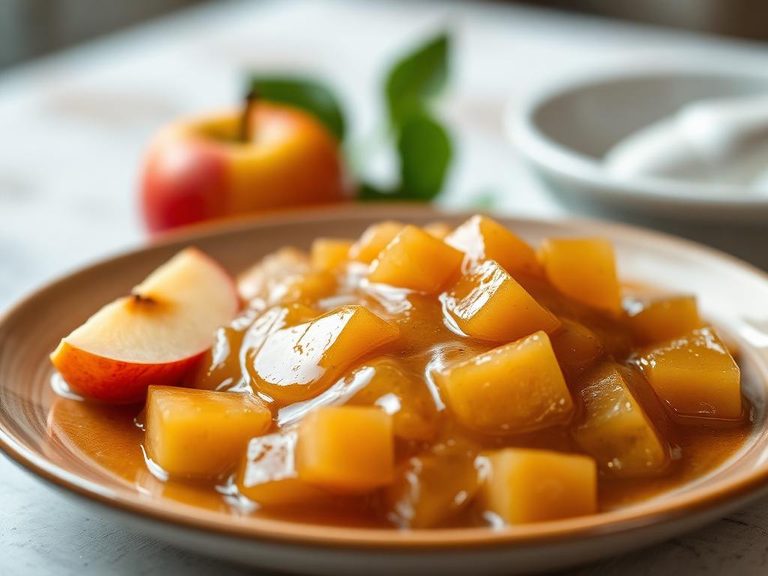
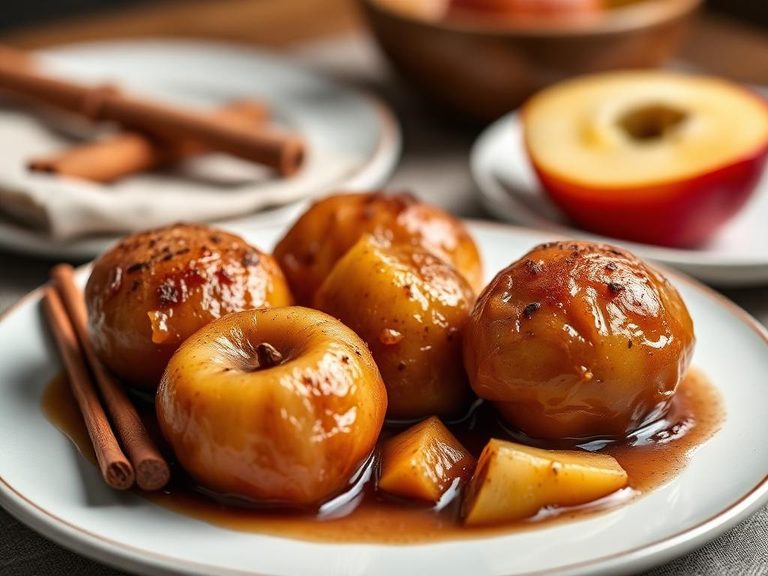
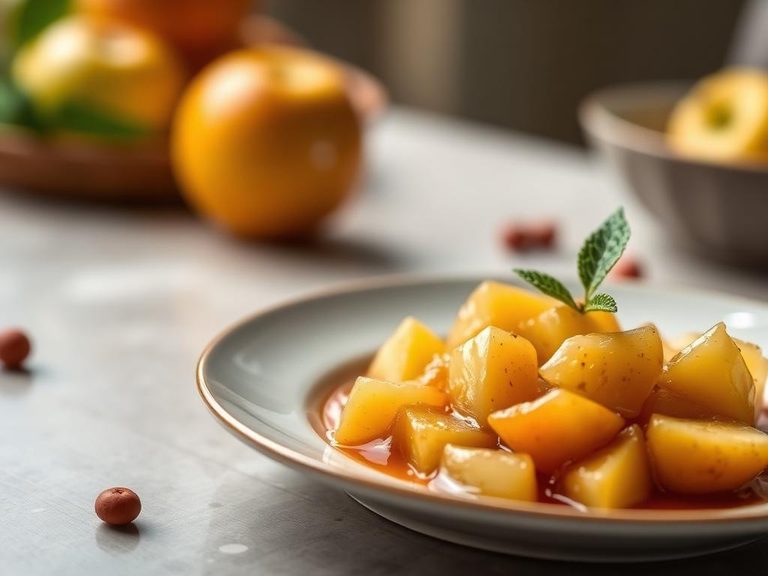
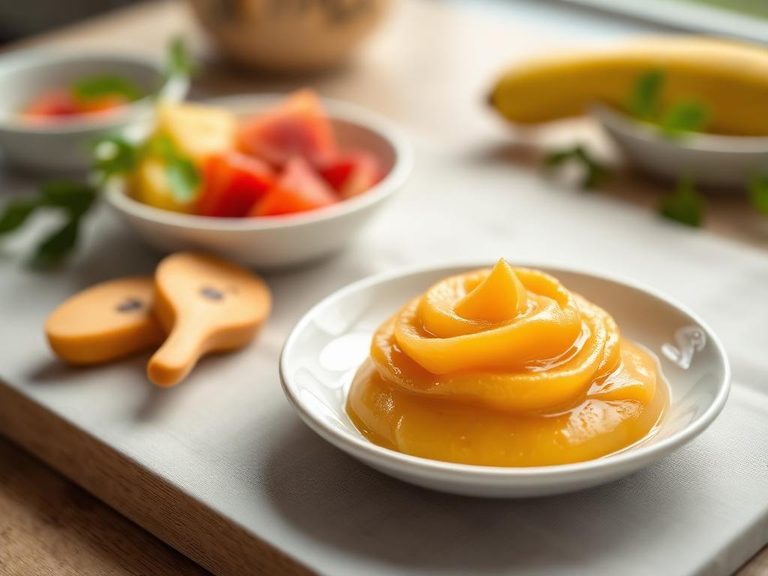
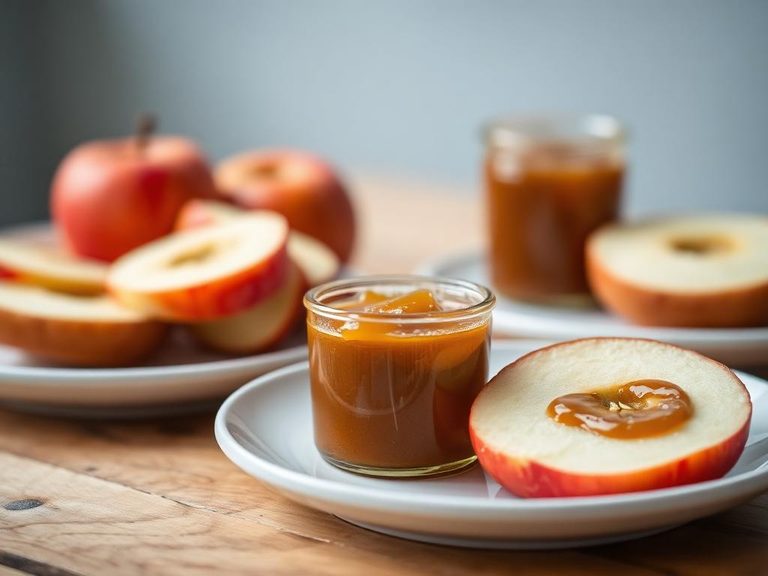
Boiled, peeled apples transform into tender, translucent morsels with a mellow, honeyed sweetness and a soft, yielding texture. This preparation strips away the skin's tartness, leaving a delicate fruit that melts in the mouth. Nutritionally, it's a light, low-calorie source of quick energy and soluble fiber.
Calorie split: 2% protein · 93% carbs · 6% fat
↓ Full nutrition💚 Why it's loved
People love boiled apples for their comforting, warm sweetness and their versatility as a simple dessert, baby food, or compote base. They evoke a sense of home cooking and are a classic way to use up slightly overripe fruit.
⚠️ Watch-outs & how to enjoy it better
The high sugar content (11g per 100g) can cause a rapid blood-sugar spike, especially without skin fiber. To counteract this, pair with a source of protein or fat like Greek yogurt or nuts, and practice portion control by serving as a side dish rather than a main dessert.
Key benefits
- Low in calories and fat
- Good source of soluble fiber (pectin)
- Gentle on the digestive system
- Provides quick, natural energy
- Retains most of the apple's vitamin C
🍽️ Popular dishes
🌍 Where it's eaten
💡 Did you know?
Boiling apples with their skins on can actually increase the antioxidant content in the cooking water, as polyphenols leach out, which is why some traditional recipes use the cooking liquid for syrups.
Full nutrition (USDA data · scales with serving)
| Water | 85.5 g |
| Energy | 53.0 kcal |
| Energy | 222 kj |
| Protein | 0.26 g |
| Total lipid (fat) | 0.36 g |
| Ash | 0.28 g |
| Carbohydrate, by difference | 13.6 g |
| Fiber, total dietary | 2.4 g |
| Total Sugars | 11.0 g |
| Calcium, Ca | 5.0 mg |
| Iron, Fe | 0.19 mg |
| Magnesium, Mg | 3.0 mg |
| Phosphorus, P | 8.0 mg |
| Potassium, K | 88.0 mg |
| Sodium, Na | 1.0 mg |
| Zinc, Zn | 0.04 mg |
| Copper, Cu | 0.04 mg |
| Manganese, Mn | 0.12 mg |
| Selenium, Se | 0.30 ug |
| Vitamin C, total ascorbic acid | 0.20 mg |
| Thiamin | 0.02 mg |
| Riboflavin | 0.01 mg |
| Niacin | 0.10 mg |
| Pantothenic acid | 0.05 mg |
| Vitamin B-6 | 0.04 mg |
| Folate, total | 1.0 ug |
| Folic acid | 0.00 ug |
| Folate, food | 1.0 ug |
| Folate, DFE | 1.0 ug |
| Choline, total | 3.4 mg |
| Vitamin B-12 | 0.00 ug |
| Vitamin B-12, added | 0.00 ug |
| Vitamin A, RAE | 2.0 ug |
| Retinol | 0.00 ug |
| Carotene, beta | 19.0 ug |
| Carotene, alpha | 0.00 ug |
| Cryptoxanthin, beta | 14.0 ug |
| Vitamin A, IU | 44.0 iu |
| Lycopene | 0.00 ug |
| Lutein + zeaxanthin | 19.0 ug |
| Vitamin E (alpha-tocopherol) | 0.05 mg |
| Vitamin E, added | 0.00 mg |
| Vitamin D (D2 + D3), International Units | 0.00 iu |
| Vitamin D (D2 + D3) | 0.00 ug |
| Vitamin K (phylloquinone) | 0.60 ug |
| Alcohol, ethyl | 0.00 g |
| Caffeine | 0.00 mg |
| Theobromine | 0.00 mg |
Fat & fatty acid profile (per 100g)
| Fatty acids, total saturated | 0.06 g |
| SFA 4:0 | 0.00 g |
| SFA 6:0 | 0.00 g |
| SFA 8:0 | 0.00 g |
| SFA 10:0 | 0.00 g |
| SFA 12:0 | 0.00 g |
| SFA 14:0 | 0.00 g |
| SFA 16:0 | 0.05 g |
| SFA 18:0 | 0.01 g |
| Fatty acids, total monounsaturated | 0.01 g |
| MUFA 16:1 | 0.00 g |
| MUFA 18:1 | 0.01 g |
| MUFA 20:1 | 0.00 g |
| MUFA 22:1 | 0.00 g |
| Fatty acids, total polyunsaturated | 0.10 g |
| PUFA 18:2 | 0.09 g |
| PUFA 18:3 | 0.02 g |
| PUFA 18:4 | 0.00 g |
| PUFA 20:4 | 0.00 g |
| PUFA 20:5 n-3 (EPA) | 0.00 g |
| PUFA 22:5 n-3 (DPA) | 0.00 g |
| PUFA 22:6 n-3 (DHA) | 0.00 g |
| Fatty acids, total trans | 0.00 g |
| Cholesterol | 0.00 mg |
Amino acid profile (per 100g)
Estimated from Applesauce, canned, unsweetened, with added ascorbic acid — USDA does not publish this profile for Apples.
| Tryptophan | 0.00 g |
| Threonine | 0.01 g |
| Isoleucine | 0.01 g |
| Leucine | 0.01 g |
| Lysine | 0.01 g |
| Methionine | 0.00 g |
| Cystine | 0.00 g |
| Phenylalanine | 0.01 g |
| Tyrosine | 0.00 g |
| Valine | 0.01 g |
| Arginine | 0.01 g |
| Histidine | 0.00 g |
| Alanine | 0.01 g |
| Aspartic acid | 0.03 g |
| Glutamic acid | 0.02 g |
| Glycine | 0.01 g |
| Proline | 0.01 g |
| Serine | 0.01 g |
FAQ
Does boiling apples remove their nutrients?
Boiling can reduce some heat-sensitive vitamins like vitamin C, but it also makes the fiber more digestible and can increase the availability of certain antioxidants.
Can I eat boiled apples on a low-sugar diet?
While naturally sweet, boiled apples are high in sugar (11g per 100g). It's best to consume them in moderation, perhaps as a small side, and pair with protein or fat to slow sugar absorption.
How long do boiled apples last in the fridge?
Properly stored in an airtight container, boiled apples will keep for 3-4 days in the refrigerator.
Nutrient density (calculated · NRF9.3)
Nutrient Rich Foods index: beneficial nutrients (protein, fiber, vitamins, minerals) minus saturated fat, added sugar & sodium, per 100 kcal.
NRF9.3 index — Fulgoni, Keast & Drewnowski, 2009. Computed from USDA nutrients.
Weight-loss friendliness (composite index)
Energy density 0.53 kcal/g · 2% calories from protein · 2.4 g fiber · 11.0 g sugar per 100 g.
Composite of energy density (Rolls et al., 1999), protein & fiber satiety, minus sugar. A calculated heuristic — ranks satiety-per-calorie, not a clinical measure.
Dietary load (calculated from USDA values)
Potential renal acid load. Positive = acid-forming, negative = alkaline-forming.
Sodium-to-potassium ratio: 0.01 (lower is better — aim for ≤ 1)
Sodium:potassium per WHO potassium guidance. Computed from USDA nutrients.