

Alcoholic beverage, wine, table, white
Whole food · Beverages
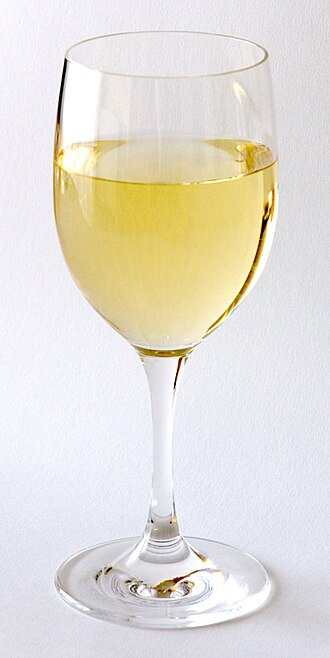
Photo: Wikipedia
A crisp, dry table white wine, like a Sauvignon Blanc or Pinot Grigio, offers bright acidity and flavors ranging from citrus and green apple to subtle floral notes. With just 82 kcal per 100g and negligible protein or fat, its primary caloric contribution comes from alcohol and a small amount of residual sugar (0.96g). It's a light, refreshing beverage often served chilled.
Calorie split: 3% protein · 97% carbs · 0% fat
↓ Full nutrition💚 Why it's loved
People love it for its crisp, refreshing taste that cleanses the palate, making it a perfect companion to meals. Its versatility in pairing with everything from seafood to salads, and its role in social rituals and celebrations, cement its popularity.
⚠️ Watch-outs & how to enjoy it better
The alcohol content can lead to dehydration, impaired judgment, and is not suitable for those avoiding alcohol, pregnant individuals, or those with certain medical conditions. The carbohydrates, while low, can contribute to blood sugar fluctuations for some. To mitigate, consume with food, alternate with water, and practice strict portion control.
Key benefits
- Low in calories compared to many alcoholic beverages.
- Contains antioxidants like resveratrol in small amounts.
- May support heart health in moderation.
- Can be part of a social and cultural dining experience.
- Pairs well with a wide variety of foods.
🍽️ Popular dishes
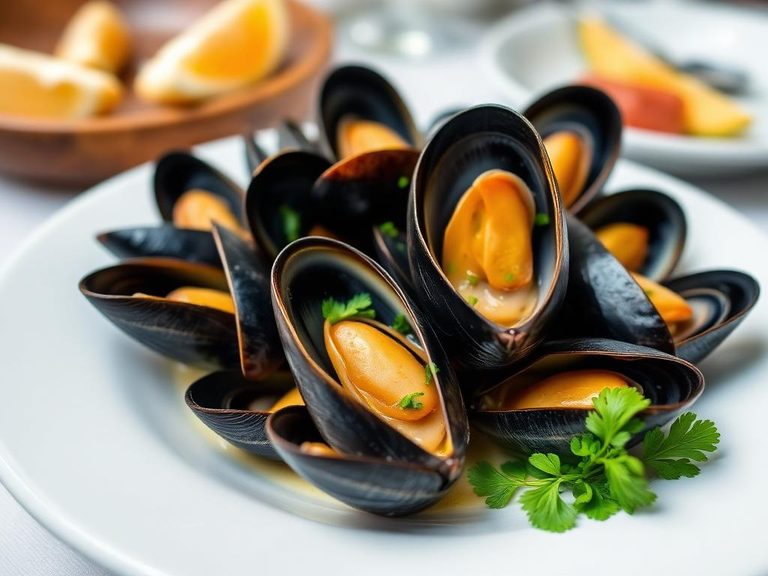
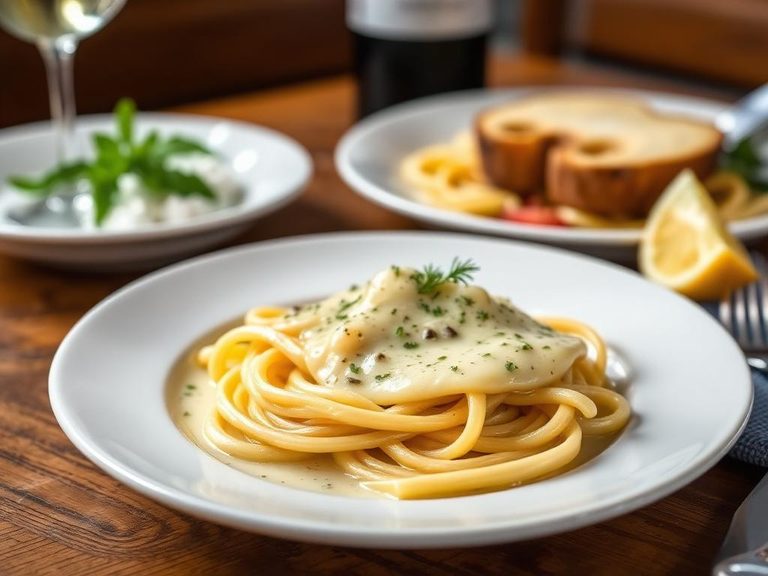
🌍 Where it's eaten
💡 Did you know?
The 'legs' or 'tears' that form on the inside of a wine glass after swirling are caused by the Marangoni effect, a result of the evaporation of alcohol altering the surface tension of the wine.
Full nutrition (USDA data · scales with serving)
| Water | 86.9 g |
| Energy | 82.0 kcal |
| Energy | 342 kj |
| Protein | 0.07 g |
| Total lipid (fat) | 0.00 g |
| Ash | 0.20 g |
| Carbohydrate, by difference | 2.6 g |
| Fiber, total dietary | 0.00 g |
| Total Sugars | 0.96 g |
| Calcium, Ca | 9.0 mg |
| Iron, Fe | 0.27 mg |
| Magnesium, Mg | 10.0 mg |
| Phosphorus, P | 18.0 mg |
| Potassium, K | 71.0 mg |
| Sodium, Na | 5.0 mg |
| Zinc, Zn | 0.12 mg |
| Copper, Cu | 0.00 mg |
| Manganese, Mn | 0.12 mg |
| Selenium, Se | 0.10 ug |
| Fluoride, F | 202 ug |
| Vitamin C, total ascorbic acid | 0.00 mg |
| Thiamin | 0.01 mg |
| Riboflavin | 0.01 mg |
| Niacin | 0.11 mg |
| Pantothenic acid | 0.04 mg |
| Vitamin B-6 | 0.05 mg |
| Folate, total | 1.0 ug |
| Folic acid | 0.00 ug |
| Folate, food | 1.0 ug |
| Folate, DFE | 1.0 ug |
| Choline, total | 4.3 mg |
| Vitamin B-12 | 0.00 ug |
| Vitamin B-12, added | 0.00 ug |
| Vitamin A, RAE | 0.00 ug |
| Retinol | 0.00 ug |
| Carotene, beta | 0.00 ug |
| Carotene, alpha | 0.00 ug |
| Cryptoxanthin, beta | 0.00 ug |
| Vitamin A, IU | 0.00 iu |
| Lycopene | 0.00 ug |
| Lutein + zeaxanthin | 0.00 ug |
| Vitamin E (alpha-tocopherol) | 0.00 mg |
| Vitamin E, added | 0.00 mg |
| Vitamin D (D2 + D3), International Units | 0.00 iu |
| Vitamin D (D2 + D3) | 0.00 ug |
| Vitamin K (phylloquinone) | 0.40 ug |
| Alcohol, ethyl | 10.3 g |
| Caffeine | 0.00 mg |
| Theobromine | 0.00 mg |
Fat & fatty acid profile (per 100g)
| Fatty acids, total saturated | 0.00 g |
| SFA 4:0 | 0.00 g |
| SFA 6:0 | 0.00 g |
| SFA 8:0 | 0.00 g |
| SFA 10:0 | 0.00 g |
| SFA 12:0 | 0.00 g |
| SFA 14:0 | 0.00 g |
| SFA 16:0 | 0.00 g |
| SFA 18:0 | 0.00 g |
| Fatty acids, total monounsaturated | 0.00 g |
| MUFA 16:1 | 0.00 g |
| MUFA 18:1 | 0.00 g |
| MUFA 20:1 | 0.00 g |
| MUFA 22:1 | 0.00 g |
| Fatty acids, total polyunsaturated | 0.00 g |
| PUFA 18:2 | 0.00 g |
| PUFA 18:3 | 0.00 g |
| PUFA 18:4 | 0.00 g |
| PUFA 20:4 | 0.00 g |
| PUFA 20:5 n-3 (EPA) | 0.00 g |
| PUFA 22:5 n-3 (DPA) | 0.00 g |
| PUFA 22:6 n-3 (DHA) | 0.00 g |
| Fatty acids, total trans | 0.00 g |
| Cholesterol | 0.00 mg |
Amino acid profile (per 100g)
Estimated from Alcoholic beverage, distilled, vodka, 80 proof — USDA does not publish this profile for Alcoholic beverage.
| Tryptophan | 0.00 g |
| Threonine | 0.00 g |
| Isoleucine | 0.00 g |
| Leucine | 0.00 g |
| Lysine | 0.00 g |
| Methionine | 0.00 g |
| Cystine | 0.00 g |
| Phenylalanine | 0.00 g |
| Tyrosine | 0.00 g |
| Valine | 0.00 g |
| Arginine | 0.00 g |
| Histidine | 0.00 g |
| Alanine | 0.00 g |
| Aspartic acid | 0.00 g |
| Glutamic acid | 0.00 g |
| Glycine | 0.00 g |
| Proline | 0.00 g |
| Serine | 0.00 g |
FAQ
How does white wine differ nutritionally from red wine?
White wine generally has slightly fewer calories and less resveratrol (an antioxidant found in grape skins) than red wine, as it is fermented without prolonged skin contact. The carbohydrate and sugar content can be similar depending on the specific wine's dryness.
Is the sugar in wine added sugar?
Not typically. The sugar in dry table wines like this comes from natural grape sugars that were not fully fermented into alcohol. Wines labeled 'sweet' or 'off-dry' may have residual sugar, and some inexpensive wines might have a small amount of sugar added for balance.
Can white wine be part of a low-carb diet?
In moderation, yes. A standard 150ml glass contains about 3-4 grams of carbohydrates, which is relatively low. However, it's important to account for these carbs within your daily limit, as alcohol can also slow fat metabolism.
Nutrient density (calculated · NRF9.3)
Nutrient Rich Foods index: beneficial nutrients (protein, fiber, vitamins, minerals) minus saturated fat, added sugar & sodium, per 100 kcal.
NRF9.3 index — Fulgoni, Keast & Drewnowski, 2009. Computed from USDA nutrients.
Weight-loss friendliness (composite index)
Energy density 0.82 kcal/g · 0% calories from protein · 0.0 g fiber · 1.0 g sugar per 100 g.
Composite of energy density (Rolls et al., 1999), protein & fiber satiety, minus sugar. A calculated heuristic — ranks satiety-per-calorie, not a clinical measure.
Dietary load (calculated from USDA values)
Potential renal acid load. Positive = acid-forming, negative = alkaline-forming.
Sodium-to-potassium ratio: 0.07 (lower is better — aim for ≤ 1)
Sodium:potassium per WHO potassium guidance. Computed from USDA nutrients.