

Alcoholic beverage, wine, dessert, sweet
Whole food · Beverages

Photo: Wikipedia
This is a luscious, syrupy wine made from grapes affected by noble rot (Botrytis cinerea), which concentrates sugars and acids into a golden nectar. Expect a viscous, honeyed texture with flavors of apricot, marmalade, and candied citrus peel, balanced by a bright, acidic backbone. Nutritionally, it's a concentrated source of quick energy from its high sugar content, with virtually no protein or fat.
Calorie split: 1% protein · 99% carbs · 0% fat
↓ Full nutrition💚 Why it's loved
People adore it for its intoxicating, complex sweetness and luxurious, velvety mouthfeel, often evoking a sense of celebration and indulgence. It's a beloved digestif or pairing partner with rich desserts, offering a harmonious balance of sweetness and acidity.
⚠️ Watch-outs & how to enjoy it better
Its high sugar content can cause rapid blood-sugar spikes, making it a concern for those managing diabetes or insulin resistance. To counteract this, serve it in a strict 2-3 oz pour alongside a source of protein or fat (like a cheese plate) to slow sugar absorption, and avoid drinking it on an empty stomach.
Key benefits
- Provides quick energy from natural fruit sugars.
- Contains antioxidants like phenolic compounds from grapes.
- Often served in small, celebratory portions.
- Can aid in palate cleansing between courses.
- Traditionally used in some cooking for flavor depth.
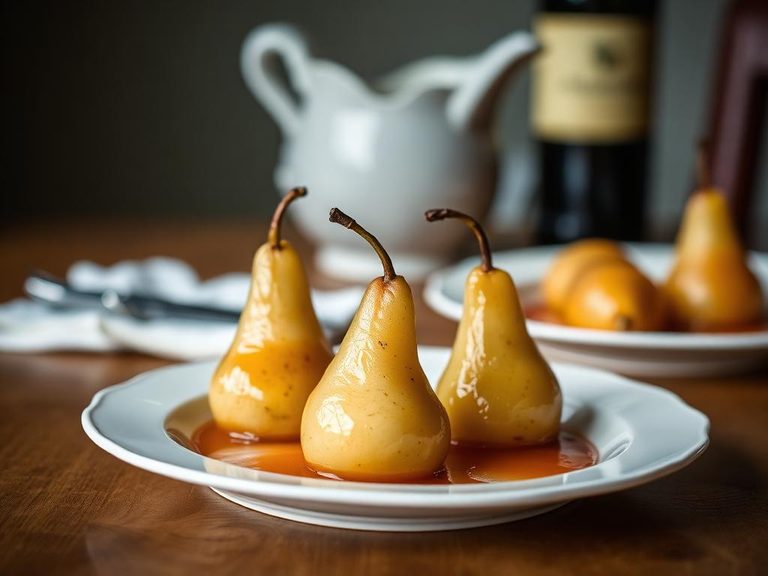
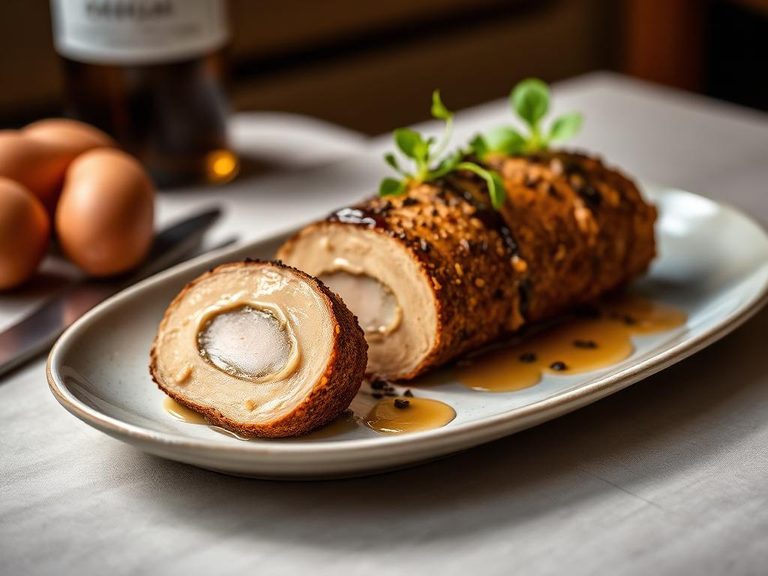
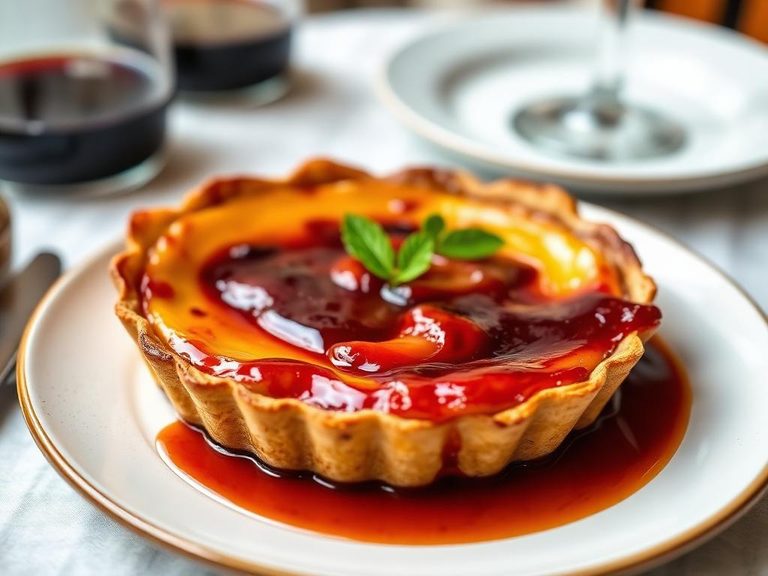
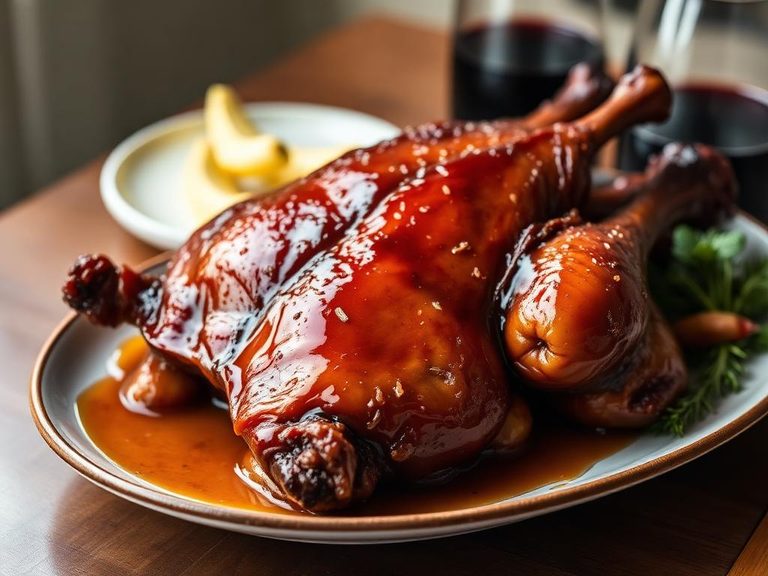
🍽️ Popular dishes
🌍 Where it's eaten
💡 Did you know?
The 'noble rot' fungus, Botrytis cinerea, only develops under very specific microclimates with morning mists and afternoon sun, making true dessert wines like Sauternes exceptionally rare and labor-intensive to produce.
Full nutrition (USDA data · scales with serving)
| Water | 70.5 g |
| Energy | 160 kcal |
| Energy | 671 kj |
| Protein | 0.20 g |
| Total lipid (fat) | 0.00 g |
| Ash | 0.30 g |
| Carbohydrate, by difference | 13.7 g |
| Fiber, total dietary | 0.00 g |
| Total Sugars | 7.8 g |
| Sucrose | 0.05 g |
| Glucose | 2.6 g |
| Fructose | 5.2 g |
| Calcium, Ca | 8.0 mg |
| Iron, Fe | 0.24 mg |
| Magnesium, Mg | 9.0 mg |
| Phosphorus, P | 9.0 mg |
| Potassium, K | 92.0 mg |
| Sodium, Na | 9.0 mg |
| Zinc, Zn | 0.07 mg |
| Copper, Cu | 0.04 mg |
| Manganese, Mn | 0.12 mg |
| Selenium, Se | 0.50 ug |
| Vitamin C, total ascorbic acid | 0.00 mg |
| Thiamin | 0.02 mg |
| Riboflavin | 0.02 mg |
| Niacin | 0.21 mg |
| Pantothenic acid | 0.03 mg |
| Vitamin B-6 | 0.00 mg |
| Folate, total | 0.00 ug |
| Folic acid | 0.00 ug |
| Folate, food | 0.00 ug |
| Folate, DFE | 0.00 ug |
| Choline, total | 5.0 mg |
| Vitamin B-12 | 0.00 ug |
| Vitamin B-12, added | 0.00 ug |
| Vitamin A, RAE | 0.00 ug |
| Retinol | 0.00 ug |
| Carotene, beta | 0.00 ug |
| Carotene, alpha | 0.00 ug |
| Cryptoxanthin, beta | 0.00 ug |
| Vitamin A, IU | 0.00 iu |
| Lycopene | 0.00 ug |
| Lutein + zeaxanthin | 0.00 ug |
| Vitamin E (alpha-tocopherol) | 0.00 mg |
| Vitamin E, added | 0.00 mg |
| Vitamin D (D2 + D3), International Units | 0.00 iu |
| Vitamin D (D2 + D3) | 0.00 ug |
| Vitamin K (phylloquinone) | 0.00 ug |
| Alcohol, ethyl | 15.3 g |
| Caffeine | 0.00 mg |
| Theobromine | 0.00 mg |
Fat & fatty acid profile (per 100g)
| Fatty acids, total saturated | 0.00 g |
| SFA 4:0 | 0.00 g |
| SFA 6:0 | 0.00 g |
| SFA 8:0 | 0.00 g |
| SFA 10:0 | 0.00 g |
| SFA 12:0 | 0.00 g |
| SFA 14:0 | 0.00 g |
| SFA 16:0 | 0.00 g |
| SFA 18:0 | 0.00 g |
| Fatty acids, total monounsaturated | 0.00 g |
| MUFA 16:1 | 0.00 g |
| MUFA 18:1 | 0.00 g |
| MUFA 20:1 | 0.00 g |
| MUFA 22:1 | 0.00 g |
| Fatty acids, total polyunsaturated | 0.00 g |
| PUFA 18:2 | 0.00 g |
| PUFA 18:3 | 0.00 g |
| PUFA 18:4 | 0.00 g |
| PUFA 20:4 | 0.00 g |
| PUFA 20:5 n-3 (EPA) | 0.00 g |
| PUFA 22:5 n-3 (DPA) | 0.00 g |
| PUFA 22:6 n-3 (DHA) | 0.00 g |
| Fatty acids, total trans | 0.00 g |
| Cholesterol | 0.00 mg |
Amino acid profile (per 100g)
Estimated from Alcoholic beverage, distilled, vodka, 80 proof — USDA does not publish this profile for Alcoholic beverage.
| Tryptophan | 0.00 g |
| Threonine | 0.00 g |
| Isoleucine | 0.00 g |
| Leucine | 0.00 g |
| Lysine | 0.00 g |
| Methionine | 0.00 g |
| Cystine | 0.00 g |
| Phenylalanine | 0.00 g |
| Tyrosine | 0.00 g |
| Valine | 0.00 g |
| Arginine | 0.00 g |
| Histidine | 0.00 g |
| Alanine | 0.00 g |
| Aspartic acid | 0.00 g |
| Glutamic acid | 0.00 g |
| Glycine | 0.00 g |
| Proline | 0.00 g |
| Serine | 0.00 g |
FAQ
What is the difference between dessert wine and regular wine?
Dessert wine is made from grapes with higher sugar concentration, either through late harvest, noble rot, or freezing, resulting in a sweeter, often lower-alcohol beverage meant for sipping in small amounts.
How should I serve sweet dessert wine?
Serve it chilled (45-50°F / 7-10°C) in a small glass to concentrate its aromas. It pairs beautifully with fruit-based desserts, blue cheese, or can be enjoyed alone as a digestif.
Why is it so expensive?
The production is risky and yields are very low. The noble rot fungus can destroy entire vineyards, and the hand-harvesting of individual berries is extremely labor-intensive.
Nutrient density (calculated · NRF9.3)
Nutrient Rich Foods index: beneficial nutrients (protein, fiber, vitamins, minerals) minus saturated fat, added sugar & sodium, per 100 kcal.
NRF9.3 index — Fulgoni, Keast & Drewnowski, 2009. Computed from USDA nutrients.
Weight-loss friendliness (composite index)
Energy density 1.60 kcal/g · 1% calories from protein · 0.0 g fiber · 7.8 g sugar per 100 g.
Composite of energy density (Rolls et al., 1999), protein & fiber satiety, minus sugar. A calculated heuristic — ranks satiety-per-calorie, not a clinical measure.
Dietary load (calculated from USDA values)
Potential renal acid load. Positive = acid-forming, negative = alkaline-forming.
Sodium-to-potassium ratio: 0.10 (lower is better — aim for ≤ 1)
Sodium:potassium per WHO potassium guidance. Computed from USDA nutrients.