PIZZA HUT 12" Cheese Pizza, THIN 'N CRISPY Crust
Whole food · Fast Foods

Photo: Wikipedia
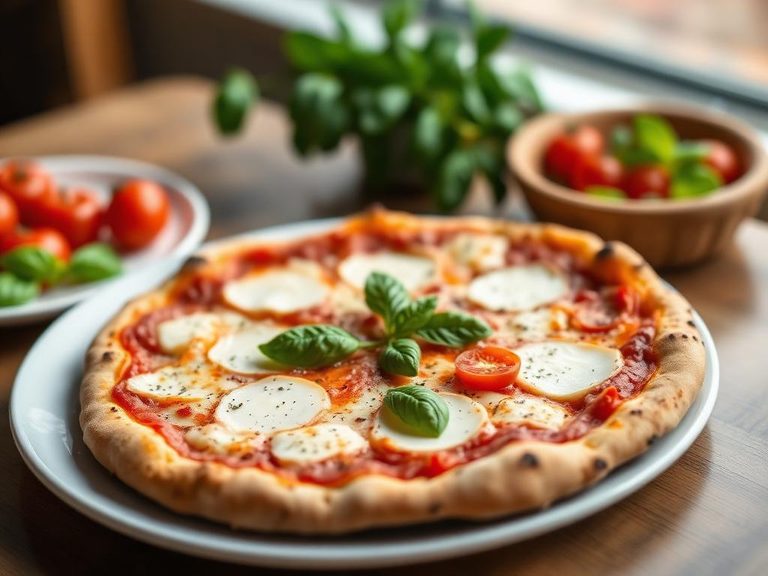
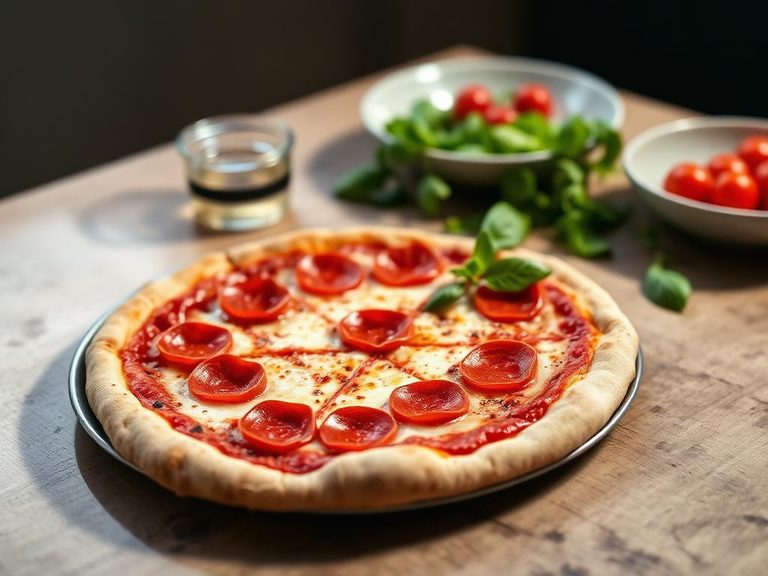
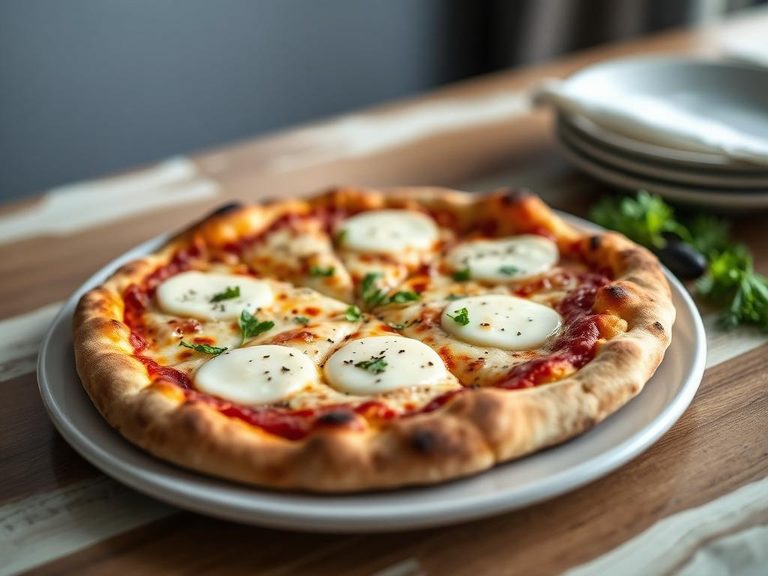
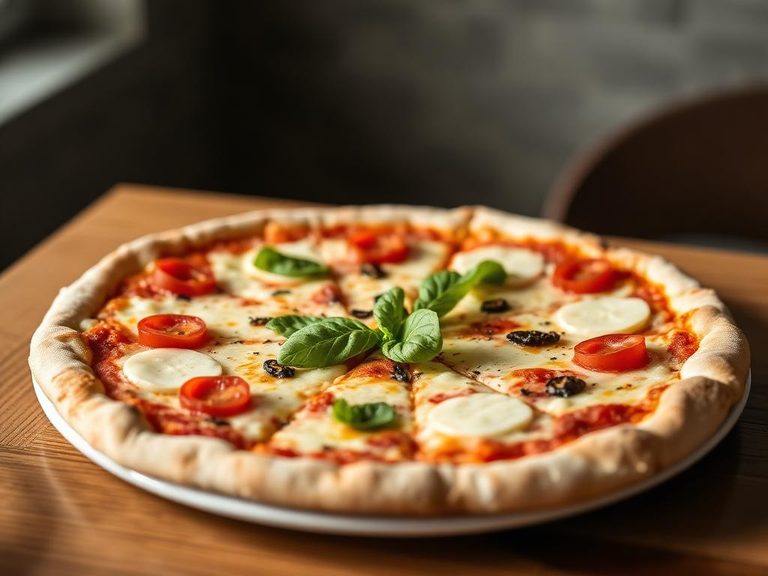
This is a thin, cracker-crisp base topped with a layer of tangy tomato sauce and a blanket of melted, stretchy mozzarella cheese, baked to a golden-brown finish. The crust provides a satisfying crunch that gives way to a chewy center, while the cheese delivers a rich, savory, and slightly salty flavor. Nutritionally, it offers a moderate protein punch from the cheese but is primarily a source of carbohydrates and fats.
💚 Why it's loved
People love it for the perfect textural contrast between the shatteringly crisp crust and the gooey, melted cheese, creating a deeply satisfying bite. It's a beloved comfort food that's endlessly versatile, serving as a canvas for countless toppings or a simple, savory snack.
⚠️ Watch-outs & how to enjoy it better
The refined flour crust can cause rapid blood-sugar spikes, and the cheese and processed meats often used as toppings contribute significant saturated fat and sodium. To counteract this, pair a slice with a large, leafy green salad dressed in olive oil to add fiber and healthy fats, which slow digestion. Opting for vegetable toppings like peppers, mushrooms, or spinach can also boost the nutrient profile.
Key benefits
- Provides a quick source of energy from carbohydrates
- Offers a good amount of protein from the mozzarella cheese
- The thin crust reduces overall carbohydrate load compared to pan styles
- Can be a vehicle for adding vegetable toppings to increase fiber
- Convenient and widely available for a fast meal
🍽️ Popular dishes
🌍 Where it's eaten
💡 Did you know?
The 'Thin 'N Crispy' crust style was popularized by Pizza Hut in the 1980s as a direct competitor to Domino's, using a dough formulation and baking process designed to achieve a cracker-like snap rather than a traditional chewy fold.
Full nutrition (scales with serving)
| Water | 38.8 g |
| Energy | 303 kcal |
| Energy | 1266 kj |
| Protein | 15.3 g |
| Total lipid (fat) | 14.1 g |
| Ash | 3.2 g |
| Carbohydrate, by difference | 28.6 g |
| Fiber, total dietary | 1.6 g |
| Total Sugars | 2.7 g |
| Sucrose | 0.00 g |
| Glucose | 0.59 g |
| Fructose | 0.48 g |
| Lactose | 0.50 g |
| Maltose | 1.0 g |
| Galactose | 0.07 g |
| Starch | 19.7 g |
| Calcium, Ca | 278 mg |
| Iron, Fe | 1.7 mg |
| Magnesium, Mg | 24.0 mg |
| Phosphorus, P | 317 mg |
| Potassium, K | 191 mg |
| Sodium, Na | 784 mg |
| Zinc, Zn | 1.9 mg |
| Copper, Cu | 0.10 mg |
| Manganese, Mn | 0.30 mg |
| Selenium, Se | 23.1 ug |
| Vitamin C, total ascorbic acid | 0.00 mg |
| Thiamin | 0.22 mg |
| Riboflavin | 0.28 mg |
| Niacin | 2.9 mg |
| Pantothenic acid | 0.32 mg |
| Vitamin B-6 | 0.11 mg |
| Vitamin B-12 | 0.89 ug |
| Vitamin A, RAE | 107 ug |
| Retinol | 107 ug |
| Vitamin A, IU | 374 iu |
| Vitamin E (alpha-tocopherol) | 0.84 mg |
| Tocopherol, beta | 0.03 mg |
| Tocopherol, gamma | 1.1 mg |
| Tocopherol, delta | 0.35 mg |
| Tocotrienol, alpha | 0.06 mg |
| Tocotrienol, beta | 0.00 mg |
| Tocotrienol, gamma | 0.00 mg |
| Tocotrienol, delta | 0.00 mg |
| Vitamin K (phylloquinone) | 8.3 ug |
| Vitamin K (Dihydrophylloquinone) | 0.00 ug |
Fat & fatty acid profile (per 100g)
| Fatty acids, total saturated | 6.9 g |
| SFA 8:0 | 0.12 g |
| SFA 10:0 | 0.27 g |
| SFA 12:0 | 0.31 g |
| SFA 14:0 | 1.1 g |
| SFA 15:0 | 0.11 g |
| SFA 16:0 | 3.3 g |
| SFA 17:0 | 0.07 g |
| SFA 18:0 | 1.6 g |
| SFA 20:0 | 0.03 g |
| SFA 22:0 | 0.01 g |
| Fatty acids, total monounsaturated | 3.8 g |
| MUFA 14:1 | 0.08 g |
| MUFA 15:1 | 0.00 g |
| MUFA 16:1 | 0.17 g |
| MUFA 17:1 | 0.00 g |
| MUFA 18:1 | 3.5 g |
| MUFA 20:1 | 0.03 g |
| Fatty acids, total polyunsaturated | 1.7 g |
| PUFA 18:2 | 1.5 g |
| PUFA 18:3 | 0.18 g |
| PUFA 18:3 n-3 c,c,c (ALA) | 0.18 g |
| PUFA 18:3 n-6 c,c,c | 0.00 g |
| PUFA 20:2 n-6 c,c | 0.00 g |
| PUFA 20:3 | 0.00 g |
| PUFA 20:4 | 0.02 g |
| Cholesterol | 34.0 mg |
Amino acid profile (per 100g)
| Tryptophan | 0.16 g |
| Threonine | 0.50 g |
| Isoleucine | 0.70 g |
| Leucine | 1.4 g |
| Lysine | 0.99 g |
| Methionine | 0.33 g |
| Cystine | 0.17 g |
| Phenylalanine | 0.80 g |
| Tyrosine | 0.69 g |
| Valine | 0.90 g |
| Arginine | 0.58 g |
| Histidine | 0.43 g |
| Alanine | 0.49 g |
| Aspartic acid | 1.0 g |
| Glutamic acid | 4.1 g |
| Glycine | 0.38 g |
| Proline | 1.6 g |
| Serine | 0.85 g |
FAQ
How does the nutrition of a thin crust compare to a regular or pan crust?
A thin crust pizza typically has fewer calories, less total carbohydrates, and less fat per slice than a regular or pan-style pizza of the same size, as it uses less dough and absorbs less oil during baking.
Is this a good source of calcium?
Yes, the mozzarella cheese topping provides a significant amount of calcium, which is essential for bone health, though the exact amount depends on the quantity of cheese used.
Can I make a healthier version at home?
Absolutely. You can use a whole-wheat or cauliflower-based thin crust, load it with vegetables, use part-skim mozzarella, and control the amount of added salt and oil for a more nutritious homemade pizza.