

Turnip greens, cooked, boiled, drained, without salt
Whole food · Vegetables and Vegetable Products

Photo: Wikipedia
Turnip greens are the peppery, dark green leaves of the turnip plant, often cooked until tender with a slightly earthy, mustard-like flavor and a silky texture. Nutritionally, they are a low-calorie powerhouse, delivering over 3.5g of fiber and a notable amount of vitamin K per 100g serving. Their vibrant color and robust taste make them a staple in hearty, comforting dishes.
Calorie split: 19% protein · 72% carbs · 9% fat
↓ Full nutrition💚 Why it's loved
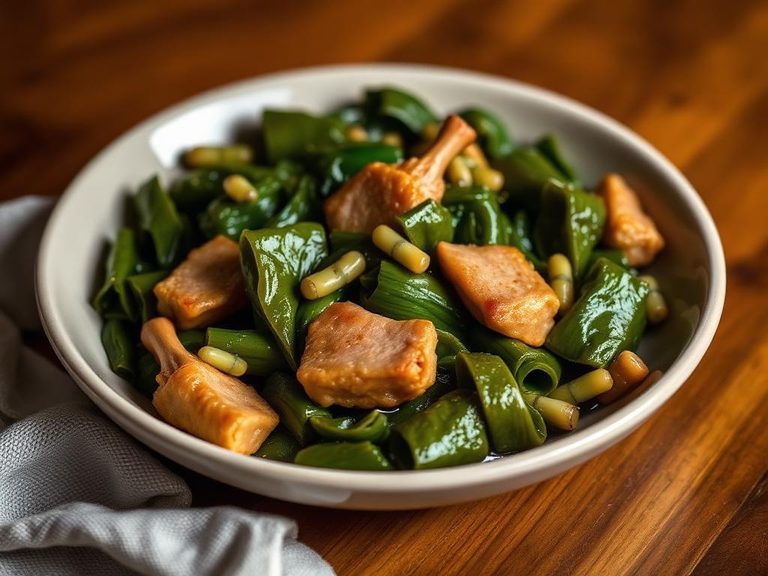
People love turnip greens for their bold, peppery flavor that stands up to long cooking and absorbs smoky, savory seasonings beautifully. They are a beloved cultural staple in Southern U.S. cuisine, often cooked with ham hocks or bacon for a deeply comforting meal.
⚠️ Watch-outs & how to enjoy it better
The distinct bitterness and high oxalate content can be off-putting for some, and oxalates may contribute to kidney stone formation in susceptible individuals. To counteract bitterness, cook with a splash of vinegar or a pinch of sugar; to reduce oxalates, use a large pot of boiling water and drain well, or pair with calcium-rich foods like cheese.
Key benefits
- Excellent source of vitamin K for bone health
- High in dietary fiber for digestive regularity
- Rich in antioxidants like beta-carotene and lutein
- Very low in calories and fat
- Good source of calcium and manganese
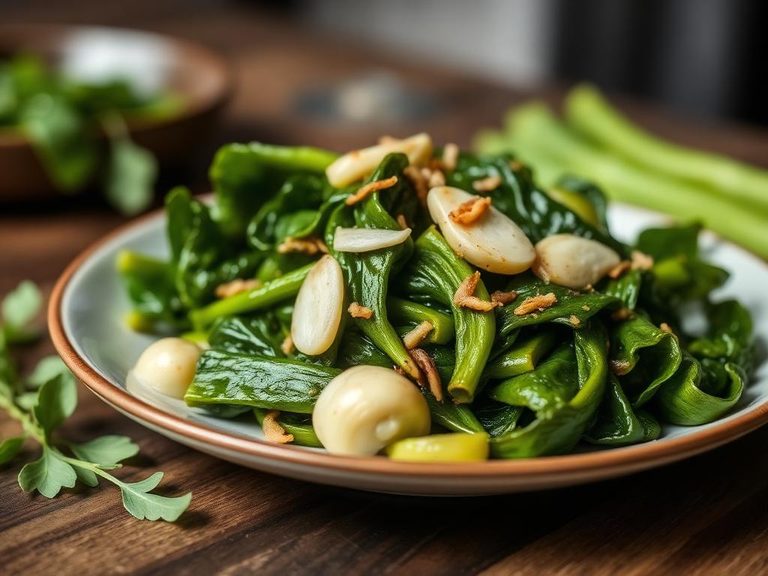
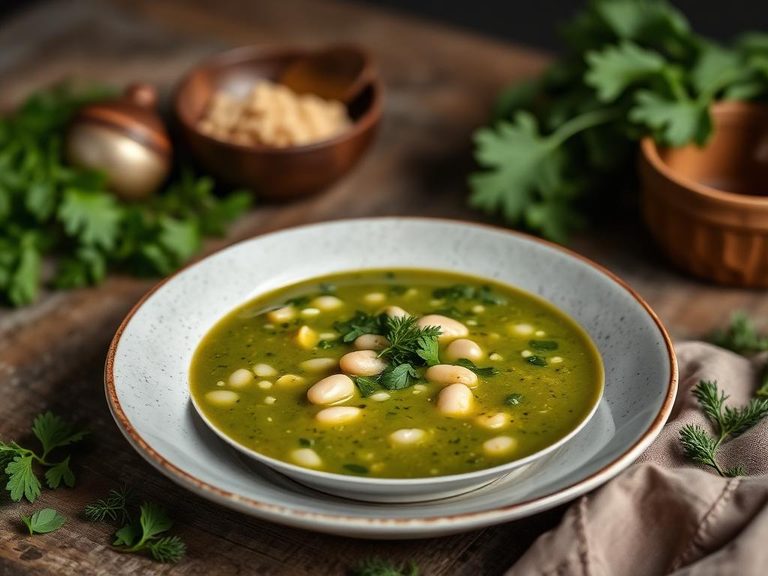
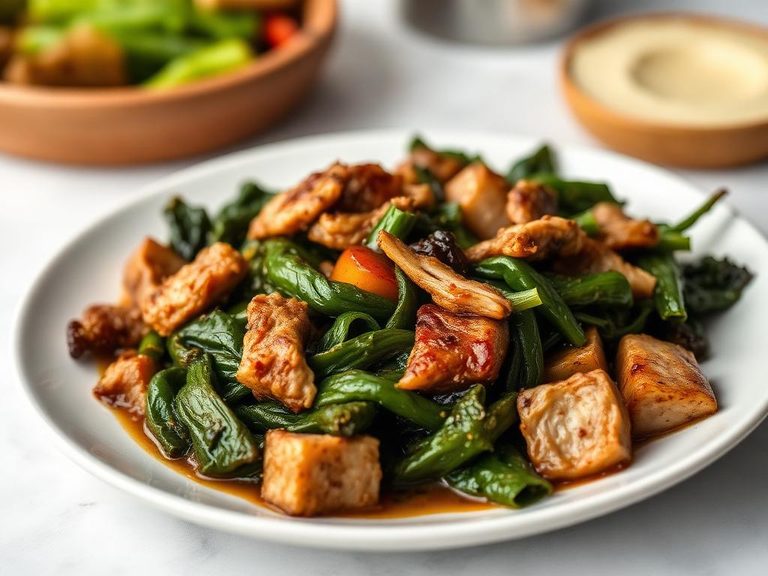
🍽️ Popular dishes

🌍 Where it's eaten
💡 Did you know?
Turnip greens are more nutrient-dense than the turnip root itself, containing significantly higher levels of vitamins A, C, and K.
Full nutrition (USDA data · scales with serving)
| Water | 93.2 g |
| Energy | 20.0 kcal |
| Energy | 84.0 kj |
| Protein | 1.1 g |
| Total lipid (fat) | 0.23 g |
| Ash | 1.1 g |
| Carbohydrate, by difference | 4.4 g |
| Fiber, total dietary | 3.5 g |
| Total Sugars | 0.53 g |
| Calcium, Ca | 137 mg |
| Iron, Fe | 0.80 mg |
| Magnesium, Mg | 22.0 mg |
| Phosphorus, P | 29.0 mg |
| Potassium, K | 203 mg |
| Sodium, Na | 29.0 mg |
| Zinc, Zn | 0.14 mg |
| Copper, Cu | 0.25 mg |
| Manganese, Mn | 0.34 mg |
| Selenium, Se | 0.90 ug |
| Vitamin C, total ascorbic acid | 27.4 mg |
| Thiamin | 0.04 mg |
| Riboflavin | 0.07 mg |
| Niacin | 0.41 mg |
| Pantothenic acid | 0.27 mg |
| Vitamin B-6 | 0.18 mg |
| Folate, total | 118 ug |
| Folic acid | 0.00 ug |
| Folate, food | 118 ug |
| Folate, DFE | 118 ug |
| Choline, total | 0.30 mg |
| Vitamin B-12 | 0.00 ug |
| Vitamin B-12, added | 0.00 ug |
| Vitamin A, RAE | 381 ug |
| Retinol | 0.00 ug |
| Carotene, beta | 4575 ug |
| Carotene, alpha | 0.00 ug |
| Cryptoxanthin, beta | 0.00 ug |
| Vitamin A, IU | 7625 iu |
| Lycopene | 0.00 ug |
| Lutein + zeaxanthin | 8440 ug |
| Vitamin E (alpha-tocopherol) | 1.9 mg |
| Vitamin E, added | 0.00 mg |
| Vitamin D (D2 + D3), International Units | 0.00 iu |
| Vitamin D (D2 + D3) | 0.00 ug |
| Vitamin K (phylloquinone) | 368 ug |
| Alcohol, ethyl | 0.00 g |
| Caffeine | 0.00 mg |
| Theobromine | 0.00 mg |
Fat & fatty acid profile (per 100g)
| Fatty acids, total saturated | 0.05 g |
| SFA 4:0 | 0.00 g |
| SFA 6:0 | 0.00 g |
| SFA 8:0 | 0.00 g |
| SFA 10:0 | 0.00 g |
| SFA 12:0 | 0.00 g |
| SFA 14:0 | 0.00 g |
| SFA 16:0 | 0.04 g |
| SFA 18:0 | 0.01 g |
| Fatty acids, total monounsaturated | 0.01 g |
| MUFA 16:1 | 0.01 g |
| MUFA 18:1 | 0.00 g |
| MUFA 20:1 | 0.00 g |
| MUFA 22:1 | 0.00 g |
| Fatty acids, total polyunsaturated | 0.09 g |
| PUFA 18:2 | 0.03 g |
| PUFA 18:3 | 0.06 g |
| PUFA 18:4 | 0.00 g |
| PUFA 20:4 | 0.00 g |
| PUFA 20:5 n-3 (EPA) | 0.00 g |
| PUFA 22:5 n-3 (DPA) | 0.00 g |
| PUFA 22:6 n-3 (DHA) | 0.00 g |
| Fatty acids, total trans | 0.00 g |
| Cholesterol | 0.00 mg |
Amino acid profile (per 100g)
| Tryptophan | 0.02 g |
| Threonine | 0.06 g |
| Isoleucine | 0.06 g |
| Leucine | 0.10 g |
| Lysine | 0.07 g |
| Methionine | 0.03 g |
| Cystine | 0.01 g |
| Phenylalanine | 0.07 g |
| Tyrosine | 0.04 g |
| Valine | 0.08 g |
| Arginine | 0.07 g |
| Histidine | 0.03 g |
| Alanine | 0.08 g |
| Aspartic acid | 0.12 g |
| Glutamic acid | 0.16 g |
| Glycine | 0.07 g |
| Proline | 0.05 g |
| Serine | 0.05 g |
FAQ
Are turnip greens the same as collard greens?
No, they are different plants, though both are leafy greens often cooked in similar Southern-style dishes. Turnip greens are generally more tender and have a sharper, more peppery flavor than the milder, earthier collard greens.
How do I prepare fresh turnip greens?
Wash them thoroughly in several changes of water to remove grit. Trim the tough center stems, then chop or leave whole. They can be boiled, steamed, sautéed, or braised until tender, typically for 20-45 minutes depending on the method.
Can I eat turnip greens raw?
While possible, they are quite tough and bitter when raw. They are most commonly cooked to soften the texture and mellow the flavor. If using raw, they are best finely shredded in salads or slaws.
Nutrient density (calculated · NRF9.3)
Nutrient Rich Foods index: beneficial nutrients (protein, fiber, vitamins, minerals) minus saturated fat, added sugar & sodium, per 100 kcal.
NRF9.3 index — Fulgoni, Keast & Drewnowski, 2009. Computed from USDA nutrients.
Weight-loss friendliness (composite index)
Energy density 0.20 kcal/g · 23% calories from protein · 3.5 g fiber · 0.5 g sugar per 100 g.
Composite of energy density (Rolls et al., 1999), protein & fiber satiety, minus sugar. A calculated heuristic — ranks satiety-per-calorie, not a clinical measure.
Dietary load (calculated from USDA values)
Potential renal acid load. Positive = acid-forming, negative = alkaline-forming.
Sodium-to-potassium ratio: 0.14 (lower is better — aim for ≤ 1)
Sodium:potassium per WHO potassium guidance. Computed from USDA nutrients.