

Syrups, table blends, pancake
Whole food · Sweets
This is a classic, amber-colored syrup blend, typically a mix of corn syrup and maple-flavored syrup, designed for the table. It has a smooth, viscous, and pourable texture with a straightforward, intensely sweet flavor that lacks the complex notes of pure maple. Nutritionally, it is a concentrated source of carbohydrates, providing over 60 grams of sugar per 100 grams with no protein, fat, or fiber.
Calorie split: 0% protein · 100% carbs · 0% fat
↓ Full nutrition💚 Why it's loved
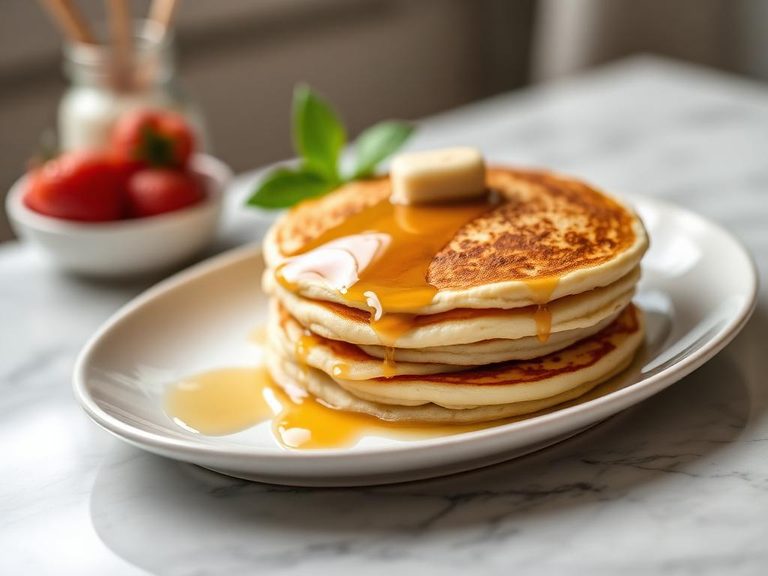
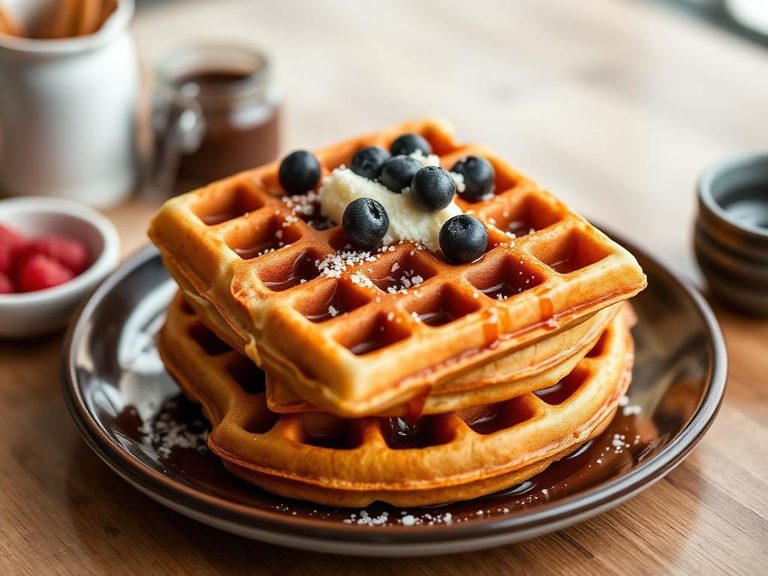
People love it for its iconic, nostalgic sweetness that instantly elevates a stack of fluffy pancakes or waffles. Its smooth pour and ability to coat every bite make it a beloved, convenient comfort food staple.
⚠️ Watch-outs & how to enjoy it better
Its high sugar content can lead to rapid blood-sugar spikes, making it a poor choice for those managing diabetes or seeking sustained energy. To counteract this, pair it with a source of protein or healthy fat (like nuts, Greek yogurt, or eggs) and practice strict portion control.
Key benefits
- Provides quick energy from simple carbohydrates.
- Offers a consistent, predictable sweetness for cooking and baking.
- Has a long shelf life and is shelf-stable without refrigeration.
- A cost-effective alternative to pure maple syrup.
🍽️ Popular dishes
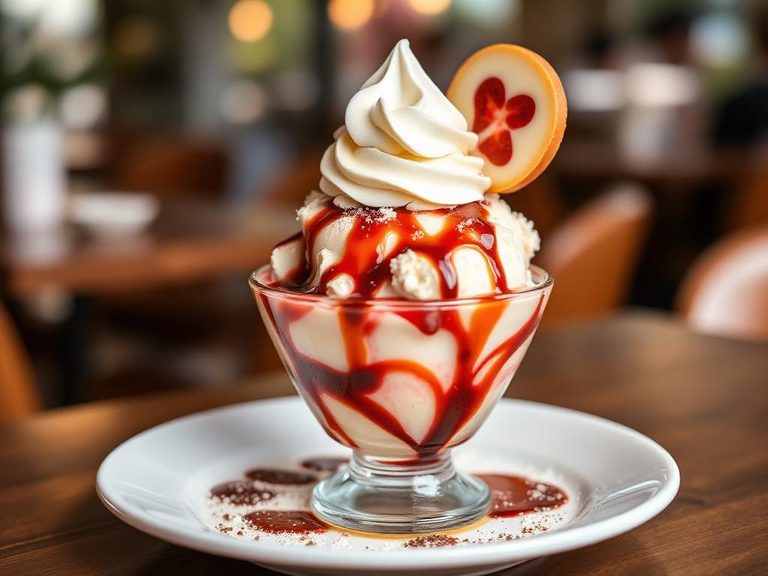
🌍 Where it's eaten
💡 Did you know?
The 'maple' flavor in most table blends comes from a compound called furaneol, which is also naturally found in strawberries and pineapple, not from maple trees.
Full nutrition (USDA data · scales with serving)
| Water | 38.0 g |
| Energy | 234 kcal |
| Energy | 977 kj |
| Protein | 0.00 g |
| Total lipid (fat) | 0.00 g |
| Ash | 0.20 g |
| Carbohydrate, by difference | 61.5 g |
| Fiber, total dietary | 0.00 g |
| Total Sugars | 21.5 g |
| Calcium, Ca | 3.0 mg |
| Iron, Fe | 0.03 mg |
| Magnesium, Mg | 2.0 mg |
| Phosphorus, P | 9.0 mg |
| Potassium, K | 15.0 mg |
| Sodium, Na | 82.0 mg |
| Zinc, Zn | 0.08 mg |
| Copper, Cu | 0.00 mg |
| Manganese, Mn | 0.07 mg |
| Selenium, Se | 0.00 ug |
| Vitamin C, total ascorbic acid | 0.00 mg |
| Thiamin | 0.02 mg |
| Riboflavin | 0.01 mg |
| Niacin | 0.00 mg |
| Pantothenic acid | 0.00 mg |
| Vitamin B-6 | 0.00 mg |
| Folate, total | 0.00 ug |
| Folic acid | 0.00 ug |
| Folate, food | 0.00 ug |
| Folate, DFE | 0.00 ug |
| Choline, total | 0.00 mg |
| Vitamin B-12 | 0.00 ug |
| Vitamin B-12, added | 0.00 ug |
| Vitamin A, RAE | 0.00 ug |
| Retinol | 0.00 ug |
| Carotene, beta | 0.00 ug |
| Carotene, alpha | 0.00 ug |
| Cryptoxanthin, beta | 0.00 ug |
| Vitamin A, IU | 0.00 iu |
| Lycopene | 0.00 ug |
| Lutein + zeaxanthin | 0.00 ug |
| Vitamin E (alpha-tocopherol) | 0.00 mg |
| Vitamin E, added | 0.00 mg |
| Vitamin D (D2 + D3), International Units | 0.00 iu |
| Vitamin D (D2 + D3) | 0.00 ug |
| Vitamin K (phylloquinone) | 0.00 ug |
| Alcohol, ethyl | 0.00 g |
| Caffeine | 0.00 mg |
| Theobromine | 0.00 mg |
Fat & fatty acid profile (per 100g)
| Fatty acids, total saturated | 0.00 g |
| SFA 4:0 | 0.00 g |
| SFA 6:0 | 0.00 g |
| SFA 8:0 | 0.00 g |
| SFA 10:0 | 0.00 g |
| SFA 12:0 | 0.00 g |
| SFA 14:0 | 0.00 g |
| SFA 16:0 | 0.00 g |
| SFA 18:0 | 0.00 g |
| Fatty acids, total monounsaturated | 0.00 g |
| MUFA 16:1 | 0.00 g |
| MUFA 18:1 | 0.00 g |
| MUFA 20:1 | 0.00 g |
| MUFA 22:1 | 0.00 g |
| Fatty acids, total polyunsaturated | 0.00 g |
| PUFA 18:2 | 0.00 g |
| PUFA 18:3 | 0.00 g |
| PUFA 18:4 | 0.00 g |
| PUFA 20:4 | 0.00 g |
| PUFA 20:5 n-3 (EPA) | 0.00 g |
| PUFA 22:5 n-3 (DPA) | 0.00 g |
| PUFA 22:6 n-3 (DHA) | 0.00 g |
| Cholesterol | 0.00 mg |
Amino acid profile (per 100g)
Estimated from Syrups, malt — USDA does not publish this profile for Syrups.
| Tryptophan | 0.07 g |
| Threonine | 0.21 g |
| Isoleucine | 0.21 g |
| Leucine | 0.38 g |
| Lysine | 0.27 g |
| Methionine | 0.11 g |
| Cystine | 0.07 g |
| Phenylalanine | 0.26 g |
| Tyrosine | 0.17 g |
| Valine | 0.30 g |
| Arginine | 0.28 g |
| Histidine | 0.13 g |
| Alanine | 0.27 g |
| Aspartic acid | 0.56 g |
| Glutamic acid | 1.0 g |
| Glycine | 0.25 g |
| Proline | 0.46 g |
| Serine | 0.23 g |
FAQ
Is this the same as pure maple syrup?
No. Table blends are primarily corn syrup with maple flavoring, while pure maple syrup is 100% boiled maple tree sap. They differ significantly in taste, cost, and nutritional profile.
Can I use it in baking?
Yes, it's commonly used in cakes, cookies, and glazes for moisture and sweetness. However, it is thinner than honey and may require slight adjustments to liquid ingredients in a recipe.
How should I store it?
Unopened, it can be stored in a cool, dark pantry. Once opened, it's best kept in the refrigerator to maintain quality and prevent any potential crystallization, though it is highly shelf-stable.
Nutrient density (calculated · NRF9.3)
Nutrient Rich Foods index: beneficial nutrients (protein, fiber, vitamins, minerals) minus saturated fat, added sugar & sodium, per 100 kcal.
NRF9.3 index — Fulgoni, Keast & Drewnowski, 2009. Computed from USDA nutrients.
Weight-loss friendliness (composite index)
Energy density 2.34 kcal/g · 0% calories from protein · 0.0 g fiber · 21.5 g sugar per 100 g.
Composite of energy density (Rolls et al., 1999), protein & fiber satiety, minus sugar. A calculated heuristic — ranks satiety-per-calorie, not a clinical measure.
Dietary load (calculated from USDA values)
Potential renal acid load. Positive = acid-forming, negative = alkaline-forming.
Sodium-to-potassium ratio: 5.47 (lower is better — aim for ≤ 1)
Sodium:potassium per WHO potassium guidance. Computed from USDA nutrients.