

Strawberries, frozen, sweetened, sliced
Whole food · Fruits and Fruit Juices

Photo: Wikipedia
These are strawberries harvested at peak ripeness, then flash-frozen with a light sugar coating to preserve their vibrant ruby color and sweet-tart flavor. The texture is softer and juicier than fresh berries, with a syrupy glaze that melts into a glossy sauce as they thaw. They offer a quick energy boost with 26g of carbs per 100g, primarily from natural sugars, while providing a modest 1.9g of fiber.
Calorie split: 2% protein · 97% carbs · 1% fat
↓ Full nutrition💚 Why it's loved
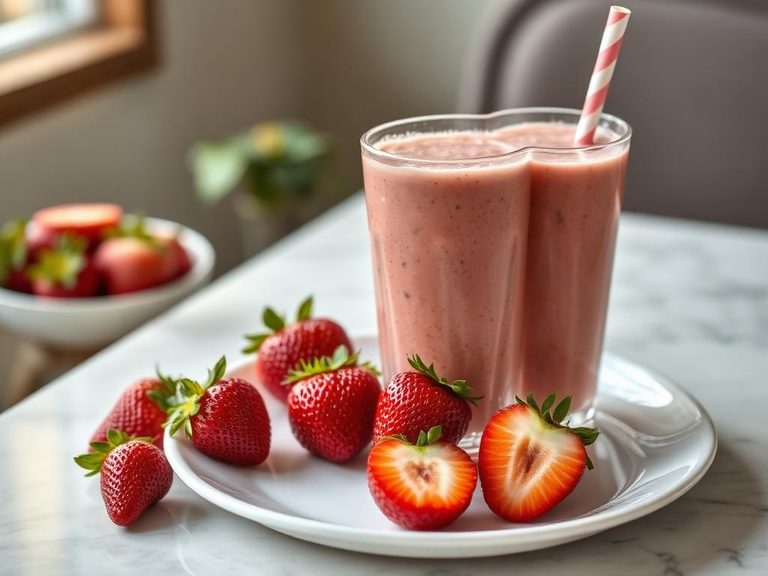
People love them for their intense, concentrated sweetness and the way they burst with juice, making them a nostalgic treat and a versatile ingredient for everything from smoothies to desserts. They capture the essence of summer strawberries in a form that's available anytime, offering a quick, satisfying burst of flavor.
⚠️ Watch-outs & how to enjoy it better
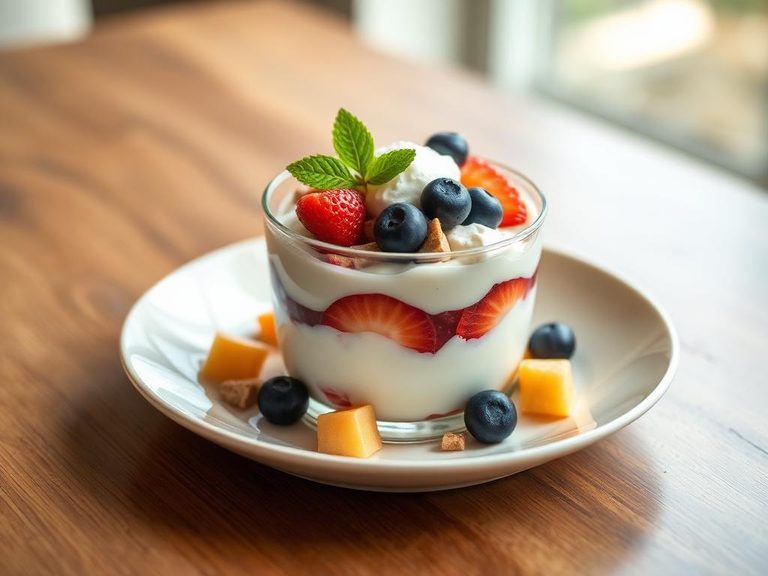
The added sugar significantly increases the glycemic load, which can cause blood-sugar spikes, especially for those with insulin sensitivity. To counteract this, pair them with protein (like Greek yogurt) or healthy fats (like nuts or chia seeds) to slow sugar absorption, and practice portion control by sticking to a half-cup serving.
Key benefits
- Rich in vitamin C, supporting immune function and skin health
- Contains antioxidants like anthocyanins and ellagic acid
- Provides dietary fiber for digestive health
- Convenient year-round source of fruit nutrients
- Low in fat and a good source of manganese
🍽️ Popular dishes

🌍 Where it's eaten
💡 Did you know?
Strawberries are the only fruit with seeds on the outside—each berry can have up to 200 tiny seeds, which are actually the fruit's true botanical seeds.
Full nutrition (USDA data · scales with serving)
| Water | 73.2 g |
| Energy | 96.0 kcal |
| Energy | 402 kj |
| Protein | 0.53 g |
| Total lipid (fat) | 0.13 g |
| Ash | 0.24 g |
| Carbohydrate, by difference | 25.9 g |
| Fiber, total dietary | 1.9 g |
| Total Sugars | 24.0 g |
| Calcium, Ca | 11.0 mg |
| Iron, Fe | 0.59 mg |
| Magnesium, Mg | 7.0 mg |
| Phosphorus, P | 13.0 mg |
| Potassium, K | 98.0 mg |
| Sodium, Na | 3.0 mg |
| Zinc, Zn | 0.06 mg |
| Copper, Cu | 0.02 mg |
| Manganese, Mn | 0.25 mg |
| Selenium, Se | 0.70 ug |
| Vitamin C, total ascorbic acid | 41.4 mg |
| Thiamin | 0.02 mg |
| Riboflavin | 0.05 mg |
| Niacin | 0.40 mg |
| Pantothenic acid | 0.11 mg |
| Vitamin B-6 | 0.03 mg |
| Folate, total | 15.0 ug |
| Folic acid | 0.00 ug |
| Folate, food | 15.0 ug |
| Folate, DFE | 15.0 ug |
| Choline, total | 4.6 mg |
| Vitamin B-12 | 0.00 ug |
| Vitamin B-12, added | 0.00 ug |
| Vitamin A, RAE | 1.0 ug |
| Retinol | 0.00 ug |
| Carotene, beta | 14.0 ug |
| Carotene, alpha | 0.00 ug |
| Cryptoxanthin, beta | 0.00 ug |
| Vitamin A, IU | 24.0 iu |
| Lycopene | 0.00 ug |
| Lutein + zeaxanthin | 21.0 ug |
| Vitamin E (alpha-tocopherol) | 0.23 mg |
| Vitamin E, added | 0.00 mg |
| Vitamin D (D2 + D3), International Units | 0.00 iu |
| Vitamin D (D2 + D3) | 0.00 ug |
| Vitamin K (phylloquinone) | 1.7 ug |
| Alcohol, ethyl | 0.00 g |
| Caffeine | 0.00 mg |
| Theobromine | 0.00 mg |
Fat & fatty acid profile (per 100g)
| Fatty acids, total saturated | 0.01 g |
| SFA 4:0 | 0.00 g |
| SFA 6:0 | 0.00 g |
| SFA 8:0 | 0.00 g |
| SFA 10:0 | 0.00 g |
| SFA 12:0 | 0.00 g |
| SFA 14:0 | 0.00 g |
| SFA 16:0 | 0.01 g |
| SFA 18:0 | 0.00 g |
| Fatty acids, total monounsaturated | 0.02 g |
| MUFA 16:1 | 0.00 g |
| MUFA 18:1 | 0.02 g |
| MUFA 20:1 | 0.00 g |
| MUFA 22:1 | 0.00 g |
| Fatty acids, total polyunsaturated | 0.06 g |
| PUFA 18:2 | 0.04 g |
| PUFA 18:3 | 0.03 g |
| PUFA 18:4 | 0.00 g |
| PUFA 20:4 | 0.00 g |
| PUFA 20:5 n-3 (EPA) | 0.00 g |
| PUFA 22:5 n-3 (DPA) | 0.00 g |
| PUFA 22:6 n-3 (DHA) | 0.00 g |
| Fatty acids, total trans | 0.00 g |
| Cholesterol | 0.00 mg |
Amino acid profile (per 100g)
| Tryptophan | 0.01 g |
| Threonine | 0.02 g |
| Isoleucine | 0.01 g |
| Leucine | 0.03 g |
| Lysine | 0.02 g |
| Methionine | 0.00 g |
| Cystine | 0.01 g |
| Phenylalanine | 0.01 g |
| Tyrosine | 0.02 g |
| Valine | 0.01 g |
| Arginine | 0.02 g |
| Histidine | 0.01 g |
| Alanine | 0.03 g |
| Aspartic acid | 0.12 g |
| Glutamic acid | 0.08 g |
| Glycine | 0.02 g |
| Proline | 0.02 g |
| Serine | 0.02 g |
FAQ
Are frozen sweetened strawberries as nutritious as fresh?
Yes, they retain most of their vitamins and antioxidants, though the added sugar increases calorie and carbohydrate content. The freezing process preserves nutrients well.
Can I use them in baking without thawing?
Yes, you can fold them directly into batters for muffins or cakes; they will release juice as they bake, adding moisture and flavor.
How do I reduce the added sugar?
Look for unsweetened frozen strawberries, or rinse thawed berries briefly under water to remove some surface sugar syrup before using.
Nutrient density (calculated · NRF9.3)
Nutrient Rich Foods index: beneficial nutrients (protein, fiber, vitamins, minerals) minus saturated fat, added sugar & sodium, per 100 kcal.
NRF9.3 index — Fulgoni, Keast & Drewnowski, 2009. Computed from USDA nutrients.
Weight-loss friendliness (composite index)
Energy density 0.96 kcal/g · 2% calories from protein · 1.9 g fiber · 24.0 g sugar per 100 g.
Composite of energy density (Rolls et al., 1999), protein & fiber satiety, minus sugar. A calculated heuristic — ranks satiety-per-calorie, not a clinical measure.
Dietary load (calculated from USDA values)
Potential renal acid load. Positive = acid-forming, negative = alkaline-forming.
Sodium-to-potassium ratio: 0.03 (lower is better — aim for ≤ 1)
Sodium:potassium per WHO potassium guidance. Computed from USDA nutrients.