

Squash, summer, scallop, raw
Whole food · Vegetables and Vegetable Products

Photo: Wikipedia
Summer scallop squash, also known as pattypan squash, is a small, disc-shaped summer squash with a scalloped edge resembling a seashell. Its flesh is tender, mild, and slightly sweet with a texture that holds up well to both raw and cooked preparations. At just 18 kcal per 100g, it's a low-calorie source of fiber and natural sugars.
Calorie split: 22% protein · 70% carbs · 8% fat
↓ Full nutrition💚 Why it's loved
People love its cheerful, unique shape that makes dishes visually appealing and its mild, versatile flavor that readily absorbs herbs and seasonings. It's a favorite in summer gardens for its prolific yield and tender, non-bitter skin.
⚠️ Watch-outs & how to enjoy it better
Its mild flavor can become bland if overcooked, and the skin, while edible, can be slightly tough if the squash is mature. To counteract blandness, roast or sauté with aromatics like garlic and herbs, or dress raw slices in a bright vinaigrette. If the skin is tough, simply peel it before cooking.
Key benefits
- Very low in calories, ideal for volume eating
- Good source of dietary fiber for digestive health
- Contains vitamin C and manganese
- Naturally low in fat and cholesterol-free
- Provides hydration due to high water content
🍽️ Popular dishes
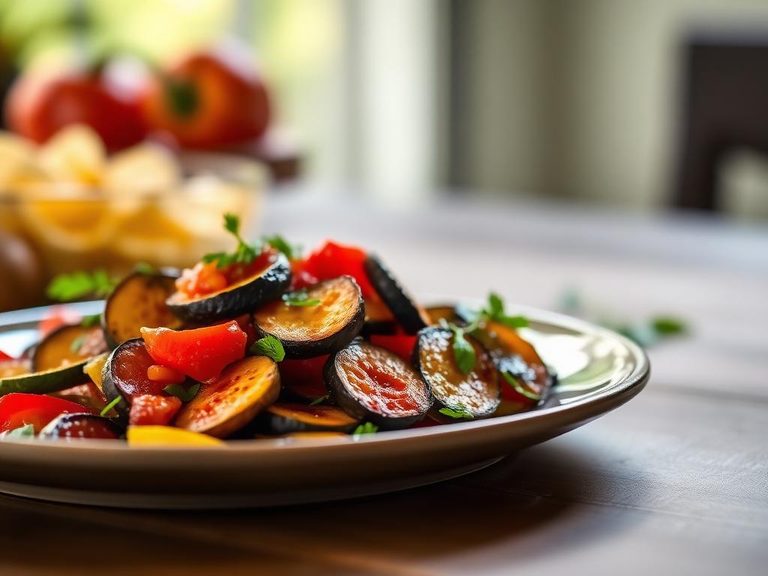
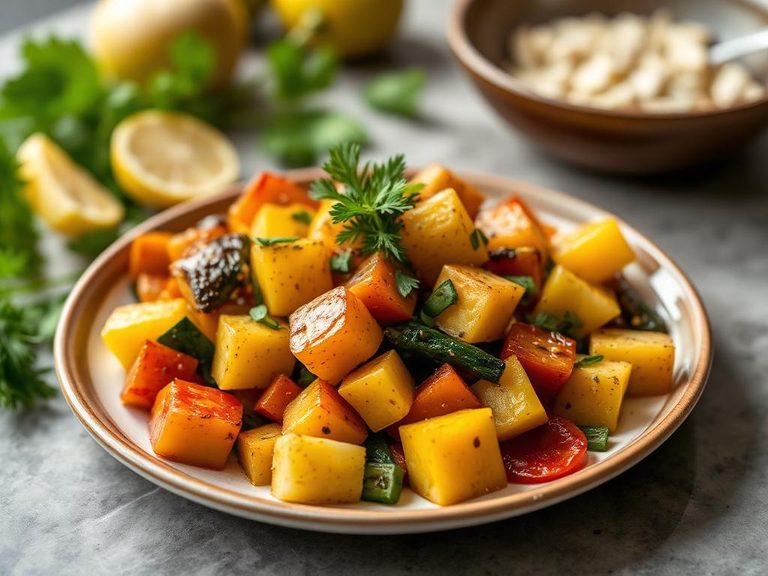
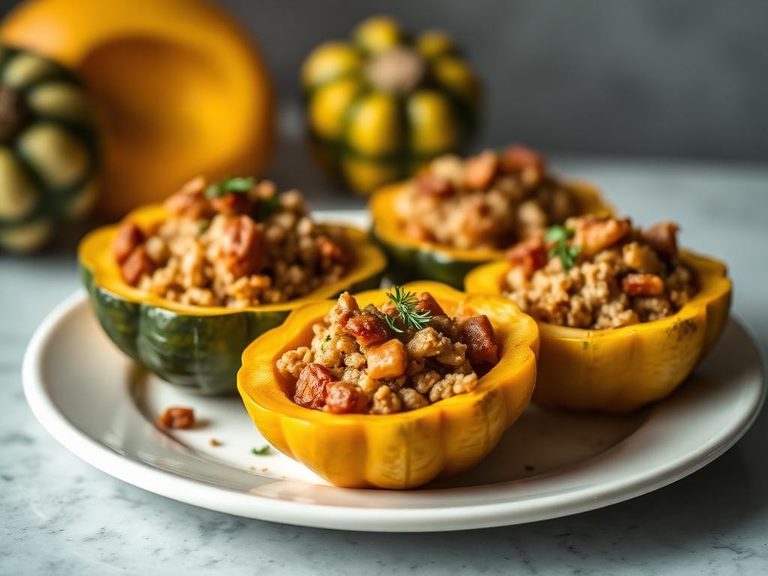
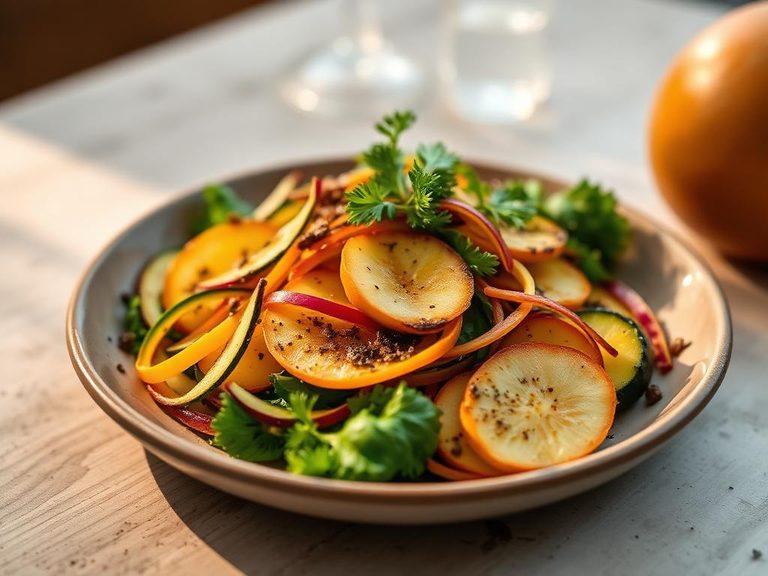
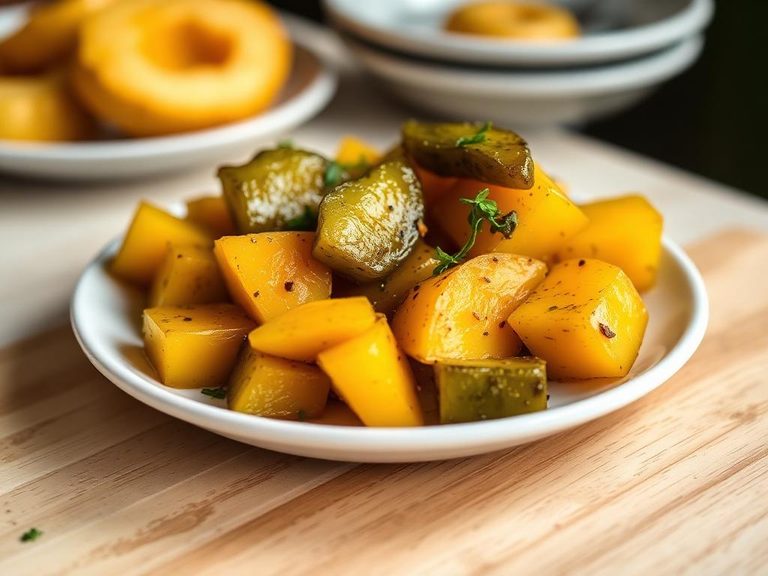
🌍 Where it's eaten
💡 Did you know?
The name 'pattypan' is thought to derive from 'a pan for a patty,' referring to its shape, which was historically used as a mold for cooking small cakes or patties.
Full nutrition (USDA data · scales with serving)
| Water | 94.2 g |
| Energy | 18.0 kcal |
| Energy | 75.0 kj |
| Protein | 1.2 g |
| Total lipid (fat) | 0.20 g |
| Ash | 0.58 g |
| Carbohydrate, by difference | 3.8 g |
| Fiber, total dietary | 1.2 g |
| Total Sugars | 2.4 g |
| Calcium, Ca | 19.0 mg |
| Iron, Fe | 0.40 mg |
| Magnesium, Mg | 23.0 mg |
| Phosphorus, P | 36.0 mg |
| Potassium, K | 182 mg |
| Sodium, Na | 1.0 mg |
| Zinc, Zn | 0.29 mg |
| Copper, Cu | 0.10 mg |
| Manganese, Mn | 0.16 mg |
| Selenium, Se | 0.20 ug |
| Vitamin C, total ascorbic acid | 18.0 mg |
| Thiamin | 0.07 mg |
| Riboflavin | 0.03 mg |
| Niacin | 0.60 mg |
| Pantothenic acid | 0.10 mg |
| Vitamin B-6 | 0.11 mg |
| Folate, total | 30.0 ug |
| Folic acid | 0.00 ug |
| Folate, food | 30.0 ug |
| Folate, DFE | 30.0 ug |
| Choline, total | 7.3 mg |
| Vitamin B-12 | 0.00 ug |
| Vitamin A, RAE | 11.0 ug |
| Retinol | 0.00 ug |
| Carotene, beta | 130 ug |
| Carotene, alpha | 0.00 ug |
| Cryptoxanthin, beta | 0.00 ug |
| Vitamin A, IU | 217 iu |
| Lycopene | 0.00 ug |
| Lutein + zeaxanthin | 2308 ug |
| Vitamin E (alpha-tocopherol) | 0.13 mg |
| Vitamin D (D2 + D3), International Units | 0.00 iu |
| Vitamin D (D2 + D3) | 0.00 ug |
| Vitamin K (phylloquinone) | 3.3 ug |
| Alcohol, ethyl | 0.00 g |
| Caffeine | 0.00 mg |
| Theobromine | 0.00 mg |
Fat & fatty acid profile (per 100g)
| Fatty acids, total saturated | 0.04 g |
| SFA 4:0 | 0.00 g |
| SFA 6:0 | 0.00 g |
| SFA 8:0 | 0.00 g |
| SFA 10:0 | 0.00 g |
| SFA 12:0 | 0.00 g |
| SFA 14:0 | 0.00 g |
| SFA 16:0 | 0.04 g |
| SFA 18:0 | 0.00 g |
| Fatty acids, total monounsaturated | 0.01 g |
| MUFA 16:1 | 0.00 g |
| MUFA 18:1 | 0.01 g |
| MUFA 20:1 | 0.00 g |
| MUFA 22:1 | 0.00 g |
| Fatty acids, total polyunsaturated | 0.08 g |
| PUFA 18:2 | 0.03 g |
| PUFA 18:3 | 0.05 g |
| PUFA 18:4 | 0.00 g |
| PUFA 20:4 | 0.00 g |
| PUFA 20:5 n-3 (EPA) | 0.00 g |
| PUFA 22:5 n-3 (DPA) | 0.00 g |
| PUFA 22:6 n-3 (DHA) | 0.00 g |
| Fatty acids, total trans | 0.00 g |
| Cholesterol | 0.00 mg |
Amino acid profile (per 100g)
| Tryptophan | 0.01 g |
| Threonine | 0.03 g |
| Isoleucine | 0.04 g |
| Leucine | 0.07 g |
| Lysine | 0.07 g |
| Methionine | 0.02 g |
| Cystine | 0.01 g |
| Phenylalanine | 0.04 g |
| Tyrosine | 0.03 g |
| Valine | 0.05 g |
| Arginine | 0.05 g |
| Histidine | 0.03 g |
| Alanine | 0.06 g |
| Aspartic acid | 0.15 g |
| Glutamic acid | 0.13 g |
| Glycine | 0.04 g |
| Proline | 0.04 g |
| Serine | 0.05 g |
FAQ
Do I need to peel summer scallop squash?
No, the skin is edible and tender on young, small squash. For larger, more mature squash, you may want to peel it for a smoother texture.
How do I store it?
Store unwashed squash in a perforated plastic bag in the refrigerator's crisper drawer. Use within 5-7 days for best quality.
Can I eat it raw?
Yes, when young and tender. Thinly slice or shred it into salads for a crisp, mild addition.
Nutrient density (calculated · NRF9.3)
Nutrient Rich Foods index: beneficial nutrients (protein, fiber, vitamins, minerals) minus saturated fat, added sugar & sodium, per 100 kcal.
NRF9.3 index — Fulgoni, Keast & Drewnowski, 2009. Computed from USDA nutrients.
Weight-loss friendliness (composite index)
Energy density 0.18 kcal/g · 27% calories from protein · 1.2 g fiber · 2.4 g sugar per 100 g.
Composite of energy density (Rolls et al., 1999), protein & fiber satiety, minus sugar. A calculated heuristic — ranks satiety-per-calorie, not a clinical measure.
Dietary load (calculated from USDA values)
Potential renal acid load. Positive = acid-forming, negative = alkaline-forming.
Sodium-to-potassium ratio: 0.01 (lower is better — aim for ≤ 1)
Sodium:potassium per WHO potassium guidance. Computed from USDA nutrients.