

Spices, sage, ground
Whole food · Spices and Herbs
Ground sage is a potent, earthy herb with a slightly peppery, minty, and pine-like flavor, derived from the dried leaves of the Salvia officinalis plant. Its fine, grayish-green powder is intensely aromatic, and nutritionally, it is a standout for its exceptionally high fiber content (over 40g per 100g), which is remarkable for a dried herb.
Calorie split: 11% protein · 61% carbs · 29% fat
↓ Full nutrition💚 Why it's loved
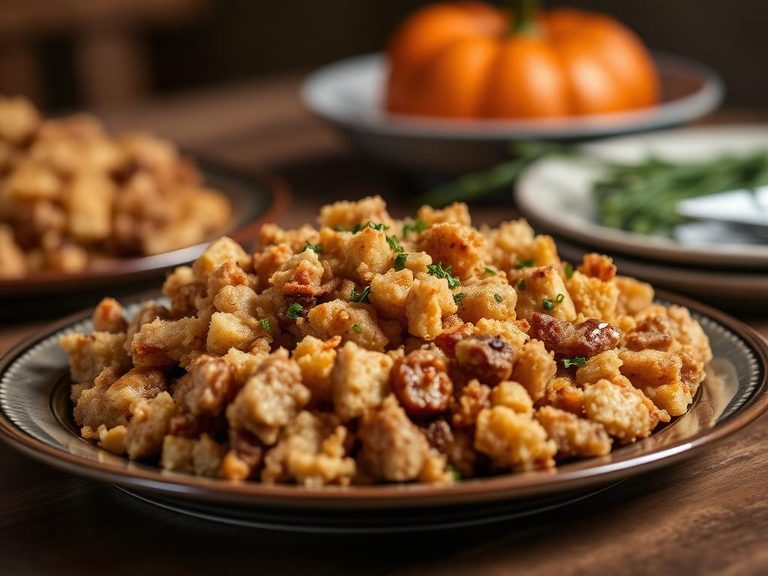
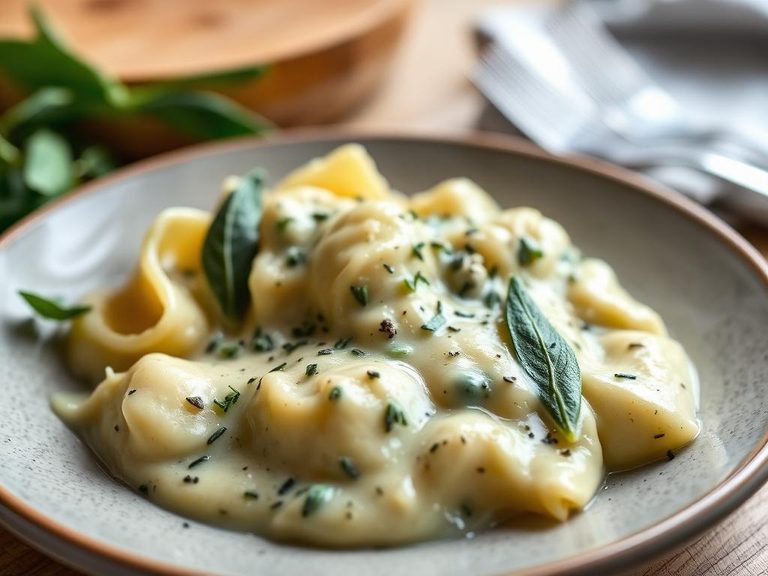
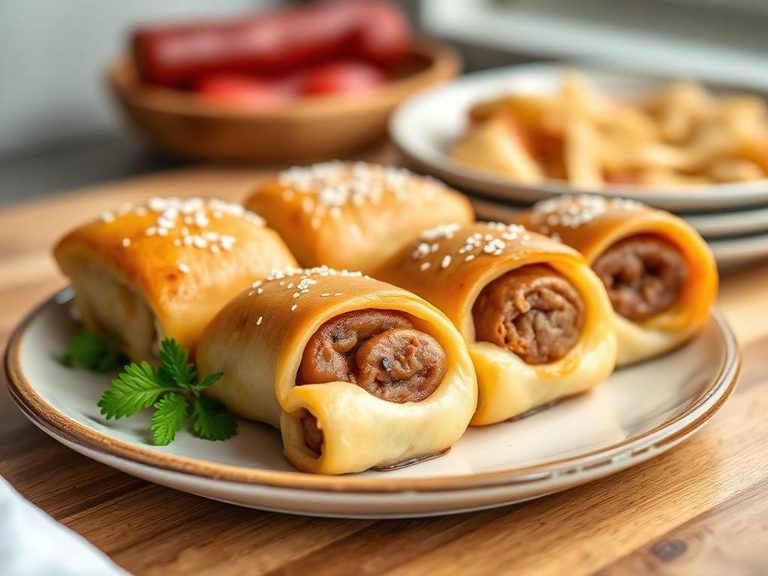
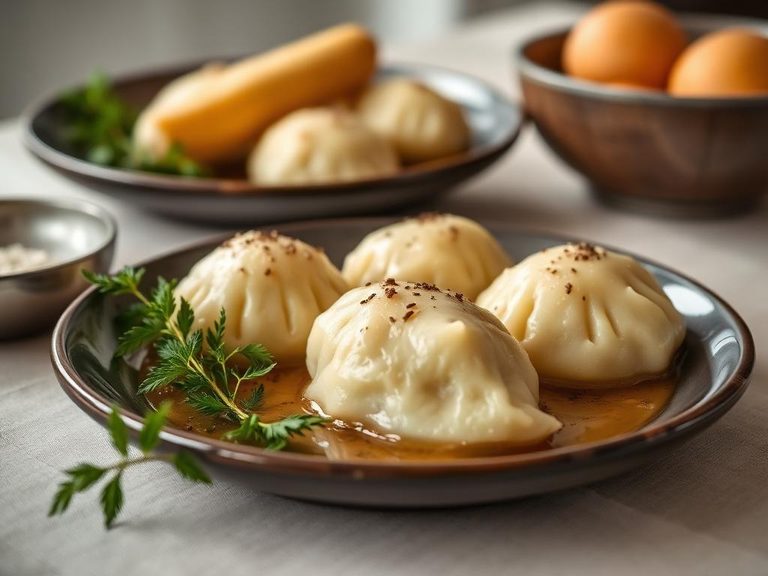
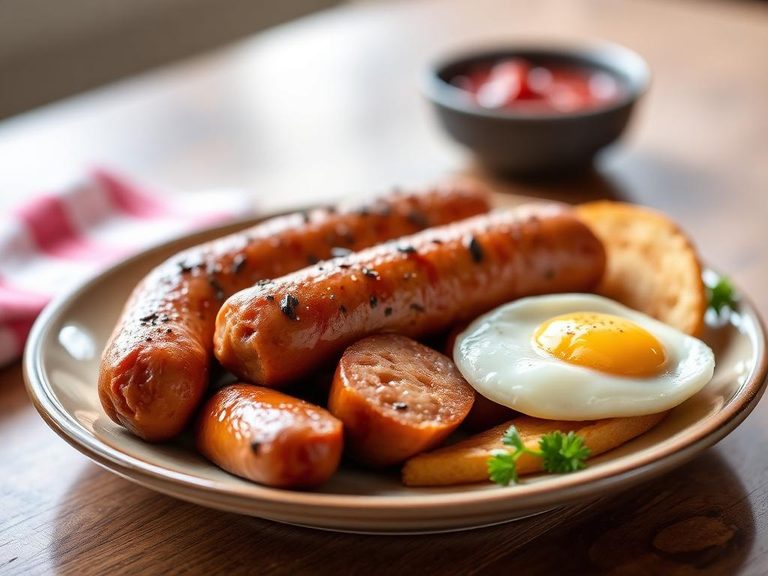
People love ground sage for its deep, savory, and slightly bitter flavor that anchors classic dishes like Thanksgiving stuffing and sausage. It is a cornerstone of European and American comfort cooking, prized for its ability to cut through rich, fatty meats and add a complex, herbal backbone.
⚠️ Watch-outs & how to enjoy it better
The intense, camphor-like flavor of ground sage can be overwhelming if used excessively, potentially making a dish taste medicinal. Because it is a dried herb, it can be gritty if not properly incorporated into liquids or fats, and those on blood-thinning medications should be mindful of its high vitamin K content. To counteract this, use it sparingly (start with 1/4 teaspoon for a family meal), and always bloom it in hot fat or liquid to release its flavor and soften its texture.
Key benefits
- Extremely high in dietary fiber, supporting digestive health.
- Rich in antioxidants like rosmarinic acid and carnosic acid.
- Contains vitamins K and A, important for blood clotting and vision.
- May have anti-inflammatory properties due to its active compounds.
- Adds robust flavor without added salt or sugar.
🍽️ Popular dishes
🌍 Where it's eaten
💡 Did you know?
The Latin name for sage, Salvia officinalis, comes from the word 'salvare,' meaning 'to save' or 'to heal,' reflecting its ancient reputation as a medicinal herb believed to grant immortality.
Full nutrition (USDA data · scales with serving)
| Water | 8.0 g |
| Energy | 315 kcal |
| Energy | 1317 kj |
| Protein | 10.6 g |
| Total lipid (fat) | 12.8 g |
| Ash | 8.0 g |
| Carbohydrate, by difference | 60.7 g |
| Fiber, total dietary | 40.3 g |
| Total Sugars | 1.7 g |
| Calcium, Ca | 1652 mg |
| Iron, Fe | 28.1 mg |
| Magnesium, Mg | 428 mg |
| Phosphorus, P | 91.0 mg |
| Potassium, K | 1070 mg |
| Sodium, Na | 11.0 mg |
| Zinc, Zn | 4.7 mg |
| Copper, Cu | 0.76 mg |
| Manganese, Mn | 3.1 mg |
| Selenium, Se | 3.7 ug |
| Vitamin C, total ascorbic acid | 32.4 mg |
| Thiamin | 0.75 mg |
| Riboflavin | 0.34 mg |
| Niacin | 5.7 mg |
| Vitamin B-6 | 2.7 mg |
| Folate, total | 274 ug |
| Folic acid | 0.00 ug |
| Folate, food | 274 ug |
| Folate, DFE | 274 ug |
| Choline, total | 43.6 mg |
| Vitamin B-12 | 0.00 ug |
| Vitamin B-12, added | 0.00 ug |
| Vitamin A, RAE | 295 ug |
| Retinol | 0.00 ug |
| Carotene, beta | 3485 ug |
| Carotene, alpha | 0.00 ug |
| Cryptoxanthin, beta | 109 ug |
| Vitamin A, IU | 5900 iu |
| Lycopene | 0.00 ug |
| Lutein + zeaxanthin | 1895 ug |
| Vitamin E (alpha-tocopherol) | 7.5 mg |
| Vitamin E, added | 0.00 mg |
| Vitamin D (D2 + D3), International Units | 0.00 iu |
| Vitamin D (D2 + D3) | 0.00 ug |
| Vitamin K (phylloquinone) | 1715 ug |
| Alcohol, ethyl | 0.00 g |
| Caffeine | 0.00 mg |
| Theobromine | 0.00 mg |
Fat & fatty acid profile (per 100g)
| Fatty acids, total saturated | 7.0 g |
| SFA 4:0 | 0.00 g |
| SFA 6:0 | 0.00 g |
| SFA 8:0 | 0.71 g |
| SFA 10:0 | 0.76 g |
| SFA 12:0 | 0.30 g |
| SFA 14:0 | 0.72 g |
| SFA 16:0 | 3.1 g |
| SFA 18:0 | 1.3 g |
| Fatty acids, total monounsaturated | 1.9 g |
| MUFA 16:1 | 0.12 g |
| MUFA 18:1 | 1.8 g |
| MUFA 20:1 | 0.00 g |
| MUFA 22:1 | 0.00 g |
| Fatty acids, total polyunsaturated | 1.8 g |
| PUFA 18:2 | 0.53 g |
| PUFA 18:3 | 1.2 g |
| PUFA 18:4 | 0.00 g |
| PUFA 20:4 | 0.00 g |
| PUFA 20:5 n-3 (EPA) | 0.00 g |
| PUFA 22:5 n-3 (DPA) | 0.00 g |
| PUFA 22:6 n-3 (DHA) | 0.00 g |
| Cholesterol | 0.00 mg |
| Phytosterols | 244 mg |
Amino acid profile (per 100g)
Estimated from Spices, garlic powder — USDA does not publish this profile for Spices.
| Tryptophan | 0.12 g |
| Threonine | 0.37 g |
| Isoleucine | 0.41 g |
| Leucine | 0.73 g |
| Lysine | 0.77 g |
| Methionine | 0.11 g |
| Cystine | 0.25 g |
| Phenylalanine | 0.53 g |
| Tyrosine | 0.45 g |
| Valine | 0.67 g |
| Arginine | 3.4 g |
| Histidine | 0.26 g |
| Alanine | 0.48 g |
| Aspartic acid | 1.9 g |
| Glutamic acid | 3.7 g |
| Glycine | 0.53 g |
| Proline | 1.4 g |
| Serine | 0.51 g |
| Hydroxyproline | 0.00 g |
FAQ
How does ground sage differ from fresh sage?
Ground sage is more concentrated and potent than fresh sage leaves. Typically, 1 teaspoon of ground sage is equivalent to about 1 tablespoon of fresh, chopped sage. Ground sage has a more muted, dusty flavor, while fresh sage has a brighter, more aromatic profile.
What is the best way to store ground sage to preserve its flavor?
Store ground sage in an airtight container in a cool, dark place, like a pantry or spice cabinet, away from heat and light. It will retain its best flavor for about 1-2 years, though it will gradually lose potency over time.
Can I use ground sage in sweet dishes?
While primarily used in savory dishes, ground sage can be used in small amounts in some sweet applications, such as in spiced cakes, cookies, or fruit compotes, where it adds a subtle, earthy depth that complements sweet flavors.
Nutrient density (calculated · NRF9.3)
Nutrient Rich Foods index: beneficial nutrients (protein, fiber, vitamins, minerals) minus saturated fat, added sugar & sodium, per 100 kcal.
NRF9.3 index — Fulgoni, Keast & Drewnowski, 2009. Computed from USDA nutrients.
Weight-loss friendliness (composite index)
Energy density 3.15 kcal/g · 13% calories from protein · 40.3 g fiber · 1.7 g sugar per 100 g.
Composite of energy density (Rolls et al., 1999), protein & fiber satiety, minus sugar. A calculated heuristic — ranks satiety-per-calorie, not a clinical measure.
Dietary load (calculated from USDA values)
Potential renal acid load. Positive = acid-forming, negative = alkaline-forming.
Sodium-to-potassium ratio: 0.01 (lower is better — aim for ≤ 1)
Sodium:potassium per WHO potassium guidance. Computed from USDA nutrients.