Thanksgiving stuffing
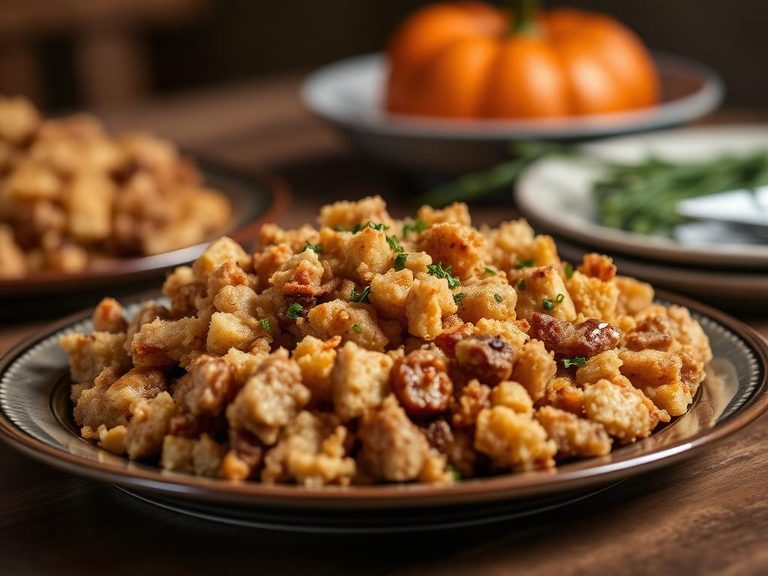
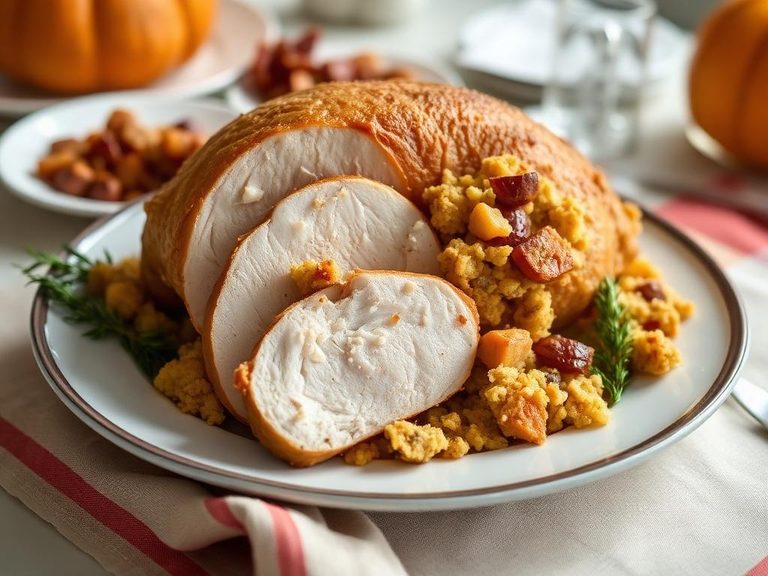
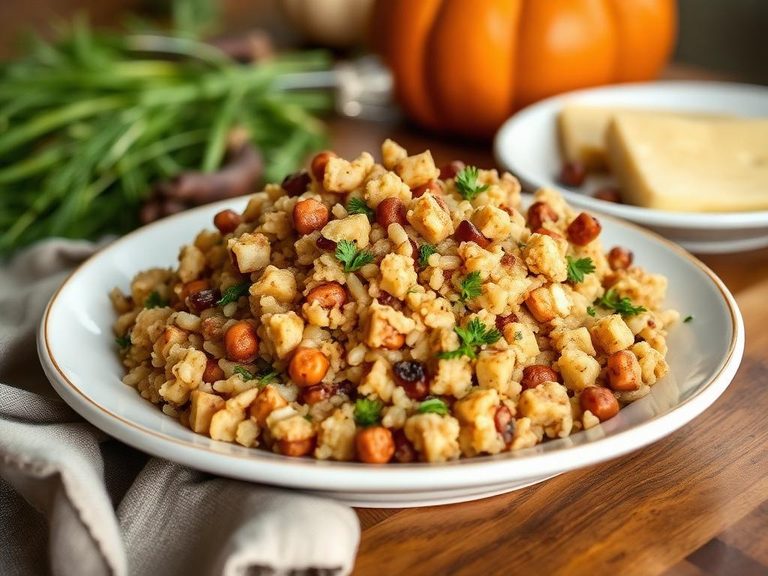
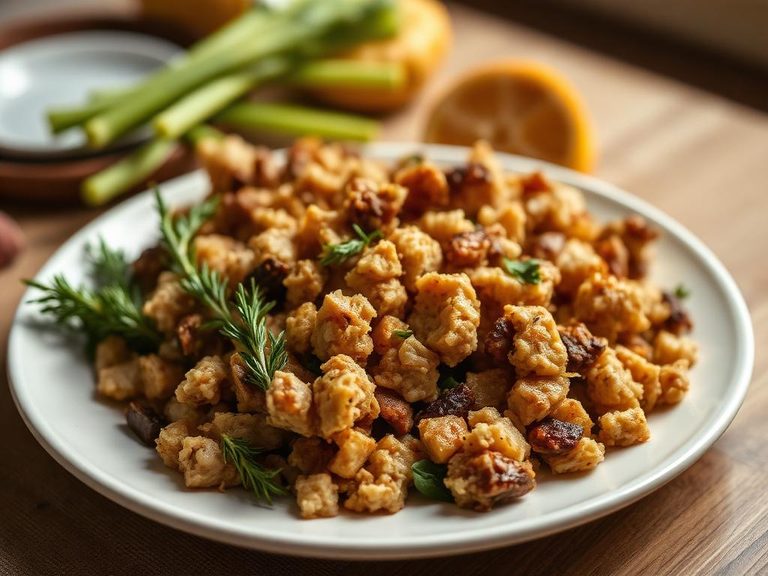
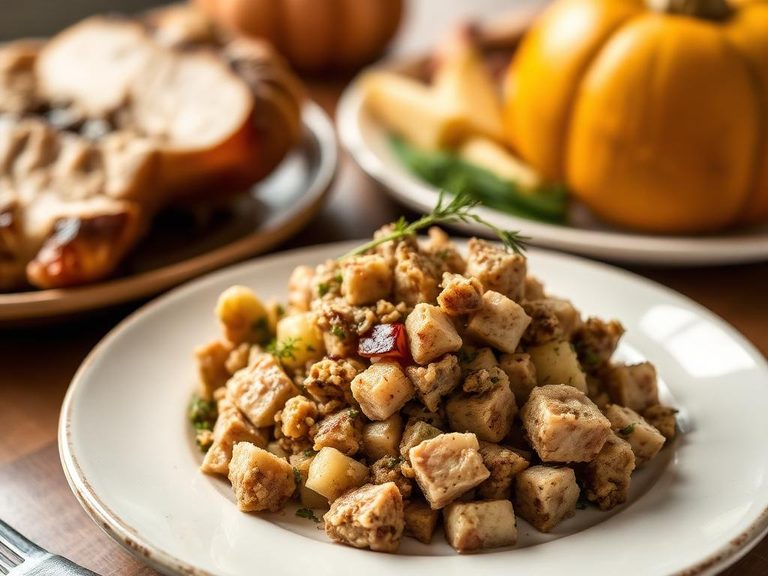
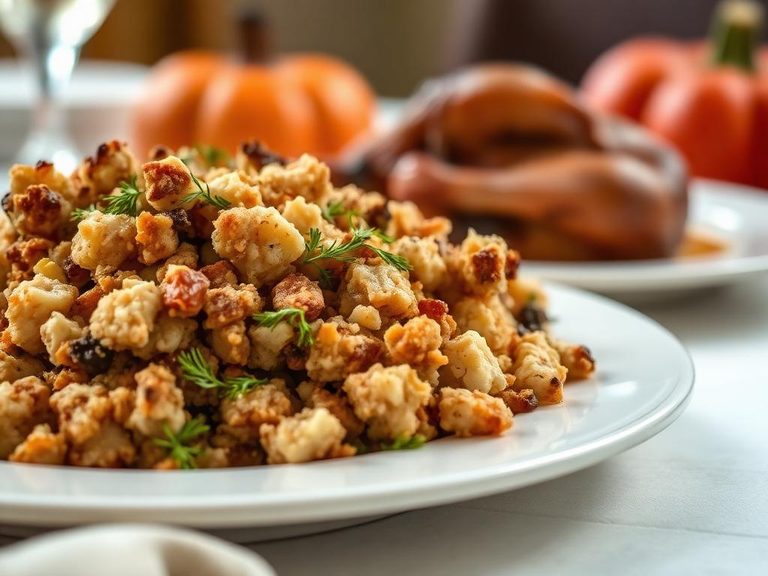
Thanksgiving stuffing, also known as dressing, is a savory baked side dish traditionally served alongside turkey during American Thanksgiving feasts. It typically consists of cubed bread or cornbread mixed with aromatic vegetables like celery and onions, herbs such as sage and thyme, and broth or turkey drippings for moisture. While its origins trace back to European culinary traditions, it has become a quintessential centerpiece of the American holiday table.
🍽️ Nutrition at a glance
This dish is generally high in carbohydrates from the bread base and can be moderately high in fat depending on the amount of butter, broth, or meat additions like sausage. It provides key nutrients such as B vitamins, iron, and some fiber, especially if whole-grain bread is used, with a typical serving containing roughly 300-400 calories.
Nutrition breakdown
| Calories | 365 kcal |
| Protein | 9 g |
| Carbs | 45 g |
| Fat | 16 g |
| Fiber | 4 g |
| Sugar | 6 g |
| Sodium | 890 mg |
| Iron | 3.2 mg |
| Potassium | 210 mg |
| Vitamin A | 150 mcg RAE |
| Vitamin C | 3 mg |
| Calcium | 65 mg |
| Thiamin (B1) | 0.3 mg |
| Folate | 55 mcg |
| Selenium | 12 mcg |
Per 1 cup (240 g) · estimated, varies by recipe
💡 What's interesting
Culturally, stuffing represents a comforting symbol of family tradition and abundance, with recipes often passed down through generations and fiercely debated for their authenticity. Nutritionally, its ability to absorb flavorful drippings makes it a delicious yet calorie-dense component of the holiday meal, balancing indulgence with the practical use of leftover bread.