Thanksgiving turkey stuffing/dressing
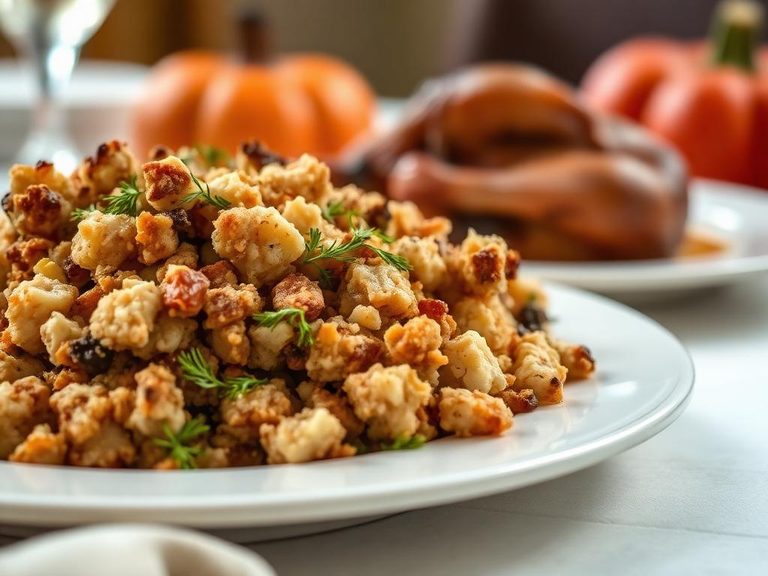
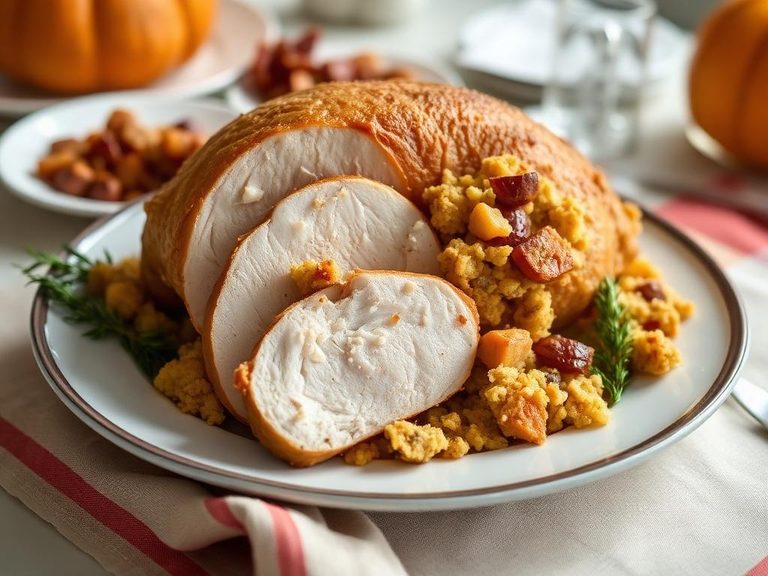
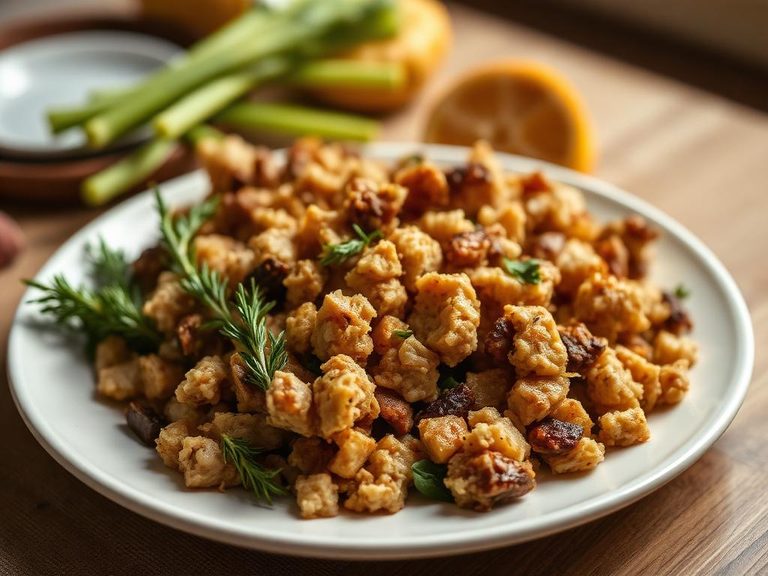
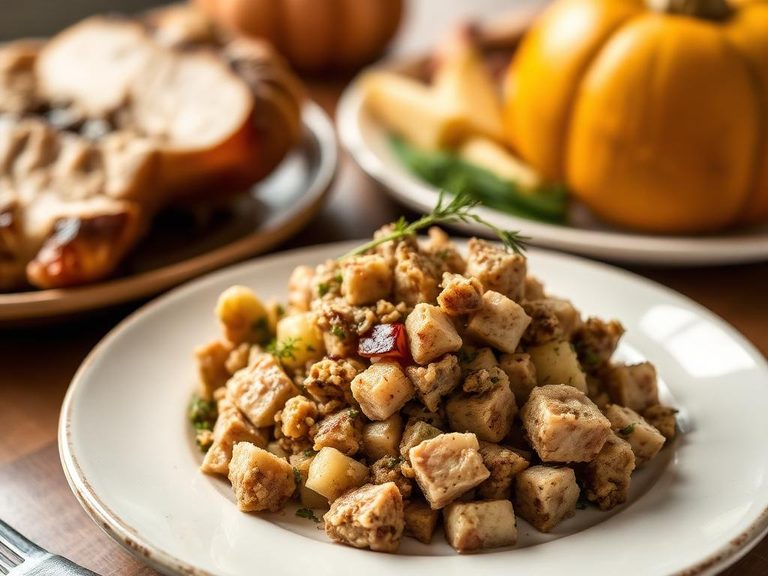
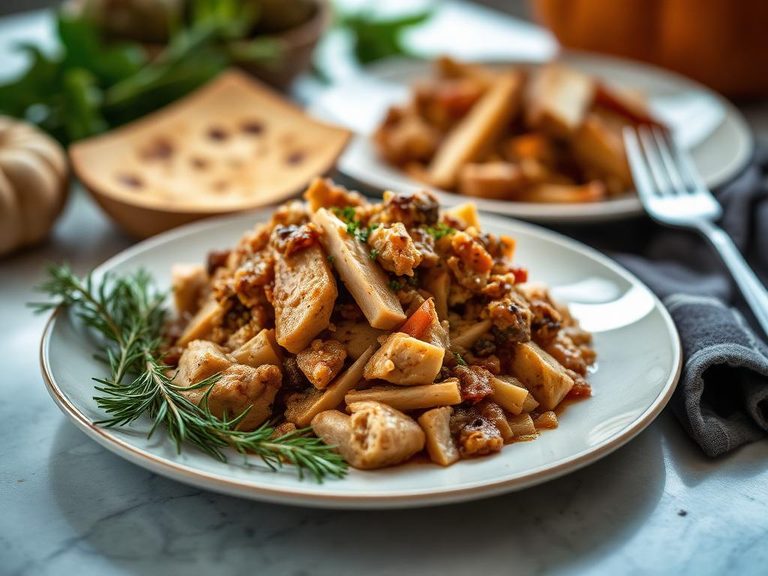
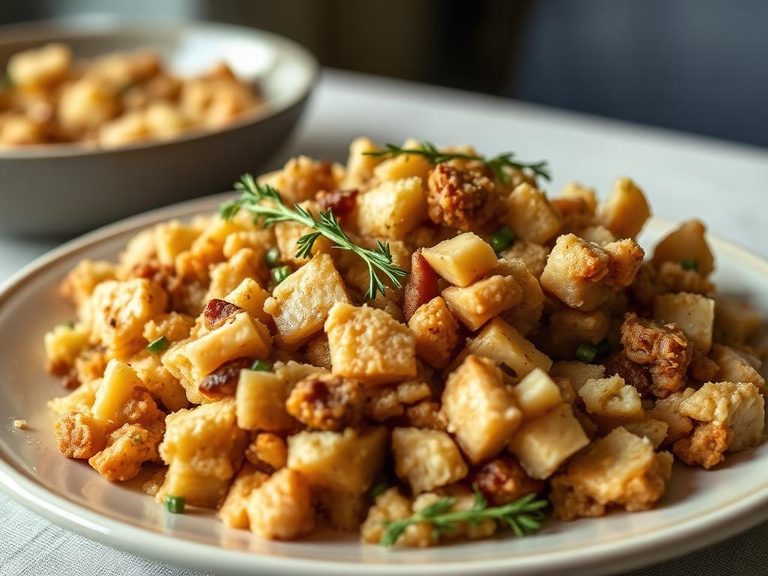
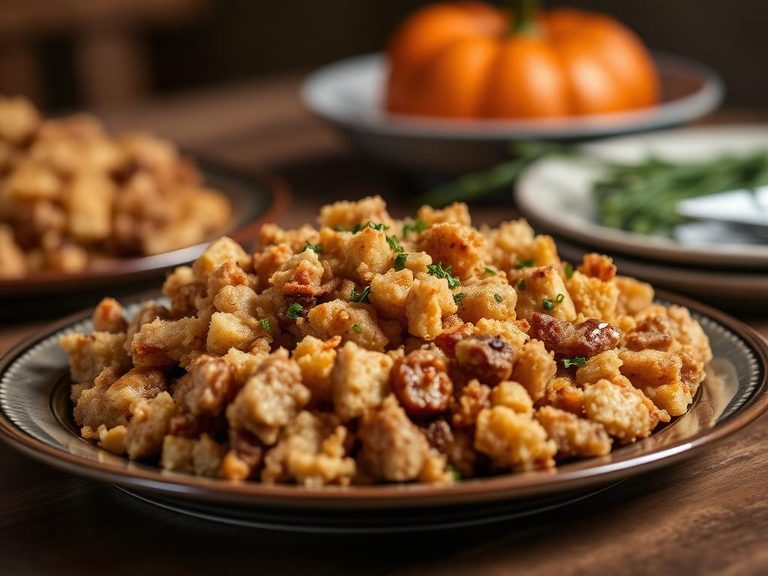
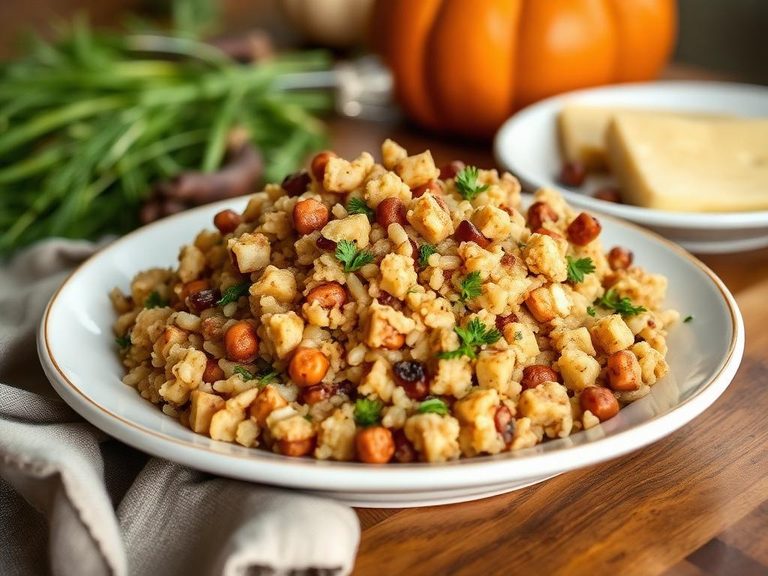
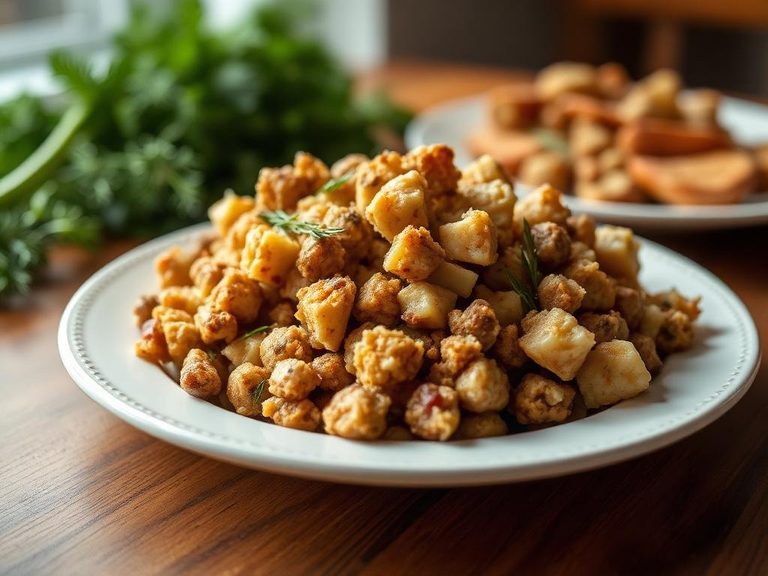
Thanksgiving turkey stuffing, also known as dressing, is a savory side dish traditionally served alongside roasted turkey during American Thanksgiving meals. It is typically made from cubes of bread mixed with herbs like sage, thyme, and rosemary, along with onions, celery, broth, and sometimes sausage, apples, or nuts. The dish is a cornerstone of the Thanksgiving feast, with recipes varying widely by family tradition and regional preference.
🍽️ Nutrition at a glance
Stuffing is generally high in carbohydrates from the bread base and can be high in fat, especially if made with butter, turkey drippings, or sausage. A typical serving provides a good source of energy and some protein, but is also often high in sodium due to broth and added seasonings.
Nutrition breakdown
| Calories | 350 kcal |
| Protein | 10 g |
| Carbs | 40 g |
| Fat | 16 g |
| Fiber | 3 g |
| Sugar | 5 g |
| Sodium | 850 mg |
| Selenium | 15 mcg |
| Thiamin (B1) | 0.3 mg |
| Niacin (B3) | 4 mg |
| Folate | 50 mcg |
| Iron | 2.5 mg |
| Potassium | 200 mg |
| Magnesium | 25 mg |
| Phosphorus | 120 mg |
Per 1 cup (240 g) · estimated, varies by recipe
💡 What's interesting
The stuffing/dressing debate—whether to cook it inside the turkey cavity or separately in a baking dish—is a long-standing cultural divide among American cooks, often tied to family tradition and food safety considerations. Nutritionally, it serves as a significant source of B vitamins and minerals from the bread and vegetable components, though its nutritional profile can vary dramatically based on preparation.