

Spaghetti, spinach, dry
Whole food · Cereal Grains and Pasta
Dry spinach spaghetti is a vibrant, earthy pasta made by blending spinach puree into durum wheat semolina, yielding a striking green hue and a subtle, grassy flavor. Its texture is slightly firmer than traditional pasta, with a satisfying chew that pairs well with bold sauces. Nutritionally, it stands out for its high fiber and protein content, making it a more substantial, nutrient-dense alternative to standard white pasta.
Calorie split: 15% protein · 82% carbs · 4% fat
↓ Full nutrition💚 Why it's loved
People love it for its beautiful green color that elevates any dish visually, and its mild, earthy spinach flavor that complements a wide range of sauces from creamy Alfredo to simple garlic and olive oil. It's a beloved staple in Italian cuisine, offering a nutritious twist on classic pasta.
⚠️ Watch-outs & how to enjoy it better
The spinach flavor can be too subtle for some, and the higher fiber content may cause bloating in sensitive individuals. To counteract this, start with smaller portions and gradually increase intake, and pair with a protein source like chicken or beans to balance the meal and slow digestion.
Key benefits
- High in dietary fiber (10.6g per 100g) for digestive health and satiety.
- Good source of plant-based protein (13.35g per 100g) for muscle maintenance.
- Low in fat (1.57g per 100g), suitable for low-fat diets.
- Contains spinach-derived nutrients like iron and vitamin K.
- Complex carbohydrates provide sustained energy without rapid sugar spikes.
🍽️ Popular dishes
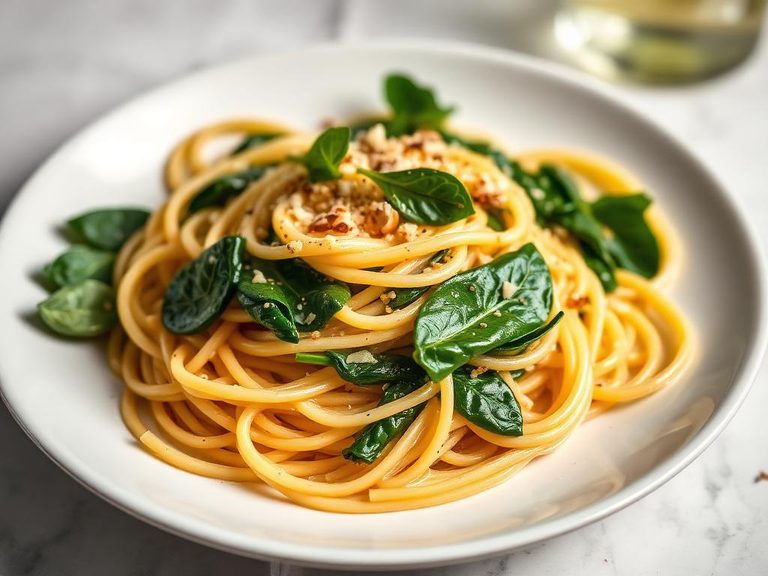
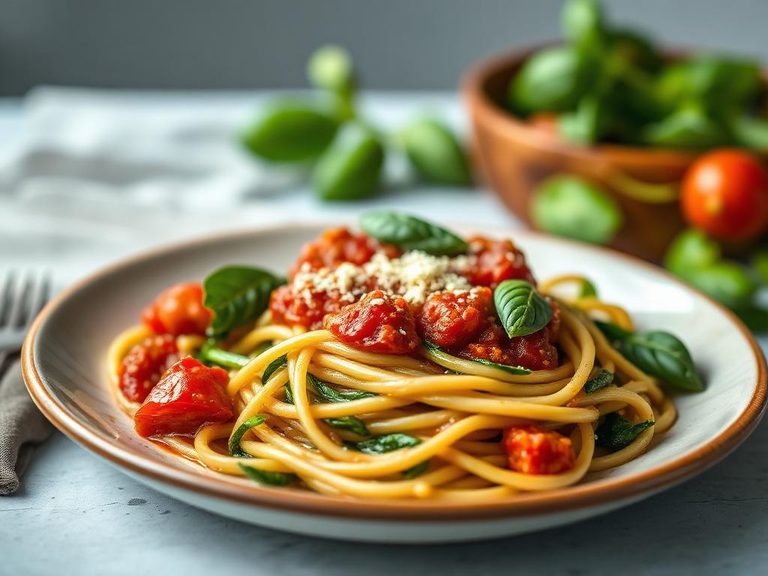
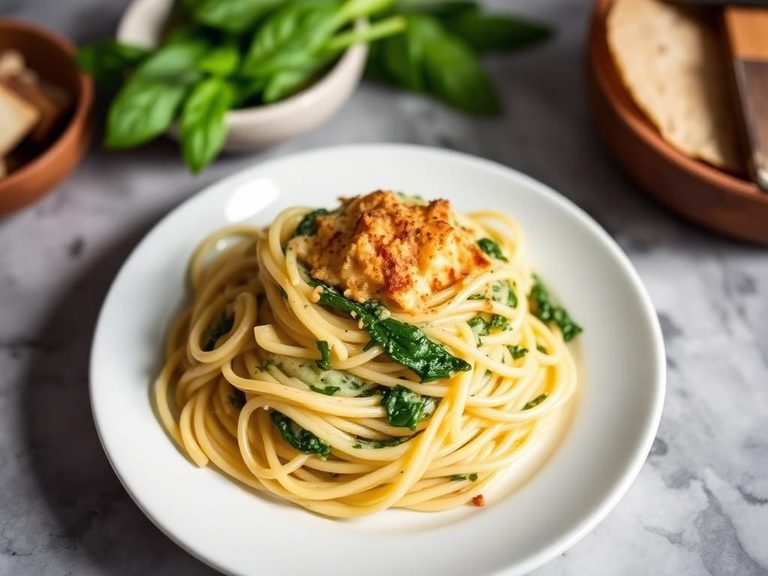
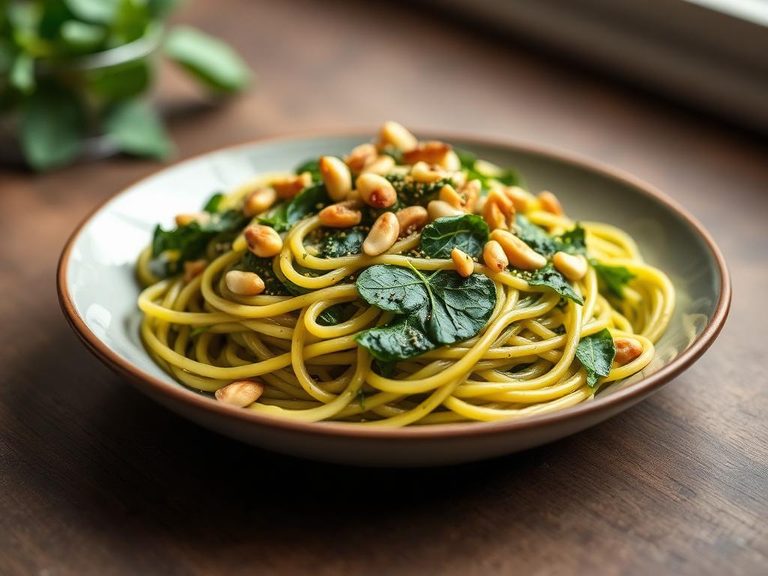
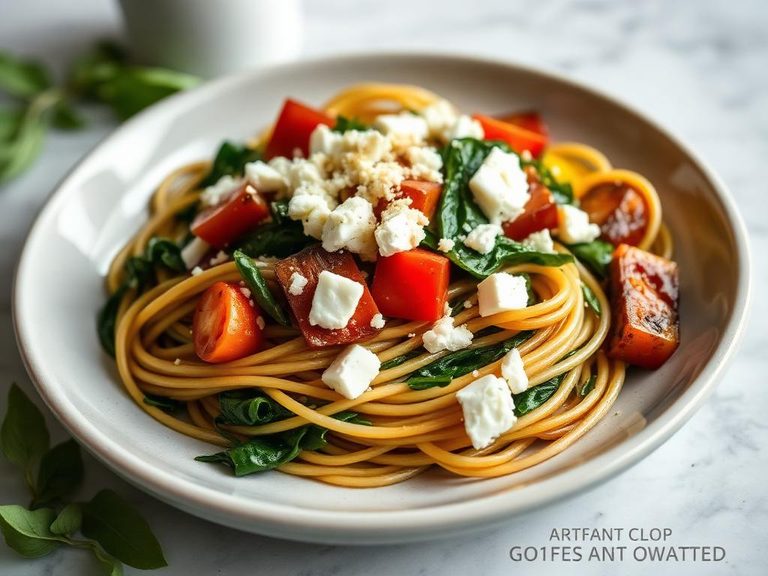
🌍 Where it's eaten
💡 Did you know?
Spinach pasta dates back to the 16th century in Italy, where it was first recorded in a 1565 recipe for 'spaghetti verdi' in the cookbook of Bartolomeo Scappi, a renowned Renaissance chef.
Full nutrition (USDA data · scales with serving)
| Water | 8.3 g |
| Energy | 372 kcal |
| Energy | 1556 kj |
| Protein | 13.3 g |
| Total lipid (fat) | 1.6 g |
| Ash | 1.9 g |
| Carbohydrate, by difference | 74.8 g |
| Fiber, total dietary | 10.6 g |
| Total Sugars | 2.7 g |
| Calcium, Ca | 58.0 mg |
| Iron, Fe | 2.1 mg |
| Magnesium, Mg | 174 mg |
| Phosphorus, P | 332 mg |
| Potassium, K | 376 mg |
| Sodium, Na | 36.0 mg |
| Zinc, Zn | 2.8 mg |
| Copper, Cu | 0.50 mg |
| Manganese, Mn | 2.6 mg |
| Selenium, Se | 63.5 ug |
| Vitamin C, total ascorbic acid | 0.00 mg |
| Thiamin | 0.37 mg |
| Riboflavin | 0.20 mg |
| Niacin | 4.5 mg |
| Pantothenic acid | 1.2 mg |
| Vitamin B-6 | 0.32 mg |
| Folate, total | 48.0 ug |
| Folic acid | 0.00 ug |
| Folate, food | 48.0 ug |
| Folate, DFE | 48.0 ug |
| Choline, total | 17.1 mg |
| Vitamin B-12 | 0.00 ug |
| Vitamin B-12, added | 0.00 ug |
| Vitamin A, RAE | 23.0 ug |
| Retinol | 0.00 ug |
| Carotene, beta | 277 ug |
| Carotene, alpha | 0.00 ug |
| Cryptoxanthin, beta | 0.00 ug |
| Vitamin A, IU | 461 iu |
| Lycopene | 0.00 ug |
| Lutein + zeaxanthin | 3487 ug |
| Vitamin E (alpha-tocopherol) | 0.74 mg |
| Vitamin E, added | 0.00 mg |
| Vitamin D (D2 + D3), International Units | 0.00 iu |
| Vitamin D (D2 + D3) | 0.00 ug |
| Vitamin K (phylloquinone) | 152 ug |
| Alcohol, ethyl | 0.00 g |
| Caffeine | 0.00 mg |
| Theobromine | 0.00 mg |
Fat & fatty acid profile (per 100g)
| Fatty acids, total saturated | 0.23 g |
| SFA 4:0 | 0.00 g |
| SFA 6:0 | 0.00 g |
| SFA 8:0 | 0.00 g |
| SFA 10:0 | 0.00 g |
| SFA 12:0 | 0.00 g |
| SFA 14:0 | 0.00 g |
| SFA 16:0 | 0.20 g |
| SFA 18:0 | 0.03 g |
| Fatty acids, total monounsaturated | 0.18 g |
| MUFA 16:1 | 0.00 g |
| MUFA 18:1 | 0.18 g |
| MUFA 20:1 | 0.00 g |
| MUFA 22:1 | 0.00 g |
| Fatty acids, total polyunsaturated | 0.64 g |
| PUFA 18:2 | 0.57 g |
| PUFA 18:3 | 0.07 g |
| PUFA 18:4 | 0.00 g |
| PUFA 20:4 | 0.00 g |
| PUFA 20:5 n-3 (EPA) | 0.00 g |
| PUFA 22:5 n-3 (DPA) | 0.00 g |
| PUFA 22:6 n-3 (DHA) | 0.00 g |
| Cholesterol | 0.00 mg |
Amino acid profile (per 100g)
| Tryptophan | 0.17 g |
| Threonine | 0.36 g |
| Isoleucine | 0.52 g |
| Leucine | 0.91 g |
| Lysine | 0.27 g |
| Methionine | 0.21 g |
| Cystine | 0.37 g |
| Phenylalanine | 0.64 g |
| Tyrosine | 0.35 g |
| Valine | 0.57 g |
| Arginine | 0.49 g |
| Histidine | 0.27 g |
| Alanine | 0.40 g |
| Aspartic acid | 0.58 g |
| Glutamic acid | 4.7 g |
| Glycine | 0.42 g |
| Proline | 1.4 g |
| Serine | 0.64 g |
FAQ
Is spinach spaghetti gluten-free?
No, traditional spinach spaghetti is made from durum wheat semolina, which contains gluten. For a gluten-free option, look for versions made with rice flour or other gluten-free grains.
How does spinach spaghetti differ from regular spaghetti in nutrition?
Spinach spaghetti has slightly more fiber and protein due to the added spinach, and it contains trace amounts of vitamins like vitamin K and iron from the spinach, while regular spaghetti is primarily a source of carbohydrates.
Can I use spinach spaghetti in any pasta recipe?
Yes, spinach spaghetti can be used in almost any recipe that calls for regular spaghetti, though its subtle spinach flavor pairs best with lighter sauces like olive oil, garlic, or cream-based sauces.
Nutrient density (calculated · NRF9.3)
Nutrient Rich Foods index: beneficial nutrients (protein, fiber, vitamins, minerals) minus saturated fat, added sugar & sodium, per 100 kcal.
NRF9.3 index — Fulgoni, Keast & Drewnowski, 2009. Computed from USDA nutrients.
Weight-loss friendliness (composite index)
Energy density 3.72 kcal/g · 14% calories from protein · 10.6 g fiber · 2.7 g sugar per 100 g.
Composite of energy density (Rolls et al., 1999), protein & fiber satiety, minus sugar. A calculated heuristic — ranks satiety-per-calorie, not a clinical measure.
Dietary load (calculated from USDA values)
Potential renal acid load. Positive = acid-forming, negative = alkaline-forming.
Sodium-to-potassium ratio: 0.10 (lower is better — aim for ≤ 1)
Sodium:potassium per WHO potassium guidance. Computed from USDA nutrients.