

Sour cream, reduced fat
Whole food · Dairy and Egg Products
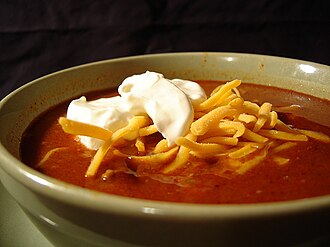
Photo: Wikipedia
Reduced-fat sour cream is a tangy, creamy cultured dairy product with a smooth, velvety texture that's slightly lighter than its full-fat counterpart. It delivers a signature rich, lactic tang that can brighten both savory and sweet dishes. With 14.1g of fat per 100g, it remains a good source of dietary fat while cutting calories compared to regular versions.
Calorie split: 15% protein · 15% carbs · 69% fat
↓ Full nutrition💚 Why it's loved
People love its cool, tangy contrast to spicy or rich foods, and its ability to add a luxurious mouthfeel. It's a versatile staple in many cuisines, from dolloping on chili to swirling into baked goods.
⚠️ Watch-outs & how to enjoy it better
As a dairy product, it contains lactose and milk proteins, which can be problematic for those with intolerances or allergies. Its fat content, while reduced, is still significant, so mindful portioning is key for those monitoring fat intake. Pair it with high-fiber foods like vegetables or whole grains to help balance blood sugar response.
Key benefits
- Provides a creamy texture with fewer calories than full-fat sour cream.
- Contains 7g of protein per 100g, supporting muscle maintenance.
- Offers a good source of calcium and phosphorus for bone health.
- Adds rich flavor without needing large quantities.
🍽️ Popular dishes

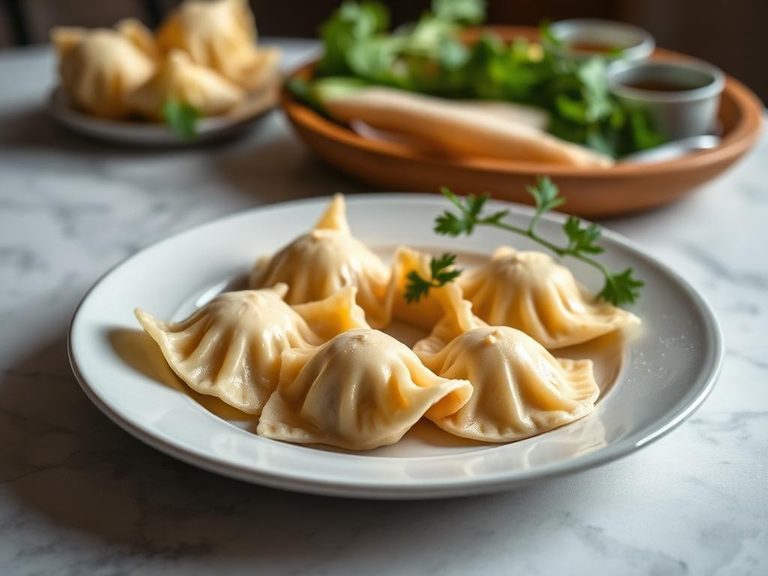
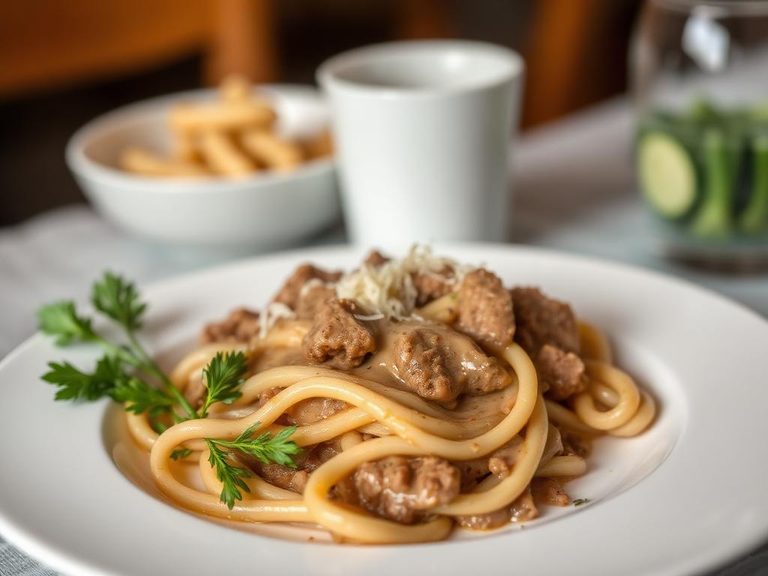
🌍 Where it's eaten
💡 Did you know?
The tang in sour cream comes from lactic acid bacteria (like Lactococcus lactis) fermenting the cream, a process historically aided by natural enzymes in stomach linings.
Full nutrition (USDA data · scales with serving)
| Water | 71.0 g |
| Energy | 181 kcal |
| Energy | 757 kj |
| Protein | 7.0 g |
| Total lipid (fat) | 14.1 g |
| Ash | 0.90 g |
| Carbohydrate, by difference | 7.0 g |
| Fiber, total dietary | 0.00 g |
| Total Sugars | 0.30 g |
| Calcium, Ca | 141 mg |
| Iron, Fe | 0.06 mg |
| Magnesium, Mg | 11.0 mg |
| Phosphorus, P | 85.0 mg |
| Potassium, K | 211 mg |
| Sodium, Na | 70.0 mg |
| Zinc, Zn | 0.27 mg |
| Copper, Cu | 0.01 mg |
| Selenium, Se | 4.1 ug |
| Vitamin C, total ascorbic acid | 0.90 mg |
| Thiamin | 0.04 mg |
| Riboflavin | 0.24 mg |
| Niacin | 0.07 mg |
| Vitamin B-6 | 0.02 mg |
| Folate, total | 11.0 ug |
| Folic acid | 0.00 ug |
| Folate, food | 11.0 ug |
| Folate, DFE | 11.0 ug |
| Choline, total | 19.2 mg |
| Vitamin B-12 | 0.30 ug |
| Vitamin B-12, added | 0.00 ug |
| Vitamin A, RAE | 119 ug |
| Retinol | 117 ug |
| Carotene, beta | 27.0 ug |
| Carotene, alpha | 0.00 ug |
| Cryptoxanthin, beta | 0.00 ug |
| Vitamin A, IU | 436 iu |
| Lycopene | 0.00 ug |
| Lutein + zeaxanthin | 0.00 ug |
| Vitamin E (alpha-tocopherol) | 0.40 mg |
| Vitamin E, added | 0.00 mg |
| Vitamin D (D2 + D3), International Units | 10.0 iu |
| Vitamin D (D2 + D3) | 0.30 ug |
| Vitamin D3 (cholecalciferol) | 0.30 ug |
| Vitamin K (phylloquinone) | 0.70 ug |
| Alcohol, ethyl | 0.00 g |
| Caffeine | 0.00 mg |
| Theobromine | 0.00 mg |
Fat & fatty acid profile (per 100g)
| Fatty acids, total saturated | 8.7 g |
| SFA 4:0 | 0.46 g |
| SFA 6:0 | 0.27 g |
| SFA 8:0 | 0.15 g |
| SFA 10:0 | 0.36 g |
| SFA 12:0 | 0.40 g |
| SFA 14:0 | 1.4 g |
| SFA 16:0 | 3.7 g |
| SFA 18:0 | 1.7 g |
| Fatty acids, total monounsaturated | 4.1 g |
| MUFA 16:1 | 0.31 g |
| MUFA 18:1 | 3.5 g |
| MUFA 20:1 | 0.00 g |
| MUFA 22:1 | 0.00 g |
| Fatty acids, total polyunsaturated | 0.50 g |
| PUFA 18:2 | 0.31 g |
| PUFA 18:3 | 0.20 g |
| PUFA 18:4 | 0.00 g |
| PUFA 20:4 | 0.00 g |
| PUFA 20:5 n-3 (EPA) | 0.00 g |
| PUFA 22:5 n-3 (DPA) | 0.00 g |
| PUFA 22:6 n-3 (DHA) | 0.00 g |
| Cholesterol | 35.0 mg |
Amino acid profile (per 100g)
Estimated from Sour cream, imitation, cultured — USDA does not publish this profile for Sour cream.
| Tryptophan | 0.03 g |
| Threonine | 0.10 g |
| Isoleucine | 0.15 g |
| Leucine | 0.24 g |
| Lysine | 0.19 g |
| Methionine | 0.07 g |
| Cystine | 0.01 g |
| Phenylalanine | 0.13 g |
| Tyrosine | 0.14 g |
| Valine | 0.17 g |
| Arginine | 0.10 g |
| Histidine | 0.07 g |
| Alanine | 0.07 g |
| Aspartic acid | 0.17 g |
| Glutamic acid | 0.55 g |
| Glycine | 0.05 g |
| Proline | 0.27 g |
| Serine | 0.15 g |
FAQ
What's the difference between reduced-fat and full-fat sour cream?
Reduced-fat sour cream typically has about 25-50% less fat than regular sour cream (which is usually 18-20% fat). This version has 14.1g fat per 100g. The trade-off is often a slightly thinner texture and milder flavor, though many find it perfectly suitable for most uses.
Can I use reduced-fat sour cream in baking?
Yes, but with caution. It provides moisture and tang but has less fat, which can affect richness and tenderness. It's excellent in recipes like coffee cakes or muffins where its tang is desired. For recipes relying heavily on fat for structure (like some cheesecakes), it may not be a 1:1 substitute for full-fat versions.
Is it a good source of probiotics?
Most commercial sour creams are pasteurized after fermentation, which kills the live cultures. While it retains some benefits from the fermentation process, it is not typically considered a significant source of live probiotics unless labeled as such.
Nutrient density (calculated · NRF9.3)
Nutrient Rich Foods index: beneficial nutrients (protein, fiber, vitamins, minerals) minus saturated fat, added sugar & sodium, per 100 kcal.
NRF9.3 index — Fulgoni, Keast & Drewnowski, 2009. Computed from USDA nutrients.
Weight-loss friendliness (composite index)
Energy density 1.81 kcal/g · 15% calories from protein · 0.0 g fiber · 0.3 g sugar per 100 g.
Composite of energy density (Rolls et al., 1999), protein & fiber satiety, minus sugar. A calculated heuristic — ranks satiety-per-calorie, not a clinical measure.
Dietary load (calculated from USDA values)
Potential renal acid load. Positive = acid-forming, negative = alkaline-forming.
Sodium-to-potassium ratio: 0.33 (lower is better — aim for ≤ 1)
Sodium:potassium per WHO potassium guidance. Computed from USDA nutrients.