

Soup, chicken vegetable, canned, condensed
Whole food · Soups, Sauces, and Gravies

Photo: Wikipedia
This is the quintessential pantry staple: a thick, savory paste of chicken broth, tender vegetable bits, and starches that transforms into a hearty soup with a simple addition of water or milk. Its texture is velvety yet chunky, delivering a comforting, umami-rich flavor that is both nostalgic and deeply satisfying. With only 61 kcal per 100g, it offers a light yet filling option, providing a modest protein boost and a good source of carbohydrates for quick energy.
Calorie split: 19% protein · 46% carbs · 34% fat
↓ Full nutrition💚 Why it's loved
People adore this soup for its deep, comforting flavor and the ease of preparation, often evoking childhood memories of a warm bowl on a cold day. Its versatility allows it to be used as a base for casseroles, sauces, or simply enjoyed as a standalone meal, making it a beloved kitchen workhorse.
⚠️ Watch-outs & how to enjoy it better
The condensed format can be high in sodium, which may be a concern for those monitoring salt intake. To counteract this, you can dilute it with unsalted broth or water, and pair it with a side of fresh vegetables or a protein source like a hard-boiled egg to balance the meal. Additionally, some brands may contain added sugars or thickeners, so checking the label and opting for low-sodium versions can help manage intake.
Key benefits
- Provides a quick, low-calorie meal base
- Offers a modest source of protein (2.94g per 100g)
- Contains a variety of vegetables for micronutrients
- Highly shelf-stable and convenient for emergency or quick meals
- Low in fat (2.32g per 100g), making it a light option
🍽️ Popular dishes
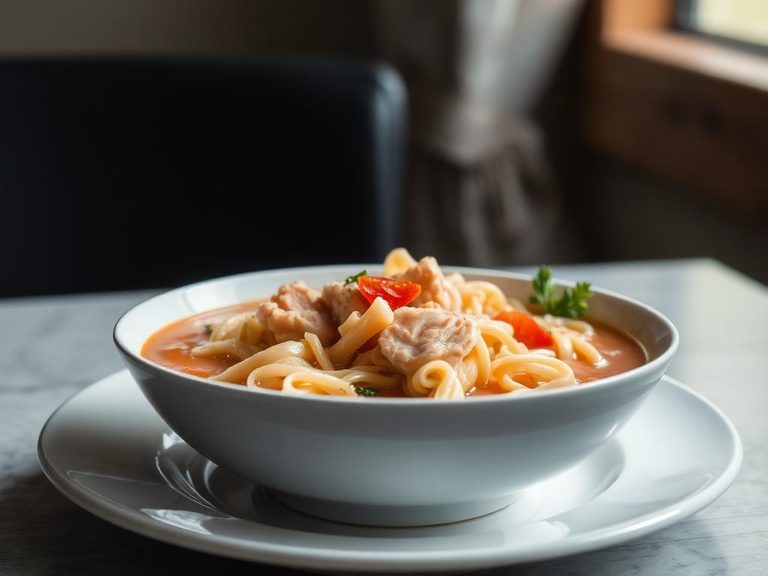
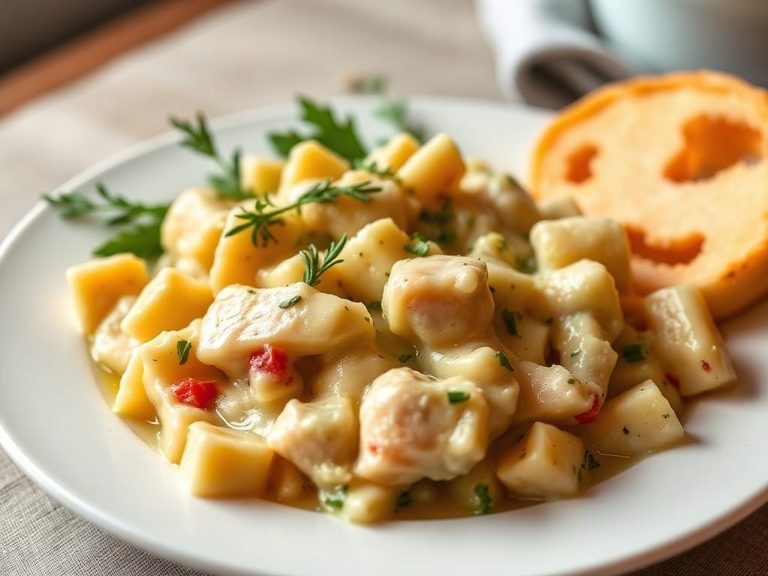
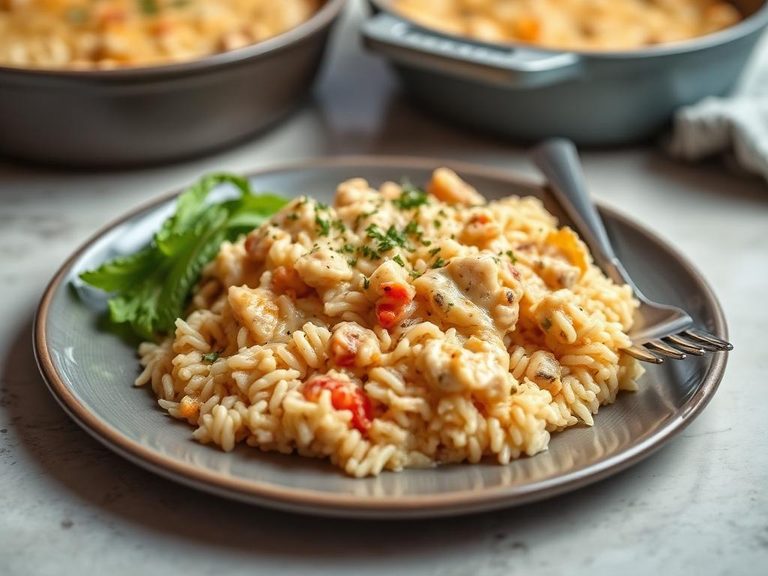
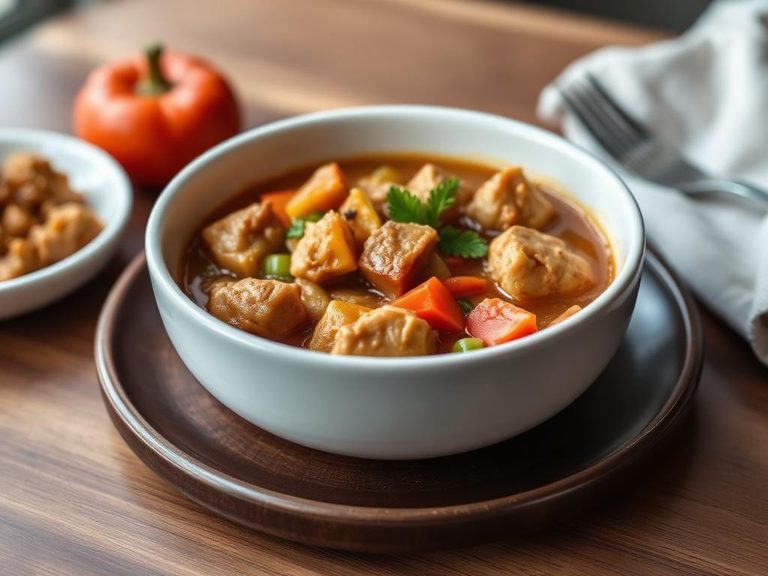
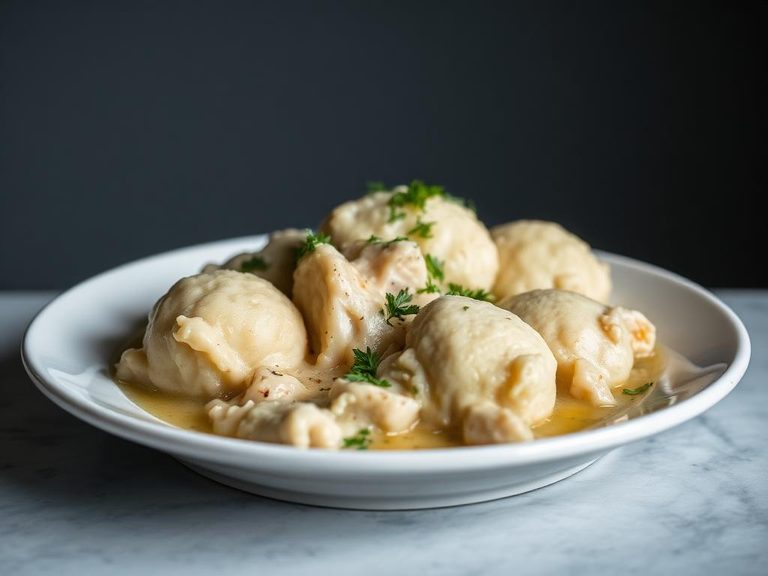
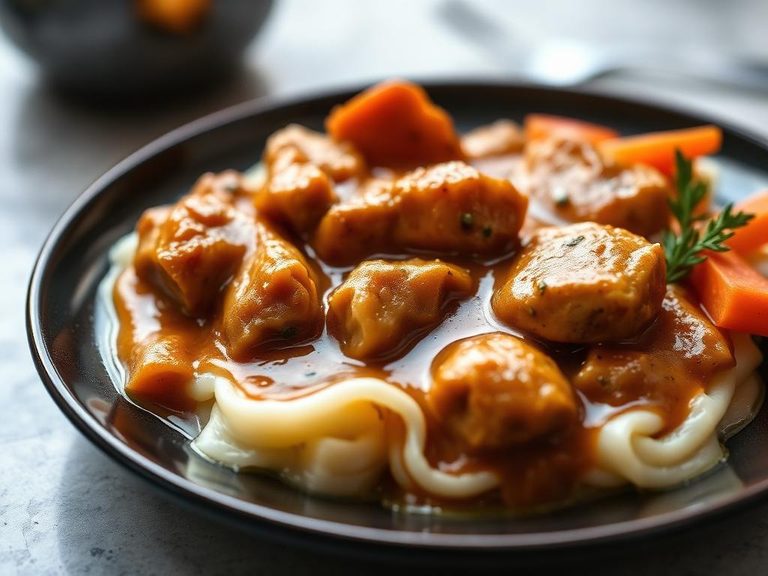
🌍 Where it's eaten
💡 Did you know?
The condensed soup can was invented in 1897 by Joseph A. Campbell, who realized that removing half the water would make the product lighter and cheaper to ship, revolutionizing the canned food industry.
Full nutrition (USDA data · scales with serving)
| Water | 85.5 g |
| Energy | 61.0 kcal |
| Energy | 255 kj |
| Protein | 2.9 g |
| Total lipid (fat) | 2.3 g |
| Ash | 2.2 g |
| Carbohydrate, by difference | 7.0 g |
| Fiber, total dietary | 0.70 g |
| Total Sugars | 1.3 g |
| Calcium, Ca | 14.0 mg |
| Iron, Fe | 0.71 mg |
| Magnesium, Mg | 5.0 mg |
| Phosphorus, P | 33.0 mg |
| Potassium, K | 126 mg |
| Sodium, Na | 706 mg |
| Zinc, Zn | 0.30 mg |
| Copper, Cu | 0.10 mg |
| Manganese, Mn | 0.30 mg |
| Selenium, Se | 4.5 ug |
| Vitamin C, total ascorbic acid | 0.80 mg |
| Thiamin | 0.04 mg |
| Riboflavin | 0.05 mg |
| Niacin | 1.0 mg |
| Pantothenic acid | 0.14 mg |
| Vitamin B-6 | 0.04 mg |
| Folate, total | 4.0 ug |
| Folic acid | 0.00 ug |
| Folate, food | 4.0 ug |
| Folate, DFE | 4.0 ug |
| Choline, total | 8.9 mg |
| Vitamin B-12 | 0.10 ug |
| Vitamin B-12, added | 0.00 ug |
| Vitamin A, RAE | 109 ug |
| Retinol | 2.0 ug |
| Carotene, beta | 1042 ug |
| Carotene, alpha | 466 ug |
| Cryptoxanthin, beta | 3.0 ug |
| Vitamin A, IU | 2136 iu |
| Lycopene | 328 ug |
| Lutein + zeaxanthin | 73.0 ug |
| Vitamin E (alpha-tocopherol) | 0.25 mg |
| Vitamin E, added | 0.00 mg |
| Vitamin D (D2 + D3), International Units | 0.00 iu |
| Vitamin D (D2 + D3) | 0.00 ug |
| Vitamin K (phylloquinone) | 3.3 ug |
| Alcohol, ethyl | 0.00 g |
| Caffeine | 0.00 mg |
| Theobromine | 0.00 mg |
Fat & fatty acid profile (per 100g)
| Fatty acids, total saturated | 0.69 g |
| SFA 4:0 | 0.00 g |
| SFA 6:0 | 0.00 g |
| SFA 8:0 | 0.00 g |
| SFA 10:0 | 0.00 g |
| SFA 12:0 | 0.00 g |
| SFA 14:0 | 0.02 g |
| SFA 16:0 | 0.50 g |
| SFA 18:0 | 0.14 g |
| Fatty acids, total monounsaturated | 1.0 g |
| MUFA 16:1 | 0.13 g |
| MUFA 18:1 | 0.87 g |
| MUFA 20:1 | 0.03 g |
| MUFA 22:1 | 0.00 g |
| Fatty acids, total polyunsaturated | 0.49 g |
| PUFA 18:2 | 0.45 g |
| PUFA 18:3 | 0.02 g |
| PUFA 18:4 | 0.00 g |
| PUFA 20:4 | 0.00 g |
| PUFA 20:5 n-3 (EPA) | 0.00 g |
| PUFA 22:5 n-3 (DPA) | 0.00 g |
| PUFA 22:6 n-3 (DHA) | 0.00 g |
| Cholesterol | 7.0 mg |
Amino acid profile (per 100g)
| Tryptophan | 0.03 g |
| Threonine | 0.09 g |
| Isoleucine | 0.11 g |
| Leucine | 0.19 g |
| Lysine | 0.18 g |
| Methionine | 0.05 g |
| Cystine | 0.02 g |
| Phenylalanine | 0.11 g |
| Tyrosine | 0.08 g |
| Valine | 0.13 g |
| Arginine | 0.14 g |
| Histidine | 0.07 g |
| Alanine | 0.17 g |
| Aspartic acid | 0.25 g |
| Glutamic acid | 0.74 g |
| Glycine | 0.18 g |
| Proline | 0.17 g |
| Serine | 0.10 g |
FAQ
How do I prepare condensed chicken vegetable soup?
Simply mix the condensed soup with an equal amount of water or milk (e.g., 1 can of soup to 1 can of water), stir well, and heat in a saucepan or microwave until hot.
Can I use condensed soup as a base for other recipes?
Yes, it's excellent as a base for casseroles, stews, and sauces. You can use it undiluted to add thickness and flavor to dishes like chicken pot pie or creamy pasta.
Is condensed chicken vegetable soup healthy?
It can be part of a balanced diet when consumed in moderation. It's low in calories and fat, but watch for sodium content. Pairing it with fresh vegetables and lean protein can enhance its nutritional value.
Nutrient density (calculated · NRF9.3)
Nutrient Rich Foods index: beneficial nutrients (protein, fiber, vitamins, minerals) minus saturated fat, added sugar & sodium, per 100 kcal.
NRF9.3 index — Fulgoni, Keast & Drewnowski, 2009. Computed from USDA nutrients.
Weight-loss friendliness (composite index)
Energy density 0.61 kcal/g · 19% calories from protein · 0.7 g fiber · 1.3 g sugar per 100 g.
Composite of energy density (Rolls et al., 1999), protein & fiber satiety, minus sugar. A calculated heuristic — ranks satiety-per-calorie, not a clinical measure.
Dietary load (calculated from USDA values)
Potential renal acid load. Positive = acid-forming, negative = alkaline-forming.
Sodium-to-potassium ratio: 5.60 (lower is better — aim for ≤ 1)
Sodium:potassium per WHO potassium guidance. Computed from USDA nutrients.