

Seeds, sesame butter, tahini, from roasted and toasted kernels (most common type)
Whole food · Nut and Seed Products

Photo: Wikipedia
Tahini is a rich, creamy paste made from ground, roasted sesame seeds, boasting a deep, nutty flavor with a slightly bitter, earthy finish. Its luxuriously smooth texture is pourable yet thick, making it a cornerstone ingredient in cuisines worldwide. Nutritionally, it's a powerhouse of healthy fats and plant-based protein, with a notable dose of fiber and minerals.
Calorie split: 11% protein · 13% carbs · 76% fat
↓ Full nutrition💚 Why it's loved
People adore tahini for its complex, savory depth that transforms simple dishes, from hummus to dressings. It's celebrated for its incredible versatility, acting as a binder, sauce base, and flavor enhancer in both sweet and savory cooking.
⚠️ Watch-outs & how to enjoy it better
Its high calorie density (595 kcal per 100g) means portions should be mindful for those tracking intake. As a tree nut (sesame is a common allergen), it requires caution for individuals with allergies. To counteract the rich fat content, pair it with fiber-rich vegetables or use it as part of a balanced meal rather than a standalone dip.
Key benefits
- Excellent source of plant-based protein (17g per 100g).
- Rich in heart-healthy unsaturated fats and omega-6 fatty acids.
- High in dietary fiber (9.3g per 100g) for digestive health.
- Provides key minerals like copper, manganese, and phosphorus.
- Naturally free from dairy and gluten.
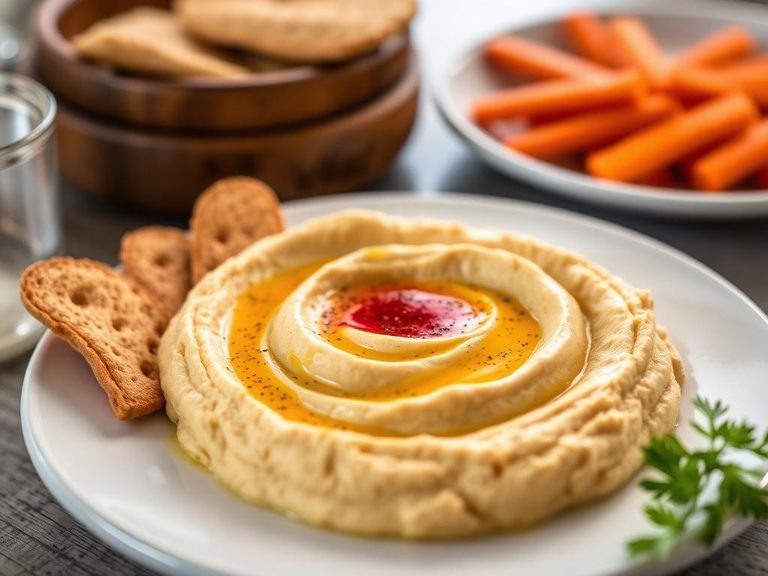
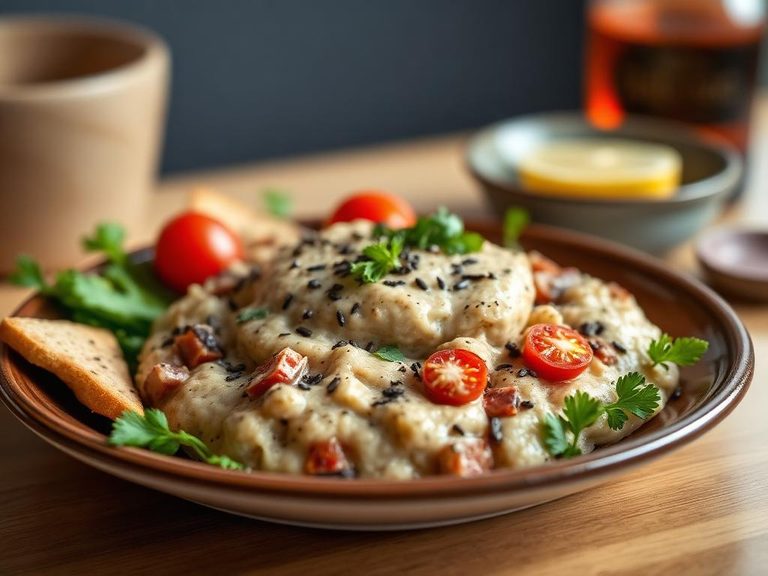
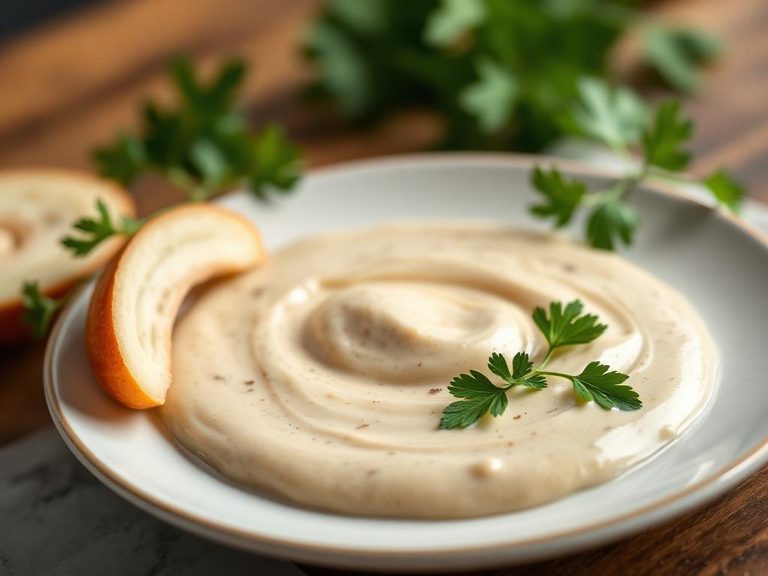
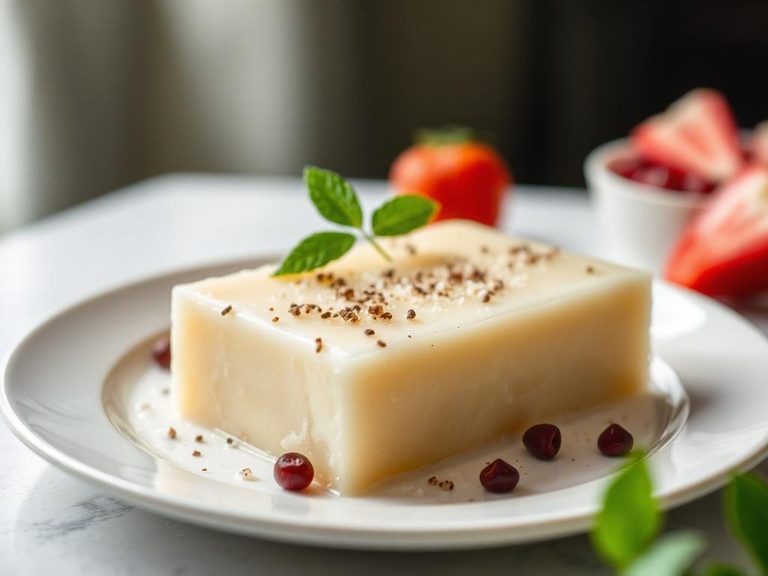
🍽️ Popular dishes
🌍 Where it's eaten
💡 Did you know?
Sesame seeds are one of the oldest known oilseed crops, domesticated over 3,000 years ago, and tahini's use in the Middle East dates back to at least the 13th century.
Full nutrition (USDA data · scales with serving)
| Water | 3.0 g |
| Energy | 595 kcal |
| Energy | 2489 kj |
| Protein | 17.0 g |
| Total lipid (fat) | 53.8 g |
| Ash | 5.0 g |
| Carbohydrate, by difference | 21.2 g |
| Fiber, total dietary | 9.3 g |
| Total Sugars | 0.49 g |
| Calcium, Ca | 426 mg |
| Iron, Fe | 8.9 mg |
| Magnesium, Mg | 95.0 mg |
| Phosphorus, P | 732 mg |
| Potassium, K | 414 mg |
| Sodium, Na | 115 mg |
| Zinc, Zn | 4.6 mg |
| Copper, Cu | 1.6 mg |
| Manganese, Mn | 1.5 mg |
| Selenium, Se | 34.4 ug |
| Vitamin C, total ascorbic acid | 0.00 mg |
| Thiamin | 1.2 mg |
| Riboflavin | 0.47 mg |
| Niacin | 5.5 mg |
| Pantothenic acid | 0.69 mg |
| Vitamin B-6 | 0.15 mg |
| Folate, total | 98.0 ug |
| Folic acid | 0.00 ug |
| Folate, food | 98.0 ug |
| Folate, DFE | 98.0 ug |
| Choline, total | 25.8 mg |
| Vitamin B-12 | 0.00 ug |
| Vitamin B-12, added | 0.00 ug |
| Vitamin A, RAE | 3.0 ug |
| Retinol | 0.00 ug |
| Carotene, beta | 40.0 ug |
| Carotene, alpha | 0.00 ug |
| Cryptoxanthin, beta | 0.00 ug |
| Vitamin A, IU | 67.0 iu |
| Lycopene | 0.00 ug |
| Lutein + zeaxanthin | 0.00 ug |
| Vitamin E (alpha-tocopherol) | 0.25 mg |
| Vitamin E, added | 0.00 mg |
| Vitamin D (D2 + D3), International Units | 0.00 iu |
| Vitamin D (D2 + D3) | 0.00 ug |
| Vitamin K (phylloquinone) | 0.00 ug |
| Alcohol, ethyl | 0.00 g |
| Caffeine | 0.00 mg |
| Theobromine | 0.00 mg |
Fat & fatty acid profile (per 100g)
| Fatty acids, total saturated | 7.5 g |
| SFA 4:0 | 0.00 g |
| SFA 6:0 | 0.00 g |
| SFA 8:0 | 0.00 g |
| SFA 10:0 | 0.00 g |
| SFA 12:0 | 0.00 g |
| SFA 14:0 | 0.13 g |
| SFA 16:0 | 4.8 g |
| SFA 18:0 | 2.3 g |
| Fatty acids, total monounsaturated | 20.3 g |
| MUFA 16:1 | 0.16 g |
| MUFA 18:1 | 20.0 g |
| MUFA 20:1 | 0.07 g |
| MUFA 22:1 | 0.00 g |
| Fatty acids, total polyunsaturated | 23.6 g |
| PUFA 18:2 | 23.1 g |
| PUFA 18:3 | 0.41 g |
| PUFA 18:4 | 0.00 g |
| PUFA 20:4 | 0.00 g |
| PUFA 20:5 n-3 (EPA) | 0.00 g |
| PUFA 22:5 n-3 (DPA) | 0.00 g |
| PUFA 22:6 n-3 (DHA) | 0.00 g |
| Cholesterol | 0.00 mg |
Amino acid profile (per 100g)
| Tryptophan | 0.37 g |
| Threonine | 0.71 g |
| Isoleucine | 0.73 g |
| Leucine | 1.3 g |
| Lysine | 0.55 g |
| Methionine | 0.56 g |
| Cystine | 0.34 g |
| Phenylalanine | 0.90 g |
| Tyrosine | 0.71 g |
| Valine | 0.95 g |
| Arginine | 2.5 g |
| Histidine | 0.50 g |
| Alanine | 0.89 g |
| Aspartic acid | 1.6 g |
| Glutamic acid | 3.8 g |
| Glycine | 1.2 g |
| Proline | 0.78 g |
| Serine | 0.93 g |
FAQ
What's the difference between tahini and sesame oil?
Tahini is a paste made from ground whole sesame seeds (including the hull), while sesame oil is the pure oil extracted from the seeds. They have different textures and culinary uses.
Why does my tahini taste bitter?
Bitterness can come from the sesame seed hulls or from the roasting process. Some brands use hulled seeds for a milder flavor. Stirring well before use can also help balance the taste.
How should I store tahini?
Store unopened tahini in a cool, dark pantry. Once opened, keep it in the refrigerator to prevent the oil from going rancid, which can last for several months.
Nutrient density (calculated · NRF9.3)
Nutrient Rich Foods index: beneficial nutrients (protein, fiber, vitamins, minerals) minus saturated fat, added sugar & sodium, per 100 kcal.
NRF9.3 index — Fulgoni, Keast & Drewnowski, 2009. Computed from USDA nutrients.
Weight-loss friendliness (composite index)
Energy density 5.95 kcal/g · 11% calories from protein · 9.3 g fiber · 0.5 g sugar per 100 g.
Composite of energy density (Rolls et al., 1999), protein & fiber satiety, minus sugar. A calculated heuristic — ranks satiety-per-calorie, not a clinical measure.
Dietary load (calculated from USDA values)
Potential renal acid load. Positive = acid-forming, negative = alkaline-forming.
Sodium-to-potassium ratio: 0.28 (lower is better — aim for ≤ 1)
Sodium:potassium per WHO potassium guidance. Computed from USDA nutrients.