

Seaweed, kelp, raw
Whole food · Vegetables and Vegetable Products

Photo: Wikipedia
Raw kelp is a large, edible brown seaweed with a distinctive oceanic, umami-rich flavor and a crisp, slightly rubbery texture when fresh. It's a nutritional powerhouse, exceptionally low in calories while being a top natural source of iodine, a mineral essential for thyroid function. Its unique mineral profile also includes significant amounts of manganese, folate, and magnesium.
Calorie split: 13% protein · 76% carbs · 10% fat
↓ Full nutrition💚 Why it's loved
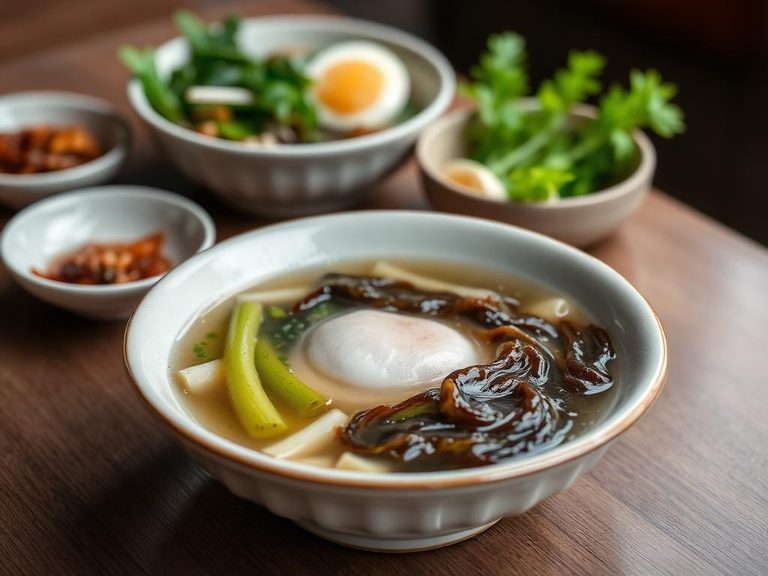
People cherish kelp for its deep, savory umami taste that forms the backbone of many East Asian broths and soups. Its versatility shines in everything from salads and smoothies to being dried and powdered as a nutrient-dense seasoning.
⚠️ Watch-outs & how to enjoy it better
The primary caution is its extremely high iodine content, which can disrupt thyroid function in susceptible individuals if consumed in large, regular amounts. It can also have a strong 'sea' flavor and slimy texture if not prepared properly, and may contain heavy metals depending on its source. To counteract, consume in moderation (not daily in large portions), opt for reputable sources, and for fresh kelp, blanching or soaking can mellow the flavor and texture.
Key benefits
- Exceptionally rich source of iodine for thyroid health
- Provides a good dose of the antioxidant fucoxanthin
- Contains soluble fiber (alginates) that may support gut health
- Naturally low in calories and carbohydrates
- Offers a unique source of plant-based minerals like manganese
🍽️ Popular dishes
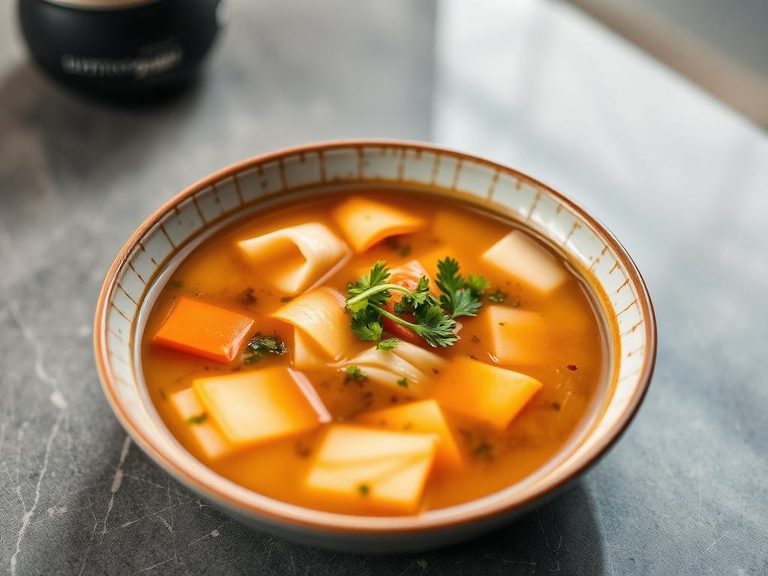
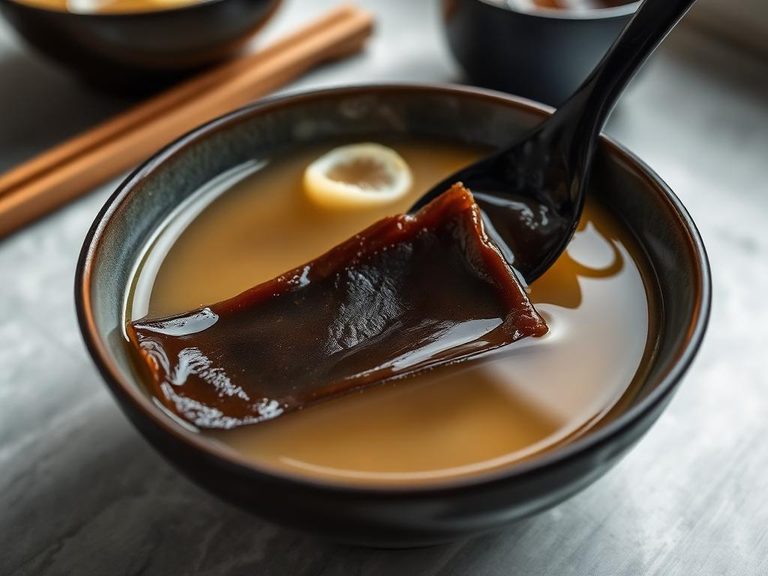
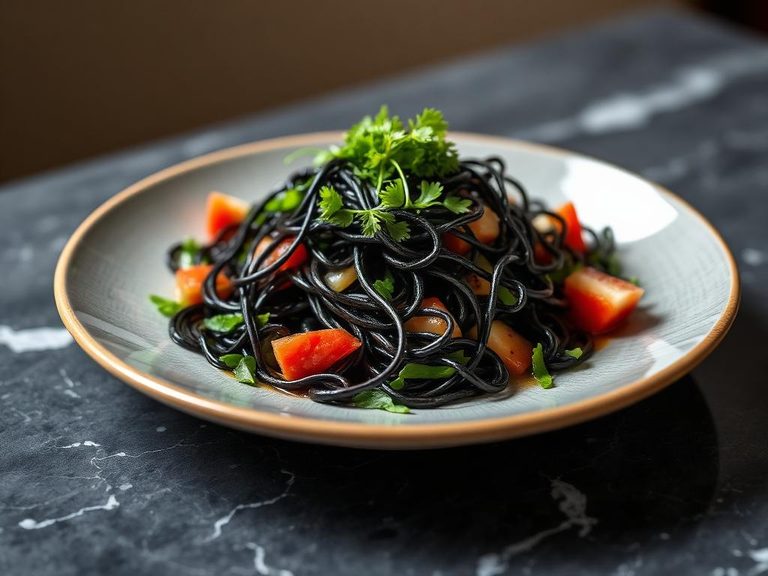
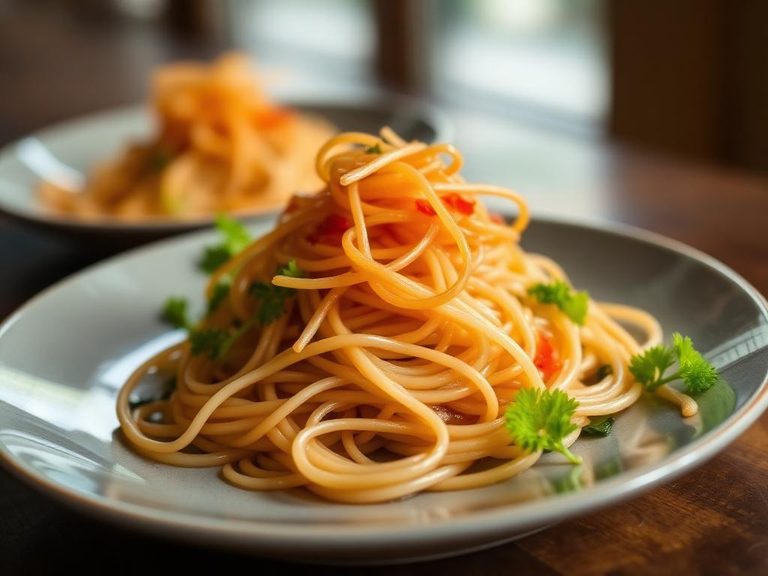
🌍 Where it's eaten
💡 Did you know?
Kelp forests are among the most productive and dynamic ecosystems on Earth, capable of growing up to 60 centimeters (2 feet) per day under ideal conditions.
Full nutrition (USDA data · scales with serving)
| Water | 81.6 g |
| Energy | 43.0 kcal |
| Energy | 180 kj |
| Protein | 1.7 g |
| Total lipid (fat) | 0.56 g |
| Ash | 6.6 g |
| Carbohydrate, by difference | 9.6 g |
| Fiber, total dietary | 1.3 g |
| Total Sugars | 0.60 g |
| Calcium, Ca | 168 mg |
| Iron, Fe | 2.9 mg |
| Magnesium, Mg | 121 mg |
| Phosphorus, P | 42.0 mg |
| Potassium, K | 89.0 mg |
| Sodium, Na | 233 mg |
| Zinc, Zn | 1.2 mg |
| Copper, Cu | 0.13 mg |
| Manganese, Mn | 0.20 mg |
| Selenium, Se | 0.70 ug |
| Vitamin C, total ascorbic acid | 3.0 mg |
| Thiamin | 0.05 mg |
| Riboflavin | 0.15 mg |
| Niacin | 0.47 mg |
| Pantothenic acid | 0.64 mg |
| Vitamin B-6 | 0.00 mg |
| Folate, total | 180 ug |
| Folic acid | 0.00 ug |
| Folate, food | 180 ug |
| Folate, DFE | 180 ug |
| Choline, total | 12.8 mg |
| Vitamin B-12 | 0.00 ug |
| Vitamin B-12, added | 0.00 ug |
| Vitamin A, RAE | 6.0 ug |
| Retinol | 0.00 ug |
| Carotene, beta | 70.0 ug |
| Carotene, alpha | 0.00 ug |
| Cryptoxanthin, beta | 0.00 ug |
| Vitamin A, IU | 116 iu |
| Lycopene | 0.00 ug |
| Lutein + zeaxanthin | 0.00 ug |
| Vitamin E (alpha-tocopherol) | 0.87 mg |
| Vitamin E, added | 0.00 mg |
| Vitamin D (D2 + D3), International Units | 0.00 iu |
| Vitamin D (D2 + D3) | 0.00 ug |
| Vitamin K (phylloquinone) | 66.0 ug |
| Alcohol, ethyl | 0.00 g |
| Caffeine | 0.00 mg |
| Theobromine | 0.00 mg |
Fat & fatty acid profile (per 100g)
| Fatty acids, total saturated | 0.25 g |
| SFA 4:0 | 0.00 g |
| SFA 6:0 | 0.00 g |
| SFA 8:0 | 0.00 g |
| SFA 10:0 | 0.00 g |
| SFA 12:0 | 0.00 g |
| SFA 14:0 | 0.03 g |
| SFA 16:0 | 0.11 g |
| SFA 18:0 | 0.09 g |
| Fatty acids, total monounsaturated | 0.10 g |
| MUFA 16:1 | 0.00 g |
| MUFA 18:1 | 0.09 g |
| MUFA 20:1 | 0.00 g |
| MUFA 22:1 | 0.00 g |
| Fatty acids, total polyunsaturated | 0.05 g |
| PUFA 18:2 | 0.02 g |
| PUFA 18:3 | 0.00 g |
| PUFA 18:4 | 0.00 g |
| PUFA 20:4 | 0.01 g |
| PUFA 20:5 n-3 (EPA) | 0.00 g |
| PUFA 22:5 n-3 (DPA) | 0.00 g |
| PUFA 22:6 n-3 (DHA) | 0.00 g |
| Fatty acids, total trans | 0.00 g |
| Cholesterol | 0.00 mg |
Amino acid profile (per 100g)
| Tryptophan | 0.05 g |
| Threonine | 0.06 g |
| Isoleucine | 0.08 g |
| Leucine | 0.08 g |
| Lysine | 0.08 g |
| Methionine | 0.03 g |
| Cystine | 0.10 g |
| Phenylalanine | 0.04 g |
| Tyrosine | 0.03 g |
| Valine | 0.07 g |
| Arginine | 0.07 g |
| Histidine | 0.02 g |
| Alanine | 0.12 g |
| Aspartic acid | 0.13 g |
| Glutamic acid | 0.27 g |
| Glycine | 0.10 g |
| Proline | 0.07 g |
| Serine | 0.10 g |
FAQ
Is raw kelp safe to eat straight from the ocean?
No. Wild-harvested kelp can contain sand, debris, and potentially harmful bacteria or heavy metals. It should be thoroughly cleaned and is typically blanched or cooked before consumption. Commercially sold kelp is processed for safety.
How does kelp differ from nori (sushi seaweed)?
Kelp is a large, leafy brown seaweed (like kombu), while nori is a thin, dried sheet of red algae (Pyropia). Nori has a more delicate, papery texture and is used to wrap sushi, while kelp is often used for stocks or in thicker pieces.
Can I use kelp as a salt substitute?
Yes, ground kelp powder (kelp salt) is used as a mineral-rich seasoning with a salty, umami flavor. However, it still contains sodium and is very high in iodine, so it should be used sparingly, not as a 1:1 salt replacement for everyone.
Nutrient density (calculated · NRF9.3)
Nutrient Rich Foods index: beneficial nutrients (protein, fiber, vitamins, minerals) minus saturated fat, added sugar & sodium, per 100 kcal.
NRF9.3 index — Fulgoni, Keast & Drewnowski, 2009. Computed from USDA nutrients.
Weight-loss friendliness (composite index)
Energy density 0.43 kcal/g · 16% calories from protein · 1.3 g fiber · 0.6 g sugar per 100 g.
Composite of energy density (Rolls et al., 1999), protein & fiber satiety, minus sugar. A calculated heuristic — ranks satiety-per-calorie, not a clinical measure.
Dietary load (calculated from USDA values)
Potential renal acid load. Positive = acid-forming, negative = alkaline-forming.
Sodium-to-potassium ratio: 2.62 (lower is better — aim for ≤ 1)
Sodium:potassium per WHO potassium guidance. Computed from USDA nutrients.