

Sausage, pork and beef, fresh, cooked
Whole food · Sausages and Luncheon Meats
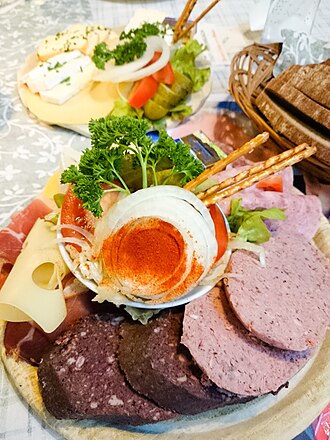
Photo: Wikipedia
A savory blend of ground pork and beef, seasoned and formed into links or patties, this fresh sausage offers a juicy, rich, and meaty flavor with a tender, slightly coarse texture. Nutritionally, it's a calorie-dense protein source, packing nearly 14 grams of protein per 100g alongside a significant fat content.
Calorie split: 14% protein · 3% carbs · 83% fat
↓ Full nutrition💚 Why it's loved
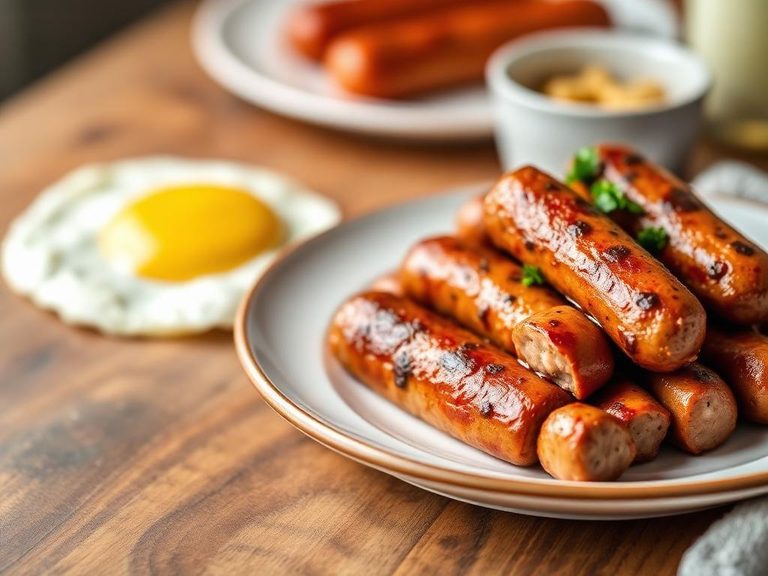
People adore its deeply savory, umami-rich flavor and satisfying, juicy mouthfeel that forms the hearty base of countless comfort foods. Its versatility allows it to be grilled, pan-fried, or crumbled into everything from breakfast plates to pasta sauces.
⚠️ Watch-outs & how to enjoy it better
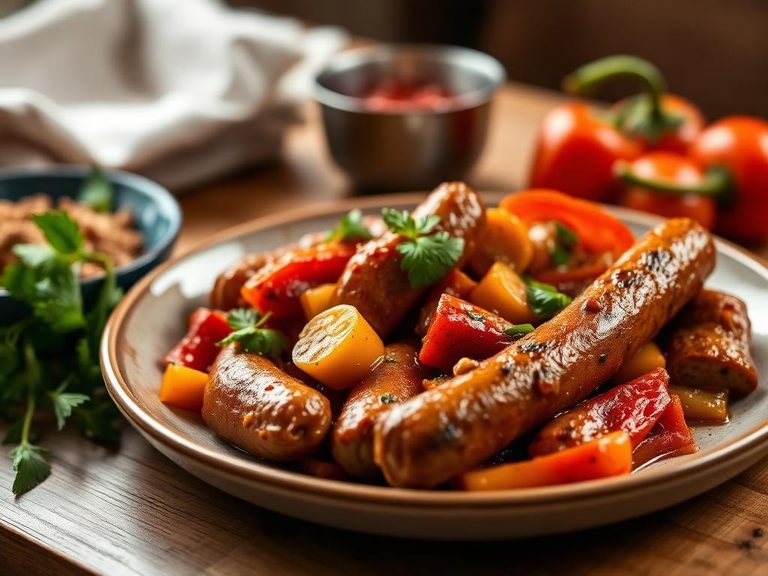
Its high saturated fat and calorie density require mindful portioning, and processed versions can be very high in sodium. To counteract this, pair it with high-fiber vegetables (like sautéed peppers or a side salad) to add volume and nutrients, and choose fresh, uncooked varieties where you can control the seasoning.
Key benefits
- High-quality complete protein for muscle maintenance.
- Rich in B vitamins, especially B12 and niacin.
- Source of essential minerals like zinc and selenium.
- Provides a quick, energy-dense meal component.
🍽️ Popular dishes
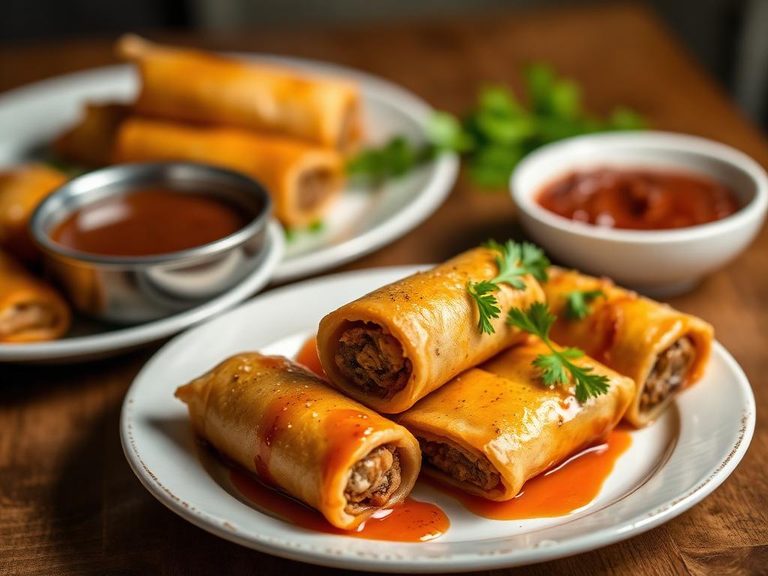
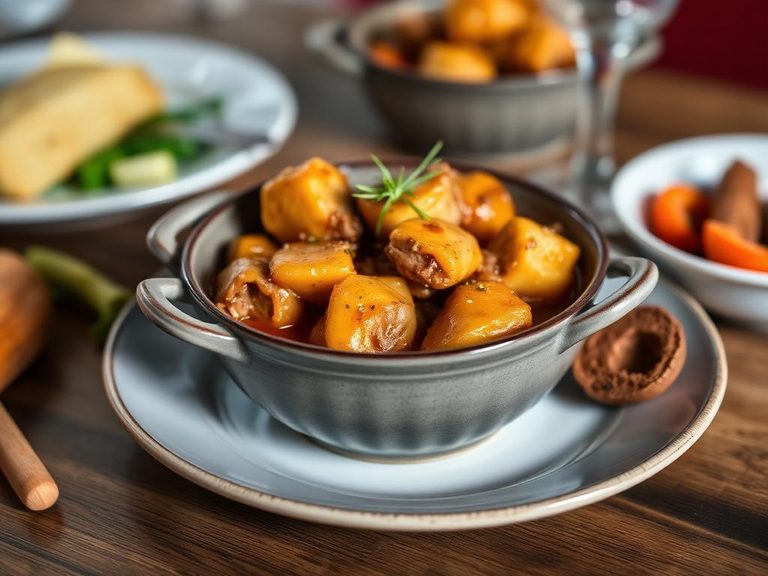
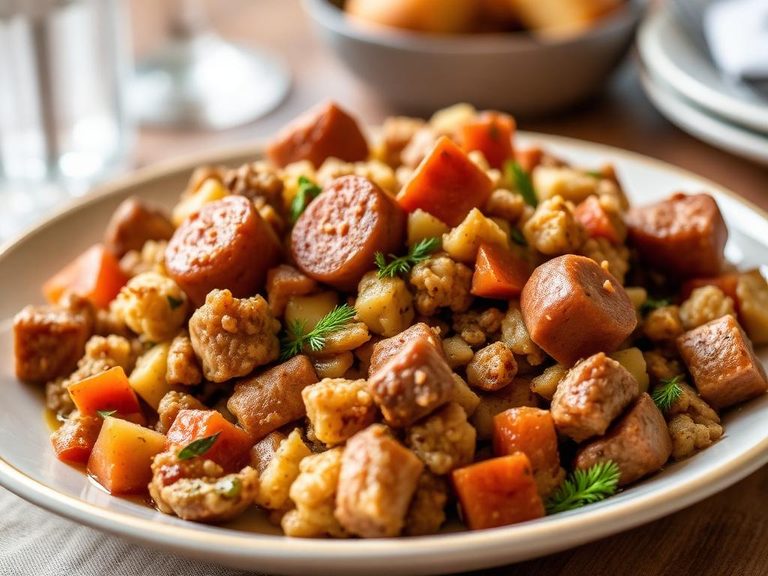
🌍 Where it's eaten
💡 Did you know?
The practice of seasoning and stuffing meat into casings is ancient, with evidence of sausage-making dating back to at least the 1st century BC in Sumeria.
Full nutrition (USDA data · scales with serving)
| Water | 44.5 g |
| Energy | 396 kcal |
| Energy | 1657 kj |
| Protein | 13.8 g |
| Total lipid (fat) | 36.3 g |
| Ash | 2.7 g |
| Carbohydrate, by difference | 2.7 g |
| Fiber, total dietary | 0.00 g |
| Total Sugars | 0.00 g |
| Calcium, Ca | 10.0 mg |
| Iron, Fe | 1.1 mg |
| Magnesium, Mg | 12.0 mg |
| Phosphorus, P | 107 mg |
| Potassium, K | 189 mg |
| Sodium, Na | 929 mg |
| Zinc, Zn | 1.9 mg |
| Copper, Cu | 0.04 mg |
| Manganese, Mn | 0.04 mg |
| Selenium, Se | 14.4 ug |
| Vitamin C, total ascorbic acid | 0.00 mg |
| Thiamin | 0.36 mg |
| Riboflavin | 0.15 mg |
| Niacin | 3.4 mg |
| Pantothenic acid | 0.48 mg |
| Vitamin B-6 | 0.05 mg |
| Folate, total | 2.0 ug |
| Folic acid | 0.00 ug |
| Folate, food | 2.0 ug |
| Folate, DFE | 2.0 ug |
| Choline, total | 58.8 mg |
| Betaine | 3.1 mg |
| Vitamin B-12 | 0.43 ug |
| Vitamin B-12, added | 0.00 ug |
| Vitamin A, RAE | 0.00 ug |
| Retinol | 0.00 ug |
| Carotene, beta | 0.00 ug |
| Carotene, alpha | 0.00 ug |
| Cryptoxanthin, beta | 0.00 ug |
| Vitamin A, IU | 0.00 iu |
| Lycopene | 0.00 ug |
| Lutein + zeaxanthin | 0.00 ug |
| Vitamin E (alpha-tocopherol) | 0.22 mg |
| Vitamin E, added | 0.00 mg |
| Vitamin D (D2 + D3), International Units | 28.0 iu |
| Vitamin D (D2 + D3) | 0.70 ug |
| Vitamin K (phylloquinone) | 1.6 ug |
| Alcohol, ethyl | 0.00 g |
| Caffeine | 0.00 mg |
| Theobromine | 0.00 mg |
Fat & fatty acid profile (per 100g)
| Fatty acids, total saturated | 13.0 g |
| SFA 4:0 | 0.00 g |
| SFA 6:0 | 0.00 g |
| SFA 8:0 | 0.00 g |
| SFA 10:0 | 0.00 g |
| SFA 12:0 | 0.00 g |
| SFA 14:0 | 0.60 g |
| SFA 16:0 | 8.3 g |
| SFA 18:0 | 3.9 g |
| Fatty acids, total monounsaturated | 17.2 g |
| MUFA 16:1 | 1.4 g |
| MUFA 18:1 | 15.8 g |
| MUFA 20:1 | 0.00 g |
| MUFA 22:1 | 0.00 g |
| Fatty acids, total polyunsaturated | 3.9 g |
| PUFA 18:2 | 3.5 g |
| PUFA 18:3 | 0.32 g |
| PUFA 18:4 | 0.00 g |
| PUFA 20:4 | 0.12 g |
| PUFA 20:5 n-3 (EPA) | 0.00 g |
| PUFA 22:5 n-3 (DPA) | 0.00 g |
| PUFA 22:6 n-3 (DHA) | 0.00 g |
| Cholesterol | 71.0 mg |
| Phytosterols | 0.00 mg |
Amino acid profile (per 100g)
| Tryptophan | 0.13 g |
| Threonine | 0.55 g |
| Isoleucine | 0.53 g |
| Leucine | 0.97 g |
| Lysine | 1.1 g |
| Methionine | 0.33 g |
| Cystine | 0.14 g |
| Phenylalanine | 0.48 g |
| Tyrosine | 0.41 g |
| Valine | 0.59 g |
| Arginine | 0.85 g |
| Histidine | 0.41 g |
| Alanine | 0.81 g |
| Aspartic acid | 1.2 g |
| Glutamic acid | 2.0 g |
| Glycine | 0.90 g |
| Proline | 0.65 g |
| Serine | 0.53 g |
FAQ
What's the difference between fresh and pre-cooked sausage?
Fresh sausage is raw and must be cooked thoroughly to a safe internal temperature (160°F/71°C for pork/beef blends). Pre-cooked sausage (like some breakfast links) is already cooked and just needs reheating.
How can I reduce the fat when cooking?
You can grill or broil the sausage on a rack, allowing fat to drip away. Alternatively, after pan-frying, you can briefly boil the links in water before finishing them in a pan to render out some fat.
Is this a good option for a low-carb diet?
Yes, fresh pork and beef sausage with no added fillers or sugars is naturally very low in carbohydrates, making it suitable for ketogenic and low-carb dietary patterns.
Nutrient density (calculated · NRF9.3)
Nutrient Rich Foods index: beneficial nutrients (protein, fiber, vitamins, minerals) minus saturated fat, added sugar & sodium, per 100 kcal.
NRF9.3 index — Fulgoni, Keast & Drewnowski, 2009. Computed from USDA nutrients.
Weight-loss friendliness (composite index)
Energy density 3.96 kcal/g · 14% calories from protein · 0.0 g fiber · 0.0 g sugar per 100 g.
Composite of energy density (Rolls et al., 1999), protein & fiber satiety, minus sugar. A calculated heuristic — ranks satiety-per-calorie, not a clinical measure.
Dietary load (calculated from USDA values)
Potential renal acid load. Positive = acid-forming, negative = alkaline-forming.
Sodium-to-potassium ratio: 4.92 (lower is better — aim for ≤ 1)
Sodium:potassium per WHO potassium guidance. Computed from USDA nutrients.