

Salad dressing, french dressing, reduced fat, without salt
Whole food · Fats and Oils

Photo: Wikipedia
This is a smooth, pourable, reduced-fat version of the classic French dressing, known for its vibrant orange-red hue and a signature tangy-sweet flavor profile. It has a creamy yet light texture, coating salad greens without the heaviness of full-fat varieties. Nutritionally, it's a significant source of carbohydrates, primarily from added sugars, while providing a moderate amount of fat.
Calorie split: 1% protein · 49% carbs · 50% fat
↓ Full nutrition💚 Why it's loved
People love it for its nostalgic, crowd-pleasing sweet and tangy taste that instantly elevates a simple garden salad. Its versatility extends beyond greens, making it a popular dip for vegetables or a glaze for grilled chicken.
⚠️ Watch-outs & how to enjoy it better
The high sugar content (28.45g per 100g) can cause rapid blood sugar spikes, making it a poor choice for individuals managing diabetes or seeking low-glycemic foods. To counteract this, use a controlled portion (1-2 tablespoons) and pair it with a salad rich in fiber, protein (like grilled chicken or chickpeas), and healthy fats (like avocado or nuts) to slow sugar absorption.
Key benefits
- Provides a flavorful way to increase vegetable intake.
- Reduced fat content compared to traditional French dressing.
- Convenient, ready-to-use format for quick meal preparation.
- Can add moisture and taste to otherwise plain dishes.
🍽️ Popular dishes
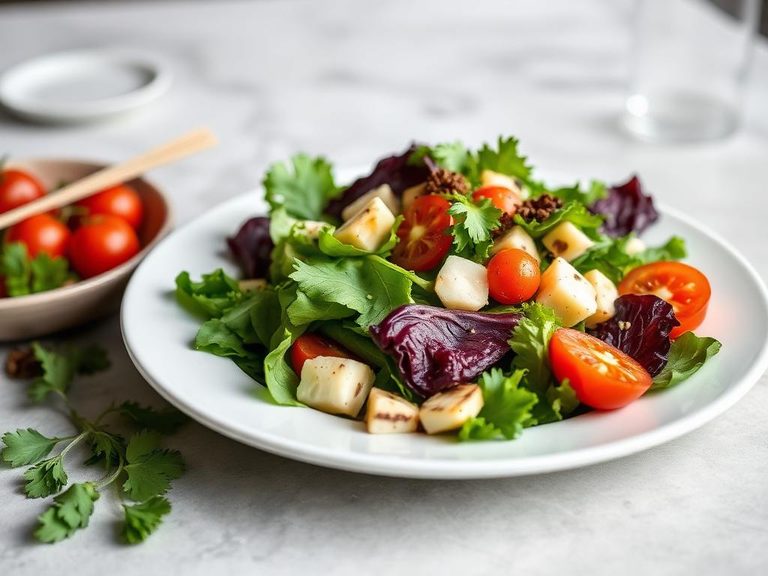
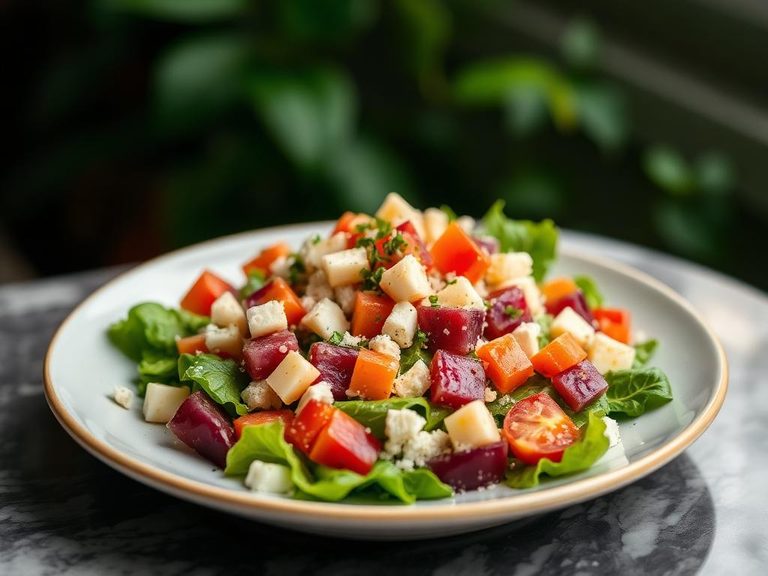
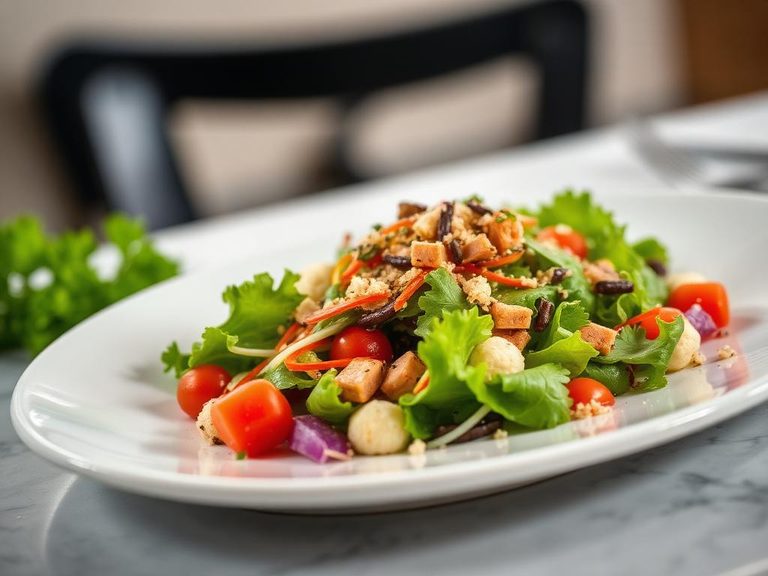
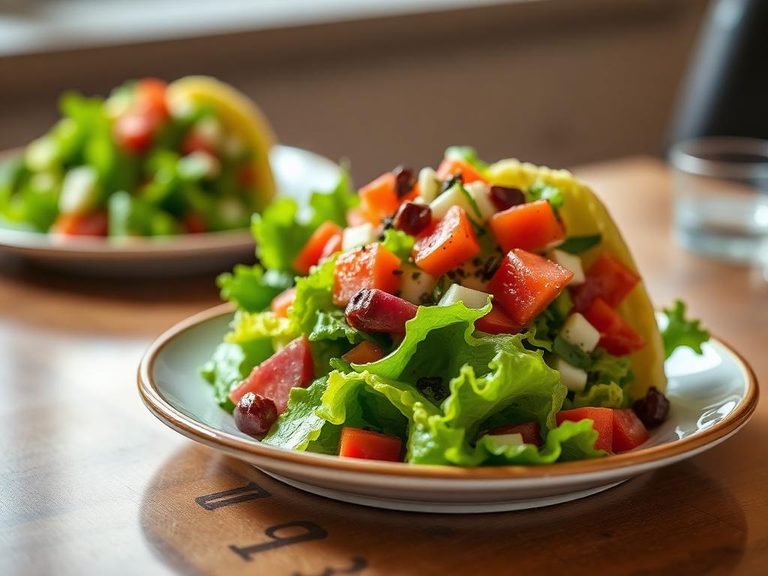

🌍 Where it's eaten
💡 Did you know?
Despite its name, 'French dressing' as Americans know it—with its tomato base, sweetness, and orange color—is largely a 20th-century American invention, not a traditional dressing from France.
Full nutrition (USDA data · scales with serving)
| Water | 54.3 g |
| Energy | 233 kcal |
| Energy | 974 kj |
| Protein | 0.58 g |
| Total lipid (fat) | 13.5 g |
| Ash | 2.4 g |
| Carbohydrate, by difference | 29.3 g |
| Fiber, total dietary | 1.1 g |
| Total Sugars | 28.4 g |
| Sucrose | 0.00 g |
| Glucose | 15.7 g |
| Fructose | 12.5 g |
| Lactose | 0.00 g |
| Maltose | 0.29 g |
| Galactose | 0.00 g |
| Starch | 0.86 g |
| Calcium, Ca | 11.0 mg |
| Iron, Fe | 0.87 mg |
| Magnesium, Mg | 8.0 mg |
| Phosphorus, P | 16.0 mg |
| Potassium, K | 107 mg |
| Sodium, Na | 30.0 mg |
| Zinc, Zn | 0.20 mg |
| Copper, Cu | 0.16 mg |
| Manganese, Mn | 0.11 mg |
| Selenium, Se | 1.6 ug |
| Vitamin C, total ascorbic acid | 0.00 mg |
| Thiamin | 0.02 mg |
| Riboflavin | 0.05 mg |
| Niacin | 0.47 mg |
| Pantothenic acid | 0.03 mg |
| Vitamin B-6 | 0.06 mg |
| Folate, total | 2.0 ug |
| Folic acid | 0.00 ug |
| Folate, food | 2.0 ug |
| Folate, DFE | 2.0 ug |
| Vitamin B-12 | 0.00 ug |
| Vitamin A, RAE | 27.0 ug |
| Retinol | 0.00 ug |
| Carotene, beta | 289 ug |
| Carotene, alpha | 0.00 ug |
| Cryptoxanthin, beta | 70.0 ug |
| Vitamin A, IU | 541 iu |
| Lycopene | 2530 ug |
| Lutein + zeaxanthin | 124 ug |
| Vitamin E (alpha-tocopherol) | 2.9 mg |
| Vitamin K (phylloquinone) | 4.8 ug |
| Alcohol, ethyl | 0.00 g |
| Caffeine | 0.00 mg |
| Theobromine | 0.00 mg |
Fat & fatty acid profile (per 100g)
| Fatty acids, total saturated | 1.1 g |
| SFA 4:0 | 0.00 g |
| SFA 6:0 | 0.00 g |
| SFA 8:0 | 0.00 g |
| SFA 10:0 | 0.00 g |
| SFA 12:0 | 0.00 g |
| SFA 14:0 | 0.00 g |
| SFA 16:0 | 0.80 g |
| SFA 18:0 | 0.30 g |
| Fatty acids, total monounsaturated | 5.9 g |
| MUFA 16:1 | 0.00 g |
| MUFA 18:1 | 5.8 g |
| MUFA 20:1 | 0.14 g |
| MUFA 22:1 | 0.00 g |
| Fatty acids, total polyunsaturated | 5.0 g |
| PUFA 18:2 | 3.9 g |
| PUFA 18:3 | 1.2 g |
| PUFA 18:4 | 0.00 g |
| PUFA 20:4 | 0.00 g |
| PUFA 20:5 n-3 (EPA) | 0.00 g |
| PUFA 22:5 n-3 (DPA) | 0.00 g |
| PUFA 22:6 n-3 (DHA) | 0.00 g |
| Cholesterol | 0.00 mg |
Amino acid profile (per 100g)
Estimated from Salad dressing, sesame seed dressing, regular — USDA does not publish this profile for Salad dressing.
| Tryptophan | 0.05 g |
| Threonine | 0.05 g |
| Isoleucine | 0.05 g |
| Leucine | 0.08 g |
| Lysine | 0.14 g |
| Methionine | 0.03 g |
| Cystine | 0.00 g |
| Phenylalanine | 0.09 g |
| Tyrosine | 0.10 g |
| Valine | 0.07 g |
| Arginine | 0.40 g |
| Histidine | 0.03 g |
| Alanine | 0.00 g |
| Aspartic acid | 0.00 g |
| Glutamic acid | 0.46 g |
| Glycine | 0.00 g |
| Proline | 0.00 g |
| Serine | 0.00 g |
FAQ
How does reduced-fat French dressing differ from the regular version?
Reduced-fat versions typically replace some or all of the oil with water, thickeners (like corn syrup or modified food starch), and additional sugar or high-fructose corn syrup to maintain flavor and texture. This results in fewer calories and less fat per serving but often a higher sugar content.
Is this dressing suitable for a low-sodium diet?
This specific product is labeled 'without salt,' making it a very low-sodium option. However, always check the nutrition label, as other brands of 'reduced-fat' or 'light' French dressing may still contain significant sodium.
Can I use this dressing as a marinade?
Yes, its sweet and tangy profile works well as a marinade for chicken, pork, or firm tofu. The sugar content can aid in caramelization during grilling or baking. For food safety, discard any leftover marinade that has been in contact with raw meat.
Nutrient density (calculated · NRF9.3)
Nutrient Rich Foods index: beneficial nutrients (protein, fiber, vitamins, minerals) minus saturated fat, added sugar & sodium, per 100 kcal.
NRF9.3 index — Fulgoni, Keast & Drewnowski, 2009. Computed from USDA nutrients.
Weight-loss friendliness (composite index)
Energy density 2.33 kcal/g · 1% calories from protein · 1.1 g fiber · 28.4 g sugar per 100 g.
Composite of energy density (Rolls et al., 1999), protein & fiber satiety, minus sugar. A calculated heuristic — ranks satiety-per-calorie, not a clinical measure.
Dietary load (calculated from USDA values)
Potential renal acid load. Positive = acid-forming, negative = alkaline-forming.
Sodium-to-potassium ratio: 0.28 (lower is better — aim for ≤ 1)
Sodium:potassium per WHO potassium guidance. Computed from USDA nutrients.