

Rolls, pumpernickel
Whole food · Baked Products

Photo: Wikipedia
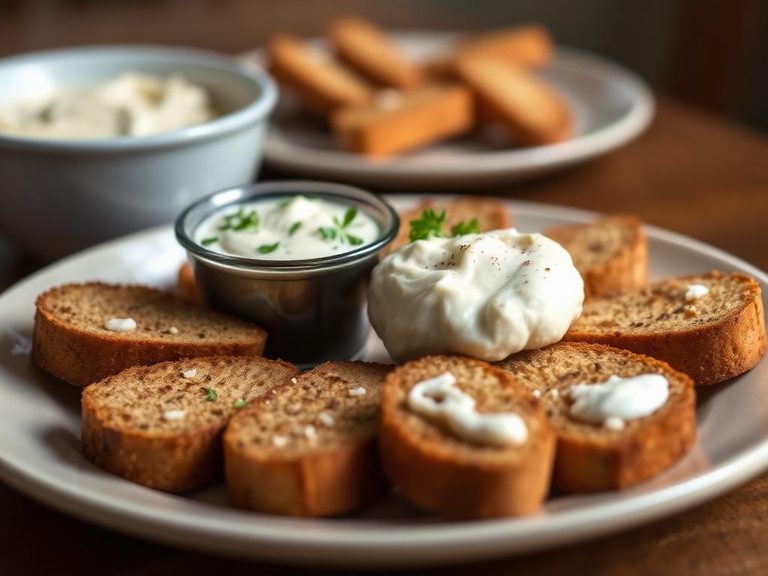
Pumpernickel rolls are dense, dark, and deeply flavorful breads made from coarsely ground rye, offering a satisfyingly firm texture and a distinct, slightly sweet, earthy taste. Nutritionally, they are a standout for their high fiber content (5.4g per 100g) and substantial protein (10.8g), making them a more satiating and nutrient-dense choice than many white bread rolls.
Calorie split: 16% protein · 75% carbs · 9% fat
↓ Full nutrition💚 Why it's loved
People love pumpernickel rolls for their robust, malty flavor that pairs perfectly with savory toppings like smoked salmon, sharp cheeses, or hearty pâtés. Their dense texture holds up well to sandwiches and toasting, making them a versatile staple in German and Northern European cuisine.
⚠️ Watch-outs & how to enjoy it better
The dense, high-fiber content can be heavy for some digestive systems, potentially causing bloating. The strong, earthy flavor is also an acquired taste. To counteract digestive discomfort, start with a smaller portion and ensure adequate water intake. Pairing with a healthy fat like avocado or a protein can also help moderate the blood sugar response from its 51.87g of carbohydrates.
Key benefits
- Excellent source of dietary fiber from whole rye grain
- High in plant-based protein for a bread product
- Low in sugar (0.4g) and fat (2.8g)
- Provides sustained energy due to complex carbohydrates
- Contains minerals like iron and magnesium from rye
🍽️ Popular dishes
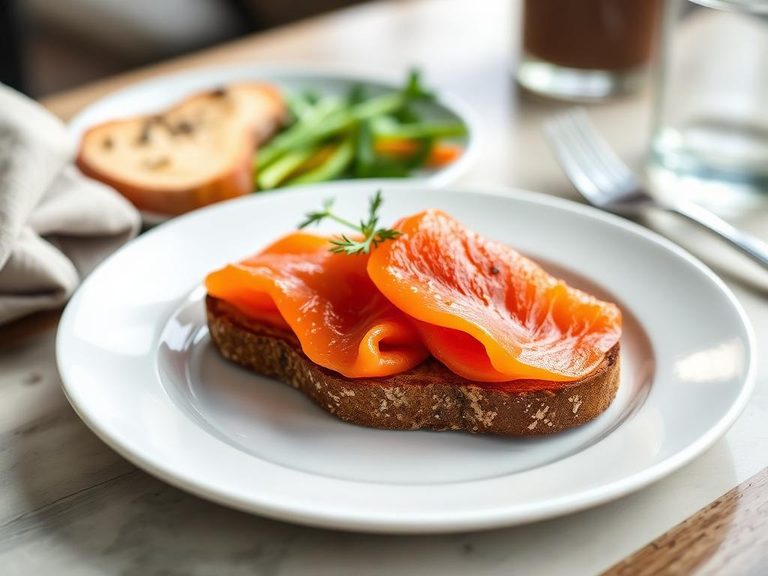
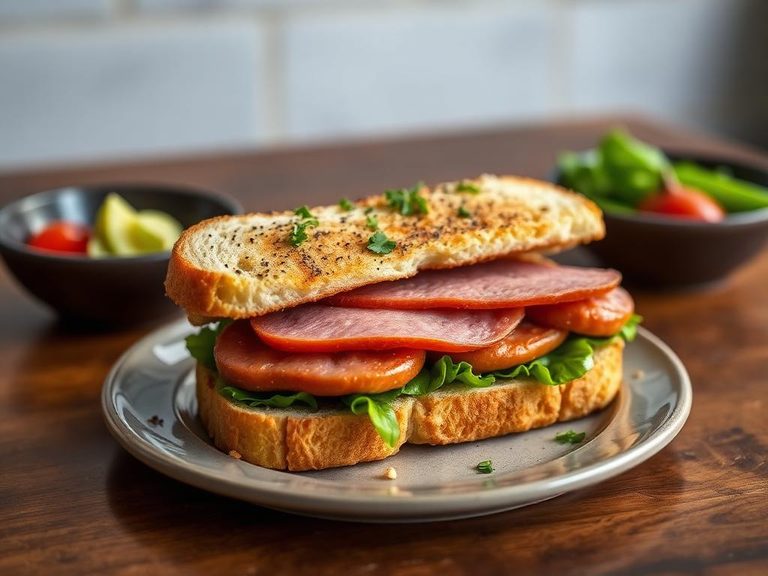
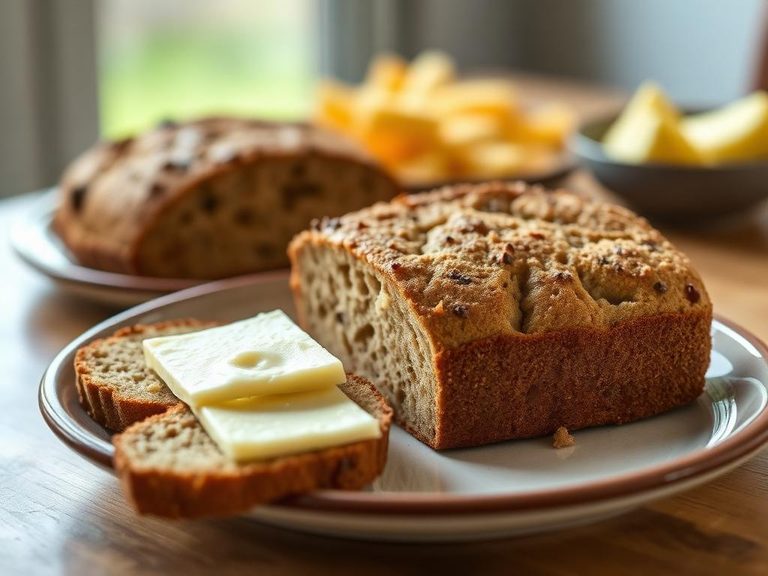
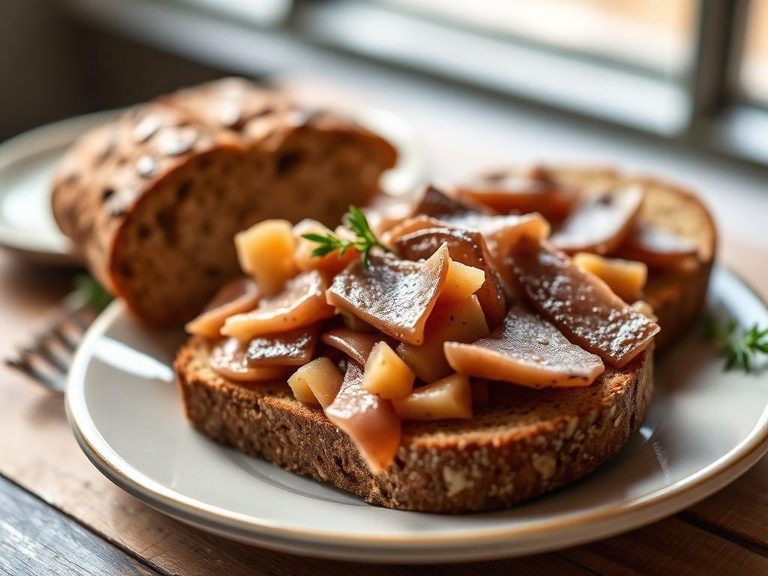
🌍 Where it's eaten
💡 Did you know?
Traditional Westphalian pumpernickel is baked in sealed wooden barrels or lidded pans for 16-24 hours at a low temperature, a slow-cooking method that caramelizes the rye's natural sugars for its signature dark color and sweetness, without added sugar.
Full nutrition (USDA data · scales with serving)
| Water | 32.0 g |
| Energy | 276 kcal |
| Energy | 1154 kj |
| Protein | 10.8 g |
| Total lipid (fat) | 2.8 g |
| Ash | 2.5 g |
| Carbohydrate, by difference | 51.9 g |
| Fiber, total dietary | 5.4 g |
| Total Sugars | 0.40 g |
| Calcium, Ca | 67.0 mg |
| Iron, Fe | 2.8 mg |
| Magnesium, Mg | 54.0 mg |
| Phosphorus, P | 171 mg |
| Potassium, K | 208 mg |
| Sodium, Na | 492 mg |
| Zinc, Zn | 1.5 mg |
| Copper, Cu | 0.29 mg |
| Manganese, Mn | 1.9 mg |
| Selenium, Se | 27.8 ug |
| Vitamin C, total ascorbic acid | 0.00 mg |
| Thiamin | 0.38 mg |
| Riboflavin | 0.30 mg |
| Niacin | 3.0 mg |
| Pantothenic acid | 0.62 mg |
| Vitamin B-6 | 0.10 mg |
| Folate, total | 86.0 ug |
| Folic acid | 56.0 ug |
| Folate, food | 30.0 ug |
| Folate, DFE | 125 ug |
| Choline, total | 14.6 mg |
| Vitamin B-12 | 0.00 ug |
| Vitamin B-12, added | 0.00 ug |
| Vitamin A, RAE | 0.00 ug |
| Retinol | 0.00 ug |
| Carotene, beta | 3.0 ug |
| Carotene, alpha | 1.0 ug |
| Cryptoxanthin, beta | 0.00 ug |
| Vitamin A, IU | 6.0 iu |
| Lycopene | 0.00 ug |
| Lutein + zeaxanthin | 106 ug |
| Vitamin E (alpha-tocopherol) | 0.63 mg |
| Vitamin E, added | 0.00 mg |
| Vitamin D (D2 + D3), International Units | 0.00 iu |
| Vitamin D (D2 + D3) | 0.00 ug |
| Vitamin K (phylloquinone) | 1.5 ug |
| Alcohol, ethyl | 0.00 g |
| Caffeine | 0.00 mg |
| Theobromine | 0.00 mg |
Fat & fatty acid profile (per 100g)
| Fatty acids, total saturated | 0.49 g |
| SFA 4:0 | 0.00 g |
| SFA 6:0 | 0.00 g |
| SFA 8:0 | 0.00 g |
| SFA 10:0 | 0.00 g |
| SFA 12:0 | 0.00 g |
| SFA 14:0 | 0.00 g |
| SFA 16:0 | 0.32 g |
| SFA 18:0 | 0.17 g |
| Fatty acids, total monounsaturated | 0.61 g |
| MUFA 16:1 | 0.01 g |
| MUFA 18:1 | 0.60 g |
| MUFA 20:1 | 0.00 g |
| MUFA 22:1 | 0.00 g |
| Fatty acids, total polyunsaturated | 1.2 g |
| PUFA 18:2 | 1.1 g |
| PUFA 18:3 | 0.11 g |
| PUFA 18:4 | 0.00 g |
| PUFA 20:4 | 0.00 g |
| PUFA 20:5 n-3 (EPA) | 0.00 g |
| PUFA 22:5 n-3 (DPA) | 0.00 g |
| PUFA 22:6 n-3 (DHA) | 0.00 g |
| Cholesterol | 0.00 mg |
| Phytosterols | 3.0 mg |
Amino acid profile (per 100g)
| Tryptophan | 0.11 g |
| Threonine | 0.27 g |
| Isoleucine | 0.35 g |
| Leucine | 0.64 g |
| Lysine | 0.23 g |
| Methionine | 0.15 g |
| Cystine | 0.20 g |
| Phenylalanine | 0.46 g |
| Tyrosine | 0.23 g |
| Valine | 0.41 g |
| Arginine | 0.35 g |
| Histidine | 0.20 g |
| Alanine | 0.32 g |
| Aspartic acid | 0.47 g |
| Glutamic acid | 3.0 g |
| Glycine | 0.33 g |
| Proline | 1.0 g |
| Serine | 0.46 g |
FAQ
Is pumpernickel bread gluten-free?
No. Pumpernickel is made from rye, which contains gluten. It is not suitable for people with celiac disease or gluten sensitivity.
What gives pumpernickel its dark color?
The dark color comes from the Maillard reaction and caramelization of the rye's natural sugars during a very long, slow baking process, not from added molasses or food coloring (though some commercial versions may add them).
How does pumpernickel differ from regular rye bread?
Pumpernickel is traditionally made from 100% coarsely ground rye meal (not rye flour) and is baked for an exceptionally long time, resulting in a denser, moister, and sweeter loaf without fermentation.
Nutrient density (calculated · NRF9.3)
Nutrient Rich Foods index: beneficial nutrients (protein, fiber, vitamins, minerals) minus saturated fat, added sugar & sodium, per 100 kcal.
NRF9.3 index — Fulgoni, Keast & Drewnowski, 2009. Computed from USDA nutrients.
Weight-loss friendliness (composite index)
Energy density 2.76 kcal/g · 16% calories from protein · 5.4 g fiber · 0.4 g sugar per 100 g.
Composite of energy density (Rolls et al., 1999), protein & fiber satiety, minus sugar. A calculated heuristic — ranks satiety-per-calorie, not a clinical measure.
Dietary load (calculated from USDA values)
Potential renal acid load. Positive = acid-forming, negative = alkaline-forming.
Sodium-to-potassium ratio: 2.37 (lower is better — aim for ≤ 1)
Sodium:potassium per WHO potassium guidance. Computed from USDA nutrients.