

Rolls, dinner, rye
Whole food · Baked Products

Photo: Wikipedia
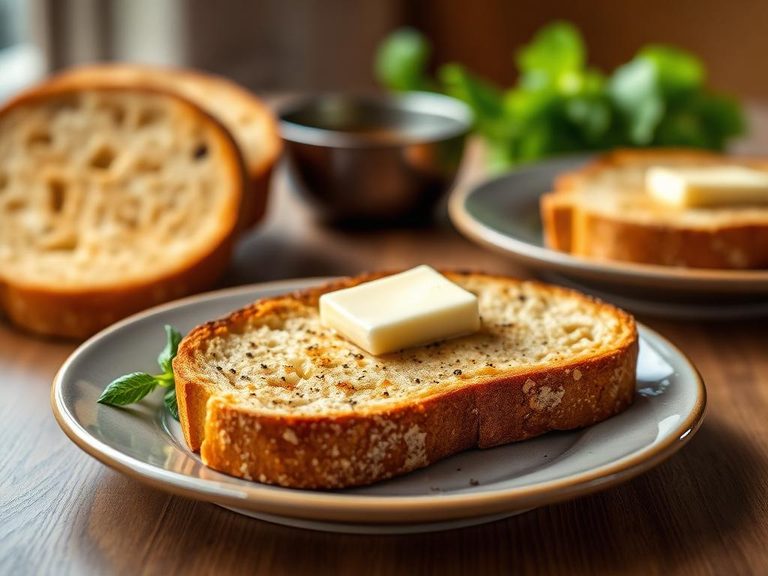
Rye dinner rolls are dense, earthy bread rolls with a distinctive, slightly sour flavor and a firm, chewy texture. They are a nutritional standout, offering a robust 10.3g of protein and 4.9g of fiber per 100g, which helps promote satiety and digestive health. Their complex carbohydrate profile provides sustained energy without the sharp spike of refined white bread.
Calorie split: 14% protein · 75% carbs · 11% fat
↓ Full nutrition💚 Why it's loved
People love rye rolls for their deep, malty flavor and satisfyingly hearty texture that stands up to rich toppings. They are a cornerstone of many European cuisines, especially Scandinavian and German, adding an authentic, rustic touch to meals.
⚠️ Watch-outs & how to enjoy it better
The dense texture and strong flavor can be an acquired taste, and some may find it less palatable than softer white rolls. Individuals monitoring blood sugar should pair it with protein or fat (like cheese or smoked fish) to further blunt any glycemic response. Those with celiac disease must avoid it due to gluten content.
Key benefits
- High in dietary fiber for digestive health
- Good source of plant-based protein
- Lower glycemic index than white bread
- Rich in minerals like manganese and selenium
- Contains beneficial phytochemicals from whole grain
🍽️ Popular dishes
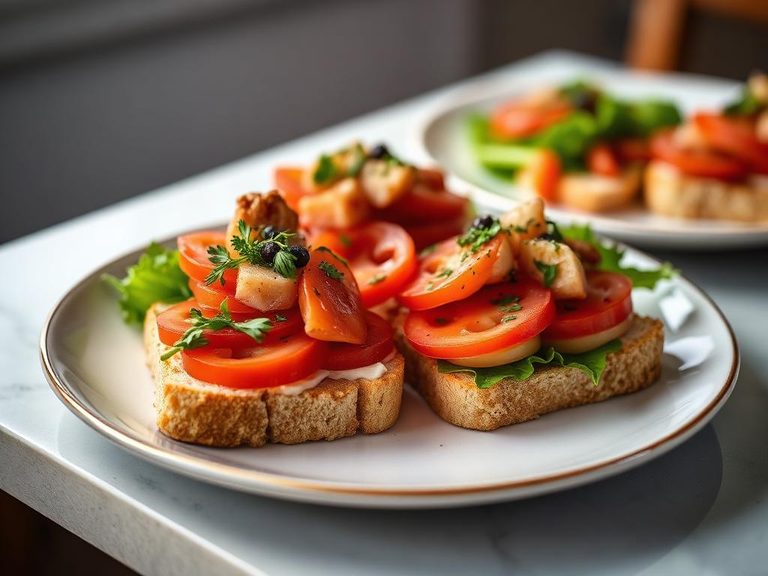
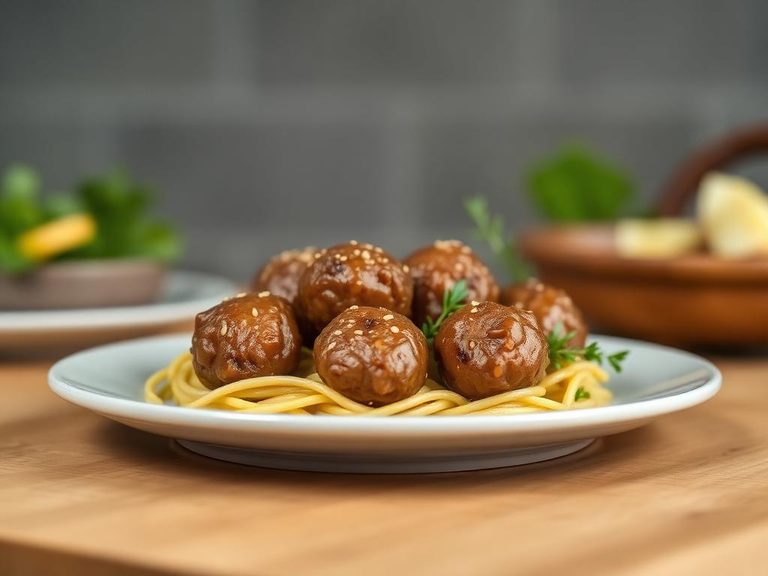
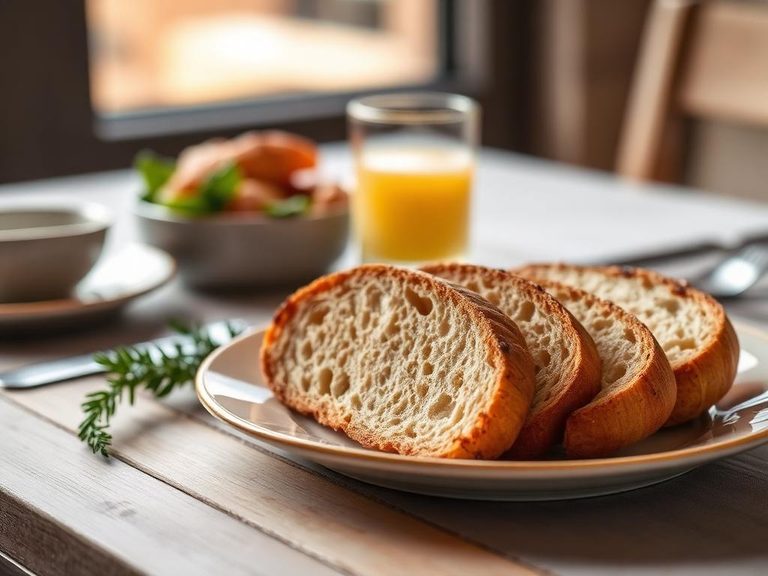
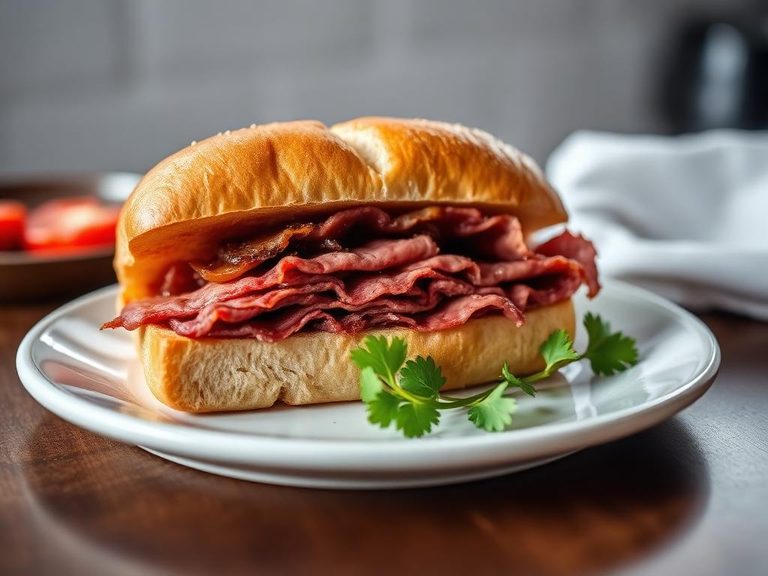
🌍 Where it's eaten
💡 Did you know?
Rye is a hardy grain that can grow in poor soil and cold climates where wheat struggles, which historically made it a vital staple in Northern and Eastern Europe.
Full nutrition (USDA data · scales with serving)
| Water | 30.1 g |
| Energy | 286 kcal |
| Energy | 1197 kj |
| Protein | 10.3 g |
| Total lipid (fat) | 3.4 g |
| Ash | 2.9 g |
| Carbohydrate, by difference | 53.1 g |
| Fiber, total dietary | 4.9 g |
| Total Sugars | 1.2 g |
| Calcium, Ca | 30.0 mg |
| Iron, Fe | 2.7 mg |
| Magnesium, Mg | 54.0 mg |
| Phosphorus, P | 159 mg |
| Potassium, K | 180 mg |
| Sodium, Na | 650 mg |
| Zinc, Zn | 0.97 mg |
| Copper, Cu | 0.20 mg |
| Manganese, Mn | 0.70 mg |
| Selenium, Se | 27.8 ug |
| Vitamin C, total ascorbic acid | 0.00 mg |
| Thiamin | 0.38 mg |
| Riboflavin | 0.27 mg |
| Niacin | 3.9 mg |
| Pantothenic acid | 0.38 mg |
| Vitamin B-6 | 0.06 mg |
| Folate, total | 99.0 ug |
| Folic acid | 77.0 ug |
| Folate, food | 22.0 ug |
| Folate, DFE | 153 ug |
| Choline, total | 14.6 mg |
| Vitamin B-12 | 0.00 ug |
| Vitamin B-12, added | 0.00 ug |
| Vitamin A, RAE | 0.00 ug |
| Retinol | 0.00 ug |
| Carotene, beta | 4.0 ug |
| Carotene, alpha | 0.00 ug |
| Cryptoxanthin, beta | 1.0 ug |
| Vitamin A, IU | 8.0 iu |
| Lycopene | 0.00 ug |
| Lutein + zeaxanthin | 54.0 ug |
| Vitamin E (alpha-tocopherol) | 0.34 mg |
| Vitamin E, added | 0.00 mg |
| Vitamin D (D2 + D3), International Units | 0.00 iu |
| Vitamin D (D2 + D3) | 0.00 ug |
| Vitamin K (phylloquinone) | 3.1 ug |
| Alcohol, ethyl | 0.00 g |
| Caffeine | 0.00 mg |
| Theobromine | 0.00 mg |
Fat & fatty acid profile (per 100g)
| Fatty acids, total saturated | 0.60 g |
| SFA 4:0 | 0.00 g |
| SFA 6:0 | 0.00 g |
| SFA 8:0 | 0.00 g |
| SFA 10:0 | 0.00 g |
| SFA 12:0 | 0.00 g |
| SFA 14:0 | 0.01 g |
| SFA 16:0 | 0.37 g |
| SFA 18:0 | 0.23 g |
| Fatty acids, total monounsaturated | 1.2 g |
| MUFA 16:1 | 0.01 g |
| MUFA 18:1 | 1.2 g |
| MUFA 20:1 | 0.00 g |
| MUFA 22:1 | 0.00 g |
| Fatty acids, total polyunsaturated | 0.71 g |
| PUFA 18:2 | 0.66 g |
| PUFA 18:3 | 0.05 g |
| PUFA 18:4 | 0.00 g |
| PUFA 20:4 | 0.00 g |
| PUFA 20:5 n-3 (EPA) | 0.00 g |
| PUFA 22:5 n-3 (DPA) | 0.00 g |
| PUFA 22:6 n-3 (DHA) | 0.00 g |
| Cholesterol | 0.00 mg |
Amino acid profile (per 100g)
| Tryptophan | 0.12 g |
| Threonine | 0.31 g |
| Isoleucine | 0.40 g |
| Leucine | 0.71 g |
| Lysine | 0.28 g |
| Methionine | 0.17 g |
| Cystine | 0.21 g |
| Phenylalanine | 0.51 g |
| Tyrosine | 0.26 g |
| Valine | 0.47 g |
| Arginine | 0.40 g |
| Histidine | 0.22 g |
| Alanine | 0.36 g |
| Aspartic acid | 0.53 g |
| Glutamic acid | 3.2 g |
| Glycine | 0.37 g |
| Proline | 1.1 g |
| Serine | 0.51 g |
FAQ
Is rye bread the same as pumpernickel?
Not exactly. While both are dark rye breads, pumpernickel is traditionally made from coarsely ground rye meal and slow-baked for many hours, giving it a very dense, sweet, and molasses-like flavor. Rye dinner rolls are typically lighter and leavened with yeast.
Why is rye bread often lower in calories than white bread?
Rye is a very high-fiber grain. The fiber adds volume and weight without adding many calories, and it slows digestion, making you feel fuller for longer. This often results in fewer calories per comparable serving size.
Can I use rye rolls for a hamburger bun?
Yes, but expect a very different experience. The dense, sturdy structure of a rye roll makes it excellent for holding juicy burgers without falling apart, but it will impart a distinct, tangy flavor that changes the classic burger profile.
Nutrient density (calculated · NRF9.3)
Nutrient Rich Foods index: beneficial nutrients (protein, fiber, vitamins, minerals) minus saturated fat, added sugar & sodium, per 100 kcal.
NRF9.3 index — Fulgoni, Keast & Drewnowski, 2009. Computed from USDA nutrients.
Weight-loss friendliness (composite index)
Energy density 2.86 kcal/g · 14% calories from protein · 4.9 g fiber · 1.2 g sugar per 100 g.
Composite of energy density (Rolls et al., 1999), protein & fiber satiety, minus sugar. A calculated heuristic — ranks satiety-per-calorie, not a clinical measure.
Dietary load (calculated from USDA values)
Potential renal acid load. Positive = acid-forming, negative = alkaline-forming.
Sodium-to-potassium ratio: 3.61 (lower is better — aim for ≤ 1)
Sodium:potassium per WHO potassium guidance. Computed from USDA nutrients.