

Rice, white, long-grain, regular, enriched, cooked
Whole food · Cereal Grains and Pasta
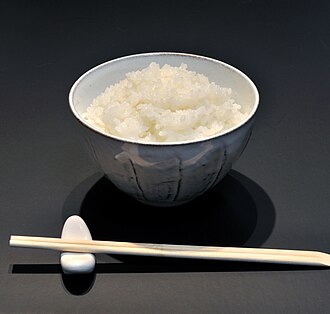
Photo: Wikipedia
White long-grain rice is a staple grain with a mild, slightly nutty flavor and a distinct, fluffy, separate-grain texture when cooked properly. It serves as a neutral, starchy canvas for countless global cuisines, absorbing sauces and spices beautifully. Nutritionally, it is a quick source of energy, providing about 130 calories and 28g of carbohydrates per 100g serving.
Calorie split: 9% protein · 89% carbs · 2% fat
↓ Full nutrition💚 Why it's loved
People love it for its incredible versatility and ability to complement any flavor profile, from spicy curries to simple butter and salt. It is a comforting, familiar food deeply embedded in cultural traditions and daily meals worldwide.
⚠️ Watch-outs & how to enjoy it better
Its high glycemic index can cause rapid blood-sugar spikes, which may be a concern for individuals managing diabetes. To counteract this, pair it with protein (like chicken, beans, or tofu), healthy fats (like avocado or nuts), or fiber-rich vegetables to slow digestion and create a more balanced meal. Also, be mindful of portion sizes, as it is calorie-dense.
Key benefits
- Excellent source of quick-release energy from carbohydrates.
- Naturally gluten-free, making it safe for those with celiac disease or gluten sensitivity.
- Enriched varieties are fortified with iron and B vitamins (like folic acid) to help prevent deficiencies.
- Highly digestible and gentle on the stomach, often recommended during illness.
- A versatile, shelf-stable pantry staple that is easy to prepare.
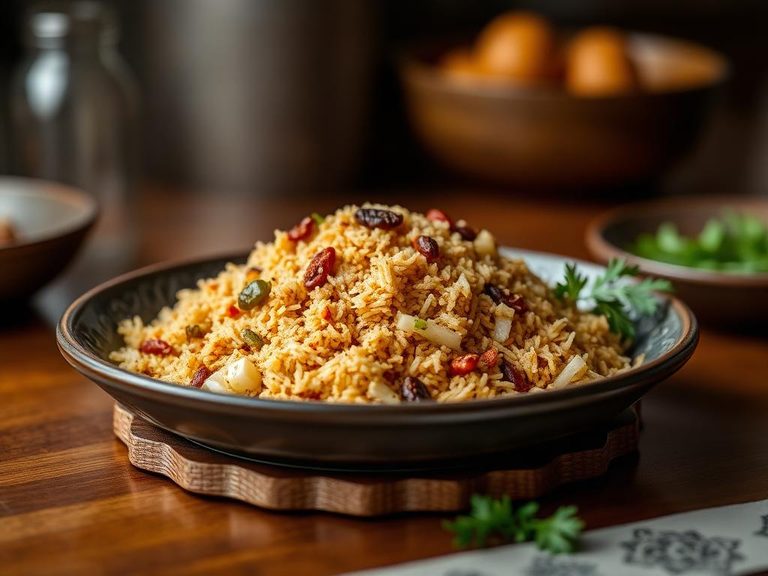
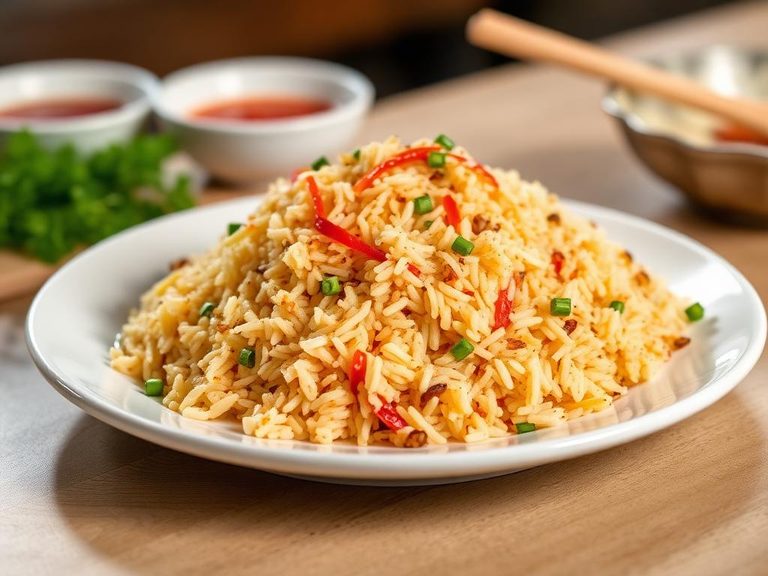
🍽️ Popular dishes
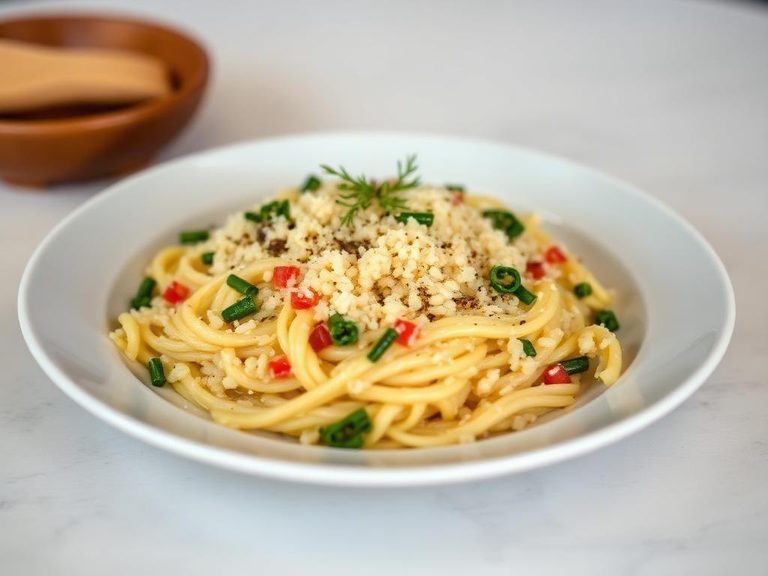
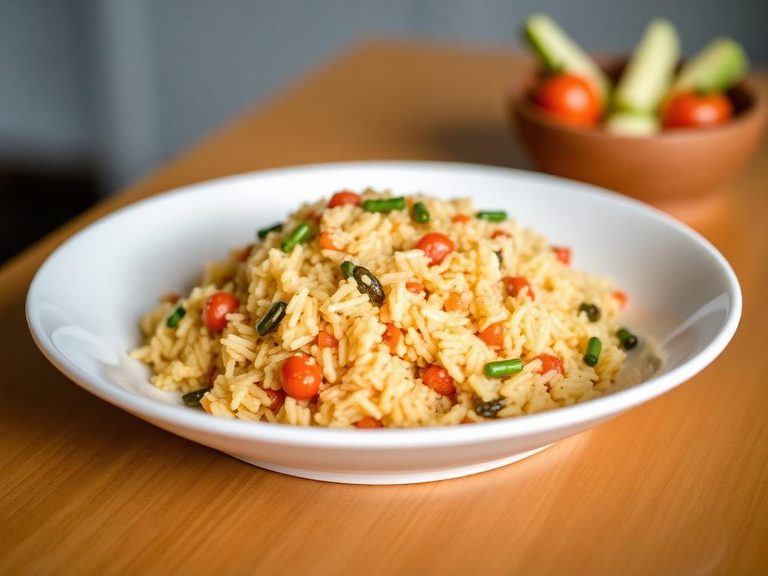
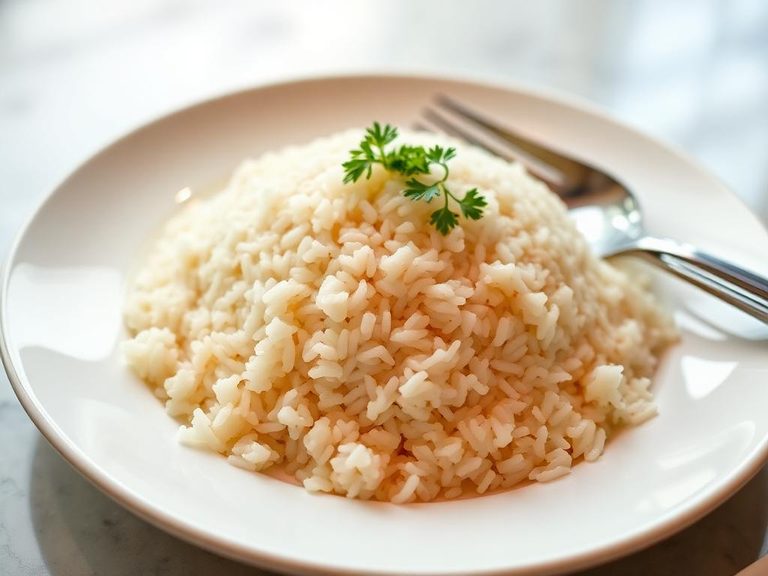
🌍 Where it's eaten
💡 Did you know?
The 'enrichment' process for white rice involves adding back nutrients like iron, thiamin, niacin, and folic acid that were removed during milling, which is why the label specifies 'enriched.'
Full nutrition (USDA data · scales with serving)
| Water | 68.4 g |
| Energy | 130 kcal |
| Energy | 544 kj |
| Protein | 2.7 g |
| Total lipid (fat) | 0.28 g |
| Ash | 0.41 g |
| Carbohydrate, by difference | 28.2 g |
| Fiber, total dietary | 0.40 g |
| Total Sugars | 0.05 g |
| Calcium, Ca | 10.0 mg |
| Iron, Fe | 1.2 mg |
| Magnesium, Mg | 12.0 mg |
| Phosphorus, P | 43.0 mg |
| Potassium, K | 35.0 mg |
| Sodium, Na | 1.0 mg |
| Zinc, Zn | 0.49 mg |
| Copper, Cu | 0.07 mg |
| Manganese, Mn | 0.47 mg |
| Selenium, Se | 7.5 ug |
| Fluoride, F | 41.1 ug |
| Vitamin C, total ascorbic acid | 0.00 mg |
| Thiamin | 0.16 mg |
| Riboflavin | 0.01 mg |
| Niacin | 1.5 mg |
| Pantothenic acid | 0.39 mg |
| Vitamin B-6 | 0.09 mg |
| Folate, total | 58.0 ug |
| Folic acid | 55.0 ug |
| Folate, food | 3.0 ug |
| Folate, DFE | 97.0 ug |
| Choline, total | 2.1 mg |
| Betaine | 0.30 mg |
| Vitamin B-12 | 0.00 ug |
| Vitamin B-12, added | 0.00 ug |
| Vitamin A, RAE | 0.00 ug |
| Retinol | 0.00 ug |
| Carotene, beta | 0.00 ug |
| Carotene, alpha | 0.00 ug |
| Cryptoxanthin, beta | 0.00 ug |
| Vitamin A, IU | 0.00 iu |
| Lycopene | 0.00 ug |
| Lutein + zeaxanthin | 0.00 ug |
| Vitamin E (alpha-tocopherol) | 0.04 mg |
| Vitamin E, added | 0.00 mg |
| Vitamin D (D2 + D3), International Units | 0.00 iu |
| Vitamin D (D2 + D3) | 0.00 ug |
| Vitamin K (phylloquinone) | 0.00 ug |
| Alcohol, ethyl | 0.00 g |
| Caffeine | 0.00 mg |
| Theobromine | 0.00 mg |
Fat & fatty acid profile (per 100g)
| Fatty acids, total saturated | 0.08 g |
| SFA 4:0 | 0.00 g |
| SFA 6:0 | 0.00 g |
| SFA 8:0 | 0.00 g |
| SFA 10:0 | 0.00 g |
| SFA 12:0 | 0.00 g |
| SFA 14:0 | 0.00 g |
| SFA 16:0 | 0.07 g |
| SFA 18:0 | 0.01 g |
| Fatty acids, total monounsaturated | 0.09 g |
| MUFA 16:1 | 0.00 g |
| MUFA 18:1 | 0.09 g |
| MUFA 20:1 | 0.00 g |
| MUFA 22:1 | 0.00 g |
| Fatty acids, total polyunsaturated | 0.08 g |
| PUFA 18:2 | 0.06 g |
| PUFA 18:3 | 0.01 g |
| PUFA 18:4 | 0.00 g |
| PUFA 20:4 | 0.00 g |
| PUFA 20:5 n-3 (EPA) | 0.00 g |
| PUFA 22:5 n-3 (DPA) | 0.00 g |
| PUFA 22:6 n-3 (DHA) | 0.00 g |
| Cholesterol | 0.00 mg |
Amino acid profile (per 100g)
| Tryptophan | 0.03 g |
| Threonine | 0.10 g |
| Isoleucine | 0.12 g |
| Leucine | 0.22 g |
| Lysine | 0.10 g |
| Methionine | 0.06 g |
| Cystine | 0.06 g |
| Phenylalanine | 0.14 g |
| Tyrosine | 0.09 g |
| Valine | 0.16 g |
| Arginine | 0.22 g |
| Histidine | 0.06 g |
| Alanine | 0.16 g |
| Aspartic acid | 0.25 g |
| Glutamic acid | 0.52 g |
| Glycine | 0.12 g |
| Proline | 0.13 g |
| Serine | 0.14 g |
FAQ
What is the difference between white and brown long-grain rice?
White rice has the bran and germ layers removed, making it lighter in color, milder in flavor, and quicker to cook. Brown rice retains these layers, giving it a nuttier taste, chewier texture, and more fiber, vitamins, and minerals.
Why is my cooked rice mushy or sticky?
This is often due to using too much water, not rinsing the rice to remove excess surface starch, or stirring it too much during cooking. For fluffy grains, use a 1.5:1 water-to-rice ratio, rinse until water runs clear, and avoid stirring after adding the rice to boiling water.
Is white rice a good source of protein?
While it contains some protein (about 2.7g per 100g cooked), it is not a complete protein on its own. It is best paired with other protein sources like legumes, meat, or dairy to form a complete amino acid profile.
Nutrient density (calculated · NRF9.3)
Nutrient Rich Foods index: beneficial nutrients (protein, fiber, vitamins, minerals) minus saturated fat, added sugar & sodium, per 100 kcal.
NRF9.3 index — Fulgoni, Keast & Drewnowski, 2009. Computed from USDA nutrients.
Weight-loss friendliness (composite index)
Energy density 1.30 kcal/g · 8% calories from protein · 0.4 g fiber · 0.1 g sugar per 100 g.
Composite of energy density (Rolls et al., 1999), protein & fiber satiety, minus sugar. A calculated heuristic — ranks satiety-per-calorie, not a clinical measure.
Dietary load (calculated from USDA values)
Potential renal acid load. Positive = acid-forming, negative = alkaline-forming.
Sodium-to-potassium ratio: 0.03 (lower is better — aim for ≤ 1)
Sodium:potassium per WHO potassium guidance. Computed from USDA nutrients.