

Pork, fresh, shoulder, whole, separable lean only, cooked, roasted
Whole food · Pork Products

Photo: Wikipedia
This is a lean, robust cut from the upper part of the pig's leg, prized for its deep pork flavor and satisfying, firm texture when roasted. Cooked properly, it yields tender, juicy slices with a beautiful sear, offering a substantial protein boost with virtually no carbohydrates. It's a workhorse of the kitchen, transforming from simple roast to complex stews with remarkable ease.
Calorie split: 45% protein · 0% carbs · 55% fat
↓ Full nutrition💚 Why it's loved
People cherish its deep, savory pork flavor that stands up boldly to herbs, spices, and long braising times. Its lean yet forgiving nature makes it a reliable choice for everything from a Sunday roast centerpiece to the pulled pork in a hearty sandwich.
⚠️ Watch-outs & how to enjoy it better
As a lean cut, it can become dry and tough if overcooked or prepared with high-heat methods without adequate moisture. To counteract this, always use a meat thermometer to avoid overcooking, and consider brining or marinating beforehand to lock in juices. For slow-cooking or braising, ensure sufficient liquid is added to the pot.
Key benefits
- Excellent source of complete, high-quality protein for muscle maintenance.
- Naturally carbohydrate-free, suitable for low-carb and ketogenic diets.
- Rich in essential B vitamins, particularly thiamine (B1) and niacin (B3).
- Provides important minerals like selenium, zinc, and phosphorus.
- Versatile base for both quick-cooking and slow-cooking methods.
🍽️ Popular dishes

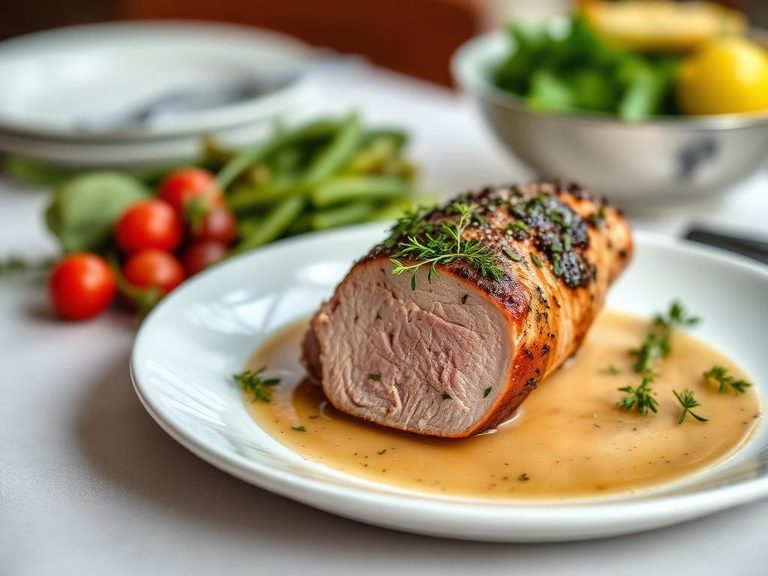
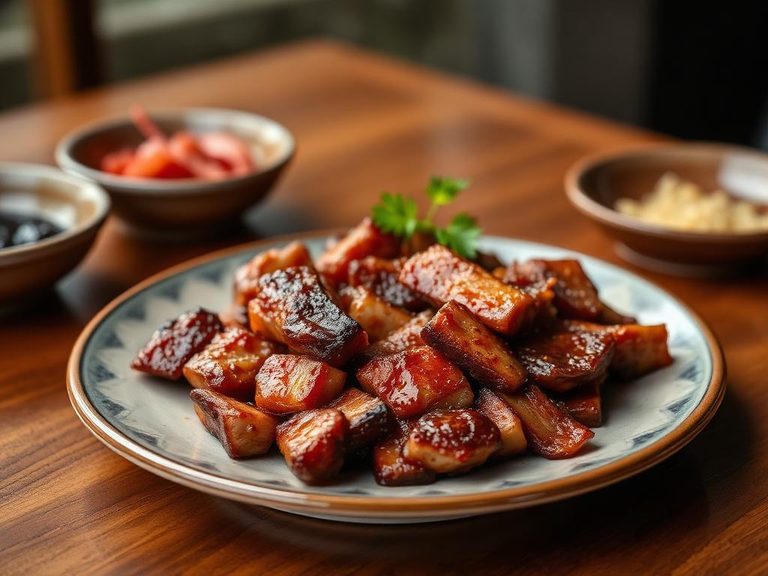

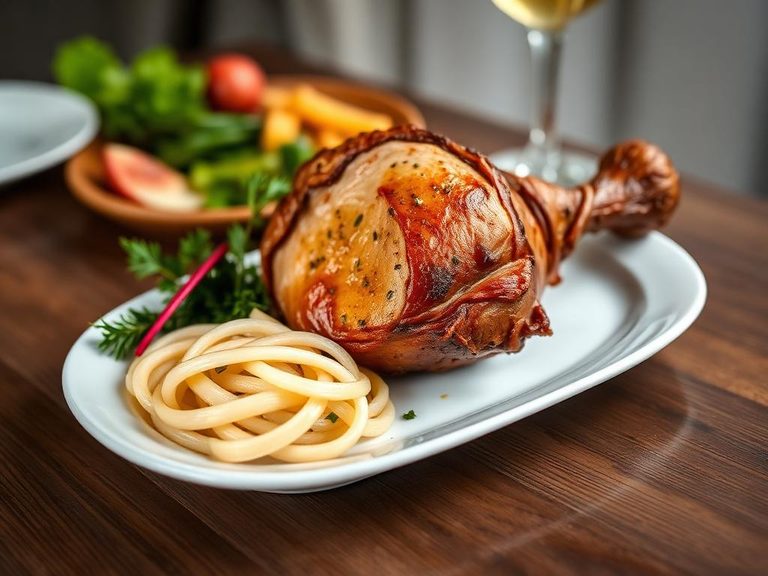
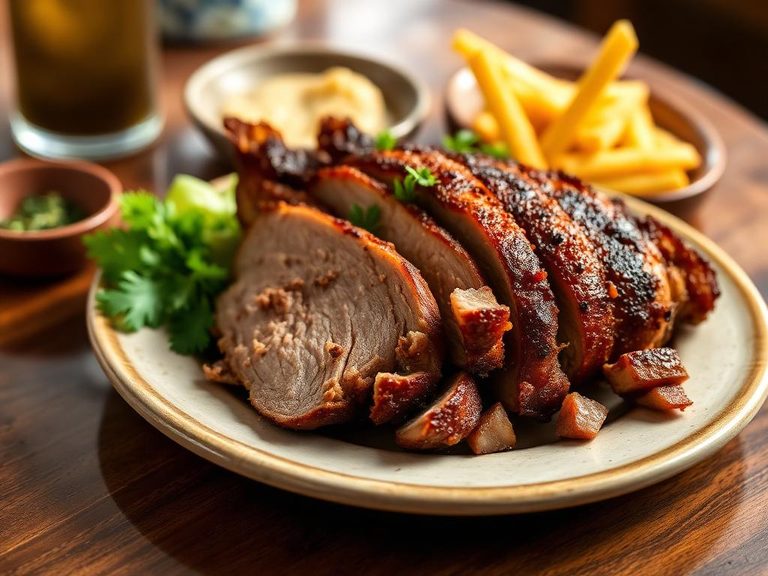
🌍 Where it's eaten
💡 Did you know?
The shoulder is one of the most exercised muscles on the pig, which is why it contains significant connective tissue (collagen) that melts into gelatin during slow cooking, creating incredibly succulent and flavorful meat.
Full nutrition (USDA data · scales with serving)
| Water | 60.6 g |
| Energy | 230 kcal |
| Energy | 962 kj |
| Protein | 25.3 g |
| Total lipid (fat) | 13.5 g |
| Ash | 1.2 g |
| Carbohydrate, by difference | 0.00 g |
| Fiber, total dietary | 0.00 g |
| Total Sugars | 0.00 g |
| Calcium, Ca | 18.0 mg |
| Iron, Fe | 1.5 mg |
| Magnesium, Mg | 20.0 mg |
| Phosphorus, P | 221 mg |
| Potassium, K | 346 mg |
| Sodium, Na | 75.0 mg |
| Zinc, Zn | 4.2 mg |
| Copper, Cu | 0.12 mg |
| Manganese, Mn | 0.03 mg |
| Selenium, Se | 37.4 ug |
| Vitamin C, total ascorbic acid | 0.60 mg |
| Thiamin | 0.63 mg |
| Riboflavin | 0.37 mg |
| Niacin | 4.3 mg |
| Pantothenic acid | 0.65 mg |
| Vitamin B-6 | 0.32 mg |
| Folate, total | 5.0 ug |
| Folic acid | 0.00 ug |
| Folate, food | 5.0 ug |
| Folate, DFE | 5.0 ug |
| Choline, total | 87.0 mg |
| Betaine | 3.4 mg |
| Vitamin B-12 | 0.86 ug |
| Vitamin B-12, added | 0.00 ug |
| Vitamin A, RAE | 2.0 ug |
| Retinol | 2.0 ug |
| Carotene, beta | 0.00 ug |
| Carotene, alpha | 0.00 ug |
| Cryptoxanthin, beta | 0.00 ug |
| Vitamin A, IU | 7.0 iu |
| Lycopene | 0.00 ug |
| Lutein + zeaxanthin | 0.00 ug |
| Vitamin E (alpha-tocopherol) | 0.25 mg |
| Vitamin E, added | 0.00 mg |
| Vitamin D (D2 + D3), International Units | 39.0 iu |
| Vitamin D (D2 + D3) | 1.0 ug |
| Vitamin D3 (cholecalciferol) | 1.0 ug |
| Vitamin K (phylloquinone) | 0.00 ug |
| Alcohol, ethyl | 0.00 g |
| Caffeine | 0.00 mg |
| Theobromine | 0.00 mg |
Fat & fatty acid profile (per 100g)
| Fatty acids, total saturated | 4.8 g |
| SFA 4:0 | 0.00 g |
| SFA 6:0 | 0.00 g |
| SFA 8:0 | 0.00 g |
| SFA 10:0 | 0.01 g |
| SFA 12:0 | 0.01 g |
| SFA 14:0 | 0.16 g |
| SFA 16:0 | 3.0 g |
| SFA 18:0 | 1.6 g |
| Fatty acids, total monounsaturated | 6.2 g |
| MUFA 16:1 | 0.38 g |
| MUFA 18:1 | 5.6 g |
| MUFA 20:1 | 0.14 g |
| MUFA 22:1 | 0.00 g |
| Fatty acids, total polyunsaturated | 1.3 g |
| PUFA 18:2 | 1.1 g |
| PUFA 18:3 | 0.04 g |
| PUFA 18:4 | 0.00 g |
| PUFA 20:4 | 0.07 g |
| PUFA 20:5 n-3 (EPA) | 0.00 g |
| PUFA 22:5 n-3 (DPA) | 0.00 g |
| PUFA 22:6 n-3 (DHA) | 0.00 g |
| Cholesterol | 90.0 mg |
Amino acid profile (per 100g)
| Tryptophan | 0.32 g |
| Threonine | 1.2 g |
| Isoleucine | 1.2 g |
| Leucine | 2.0 g |
| Lysine | 2.3 g |
| Methionine | 0.67 g |
| Cystine | 0.32 g |
| Phenylalanine | 1.0 g |
| Tyrosine | 0.88 g |
| Valine | 1.4 g |
| Arginine | 1.6 g |
| Histidine | 1.0 g |
| Alanine | 1.5 g |
| Aspartic acid | 2.4 g |
| Glutamic acid | 4.0 g |
| Glycine | 1.2 g |
| Proline | 1.0 g |
| Serine | 1.0 g |
FAQ
What's the difference between pork shoulder and pork butt?
They are the same primal cut from the upper shoulder. 'Pork butt' (or Boston butt) is the upper portion, while 'pork shoulder' (or picnic shoulder) is the lower portion closer to the leg. The picnic shoulder often has more bone and connective tissue, making it ideal for slow roasting and braising.
How do I prevent my roasted pork shoulder from drying out?
The key is low-and-slow cooking. Use a meat thermometer and remove it from the oven when the internal temperature reaches 145°F (63°C) for medium, or up to 195°F (90°C) for fall-apart tender pulled pork. Letting it rest for 10-15 minutes after cooking is crucial for the juices to redistribute.
Is this a fatty cut of meat?
The 'separable lean only' specification means the external fat cap has been removed. While intramuscular marbling provides flavor and moisture, this preparation is relatively lean, with about 13.5g of fat per 100g, most of which is saturated.
Nutrient density (calculated · NRF9.3)
Nutrient Rich Foods index: beneficial nutrients (protein, fiber, vitamins, minerals) minus saturated fat, added sugar & sodium, per 100 kcal.
NRF9.3 index — Fulgoni, Keast & Drewnowski, 2009. Computed from USDA nutrients.
Weight-loss friendliness (composite index)
Energy density 2.30 kcal/g · 44% calories from protein · 0.0 g fiber · 0.0 g sugar per 100 g.
Composite of energy density (Rolls et al., 1999), protein & fiber satiety, minus sugar. A calculated heuristic — ranks satiety-per-calorie, not a clinical measure.
Dietary load (calculated from USDA values)
Potential renal acid load. Positive = acid-forming, negative = alkaline-forming.
Sodium-to-potassium ratio: 0.22 (lower is better — aim for ≤ 1)
Sodium:potassium per WHO potassium guidance. Computed from USDA nutrients.