

Poi
Whole food · Vegetables and Vegetable Products
Poi is a traditional Hawaiian staple made from steamed and mashed taro root, resulting in a smooth, starchy paste with a distinctive purple-gray hue. Its flavor is mildly sweet, earthy, and slightly tangy, with a unique, gluey texture that can be thick or thin depending on preparation. Nutritionally, it is a low-fat, low-protein carbohydrate source, providing quick energy with a very low glycemic index.
Calorie split: 1% protein · 98% carbs · 1% fat
↓ Full nutrition💚 Why it's loved
People love poi for its mild, versatile flavor that acts as a perfect neutral base, balancing the rich, salty, and savory tastes of traditional Hawaiian lūʻau dishes like laulau and kalua pig. It is deeply cherished as a cultural and spiritual food, central to Hawaiian heritage and family gatherings.
⚠️ Watch-outs & how to enjoy it better
Its sticky, paste-like texture and acquired taste can be challenging for first-time eaters. Those monitoring carbohydrate intake or managing diabetes should be mindful of its starchy nature. To counteract, pair small portions with protein-rich foods like fish or meat, or mix poi with water to achieve a thinner, more palatable consistency.
Key benefits
- Excellent source of complex carbohydrates for sustained energy.
- Naturally gluten-free and low in fat.
- Contains prebiotic fiber that supports gut health.
- Rich in essential minerals like potassium and manganese.
- Has a very low glycemic index, preventing rapid blood sugar spikes.
🍽️ Popular dishes
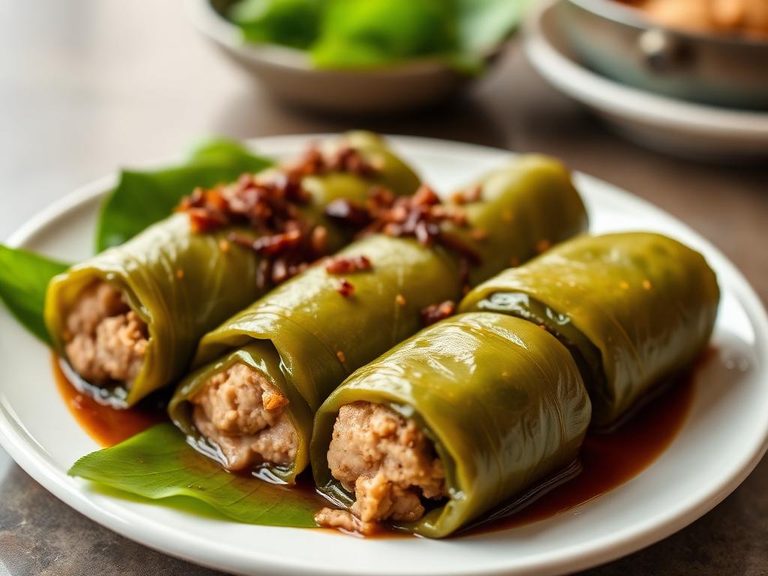
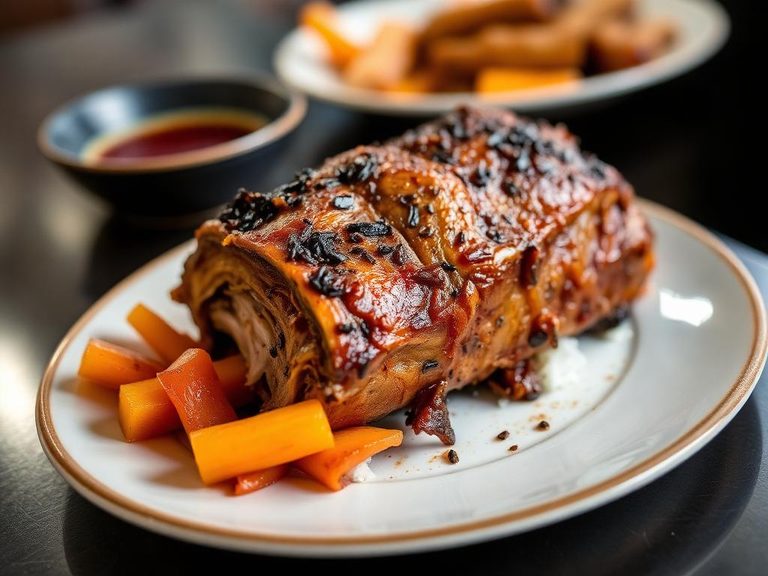
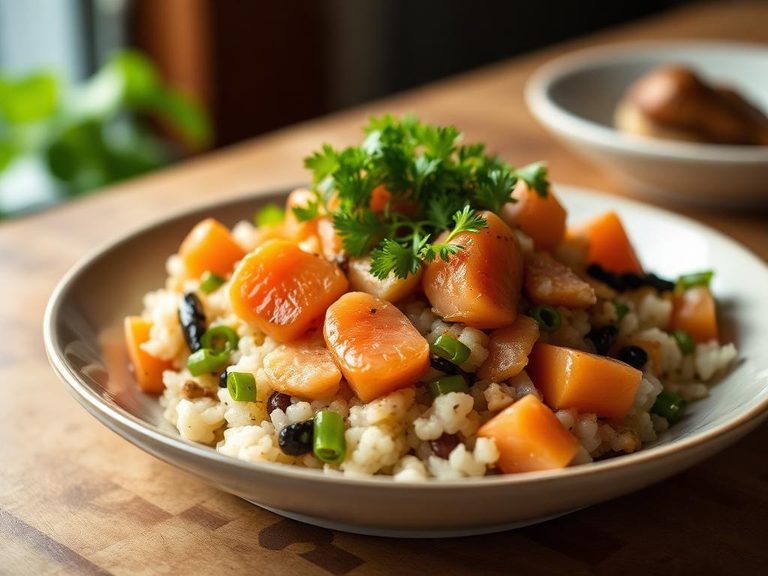
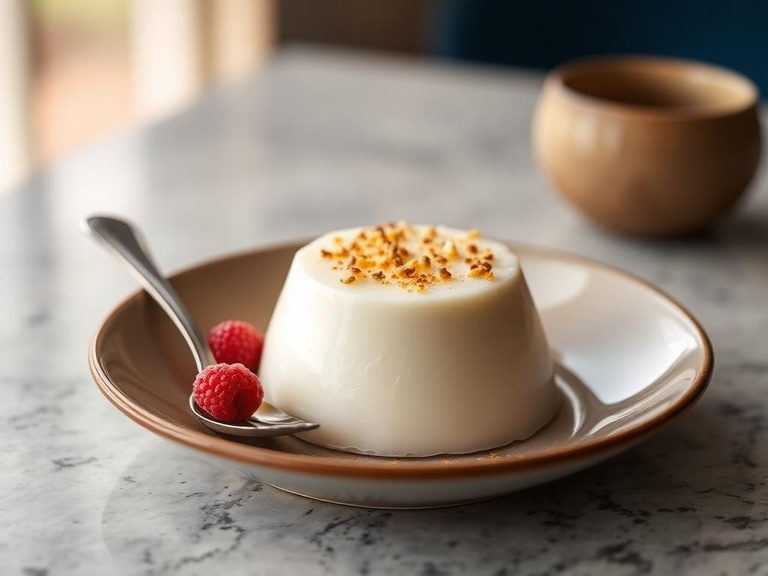
🌍 Where it's eaten
💡 Did you know?
In Hawaiian tradition, the thickness of poi is described by the number of fingers used to scoop it: 'one-finger poi' is thick, while 'three-finger poi' is much thinner and more liquid.
Full nutrition (USDA data · scales with serving)
| Water | 71.6 g |
| Energy | 112 kcal |
| Energy | 469 kj |
| Protein | 0.38 g |
| Total lipid (fat) | 0.14 g |
| Ash | 0.61 g |
| Carbohydrate, by difference | 27.2 g |
| Fiber, total dietary | 0.40 g |
| Total Sugars | 0.39 g |
| Calcium, Ca | 16.0 mg |
| Iron, Fe | 0.88 mg |
| Magnesium, Mg | 24.0 mg |
| Phosphorus, P | 39.0 mg |
| Potassium, K | 183 mg |
| Sodium, Na | 12.0 mg |
| Zinc, Zn | 0.22 mg |
| Copper, Cu | 0.17 mg |
| Manganese, Mn | 0.37 mg |
| Selenium, Se | 0.70 ug |
| Vitamin C, total ascorbic acid | 4.0 mg |
| Thiamin | 0.13 mg |
| Riboflavin | 0.04 mg |
| Niacin | 1.1 mg |
| Pantothenic acid | 0.29 mg |
| Vitamin B-6 | 0.27 mg |
| Folate, total | 21.0 ug |
| Folic acid | 0.00 ug |
| Folate, food | 21.0 ug |
| Folate, DFE | 21.0 ug |
| Choline, total | 16.7 mg |
| Vitamin B-12 | 0.00 ug |
| Vitamin B-12, added | 0.00 ug |
| Vitamin A, RAE | 3.0 ug |
| Retinol | 0.00 ug |
| Carotene, beta | 31.0 ug |
| Carotene, alpha | 0.00 ug |
| Cryptoxanthin, beta | 17.0 ug |
| Vitamin A, IU | 66.0 iu |
| Lycopene | 0.00 ug |
| Lutein + zeaxanthin | 0.00 ug |
| Vitamin E (alpha-tocopherol) | 2.3 mg |
| Vitamin E, added | 0.00 mg |
| Vitamin D (D2 + D3), International Units | 0.00 iu |
| Vitamin D (D2 + D3) | 0.00 ug |
| Vitamin K (phylloquinone) | 1.0 ug |
| Alcohol, ethyl | 0.00 g |
| Caffeine | 0.00 mg |
| Theobromine | 0.00 mg |
Fat & fatty acid profile (per 100g)
| Fatty acids, total saturated | 0.03 g |
| SFA 4:0 | 0.00 g |
| SFA 6:0 | 0.00 g |
| SFA 8:0 | 0.00 g |
| SFA 10:0 | 0.00 g |
| SFA 12:0 | 0.00 g |
| SFA 14:0 | 0.00 g |
| SFA 16:0 | 0.03 g |
| SFA 18:0 | 0.00 g |
| Fatty acids, total monounsaturated | 0.01 g |
| MUFA 16:1 | 0.00 g |
| MUFA 18:1 | 0.01 g |
| MUFA 20:1 | 0.00 g |
| MUFA 22:1 | 0.00 g |
| Fatty acids, total polyunsaturated | 0.06 g |
| PUFA 18:2 | 0.04 g |
| PUFA 18:3 | 0.02 g |
| PUFA 18:4 | 0.00 g |
| PUFA 20:4 | 0.00 g |
| PUFA 20:5 n-3 (EPA) | 0.00 g |
| PUFA 22:5 n-3 (DPA) | 0.00 g |
| PUFA 22:6 n-3 (DHA) | 0.00 g |
| Fatty acids, total trans | 0.00 g |
| Cholesterol | 0.00 mg |
Amino acid profile (per 100g)
Estimated from Cabbage, common (danish, domestic, and pointed types), freshly harvest, raw — USDA does not publish this profile for Poi.
| Tryptophan | 0.01 g |
| Threonine | 0.04 g |
| Isoleucine | 0.06 g |
| Leucine | 0.06 g |
| Lysine | 0.06 g |
| Methionine | 0.01 g |
| Cystine | 0.01 g |
| Phenylalanine | 0.04 g |
| Tyrosine | 0.02 g |
| Valine | 0.05 g |
| Arginine | 0.07 g |
| Histidine | 0.03 g |
| Alanine | 0.04 g |
| Aspartic acid | 0.12 g |
| Glutamic acid | 0.27 g |
| Glycine | 0.03 g |
| Proline | 0.24 g |
| Serine | 0.07 g |
FAQ
What does poi taste like?
Poi has a mild, slightly sweet and earthy flavor, often compared to a less sweet, more neutral potato. Freshly made poi is sweeter, while fermented poi develops a pleasant sour tang.
How is poi traditionally eaten?
It is most commonly eaten as a staple starch, scooped with the fingers and used to balance or accompany savory, salty, or fatty dishes at a Hawaiian meal.
Is poi healthy?
Yes, it is a nutrient-dense, low-fat carbohydrate source with a low glycemic index, making it a good energy food that doesn't cause sharp blood sugar spikes.
How do you store poi?
Poi is highly perishable. Store it in an airtight container in the refrigerator. It will sour over time; many enjoy this tangy, fermented version. It can also be frozen.
Nutrient density (calculated · NRF9.3)
Nutrient Rich Foods index: beneficial nutrients (protein, fiber, vitamins, minerals) minus saturated fat, added sugar & sodium, per 100 kcal.
NRF9.3 index — Fulgoni, Keast & Drewnowski, 2009. Computed from USDA nutrients.
Weight-loss friendliness (composite index)
Energy density 1.12 kcal/g · 1% calories from protein · 0.4 g fiber · 0.4 g sugar per 100 g.
Composite of energy density (Rolls et al., 1999), protein & fiber satiety, minus sugar. A calculated heuristic — ranks satiety-per-calorie, not a clinical measure.
Dietary load (calculated from USDA values)
Potential renal acid load. Positive = acid-forming, negative = alkaline-forming.
Sodium-to-potassium ratio: 0.07 (lower is better — aim for ≤ 1)
Sodium:potassium per WHO potassium guidance. Computed from USDA nutrients.