

Plums, dried (prunes), stewed, without added sugar
Whole food · Fruits and Fruit Juices

Photo: Wikipedia
Stewed prunes are plums that have been slowly simmered in water until they become tender, plump, and deeply sweet, with a jammy, almost silky texture. This simple preparation intensifies their natural honeyed flavor and dark, caramel-like notes. Nutritionally, they are a concentrated source of quick energy from natural sugars and provide a notable amount of dietary fiber.
Calorie split: 3% protein · 96% carbs · 1% fat
↓ Full nutrition💚 Why it's loved
People love stewed prunes for their intense, concentrated sweetness and comforting, soft texture that feels like a wholesome treat. They are a versatile staple, enjoyed on their own, as a topping for yogurt or oatmeal, or as a natural sweetener in baking.
⚠️ Watch-outs & how to enjoy it better
The high natural sugar content (nearly 25g per 100g) can cause rapid blood-sugar spikes, making portion control important for those managing diabetes. The high fiber and sorbitol content may also cause digestive discomfort (bloating or laxative effects) in sensitive individuals. To counteract this, pair them with a source of protein or fat (like Greek yogurt or nuts) to slow sugar absorption, and start with a small portion (e.g., 2-3 prunes) to assess tolerance.
Key benefits
- Excellent source of dietary fiber (3.1g per 100g)
- Provides quick, natural energy from carbohydrates
- Naturally fat-free and low in protein
- Contains no added sugars in this preparation
- Convenient, shelf-stable fruit option
🍽️ Popular dishes
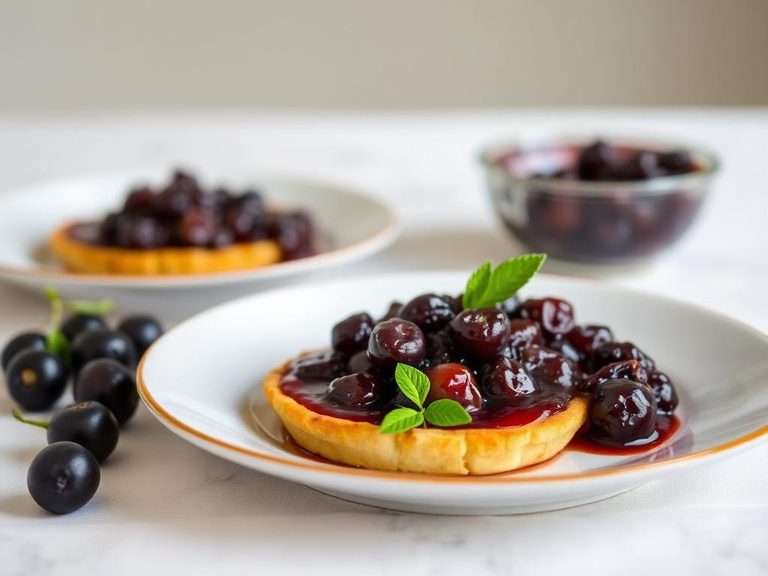
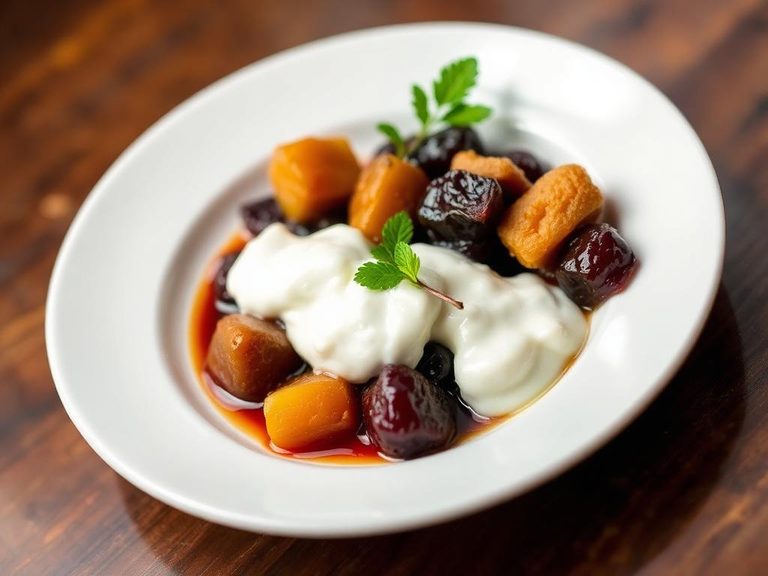

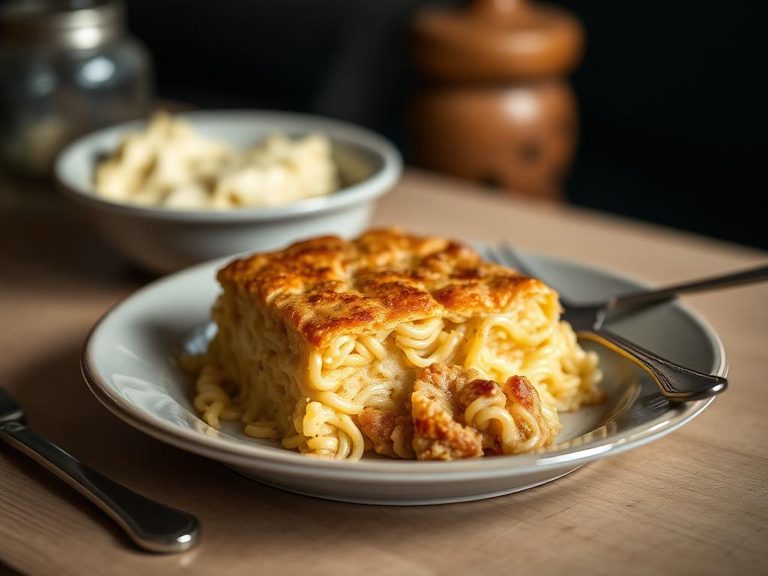
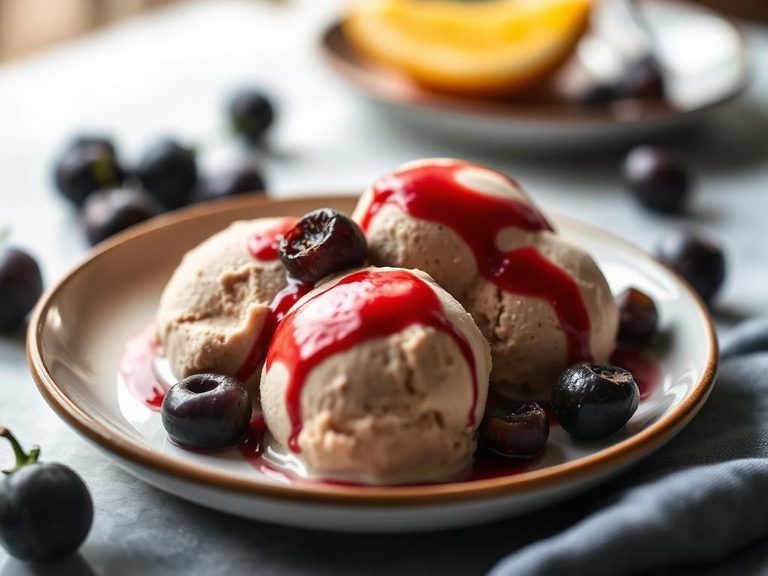
🌍 Where it's eaten
💡 Did you know?
Prunes were so commonly used as a gentle laxative that the word 'prune' was once used as a mild, old-fashioned insult for a dull or stern person.
Full nutrition (USDA data · scales with serving)
| Water | 69.7 g |
| Energy | 107 kcal |
| Energy | 448 kj |
| Protein | 0.96 g |
| Total lipid (fat) | 0.16 g |
| Ash | 1.2 g |
| Carbohydrate, by difference | 28.1 g |
| Fiber, total dietary | 3.1 g |
| Total Sugars | 25.0 g |
| Calcium, Ca | 19.0 mg |
| Iron, Fe | 0.41 mg |
| Magnesium, Mg | 18.0 mg |
| Phosphorus, P | 30.0 mg |
| Potassium, K | 321 mg |
| Sodium, Na | 1.0 mg |
| Zinc, Zn | 0.19 mg |
| Copper, Cu | 0.12 mg |
| Manganese, Mn | 0.13 mg |
| Selenium, Se | 0.10 ug |
| Vitamin C, total ascorbic acid | 2.9 mg |
| Thiamin | 0.02 mg |
| Riboflavin | 0.10 mg |
| Niacin | 0.72 mg |
| Pantothenic acid | 0.11 mg |
| Vitamin B-6 | 0.22 mg |
| Folate, total | 0.00 ug |
| Folic acid | 0.00 ug |
| Folate, food | 0.00 ug |
| Folate, DFE | 0.00 ug |
| Choline, total | 4.4 mg |
| Vitamin B-12 | 0.00 ug |
| Vitamin B-12, added | 0.00 ug |
| Vitamin A, RAE | 17.0 ug |
| Retinol | 0.00 ug |
| Carotene, beta | 173 ug |
| Carotene, alpha | 25.0 ug |
| Cryptoxanthin, beta | 41.0 ug |
| Vitamin A, IU | 342 iu |
| Lycopene | 0.00 ug |
| Lutein + zeaxanthin | 65.0 ug |
| Vitamin E (alpha-tocopherol) | 0.19 mg |
| Vitamin E, added | 0.00 mg |
| Vitamin D (D2 + D3), International Units | 0.00 iu |
| Vitamin D (D2 + D3) | 0.00 ug |
| Vitamin K (phylloquinone) | 26.1 ug |
| Alcohol, ethyl | 0.00 g |
| Caffeine | 0.00 mg |
| Theobromine | 0.00 mg |
Fat & fatty acid profile (per 100g)
| Fatty acids, total saturated | 0.01 g |
| SFA 4:0 | 0.00 g |
| SFA 6:0 | 0.00 g |
| SFA 8:0 | 0.00 g |
| SFA 10:0 | 0.00 g |
| SFA 12:0 | 0.00 g |
| SFA 14:0 | 0.00 g |
| SFA 16:0 | 0.01 g |
| SFA 18:0 | 0.00 g |
| Fatty acids, total monounsaturated | 0.08 g |
| MUFA 16:1 | 0.00 g |
| MUFA 18:1 | 0.08 g |
| MUFA 20:1 | 0.00 g |
| MUFA 22:1 | 0.00 g |
| Fatty acids, total polyunsaturated | 0.03 g |
| PUFA 18:2 | 0.03 g |
| PUFA 18:3 | 0.00 g |
| PUFA 18:4 | 0.00 g |
| PUFA 20:4 | 0.00 g |
| PUFA 20:5 n-3 (EPA) | 0.00 g |
| PUFA 22:5 n-3 (DPA) | 0.00 g |
| PUFA 22:6 n-3 (DHA) | 0.00 g |
| Cholesterol | 0.00 mg |
Amino acid profile (per 100g)
Estimated from Plums, dried (prunes), uncooked — USDA does not publish this profile for Plums.
| Tryptophan | 0.03 g |
| Threonine | 0.05 g |
| Isoleucine | 0.04 g |
| Leucine | 0.07 g |
| Lysine | 0.05 g |
| Methionine | 0.02 g |
| Cystine | 0.01 g |
| Phenylalanine | 0.05 g |
| Tyrosine | 0.02 g |
| Valine | 0.06 g |
| Arginine | 0.04 g |
| Histidine | 0.03 g |
| Alanine | 0.07 g |
| Aspartic acid | 0.80 g |
| Glutamic acid | 0.11 g |
| Glycine | 0.05 g |
| Proline | 0.13 g |
| Serine | 0.06 g |
FAQ
Are stewed prunes the same as prunes in syrup?
No. Stewed prunes are typically prunes simmered in water only, rehydrating them and concentrating their natural sugars. Prunes in syrup are cooked in a sugar solution, adding significant extra sugar and calories.
How long do homemade stewed prunes last?
When stored in an airtight container in the refrigerator, they will keep for about 5 to 7 days. You can also freeze them for up to 3 months.
Can I use stewed prunes to replace sugar in baking?
Yes, they can be pureed and used to replace some sugar and fat in recipes like muffins or brownies, adding moisture and natural sweetness. This will also increase the fiber content of the final product.
Nutrient density (calculated · NRF9.3)
Nutrient Rich Foods index: beneficial nutrients (protein, fiber, vitamins, minerals) minus saturated fat, added sugar & sodium, per 100 kcal.
NRF9.3 index — Fulgoni, Keast & Drewnowski, 2009. Computed from USDA nutrients.
Weight-loss friendliness (composite index)
Energy density 1.07 kcal/g · 4% calories from protein · 3.1 g fiber · 25.0 g sugar per 100 g.
Composite of energy density (Rolls et al., 1999), protein & fiber satiety, minus sugar. A calculated heuristic — ranks satiety-per-calorie, not a clinical measure.
Dietary load (calculated from USDA values)
Potential renal acid load. Positive = acid-forming, negative = alkaline-forming.
Sodium-to-potassium ratio: 0.00 (lower is better — aim for ≤ 1)
Sodium:potassium per WHO potassium guidance. Computed from USDA nutrients.