

Bakewell tart

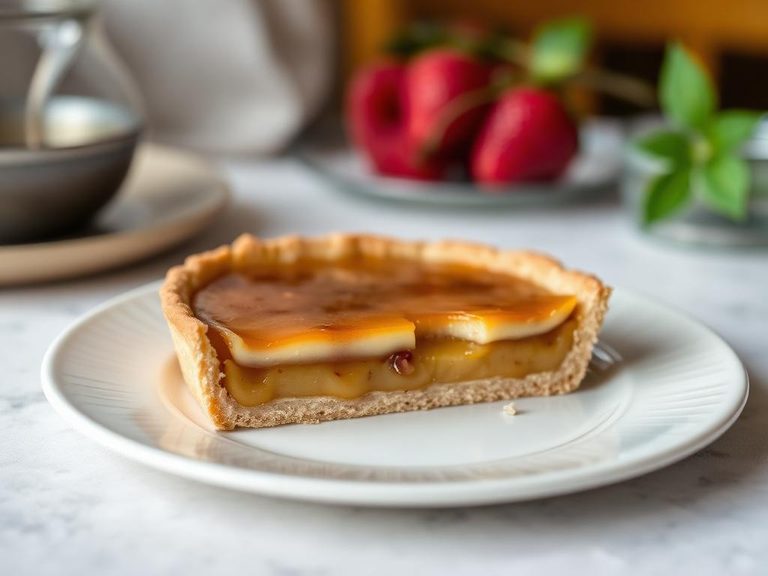
A Bakewell tart is a classic British dessert featuring a shortcrust pastry base, a layer of raspberry jam, and a frangipane (almond sponge) filling, often topped with flaked almonds or icing. It originates from the town of Bakewell in Derbyshire, England, and is a beloved treat in British bakeries and tea rooms.
🍳 View the full Bakewell tart recipe →
🍽️ Nutrition at a glance
This tart is high in carbohydrates and fat, primarily from sugar, butter, and almonds, with a modest amount of protein from the almonds and eggs. A typical serving contains roughly 300-400 calories, offering some iron and magnesium from the nuts but being otherwise energy-dense rather than nutrient-rich.
Nutrition breakdown
| Calories | 410 kcal |
| Protein | 5.5 g |
| Carbs | 45 g |
| Fat | 24 g |
| Fiber | 1.5 g |
| Sugar | 28 g |
| Sodium | 230 mg |
| Vitamin A | 120 µg |
| Vitamin C | 2 mg |
| Calcium | 50 mg |
| Iron | 1.8 mg |
| Potassium | 100 mg |
| Magnesium | 15 mg |
| Phosphorus | 60 mg |
| Vitamin E | 1.5 mg |
Per 1 slice (approx. 100 g) · estimated, varies by recipe
💡 What's interesting
The Bakewell tart is famously linked to a culinary accident in the 19th century, where a cook at the White Horse Inn misunderstood instructions and spread jam over pastry instead of under the sponge mixture. Nutritionally, the almonds provide a source of healthy monounsaturated fats and vitamin E, making it a slightly more nourishing choice compared to purely butter-based pastries.
🍽️ Related dishes






AI estimate may be inaccurate · Terms