

Bakewell pudding

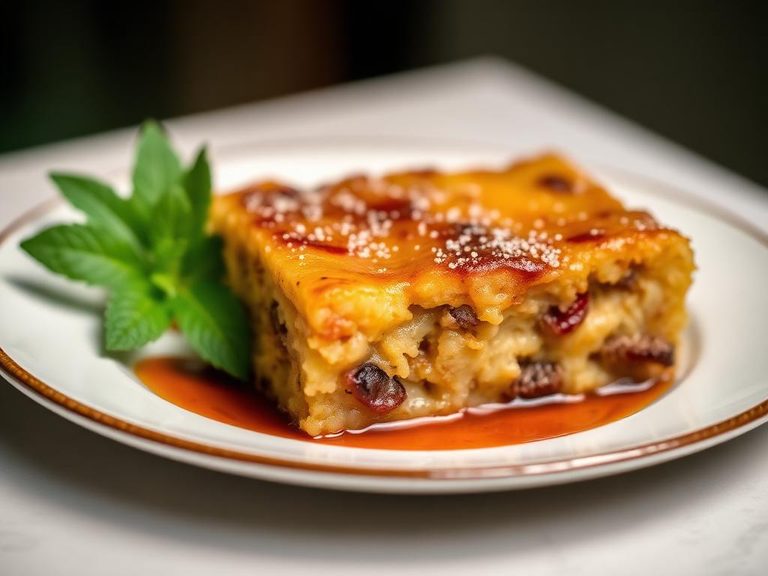
Bakewell pudding is a traditional English dessert from the town of Bakewell in Derbyshire, featuring a flaky pastry base spread with jam and topped with a rich, frangipane-like filling of eggs, butter, sugar, and ground almonds. It is distinct from the more common Bakewell tart, which has a shorter, crumbly pastry and a layer of almond-flavored sponge. The pudding is often served warm, sometimes with custard or cream, and is a beloved treat in the Peak District and beyond.
🍳 View the full Bakewell pudding recipe →
🍽️ Nutrition at a glance
Bakewell pudding is high in carbohydrates and fat, primarily from the pastry, sugar, and butter, with moderate protein from the eggs and almonds. A typical serving provides around 400-500 calories, offering energy and some essential nutrients like vitamin E from almonds and iron from the eggs, but it is best enjoyed as an occasional indulgence.
Nutrition breakdown
| Calories | 450 kcal |
| Protein | 5 g |
| Carbs | 55 g |
| Fat | 24 g |
| Fiber | 1.5 g |
| Sugar | 35 g |
| Sodium | 280 mg |
| Potassium | 150 mg |
| Calcium | 60 mg |
| Iron | 1.8 mg |
| Vitamin A | 120 µg |
| Vitamin C | 1 mg |
| Thiamin (B1) | 0.1 mg |
| Niacin (B3) | 1.2 mg |
| Folate | 30 µg |
Per 1 piece (approx. 120 g) · estimated, varies by recipe
💡 What's interesting
Bakewell pudding is culturally significant as a regional specialty that has been a staple of Derbyshire cuisine since the 19th century, often associated with the town's tourism and local bakeries. Nutritionally, its use of ground almonds adds a subtle nutty flavor and a source of healthy fats, making it a slightly more nutrient-dense option compared to many other sweet pastries.
🍽️ Related dishes







AI estimate may be inaccurate · Terms