

Pineapple juice, frozen concentrate, unsweetened, diluted with 3 volume water
Whole food · Fruits and Fruit Juices

Photo: Wikipedia
This is the vibrant, sun-yellow result of reconstituting frozen pineapple concentrate with water, delivering the fruit's signature sweet-tart punch in a convenient liquid form. Its texture is smooth and slightly viscous, with a bright, tropical aroma that immediately evokes summer. Nutritionally, it's a source of quick energy from natural sugars and provides a modest dose of vitamin C.
Calorie split: 3% protein · 96% carbs · 1% fat
↓ Full nutrition💚 Why it's loved
People adore its intensely refreshing and perfectly balanced sweet-sour flavor, which is both uplifting and nostalgic. It's a versatile base for everything from morning smoothies to evening cocktails, and is a cornerstone of tropical and Caribbean culinary traditions.
⚠️ Watch-outs & how to enjoy it better
The high natural sugar content can cause blood-sugar spikes, making it a concern for diabetics or those monitoring glycemic load. The bromelain enzyme can irritate the mouths of some individuals, causing a tingling or sore sensation. To counteract sugar spikes, pair it with a source of protein or healthy fat (like Greek yogurt or nuts), or dilute it further. For mouth irritation, choose canned or cooked pineapple products, as heat deactivates bromelain.
Key benefits
- Excellent source of vitamin C, an antioxidant that supports immune function.
- Contains bromelain, an enzyme that may aid digestion and reduce inflammation.
- Provides quick, natural energy from fruit sugars.
- Hydrating due to its high water content.
- Offers a convenient way to consume pineapple nutrients year-round.
🍽️ Popular dishes
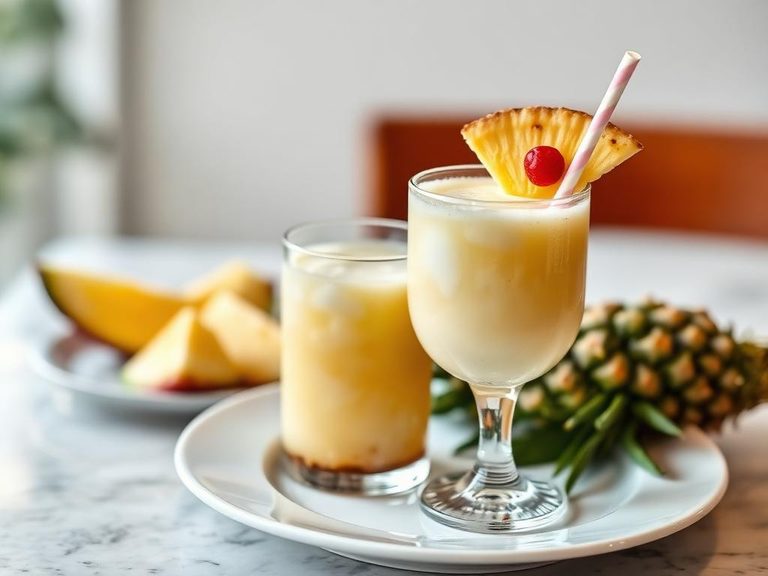
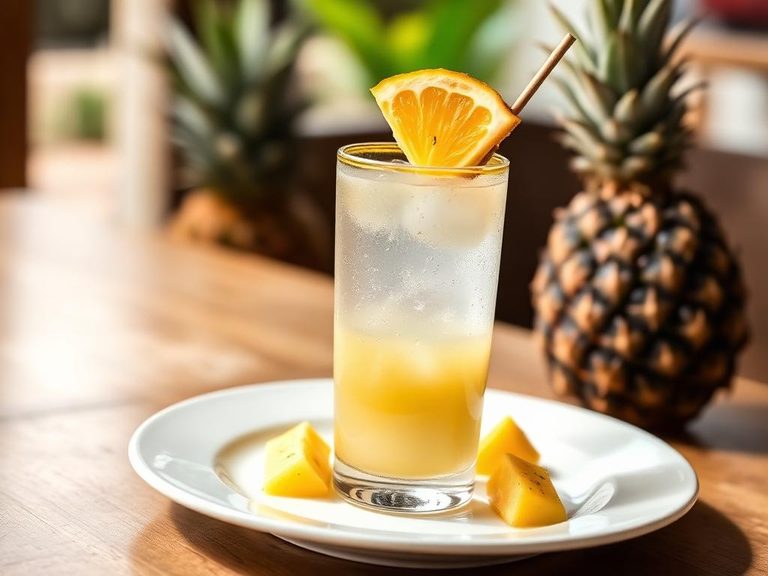
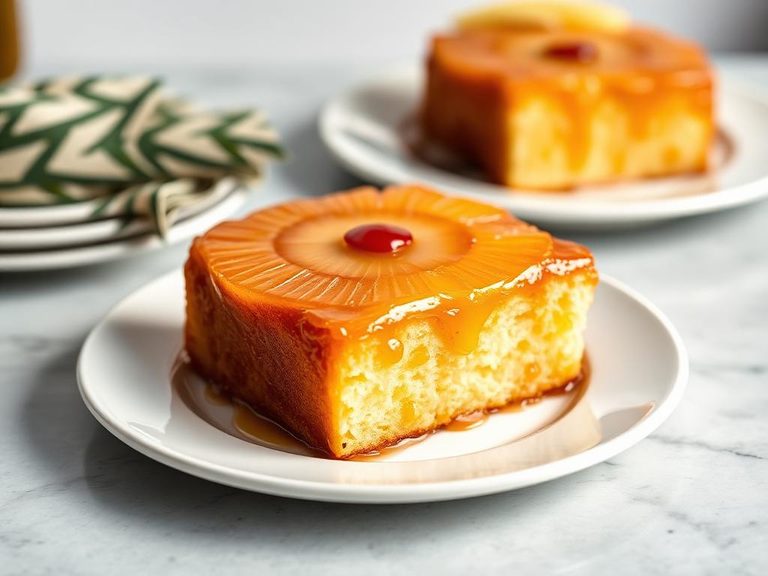
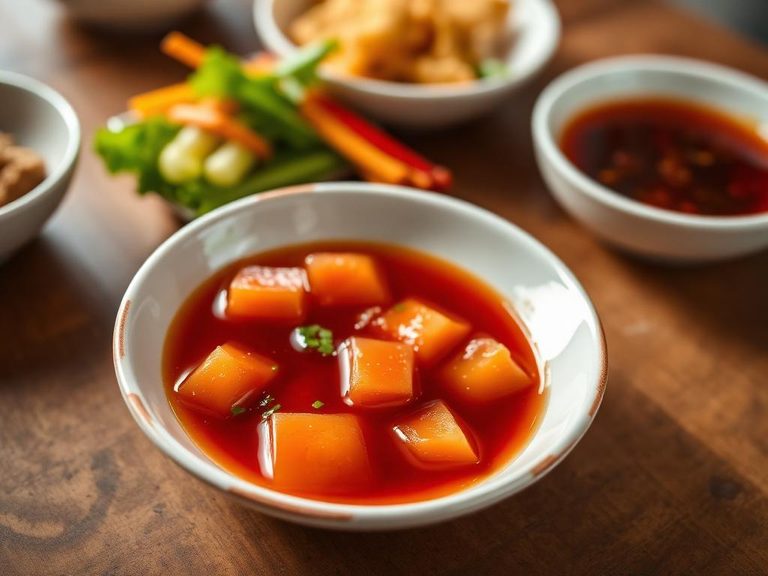
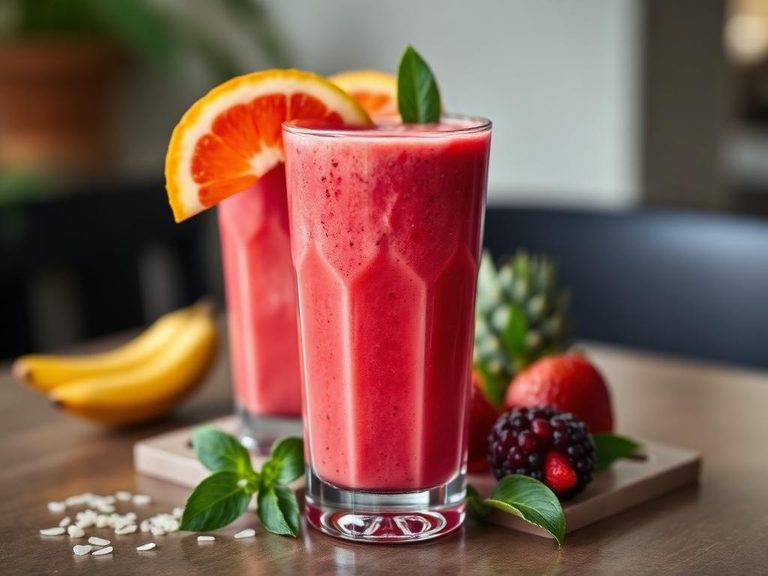
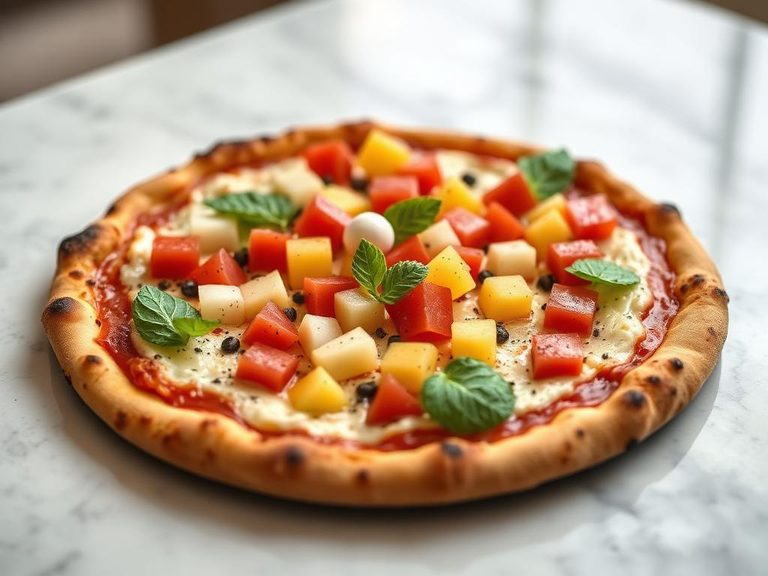
🌍 Where it's eaten
💡 Did you know?
A single pineapple plant can produce multiple fruits over several years, but each plant only fruits once, making the harvest a significant event in tropical agriculture.
Full nutrition (USDA data · scales with serving)
| Water | 86.6 g |
| Energy | 51.0 kcal |
| Energy | 214 kj |
| Protein | 0.40 g |
| Total lipid (fat) | 0.03 g |
| Ash | 0.30 g |
| Carbohydrate, by difference | 12.7 g |
| Fiber, total dietary | 0.20 g |
| Total Sugars | 12.5 g |
| Calcium, Ca | 13.0 mg |
| Iron, Fe | 0.16 mg |
| Magnesium, Mg | 14.0 mg |
| Phosphorus, P | 9.0 mg |
| Potassium, K | 132 mg |
| Sodium, Na | 1.0 mg |
| Zinc, Zn | 0.08 mg |
| Copper, Cu | 0.04 mg |
| Manganese, Mn | 1.0 mg |
| Selenium, Se | 0.10 ug |
| Vitamin C, total ascorbic acid | 12.0 mg |
| Thiamin | 0.07 mg |
| Riboflavin | 0.02 mg |
| Niacin | 0.20 mg |
| Pantothenic acid | 0.13 mg |
| Vitamin B-6 | 0.07 mg |
| Folate, total | 11.0 ug |
| Folic acid | 0.00 ug |
| Folate, food | 11.0 ug |
| Folate, DFE | 11.0 ug |
| Choline, total | 3.3 mg |
| Vitamin B-12 | 0.00 ug |
| Vitamin B-12, added | 0.00 ug |
| Vitamin A, RAE | 1.0 ug |
| Retinol | 0.00 ug |
| Carotene, beta | 6.0 ug |
| Carotene, alpha | 0.00 ug |
| Cryptoxanthin, beta | 0.00 ug |
| Vitamin A, IU | 10.0 iu |
| Lycopene | 0.00 ug |
| Lutein + zeaxanthin | 0.00 ug |
| Vitamin E (alpha-tocopherol) | 0.01 mg |
| Vitamin E, added | 0.00 mg |
| Vitamin D (D2 + D3), International Units | 0.00 iu |
| Vitamin D (D2 + D3) | 0.00 ug |
| Vitamin K (phylloquinone) | 0.30 ug |
| Alcohol, ethyl | 0.00 g |
| Caffeine | 0.00 mg |
| Theobromine | 0.00 mg |
Fat & fatty acid profile (per 100g)
| Fatty acids, total saturated | 0.00 g |
| SFA 4:0 | 0.00 g |
| SFA 6:0 | 0.00 g |
| SFA 8:0 | 0.00 g |
| SFA 10:0 | 0.00 g |
| SFA 12:0 | 0.00 g |
| SFA 14:0 | 0.00 g |
| SFA 16:0 | 0.00 g |
| SFA 18:0 | 0.00 g |
| Fatty acids, total monounsaturated | 0.00 g |
| MUFA 16:1 | 0.00 g |
| MUFA 18:1 | 0.00 g |
| MUFA 20:1 | 0.00 g |
| MUFA 22:1 | 0.00 g |
| Fatty acids, total polyunsaturated | 0.01 g |
| PUFA 18:2 | 0.01 g |
| PUFA 18:3 | 0.00 g |
| PUFA 18:4 | 0.00 g |
| PUFA 20:4 | 0.00 g |
| PUFA 20:5 n-3 (EPA) | 0.00 g |
| PUFA 22:5 n-3 (DPA) | 0.00 g |
| PUFA 22:6 n-3 (DHA) | 0.00 g |
| Fatty acids, total trans | 0.00 g |
| Cholesterol | 0.00 mg |
Amino acid profile (per 100g)
Estimated from Pineapple, canned, juice pack, solids and liquids — USDA does not publish this profile for Pineapple juice.
| Tryptophan | 0.01 g |
| Threonine | 0.01 g |
| Isoleucine | 0.01 g |
| Leucine | 0.02 g |
| Lysine | 0.02 g |
| Methionine | 0.01 g |
| Cystine | 0.00 g |
| Phenylalanine | 0.01 g |
| Tyrosine | 0.01 g |
| Valine | 0.01 g |
| Arginine | 0.01 g |
| Histidine | 0.01 g |
| Alanine | 0.02 g |
| Aspartic acid | 0.10 g |
| Glutamic acid | 0.05 g |
| Glycine | 0.02 g |
| Proline | 0.01 g |
| Serine | 0.02 g |
FAQ
Is frozen concentrate as nutritious as fresh pineapple?
Frozen concentrate retains most of the vitamins and minerals of fresh pineapple, especially vitamin C. However, the canning or freezing process can slightly degrade heat-sensitive nutrients like bromelain. It is still a nutritious choice.
Why does my mouth tingle after drinking pineapple juice?
This is caused by bromelain, a proteolytic enzyme in pineapple that breaks down proteins, including those on the soft tissues of your mouth. Cooking, canning, or using pasteurized juice deactivates the enzyme, eliminating the sensation.
Can I use this concentrate in baking?
Absolutely. It's excellent for adding moisture and flavor to cakes, muffins, and glazes. Remember to adjust the recipe's other liquids, as the concentrate adds significant liquid volume.
Nutrient density (calculated · NRF9.3)
Nutrient Rich Foods index: beneficial nutrients (protein, fiber, vitamins, minerals) minus saturated fat, added sugar & sodium, per 100 kcal.
NRF9.3 index — Fulgoni, Keast & Drewnowski, 2009. Computed from USDA nutrients.
Weight-loss friendliness (composite index)
Energy density 0.51 kcal/g · 3% calories from protein · 0.2 g fiber · 12.5 g sugar per 100 g.
Composite of energy density (Rolls et al., 1999), protein & fiber satiety, minus sugar. A calculated heuristic — ranks satiety-per-calorie, not a clinical measure.
Dietary load (calculated from USDA values)
Potential renal acid load. Positive = acid-forming, negative = alkaline-forming.
Sodium-to-potassium ratio: 0.01 (lower is better — aim for ≤ 1)
Sodium:potassium per WHO potassium guidance. Computed from USDA nutrients.