

Pineapple, canned, light syrup pack, solids and liquids
Whole food · Fruits and Fruit Juices

Photo: Wikipedia
This is pineapple, sliced or chunked and preserved in a light sugar syrup, offering a consistently sweet, tangy flavor and a tender, juicy texture year-round. Nutritionally, it's a low-calorie source of quick energy from its natural and added sugars, with minimal fat and protein. The light syrup pack provides a milder sweetness compared to heavy syrup, making it a versatile pantry staple.
Calorie split: 3% protein · 96% carbs · 2% fat
↓ Full nutrition💚 Why it's loved
People love it for its bright, tropical sweetness and juicy burst that instantly lifts a dish or a snack. Its versatility shines in both sweet desserts and savory cuisines, from pizza toppings to glazes for meats.
⚠️ Watch-outs & how to enjoy it better
The primary downside is the added sugar from the syrup, which can contribute to blood sugar spikes, especially for those monitoring glucose levels. To counteract this, pair it with a source of protein or healthy fat (like yogurt or nuts) to slow sugar absorption, and practice portion control. You can also rinse the pieces to remove some surface syrup.
Key benefits
- Provides vitamin C and manganese.
- Contains bromelain, an enzyme that aids protein digestion.
- Offers a convenient, ready-to-eat fruit option.
- Adds natural sweetness and moisture to dishes.
- Low in fat and a source of dietary fiber.
🍽️ Popular dishes
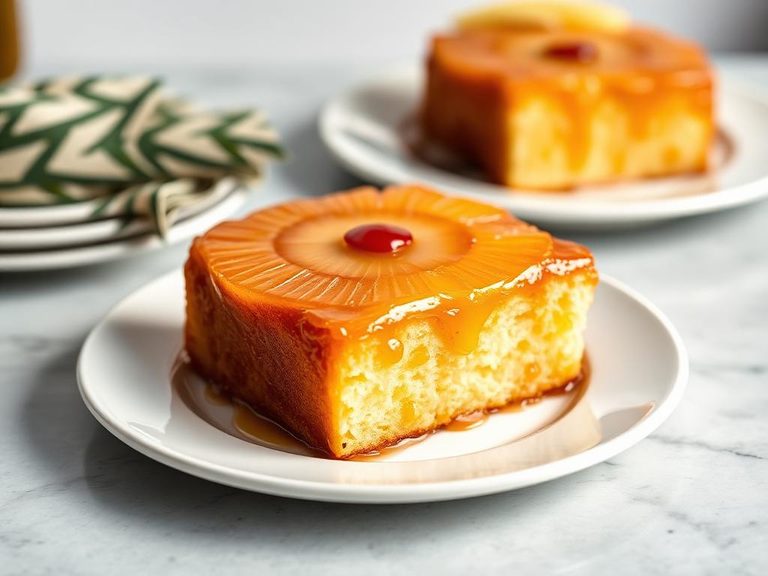
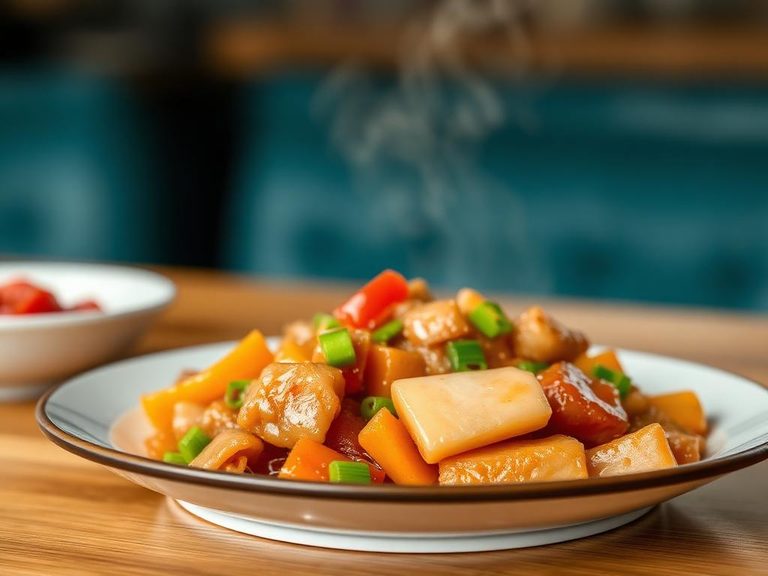

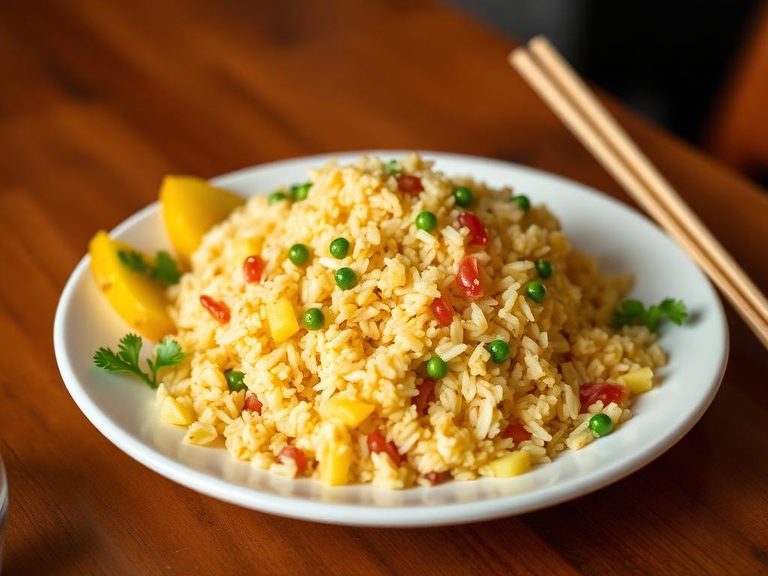
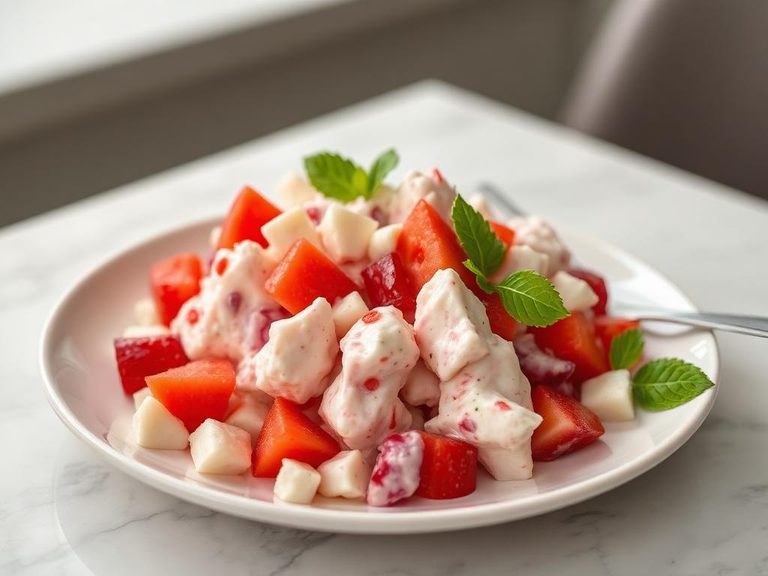

🌍 Where it's eaten
💡 Did you know?
The bromelain enzyme in pineapple is so effective at breaking down proteins that it's used as a meat tenderizer, and it's the reason why fresh pineapple will turn gelatin into liquid, but canned pineapple (where the enzyme is deactivated by heat) will not.
Full nutrition (USDA data · scales with serving)
| Water | 85.7 g |
| Energy | 52.0 kcal |
| Energy | 218 kj |
| Protein | 0.36 g |
| Total lipid (fat) | 0.12 g |
| Ash | 0.35 g |
| Carbohydrate, by difference | 13.4 g |
| Fiber, total dietary | 0.80 g |
| Total Sugars | 12.7 g |
| Calcium, Ca | 14.0 mg |
| Iron, Fe | 0.39 mg |
| Magnesium, Mg | 16.0 mg |
| Phosphorus, P | 7.0 mg |
| Potassium, K | 105 mg |
| Sodium, Na | 1.0 mg |
| Zinc, Zn | 0.12 mg |
| Copper, Cu | 0.10 mg |
| Manganese, Mn | 1.1 mg |
| Selenium, Se | 0.40 ug |
| Vitamin C, total ascorbic acid | 7.5 mg |
| Thiamin | 0.09 mg |
| Riboflavin | 0.03 mg |
| Niacin | 0.29 mg |
| Pantothenic acid | 0.10 mg |
| Vitamin B-6 | 0.07 mg |
| Folate, total | 5.0 ug |
| Folic acid | 0.00 ug |
| Folate, food | 5.0 ug |
| Folate, DFE | 5.0 ug |
| Choline, total | 3.8 mg |
| Vitamin B-12 | 0.00 ug |
| Vitamin B-12, added | 0.00 ug |
| Vitamin A, RAE | 2.0 ug |
| Retinol | 0.00 ug |
| Carotene, beta | 23.0 ug |
| Carotene, alpha | 0.00 ug |
| Cryptoxanthin, beta | 0.00 ug |
| Vitamin A, IU | 38.0 iu |
| Lycopene | 0.00 ug |
| Lutein + zeaxanthin | 0.00 ug |
| Vitamin E (alpha-tocopherol) | 0.01 mg |
| Vitamin E, added | 0.00 mg |
| Vitamin D (D2 + D3), International Units | 0.00 iu |
| Vitamin D (D2 + D3) | 0.00 ug |
| Vitamin K (phylloquinone) | 0.30 ug |
| Alcohol, ethyl | 0.00 g |
| Caffeine | 0.00 mg |
| Theobromine | 0.00 mg |
Fat & fatty acid profile (per 100g)
| Fatty acids, total saturated | 0.01 g |
| SFA 4:0 | 0.00 g |
| SFA 6:0 | 0.00 g |
| SFA 8:0 | 0.00 g |
| SFA 10:0 | 0.00 g |
| SFA 12:0 | 0.00 g |
| SFA 14:0 | 0.00 g |
| SFA 16:0 | 0.01 g |
| SFA 18:0 | 0.00 g |
| Fatty acids, total monounsaturated | 0.01 g |
| MUFA 16:1 | 0.00 g |
| MUFA 18:1 | 0.01 g |
| MUFA 20:1 | 0.00 g |
| MUFA 22:1 | 0.00 g |
| Fatty acids, total polyunsaturated | 0.04 g |
| PUFA 18:2 | 0.02 g |
| PUFA 18:3 | 0.02 g |
| PUFA 18:4 | 0.00 g |
| PUFA 20:4 | 0.00 g |
| PUFA 20:5 n-3 (EPA) | 0.00 g |
| PUFA 22:5 n-3 (DPA) | 0.00 g |
| PUFA 22:6 n-3 (DHA) | 0.00 g |
| Fatty acids, total trans | 0.00 g |
| Cholesterol | 0.00 mg |
Amino acid profile (per 100g)
| Tryptophan | 0.01 g |
| Threonine | 0.01 g |
| Isoleucine | 0.01 g |
| Leucine | 0.01 g |
| Lysine | 0.02 g |
| Methionine | 0.01 g |
| Cystine | 0.00 g |
| Phenylalanine | 0.01 g |
| Tyrosine | 0.01 g |
| Valine | 0.01 g |
| Arginine | 0.01 g |
| Histidine | 0.01 g |
| Alanine | 0.02 g |
| Aspartic acid | 0.08 g |
| Glutamic acid | 0.04 g |
| Glycine | 0.01 g |
| Proline | 0.01 g |
| Serine | 0.02 g |
FAQ
What's the difference between light syrup and heavy syrup packs?
Light syrup is a less concentrated sugar solution, resulting in a milder sweetness and slightly fewer calories than heavy syrup. Pineapple in its own juice is the lowest-sugar option.
Can I use the syrup in the can?
Yes, the syrup is edible and can be used to sweeten drinks, sauces, or baked goods. However, be mindful of its added sugar content.
Is canned pineapple as healthy as fresh?
Canning reduces some heat-sensitive nutrients like vitamin C, but it retains fiber and minerals. The main difference is the added sugar in syrup packs versus the natural sugars in fresh fruit.
Nutrient density (calculated · NRF9.3)
Nutrient Rich Foods index: beneficial nutrients (protein, fiber, vitamins, minerals) minus saturated fat, added sugar & sodium, per 100 kcal.
NRF9.3 index — Fulgoni, Keast & Drewnowski, 2009. Computed from USDA nutrients.
Weight-loss friendliness (composite index)
Energy density 0.52 kcal/g · 3% calories from protein · 0.8 g fiber · 12.7 g sugar per 100 g.
Composite of energy density (Rolls et al., 1999), protein & fiber satiety, minus sugar. A calculated heuristic — ranks satiety-per-calorie, not a clinical measure.
Dietary load (calculated from USDA values)
Potential renal acid load. Positive = acid-forming, negative = alkaline-forming.
Sodium-to-potassium ratio: 0.01 (lower is better — aim for ≤ 1)
Sodium:potassium per WHO potassium guidance. Computed from USDA nutrients.