

Pie crust, refrigerated, regular, baked
Whole food · Baked Products

Photo: Wikipedia
This is a pre-made, unbaked pie shell that has been baked to a golden, flaky crisp. It offers a rich, buttery flavor with a satisfyingly crumbly, layered texture that provides a sturdy base for both sweet and savory fillings. Nutritionally, it is a high-energy, fat-rich food, delivering over 500 kcal per 100g.
Calorie split: 3% protein · 46% carbs · 51% fat
↓ Full nutrition💚 Why it's loved
People love it for the buttery, savory flavor and the perfect, tender-crisp texture it adds to a pie. It's the ultimate kitchen shortcut, turning a complex baking task into a simple assembly job for classics like quiche or apple pie.
⚠️ Watch-outs & how to enjoy it better
Its high fat and calorie content can contribute to excess calorie intake if portions aren't controlled. The refined carbohydrates can cause a rapid blood-sugar spike, especially when filled with sugary fillings. To counteract, pair a slice of fruit pie with a source of protein like Greek yogurt or nuts, and consider using it for savory dishes with vegetable-heavy fillings.
Key benefits
- Provides a quick, convenient base for homemade pies
- Offers a consistent, reliable flaky texture
- High in energy from fats and carbohydrates
- Versatile for both sweet and savory applications
- Saves significant preparation time
🍽️ Popular dishes
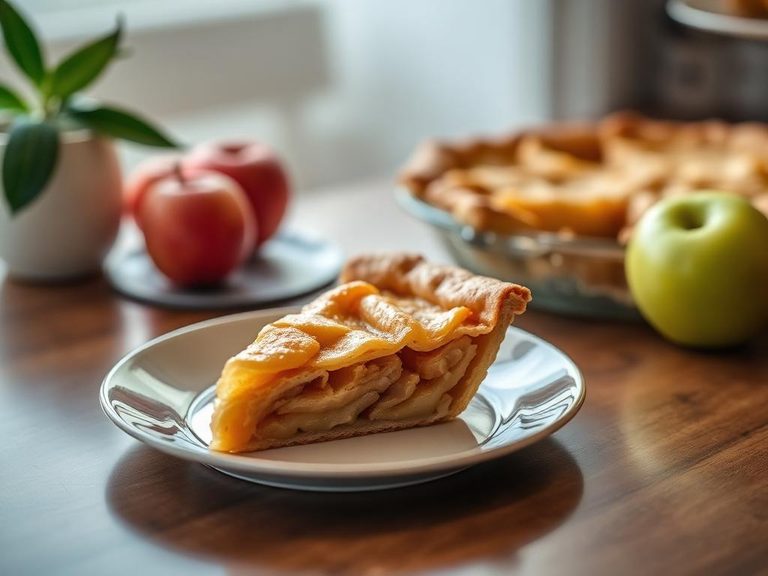
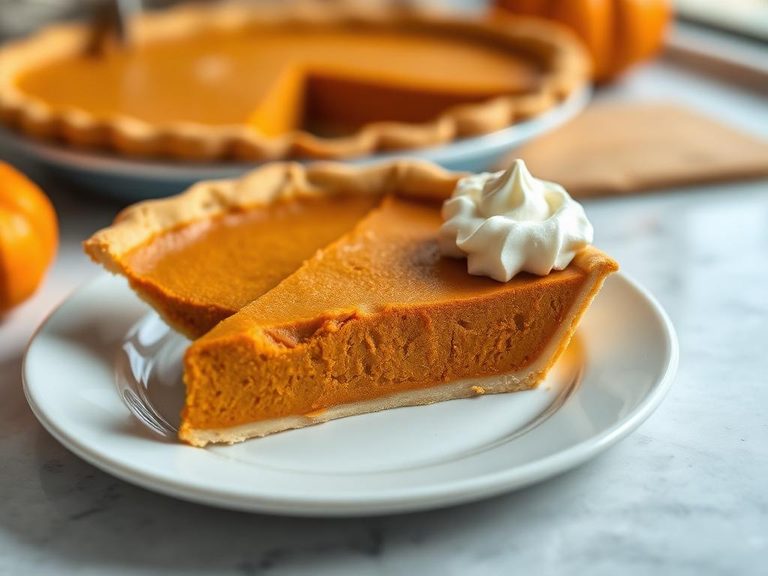
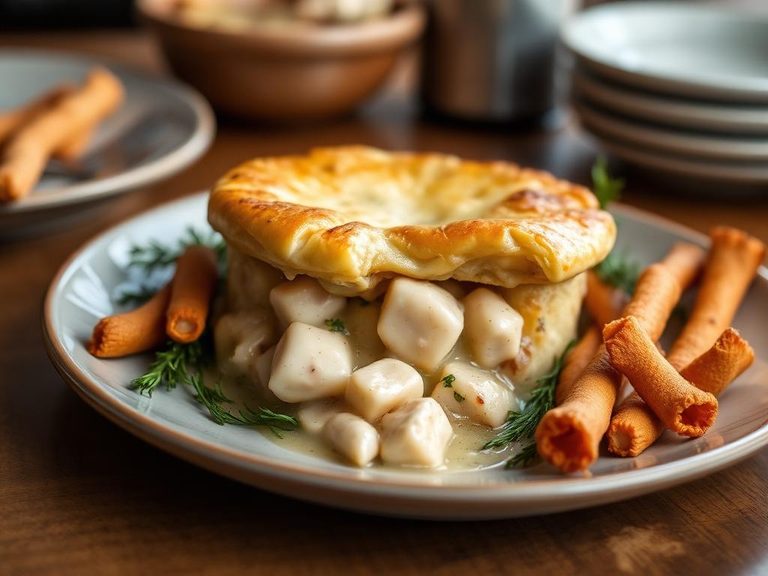
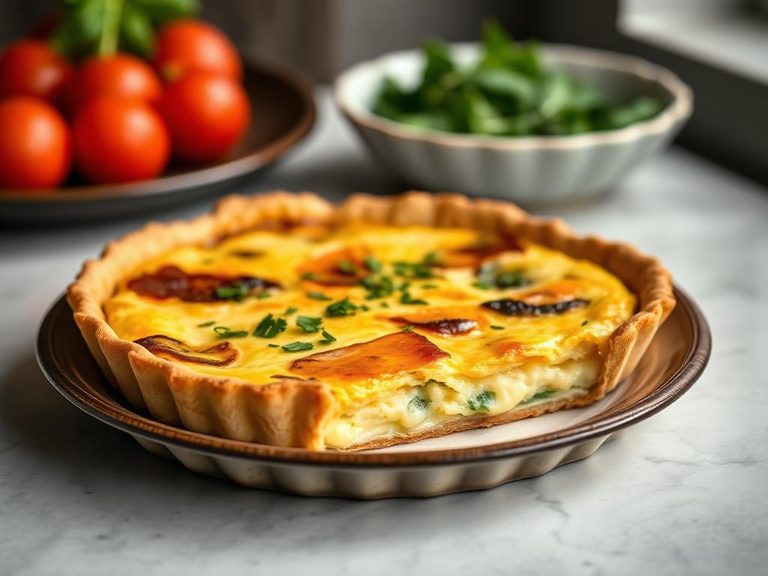


🌍 Where it's eaten
💡 Did you know?
The classic technique for a flaky crust involves keeping the fat (butter or shortening) in pea-sized chunks; when baked, the water in the fat creates steam, which puffs up the layers of dough.
Full nutrition (USDA data · scales with serving)
| Water | 8.0 g |
| Energy | 506 kcal |
| Energy | 2117 kj |
| Protein | 3.4 g |
| Total lipid (fat) | 28.7 g |
| Ash | 1.4 g |
| Carbohydrate, by difference | 58.5 g |
| Fiber, total dietary | 1.4 g |
| Starch | 51.9 g |
| Calcium, Ca | 12.0 mg |
| Iron, Fe | 1.1 mg |
| Magnesium, Mg | 9.0 mg |
| Phosphorus, P | 52.0 mg |
| Potassium, K | 83.0 mg |
| Sodium, Na | 472 mg |
| Zinc, Zn | 0.22 mg |
| Copper, Cu | 0.05 mg |
| Manganese, Mn | 0.21 mg |
| Selenium, Se | 4.5 ug |
| Thiamin | 0.14 mg |
| Riboflavin | 0.04 mg |
| Niacin | 1.3 mg |
| Pantothenic acid | 0.29 mg |
| Vitamin B-6 | 0.02 mg |
| Folate, total | 32.0 ug |
| Folic acid | 21.0 ug |
| Folate, food | 11.0 ug |
| Folate, DFE | 47.0 ug |
| Vitamin B-12 | 0.00 ug |
| Vitamin E (alpha-tocopherol) | 0.05 mg |
| Tocopherol, beta | 0.01 mg |
| Tocopherol, gamma | 0.15 mg |
| Tocopherol, delta | 0.03 mg |
| Tocotrienol, alpha | 0.01 mg |
| Tocotrienol, beta | 0.00 mg |
| Tocotrienol, gamma | 0.01 mg |
| Tocotrienol, delta | 0.00 mg |
| Vitamin K (phylloquinone) | 0.40 ug |
| Vitamin K (Dihydrophylloquinone) | 0.00 ug |
| Vitamin K (Menaquinone-4) | 4.5 ug |
Fat & fatty acid profile (per 100g)
| Fatty acids, total saturated | 11.1 g |
| SFA 8:0 | 0.00 g |
| SFA 10:0 | 0.00 g |
| SFA 12:0 | 0.00 g |
| SFA 14:0 | 0.39 g |
| SFA 15:0 | 0.00 g |
| SFA 16:0 | 6.6 g |
| SFA 17:0 | 0.11 g |
| SFA 18:0 | 4.0 g |
| SFA 20:0 | 0.07 g |
| SFA 22:0 | 0.00 g |
| Fatty acids, total monounsaturated | 11.8 g |
| MUFA 14:1 | 0.00 g |
| MUFA 15:1 | 0.00 g |
| MUFA 16:1 | 0.60 g |
| MUFA 17:1 | 0.00 g |
| MUFA 18:1 | 11.0 g |
| MUFA 20:1 | 0.21 g |
| Fatty acids, total polyunsaturated | 3.8 g |
| PUFA 18:2 | 3.4 g |
| PUFA 18:3 | 0.15 g |
| PUFA 18:3 n-3 c,c,c (ALA) | 0.15 g |
| PUFA 18:3 n-6 c,c,c | 0.00 g |
| PUFA 20:2 n-6 c,c | 0.14 g |
| PUFA 20:3 | 0.00 g |
| PUFA 20:4 | 0.05 g |
Amino acid profile (per 100g)
| Tryptophan | 0.04 g |
| Threonine | 0.07 g |
| Isoleucine | 0.12 g |
| Leucine | 0.22 g |
| Lysine | 0.07 g |
| Methionine | 0.05 g |
| Cystine | 0.07 g |
| Phenylalanine | 0.14 g |
| Tyrosine | 0.07 g |
| Valine | 0.14 g |
| Arginine | 0.11 g |
| Histidine | 0.06 g |
| Alanine | 0.10 g |
| Aspartic acid | 0.16 g |
| Glutamic acid | 1.1 g |
| Glycine | 0.13 g |
| Proline | 0.44 g |
| Serine | 0.17 g |
| Hydroxyproline | 0.00 g |
FAQ
Can I use a refrigerated pie crust for a no-bake pie?
Yes, but you must bake and fully cool the crust first. It is sold raw and requires baking to become safe to eat and achieve the proper texture.
How do I prevent a pre-made crust from shrinking during baking?
Prick the bottom with a fork (docking), chill the crust for 30 minutes before baking, and consider using pie weights or dried beans during the initial blind bake to hold its shape.
Is the fat in refrigerated pie crust usually butter or shortening?
It varies by brand. Most conventional U.S. brands use shortening or a vegetable oil blend for flakiness and shelf stability. Some premium or 'all-butter' versions exist, but you must check the ingredient list.
Nutrient density (calculated · NRF9.3)
Nutrient Rich Foods index: beneficial nutrients (protein, fiber, vitamins, minerals) minus saturated fat, added sugar & sodium, per 100 kcal.
NRF9.3 index — Fulgoni, Keast & Drewnowski, 2009. Computed from USDA nutrients.
Weight-loss friendliness (composite index)
Energy density 5.06 kcal/g · 3% calories from protein · 1.4 g fiber · 0.0 g sugar per 100 g.
Composite of energy density (Rolls et al., 1999), protein & fiber satiety, minus sugar. A calculated heuristic — ranks satiety-per-calorie, not a clinical measure.
Dietary load (calculated from USDA values)
Potential renal acid load. Positive = acid-forming, negative = alkaline-forming.
Sodium-to-potassium ratio: 5.69 (lower is better — aim for ≤ 1)
Sodium:potassium per WHO potassium guidance. Computed from USDA nutrients.