

Pie crust, deep dish, frozen, baked, made with enriched flour
Whole food · Baked Products

Photo: Wikipedia
This is a pre-made, deep-dish pie shell, typically sold frozen and ready for a quick bake to a golden, flaky finish. Its texture is buttery and crisp, providing a sturdy, flavorful vessel for both sweet and savory fillings. Nutritionally, it's a calorie-dense base, delivering over 500 kcal per 100g primarily from refined carbohydrates and fats.
Calorie split: 5% protein · 40% carbs · 55% fat
↓ Full nutrition💚 Why it's loved
People love it for the immense time savings it offers, transforming a multi-hour baking project into a simple assembly job. It's the reliable, crispy foundation that lets home cooks focus on creating delicious fillings.
⚠️ Watch-outs & how to enjoy it better
As a refined carbohydrate with a high glycemic index, it can cause rapid blood-sugar spikes, making it less ideal for those managing diabetes. It's also a common source of hidden sodium and is a major gluten allergen. To mitigate, pair it with high-protein or high-fat fillings (like chicken pot pie) to slow digestion, and practice strict portion control.
Key benefits
- Provides a quick, convenient foundation for homemade pies
- Offers a satisfyingly crisp and flaky texture
- Acts as a versatile canvas for both sweet and savory recipes
- Enriched flour adds back iron and B vitamins
🍽️ Popular dishes
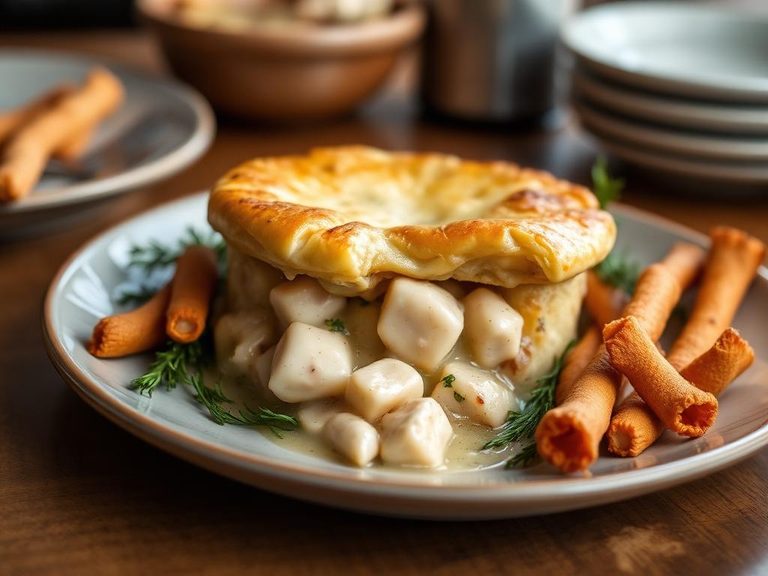
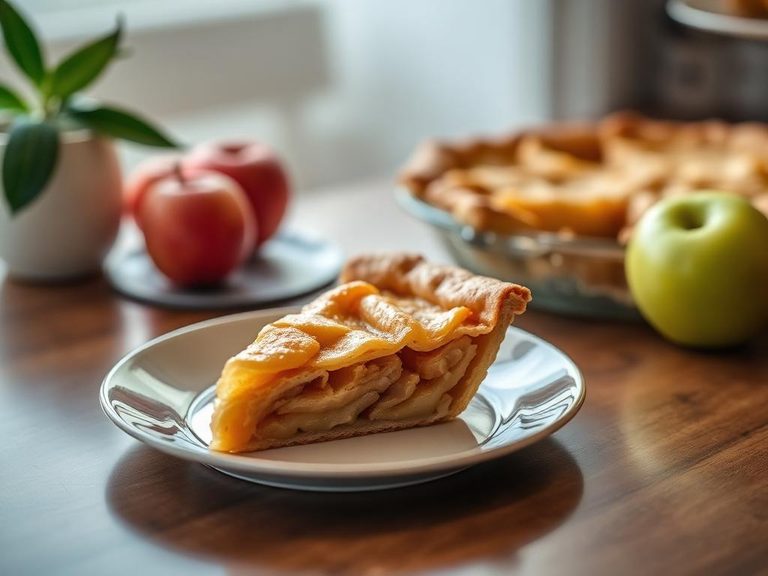

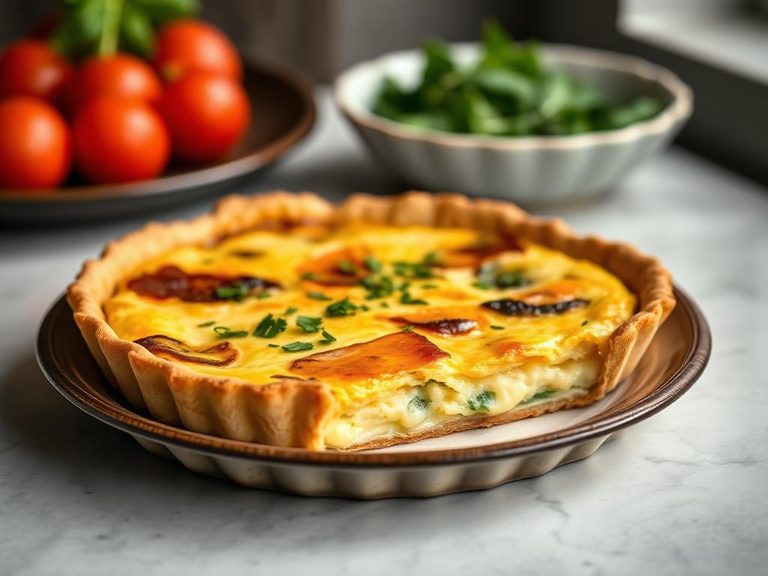
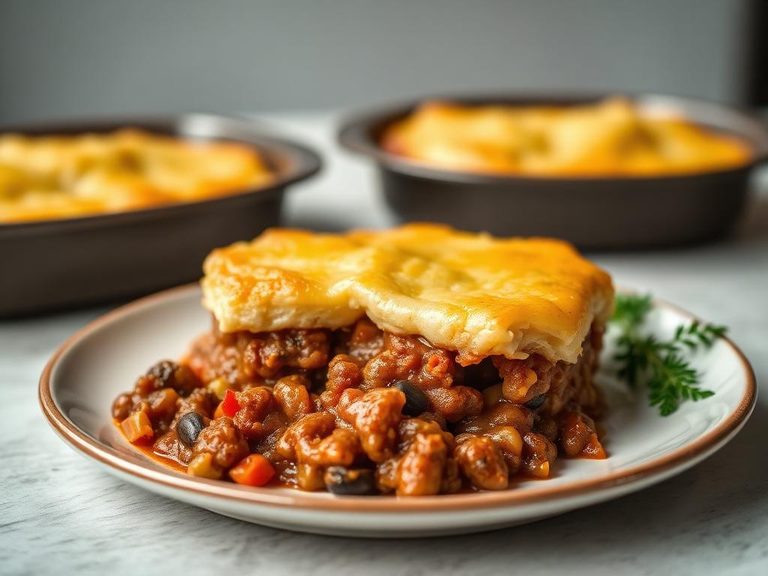
🌍 Where it's eaten
💡 Did you know?
The deep-dish style is a hallmark of American pie baking, famously associated with Chicago's savory pies and the 'double-crust' fruit pies of New England.
Full nutrition (USDA data · scales with serving)
| Water | 8.3 g |
| Energy | 521 kcal |
| Energy | 2179 kj |
| Protein | 6.1 g |
| Total lipid (fat) | 31.8 g |
| Ash | 1.3 g |
| Carbohydrate, by difference | 52.5 g |
| Fiber, total dietary | 2.3 g |
| Starch | 45.7 g |
| Calcium, Ca | 23.0 mg |
| Iron, Fe | 2.5 mg |
| Magnesium, Mg | 17.0 mg |
| Phosphorus, P | 77.0 mg |
| Potassium, K | 103 mg |
| Sodium, Na | 393 mg |
| Zinc, Zn | 0.52 mg |
| Copper, Cu | 0.09 mg |
| Manganese, Mn | 0.53 mg |
| Selenium, Se | 5.0 ug |
| Thiamin | 0.26 mg |
| Riboflavin | 0.13 mg |
| Niacin | 2.9 mg |
| Pantothenic acid | 0.40 mg |
| Vitamin B-6 | 0.04 mg |
| Folate, total | 94.0 ug |
| Folic acid | 72.0 ug |
| Folate, food | 22.0 ug |
| Folate, DFE | 144 ug |
| Vitamin B-12 | 0.00 ug |
| Vitamin E (alpha-tocopherol) | 1.4 mg |
| Tocopherol, beta | 0.13 mg |
| Tocopherol, gamma | 9.4 mg |
| Tocopherol, delta | 2.8 mg |
| Tocotrienol, alpha | 0.03 mg |
| Tocotrienol, beta | 0.00 mg |
| Tocotrienol, gamma | 0.00 mg |
| Tocotrienol, delta | 0.00 mg |
| Vitamin K (phylloquinone) | 16.7 ug |
| Vitamin K (Dihydrophylloquinone) | 61.4 ug |
| Vitamin K (Menaquinone-4) | 1.0 ug |
Fat & fatty acid profile (per 100g)
| Fatty acids, total saturated | 8.9 g |
| SFA 8:0 | 0.00 g |
| SFA 10:0 | 0.00 g |
| SFA 12:0 | 0.00 g |
| SFA 14:0 | 0.18 g |
| SFA 15:0 | 0.00 g |
| SFA 16:0 | 5.0 g |
| SFA 17:0 | 0.07 g |
| SFA 18:0 | 3.5 g |
| SFA 20:0 | 0.09 g |
| SFA 22:0 | 0.07 g |
| Fatty acids, total monounsaturated | 16.5 g |
| MUFA 14:1 | 0.00 g |
| MUFA 15:1 | 0.00 g |
| MUFA 16:1 | 0.28 g |
| MUFA 17:1 | 0.00 g |
| MUFA 18:1 | 16.0 g |
| MUFA 20:1 | 0.13 g |
| Fatty acids, total polyunsaturated | 3.9 g |
| PUFA 18:2 | 3.7 g |
| PUFA 18:3 | 0.13 g |
| PUFA 18:3 n-3 c,c,c (ALA) | 0.13 g |
| PUFA 18:3 n-6 c,c,c | 0.00 g |
| PUFA 20:2 n-6 c,c | 0.06 g |
| PUFA 20:3 | 0.00 g |
| PUFA 20:4 | 0.01 g |
Amino acid profile (per 100g)
| Tryptophan | 0.06 g |
| Threonine | 0.13 g |
| Isoleucine | 0.22 g |
| Leucine | 0.42 g |
| Lysine | 0.11 g |
| Methionine | 0.09 g |
| Cystine | 0.13 g |
| Phenylalanine | 0.28 g |
| Tyrosine | 0.12 g |
| Valine | 0.28 g |
| Arginine | 0.23 g |
| Histidine | 0.11 g |
| Alanine | 0.19 g |
| Aspartic acid | 0.30 g |
| Glutamic acid | 2.1 g |
| Glycine | 0.23 g |
| Proline | 0.80 g |
| Serine | 0.30 g |
| Hydroxyproline | 0.00 g |
FAQ
Can I use this for a savory pot pie?
Absolutely! This type of crust is the classic base for savory dishes like chicken or beef pot pie. Its sturdy structure holds up well to wet, hearty fillings.
How do I prevent a soggy bottom?
For a crispier base, you can 'blind bake' the crust for 5-10 minutes before adding a wet filling. Also, ensure your filling isn't overly watery.
Is the nutrition different from a homemade crust?
The core ingredients (flour, fat) are similar, but commercial versions often contain added sodium for preservation and may use different types of fats (like shortening) compared to a traditional all-butter homemade crust.
Nutrient density (calculated · NRF9.3)
Nutrient Rich Foods index: beneficial nutrients (protein, fiber, vitamins, minerals) minus saturated fat, added sugar & sodium, per 100 kcal.
NRF9.3 index — Fulgoni, Keast & Drewnowski, 2009. Computed from USDA nutrients.
Weight-loss friendliness (composite index)
Energy density 5.21 kcal/g · 5% calories from protein · 2.3 g fiber · 0.0 g sugar per 100 g.
Composite of energy density (Rolls et al., 1999), protein & fiber satiety, minus sugar. A calculated heuristic — ranks satiety-per-calorie, not a clinical measure.
Dietary load (calculated from USDA values)
Potential renal acid load. Positive = acid-forming, negative = alkaline-forming.
Sodium-to-potassium ratio: 3.82 (lower is better — aim for ≤ 1)
Sodium:potassium per WHO potassium guidance. Computed from USDA nutrients.