

Onions, spring or scallions (includes tops and bulb), raw
Whole food · Vegetables and Vegetable Products
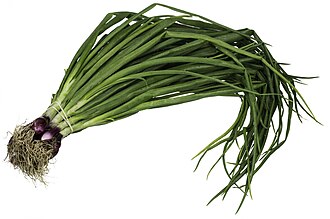
Photo: Wikipedia
Spring onions, also known as scallions, are the young, slender shoots of the onion plant, harvested before the bulb has fully formed. They offer a crisp, juicy texture with a fresh, mildly pungent flavor that is less intense than mature onions. Nutritionally, they are a low-calorie source of fiber and vitamin K, providing a significant boost of antioxidants like quercetin.
Calorie split: 19% protein · 76% carbs · 4% fat
↓ Full nutrition💚 Why it's loved
People love spring onions for their vibrant, fresh flavor that adds a sharp, clean bite to dishes without the overwhelming sweetness of cooked onions. Their versatility is unmatched—they can be used raw as a garnish, stir-fried for a milder taste, or incorporated into everything from soups to salads.
⚠️ Watch-outs & how to enjoy it better
For some, the strong sulfur compounds in raw spring onions can cause digestive discomfort, bloating, or heartburn, especially for those with IBS or acid reflux. To mitigate this, try cooking them lightly to milder the pungency, or pair them with starchy foods like rice or bread to buffer the digestive impact. They are also high in vitamin K, which can interfere with blood-thinning medications like warfarin; individuals on such therapy should maintain consistent intake.
Key benefits
- Rich in vitamin K, essential for bone health and blood clotting.
- Contains quercetin, a potent antioxidant with anti-inflammatory properties.
- Provides dietary fiber that supports digestive health.
- Low in calories and fat, making them ideal for weight management.
- Source of vitamin C, which supports immune function.
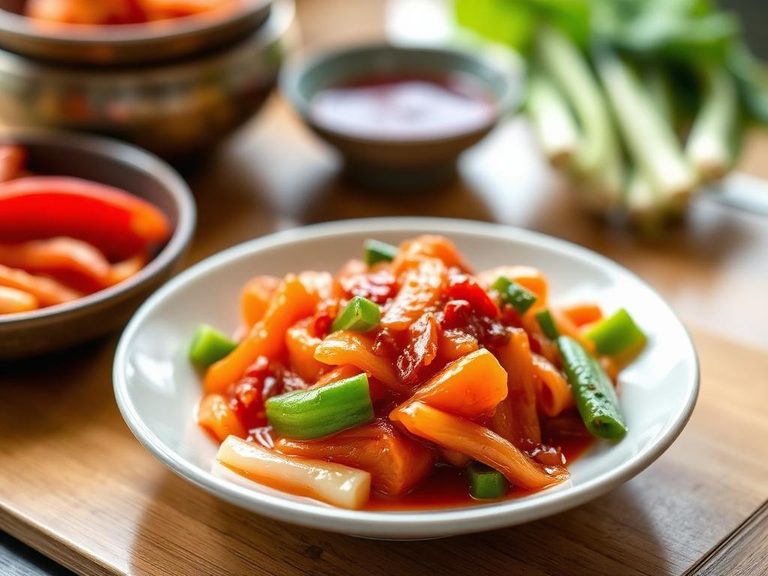
🍽️ Popular dishes
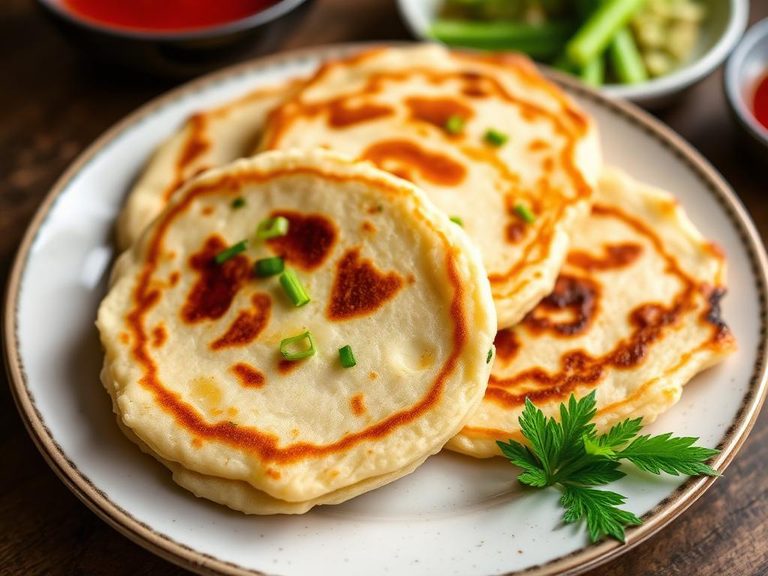
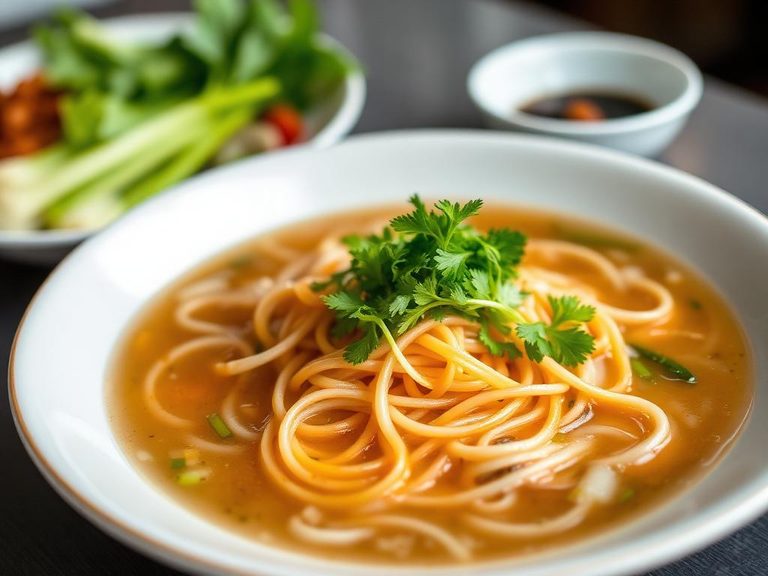


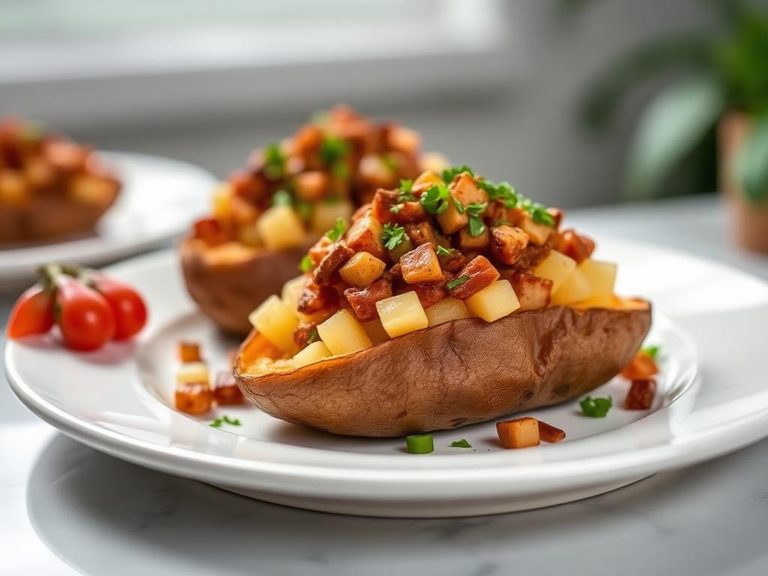
🌍 Where it's eaten
💡 Did you know?
Ancient Egyptians believed spring onions had medicinal properties and placed them in the tombs of pharaohs, including in the tomb of Ramesses IV, as offerings for the afterlife.
Full nutrition (USDA data · scales with serving)
| Water | 89.8 g |
| Energy | 32.0 kcal |
| Energy | 135 kj |
| Protein | 1.8 g |
| Total lipid (fat) | 0.19 g |
| Ash | 0.81 g |
| Carbohydrate, by difference | 7.3 g |
| Fiber, total dietary | 2.6 g |
| Total Sugars | 2.3 g |
| Calcium, Ca | 72.0 mg |
| Iron, Fe | 1.5 mg |
| Magnesium, Mg | 20.0 mg |
| Phosphorus, P | 37.0 mg |
| Potassium, K | 276 mg |
| Sodium, Na | 16.0 mg |
| Zinc, Zn | 0.39 mg |
| Copper, Cu | 0.08 mg |
| Manganese, Mn | 0.16 mg |
| Selenium, Se | 0.60 ug |
| Vitamin C, total ascorbic acid | 18.8 mg |
| Thiamin | 0.06 mg |
| Riboflavin | 0.08 mg |
| Niacin | 0.53 mg |
| Pantothenic acid | 0.07 mg |
| Vitamin B-6 | 0.06 mg |
| Folate, total | 64.0 ug |
| Folic acid | 0.00 ug |
| Folate, food | 64.0 ug |
| Folate, DFE | 64.0 ug |
| Choline, total | 5.7 mg |
| Vitamin B-12 | 0.00 ug |
| Vitamin B-12, added | 0.00 ug |
| Vitamin A, RAE | 50.0 ug |
| Retinol | 0.00 ug |
| Carotene, beta | 598 ug |
| Carotene, alpha | 0.00 ug |
| Cryptoxanthin, beta | 0.00 ug |
| Vitamin A, IU | 997 iu |
| Lycopene | 0.00 ug |
| Lutein + zeaxanthin | 1137 ug |
| Vitamin E (alpha-tocopherol) | 0.55 mg |
| Vitamin E, added | 0.00 mg |
| Vitamin D (D2 + D3), International Units | 0.00 iu |
| Vitamin D (D2 + D3) | 0.00 ug |
| Vitamin K (phylloquinone) | 207 ug |
| Alcohol, ethyl | 0.00 g |
| Caffeine | 0.00 mg |
| Theobromine | 0.00 mg |
Fat & fatty acid profile (per 100g)
| Fatty acids, total saturated | 0.03 g |
| SFA 4:0 | 0.00 g |
| SFA 6:0 | 0.00 g |
| SFA 8:0 | 0.00 g |
| SFA 10:0 | 0.00 g |
| SFA 12:0 | 0.00 g |
| SFA 14:0 | 0.00 g |
| SFA 16:0 | 0.03 g |
| SFA 18:0 | 0.00 g |
| Fatty acids, total monounsaturated | 0.03 g |
| MUFA 16:1 | 0.00 g |
| MUFA 18:1 | 0.03 g |
| MUFA 20:1 | 0.00 g |
| MUFA 22:1 | 0.00 g |
| Fatty acids, total polyunsaturated | 0.07 g |
| PUFA 18:2 | 0.07 g |
| PUFA 18:3 | 0.00 g |
| PUFA 18:4 | 0.00 g |
| PUFA 20:4 | 0.00 g |
| PUFA 20:5 n-3 (EPA) | 0.00 g |
| PUFA 22:5 n-3 (DPA) | 0.00 g |
| PUFA 22:6 n-3 (DHA) | 0.00 g |
| Fatty acids, total trans | 0.00 g |
| Cholesterol | 0.00 mg |
Amino acid profile (per 100g)
| Tryptophan | 0.02 g |
| Threonine | 0.07 g |
| Isoleucine | 0.08 g |
| Leucine | 0.11 g |
| Lysine | 0.09 g |
| Methionine | 0.02 g |
| Phenylalanine | 0.06 g |
| Tyrosine | 0.05 g |
| Valine | 0.08 g |
| Arginine | 0.13 g |
| Histidine | 0.03 g |
| Alanine | 0.08 g |
| Aspartic acid | 0.17 g |
| Glutamic acid | 0.38 g |
| Glycine | 0.09 g |
| Proline | 0.12 g |
| Serine | 0.08 g |
FAQ
What's the difference between spring onions and green onions?
The terms are often used interchangeably. 'Spring onion' typically refers to varieties that form a small, distinct bulb at the base, while 'green onion' may refer to varieties grown purely for their green stalks with no significant bulb. Nutritionally and in culinary use, they are very similar.
Can you eat the white bulb part?
Yes, the entire spring onion—both the green tops and the white bulb—is edible. The white part has a slightly stronger, more peppery flavor and a firmer texture, making it excellent for cooking, while the green tops are milder and often used raw as a garnish.
How should I store them to keep them fresh?
Place the spring onions upright in a jar with an inch of water, cover loosely with a plastic bag, and refrigerate. This method can keep them crisp for up to two weeks. Alternatively, wrap them dry in a paper towel and store in a plastic bag in the crisper drawer for about a week.
Nutrient density (calculated · NRF9.3)
Nutrient Rich Foods index: beneficial nutrients (protein, fiber, vitamins, minerals) minus saturated fat, added sugar & sodium, per 100 kcal.
NRF9.3 index — Fulgoni, Keast & Drewnowski, 2009. Computed from USDA nutrients.
Weight-loss friendliness (composite index)
Energy density 0.32 kcal/g · 23% calories from protein · 2.6 g fiber · 2.3 g sugar per 100 g.
Composite of energy density (Rolls et al., 1999), protein & fiber satiety, minus sugar. A calculated heuristic — ranks satiety-per-calorie, not a clinical measure.
Dietary load (calculated from USDA values)
Potential renal acid load. Positive = acid-forming, negative = alkaline-forming.
Sodium-to-potassium ratio: 0.06 (lower is better — aim for ≤ 1)
Sodium:potassium per WHO potassium guidance. Computed from USDA nutrients.