

Onions, canned, solids and liquids
Whole food · Vegetables and Vegetable Products

Photo: Wikipedia
Canned onions are pre-cooked, peeled onions preserved in their own liquid or a light brine, offering a soft, tender texture and a mellow, sweet flavor without the sharp bite of raw onions. Nutritionally, they are a very low-calorie, virtually fat-free source of dietary fiber and natural sugars. Their convenience makes them a quick way to add savory depth to a dish.
Calorie split: 17% protein · 79% carbs · 4% fat
↓ Full nutrition💚 Why it's loved
People love canned onions for their sweet, umami-rich flavor and melt-in-your-mouth texture, which integrates seamlessly into stews, casseroles, and sauces. They are a cultural staple in many home kitchens for adding instant depth and sweetness to comfort food.
⚠️ Watch-outs & how to enjoy it better
The primary downside is that the canning process can significantly increase sodium content, which is a concern for those monitoring salt intake. Additionally, the soft texture may not be suitable for dishes requiring a crisp bite. To counteract high sodium, rinse the onions thoroughly under cold water before use and opt for 'no salt added' varieties when available.
Key benefits
- Extremely low in calories and fat.
- Provides dietary fiber for digestive health.
- Contains natural sugars for quick energy.
- Convenient and pre-cooked, saving preparation time.
- Source of antioxidants like quercetin.
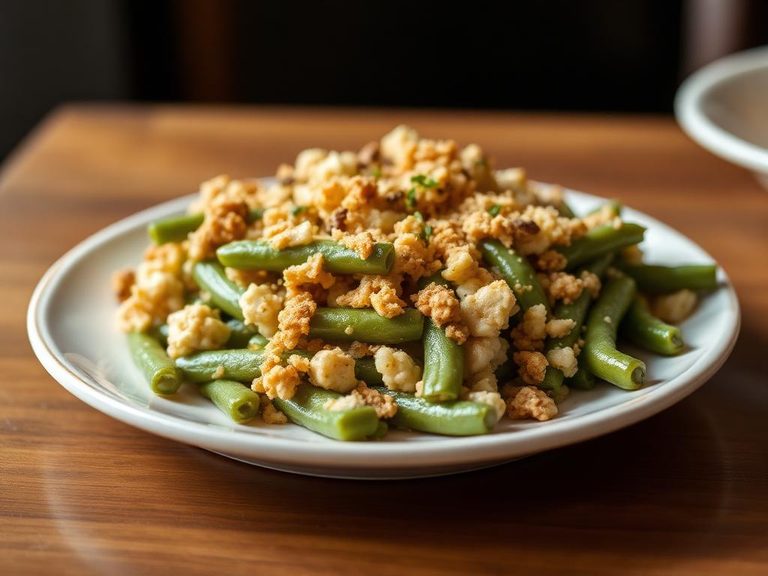
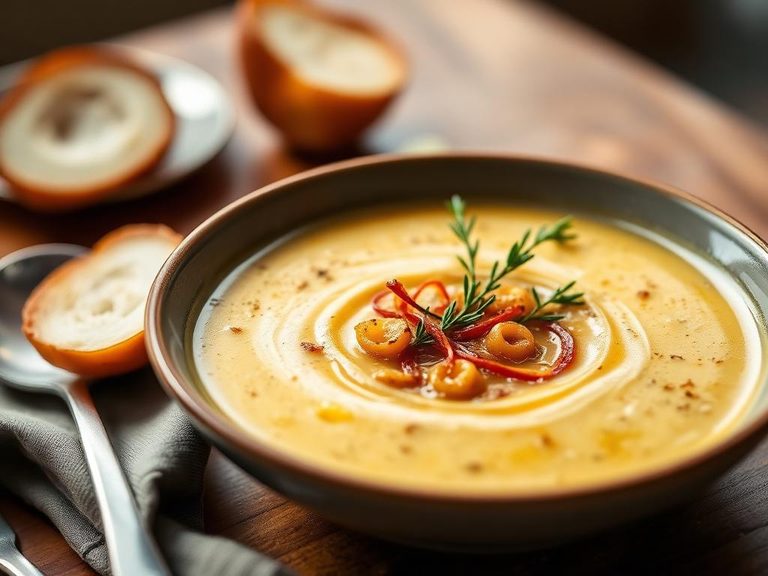
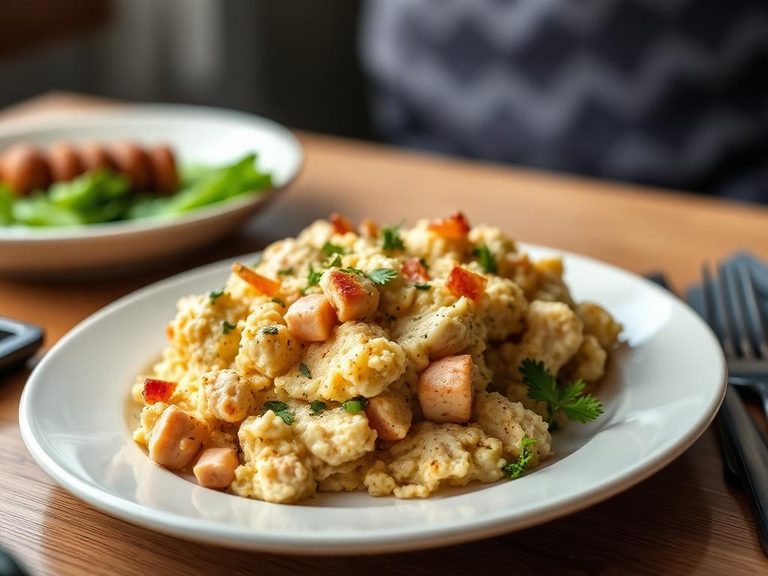
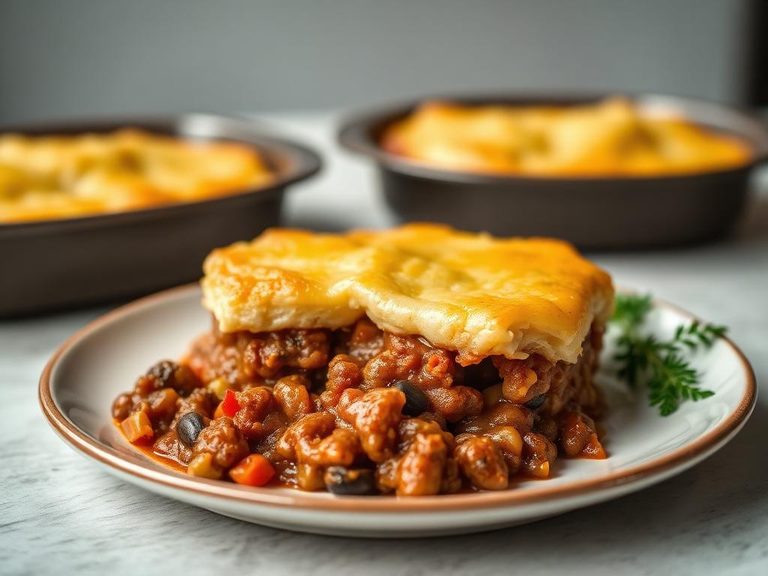
🍽️ Popular dishes

🌍 Where it's eaten
💡 Did you know?
The Maillard reaction, which gives browned food its distinctive flavor, can still occur with canned onions when they are sautéed or baked, further deepening their savory sweetness.
Full nutrition (USDA data · scales with serving)
| Water | 94.1 g |
| Energy | 19.0 kcal |
| Energy | 78.0 kj |
| Protein | 0.85 g |
| Total lipid (fat) | 0.09 g |
| Ash | 0.94 g |
| Carbohydrate, by difference | 4.0 g |
| Fiber, total dietary | 1.2 g |
| Total Sugars | 2.2 g |
| Calcium, Ca | 45.0 mg |
| Iron, Fe | 0.13 mg |
| Magnesium, Mg | 6.0 mg |
| Phosphorus, P | 28.0 mg |
| Potassium, K | 111 mg |
| Sodium, Na | 371 mg |
| Zinc, Zn | 0.29 mg |
| Copper, Cu | 0.06 mg |
| Manganese, Mn | 0.10 mg |
| Selenium, Se | 0.30 ug |
| Vitamin C, total ascorbic acid | 4.3 mg |
| Thiamin | 0.03 mg |
| Riboflavin | 0.01 mg |
| Niacin | 0.06 mg |
| Pantothenic acid | 0.10 mg |
| Vitamin B-6 | 0.14 mg |
| Folate, total | 10.0 ug |
| Folic acid | 0.00 ug |
| Folate, food | 10.0 ug |
| Folate, DFE | 10.0 ug |
| Vitamin B-12 | 0.00 ug |
| Vitamin A, RAE | 0.00 ug |
| Retinol | 0.00 ug |
| Carotene, beta | 1.0 ug |
| Carotene, alpha | 0.00 ug |
| Cryptoxanthin, beta | 0.00 ug |
| Vitamin A, IU | 1.0 iu |
| Lycopene | 0.00 ug |
| Lutein + zeaxanthin | 2.0 ug |
| Vitamin E (alpha-tocopherol) | 0.07 mg |
| Vitamin D (D2 + D3), International Units | 0.00 iu |
| Vitamin D (D2 + D3) | 0.00 ug |
| Vitamin K (phylloquinone) | 0.20 ug |
| Alcohol, ethyl | 0.00 g |
| Caffeine | 0.00 mg |
| Theobromine | 0.00 mg |
Fat & fatty acid profile (per 100g)
| Fatty acids, total saturated | 0.02 g |
| SFA 4:0 | 0.00 g |
| SFA 6:0 | 0.00 g |
| SFA 8:0 | 0.00 g |
| SFA 10:0 | 0.00 g |
| SFA 12:0 | 0.00 g |
| SFA 14:0 | 0.00 g |
| SFA 16:0 | 0.01 g |
| SFA 18:0 | 0.00 g |
| Fatty acids, total monounsaturated | 0.01 g |
| MUFA 16:1 | 0.00 g |
| MUFA 18:1 | 0.01 g |
| MUFA 20:1 | 0.00 g |
| MUFA 22:1 | 0.00 g |
| Fatty acids, total polyunsaturated | 0.04 g |
| PUFA 18:2 | 0.03 g |
| PUFA 18:3 | 0.00 g |
| PUFA 18:4 | 0.00 g |
| PUFA 20:4 | 0.00 g |
| PUFA 20:5 n-3 (EPA) | 0.00 g |
| PUFA 22:5 n-3 (DPA) | 0.00 g |
| PUFA 22:6 n-3 (DHA) | 0.00 g |
| Fatty acids, total trans | 0.00 g |
| Cholesterol | 0.00 mg |
Amino acid profile (per 100g)
| Tryptophan | 0.01 g |
| Threonine | 0.02 g |
| Isoleucine | 0.03 g |
| Leucine | 0.03 g |
| Lysine | 0.04 g |
| Methionine | 0.01 g |
| Cystine | 0.01 g |
| Phenylalanine | 0.02 g |
| Tyrosine | 0.02 g |
| Valine | 0.02 g |
| Arginine | 0.11 g |
| Histidine | 0.01 g |
| Alanine | 0.02 g |
| Aspartic acid | 0.04 g |
| Glutamic acid | 0.13 g |
| Glycine | 0.03 g |
| Proline | 0.03 g |
| Serine | 0.02 g |
FAQ
Are canned onions as nutritious as fresh onions?
Canning can reduce some heat-sensitive vitamins like vitamin C, but it preserves most minerals and fiber. The primary nutritional difference is often the added sodium in the canning liquid.
What's the best way to use canned onions?
They are ideal for cooked dishes where a soft texture is desired, such as soups, stews, casseroles, and sauces. Rinsing them first can reduce sodium and any metallic taste.
Can I substitute canned onions for fresh onions in a recipe?
Yes, but adjust for texture and moisture. Use about 1/2 cup of canned onions for 1 medium fresh onion, and reduce other liquids in the recipe slightly as canned onions add moisture.
Nutrient density (calculated · NRF9.3)
Nutrient Rich Foods index: beneficial nutrients (protein, fiber, vitamins, minerals) minus saturated fat, added sugar & sodium, per 100 kcal.
NRF9.3 index — Fulgoni, Keast & Drewnowski, 2009. Computed from USDA nutrients.
Weight-loss friendliness (composite index)
Energy density 0.19 kcal/g · 18% calories from protein · 1.2 g fiber · 2.2 g sugar per 100 g.
Composite of energy density (Rolls et al., 1999), protein & fiber satiety, minus sugar. A calculated heuristic — ranks satiety-per-calorie, not a clinical measure.
Dietary load (calculated from USDA values)
Potential renal acid load. Positive = acid-forming, negative = alkaline-forming.
Sodium-to-potassium ratio: 3.34 (lower is better — aim for ≤ 1)
Sodium:potassium per WHO potassium guidance. Computed from USDA nutrients.