

Okra, frozen, unprepared
Whole food · Vegetables and Vegetable Products

Photo: Wikipedia
Frozen okra, unprepared, consists of sliced, flash-frozen pods that retain a vibrant green hue and a characteristic, slightly grassy flavor. When cooked, its texture transforms from firm to tender with a distinctive, pleasantly viscous quality known as 'slime' or 'mucilage.' Nutritionally, it is a low-calorie, high-fiber vegetable, offering a good source of vitamin C and antioxidants.
Calorie split: 19% protein · 75% carbs · 6% fat
↓ Full nutrition💚 Why it's loved
People love okra for its unique, slightly sweet flavor and its ability to act as a natural thickener in stews and gumbos. Its versatility in global cuisines, from Southern U.S. to West African and Indian, makes it a beloved ingredient for creating rich, comforting dishes.
⚠️ Watch-outs & how to enjoy it better
The primary dislike is its slimy or mucilaginous texture when cooked, which some find unappealing. To counteract this, you can cook it quickly at high heat (like roasting or sautéing), pair it with acidic ingredients like tomatoes or vinegar, or soak it in a vinegar-water solution before cooking to reduce the slime.
Key benefits
- Excellent source of dietary fiber (2.2g per 100g).
- Very low in calories (30 kcal per 100g).
- Contains antioxidants like polyphenols and vitamin C.
- Provides folate and vitamin K for cellular and bone health.
- High in mucilage, a soluble fiber beneficial for digestive health.
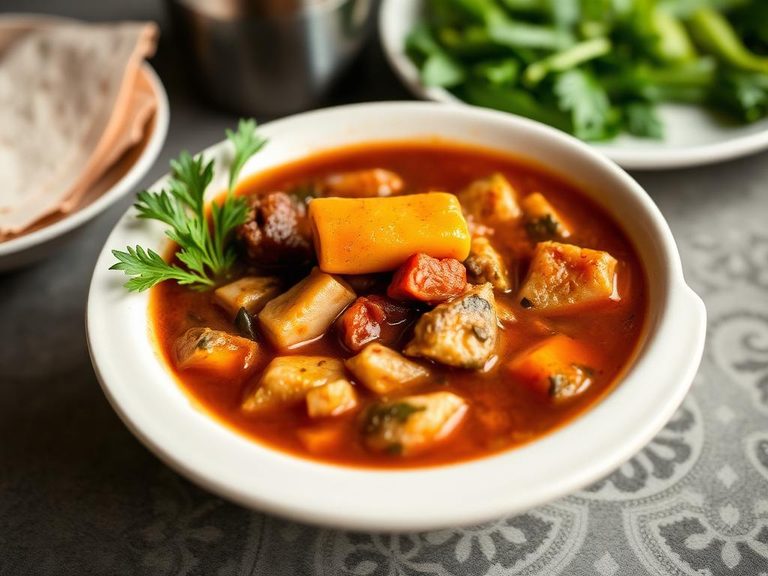
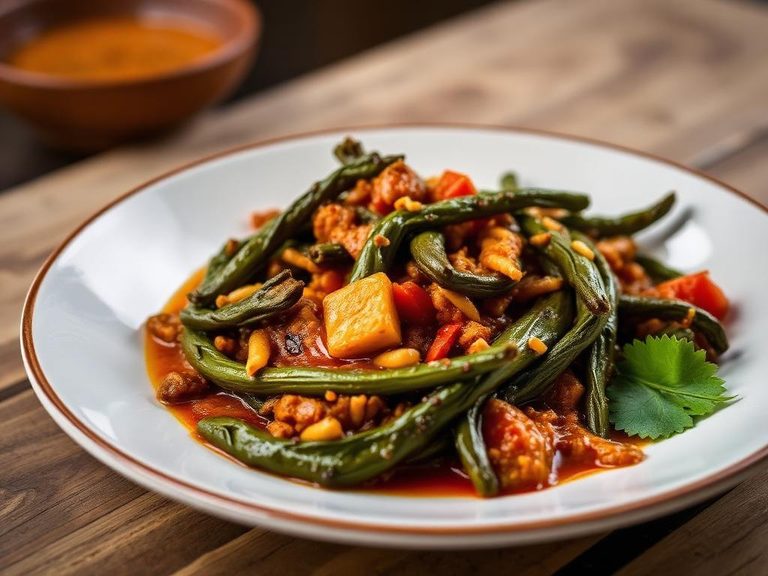
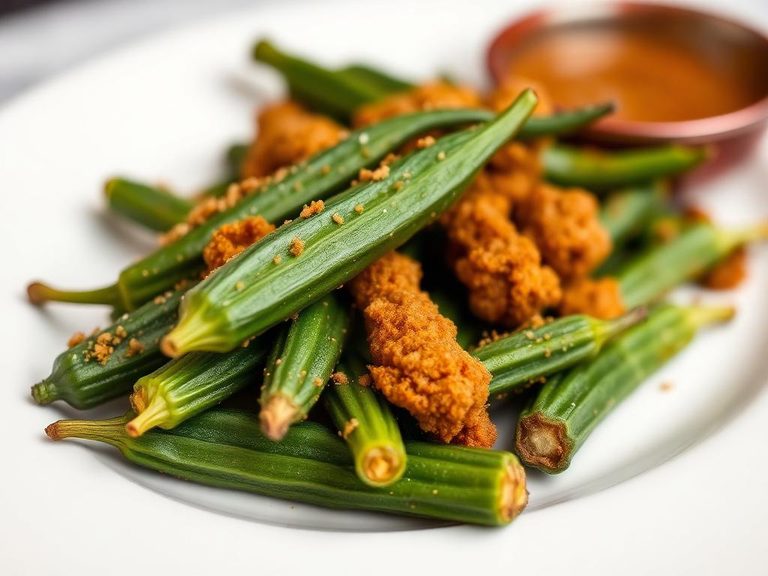
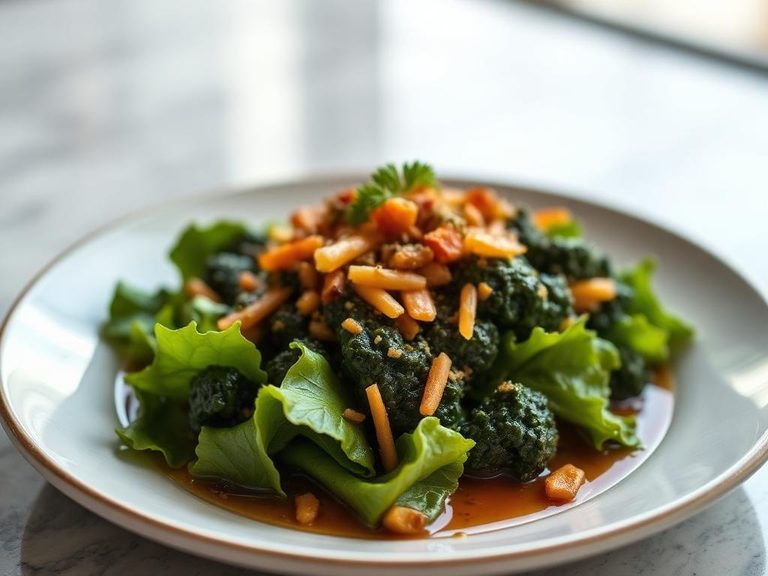
🍽️ Popular dishes
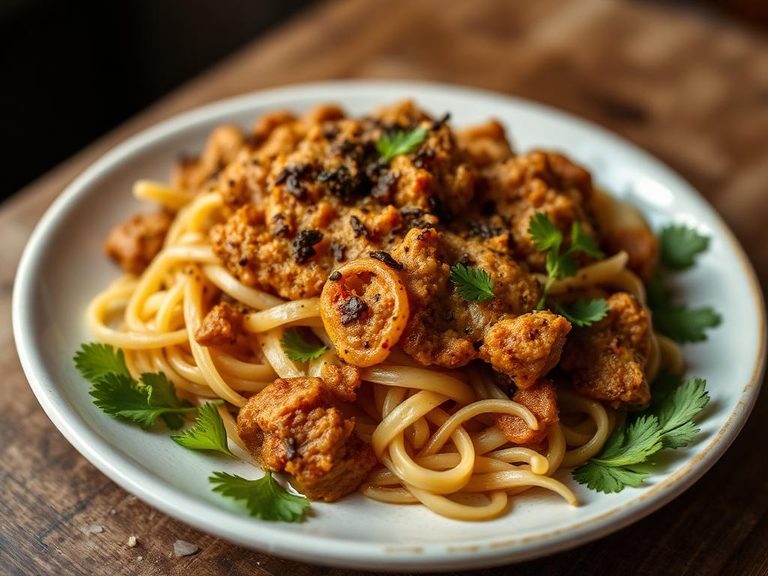
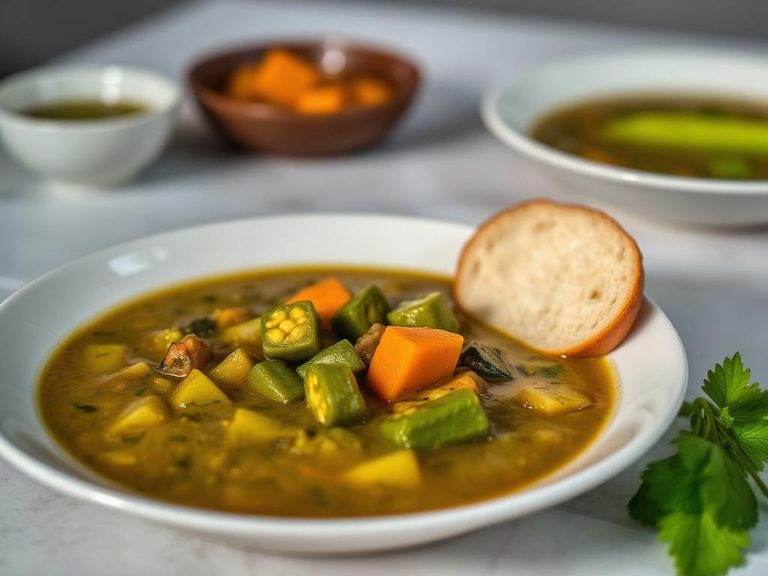
🌍 Where it's eaten
💡 Did you know?
The 'slime' in okra is actually a beneficial soluble fiber called mucilage, which is used in some traditional medicines and even as a natural thickener in ice cream production.
Full nutrition (USDA data · scales with serving)
| Water | 90.8 g |
| Energy | 30.0 kcal |
| Energy | 125 kj |
| Protein | 1.7 g |
| Total lipid (fat) | 0.25 g |
| Ash | 0.61 g |
| Carbohydrate, by difference | 6.6 g |
| Fiber, total dietary | 2.2 g |
| Total Sugars | 3.0 g |
| Calcium, Ca | 81.0 mg |
| Iron, Fe | 0.57 mg |
| Magnesium, Mg | 43.0 mg |
| Phosphorus, P | 42.0 mg |
| Potassium, K | 211 mg |
| Sodium, Na | 3.0 mg |
| Zinc, Zn | 0.53 mg |
| Copper, Cu | 0.08 mg |
| Manganese, Mn | 0.87 mg |
| Selenium, Se | 0.60 ug |
| Vitamin C, total ascorbic acid | 12.4 mg |
| Thiamin | 0.09 mg |
| Riboflavin | 0.10 mg |
| Niacin | 0.71 mg |
| Pantothenic acid | 0.22 mg |
| Vitamin B-6 | 0.04 mg |
| Folate, total | 148 ug |
| Folic acid | 0.00 ug |
| Folate, food | 148 ug |
| Folate, DFE | 148 ug |
| Choline, total | 11.4 mg |
| Vitamin B-12 | 0.00 ug |
| Vitamin B-12, added | 0.00 ug |
| Vitamin A, RAE | 18.0 ug |
| Retinol | 0.00 ug |
| Carotene, beta | 210 ug |
| Carotene, alpha | 0.00 ug |
| Cryptoxanthin, beta | 0.00 ug |
| Vitamin A, IU | 350 iu |
| Lycopene | 0.00 ug |
| Lutein + zeaxanthin | 482 ug |
| Vitamin E (alpha-tocopherol) | 0.33 mg |
| Vitamin E, added | 0.00 mg |
| Vitamin D (D2 + D3), International Units | 0.00 iu |
| Vitamin D (D2 + D3) | 0.00 ug |
| Vitamin K (phylloquinone) | 49.4 ug |
| Alcohol, ethyl | 0.00 g |
| Caffeine | 0.00 mg |
| Theobromine | 0.00 mg |
Fat & fatty acid profile (per 100g)
| Fatty acids, total saturated | 0.07 g |
| SFA 4:0 | 0.00 g |
| SFA 6:0 | 0.00 g |
| SFA 8:0 | 0.00 g |
| SFA 10:0 | 0.00 g |
| SFA 12:0 | 0.00 g |
| SFA 14:0 | 0.00 g |
| SFA 16:0 | 0.06 g |
| SFA 18:0 | 0.01 g |
| Fatty acids, total monounsaturated | 0.04 g |
| MUFA 16:1 | 0.00 g |
| MUFA 18:1 | 0.04 g |
| MUFA 20:1 | 0.00 g |
| MUFA 22:1 | 0.00 g |
| Fatty acids, total polyunsaturated | 0.07 g |
| PUFA 18:2 | 0.07 g |
| PUFA 18:3 | 0.00 g |
| PUFA 18:4 | 0.00 g |
| PUFA 20:4 | 0.00 g |
| PUFA 20:5 n-3 (EPA) | 0.00 g |
| PUFA 22:5 n-3 (DPA) | 0.00 g |
| PUFA 22:6 n-3 (DHA) | 0.00 g |
| Fatty acids, total trans | 0.00 g |
| Cholesterol | 0.00 mg |
Amino acid profile (per 100g)
| Tryptophan | 0.01 g |
| Threonine | 0.06 g |
| Isoleucine | 0.06 g |
| Leucine | 0.09 g |
| Lysine | 0.07 g |
| Methionine | 0.02 g |
| Cystine | 0.02 g |
| Phenylalanine | 0.06 g |
| Tyrosine | 0.07 g |
| Valine | 0.08 g |
| Arginine | 0.07 g |
| Histidine | 0.03 g |
| Alanine | 0.06 g |
| Aspartic acid | 0.12 g |
| Glutamic acid | 0.23 g |
| Glycine | 0.04 g |
| Proline | 0.04 g |
| Serine | 0.04 g |
FAQ
How do I reduce the sliminess of frozen okra?
Cook it quickly over high heat (roasting, sautéing, or frying), add acidic ingredients like tomatoes or lemon juice, or soak it in a mixture of water and vinegar for 30 minutes before cooking.
Is frozen okra as nutritious as fresh?
Yes, frozen okra is often more nutritious than fresh because it is flash-frozen at peak ripeness, preserving vitamins and antioxidants that can degrade over time in fresh produce.
Can I eat okra raw?
While some people eat young, tender okra raw in salads, it is more commonly cooked. Cooking helps to soften its texture and reduce its mucilaginous quality for most palates.
Nutrient density (calculated · NRF9.3)
Nutrient Rich Foods index: beneficial nutrients (protein, fiber, vitamins, minerals) minus saturated fat, added sugar & sodium, per 100 kcal.
NRF9.3 index — Fulgoni, Keast & Drewnowski, 2009. Computed from USDA nutrients.
Weight-loss friendliness (composite index)
Energy density 0.30 kcal/g · 23% calories from protein · 2.2 g fiber · 3.0 g sugar per 100 g.
Composite of energy density (Rolls et al., 1999), protein & fiber satiety, minus sugar. A calculated heuristic — ranks satiety-per-calorie, not a clinical measure.
Dietary load (calculated from USDA values)
Potential renal acid load. Positive = acid-forming, negative = alkaline-forming.
Sodium-to-potassium ratio: 0.01 (lower is better — aim for ≤ 1)
Sodium:potassium per WHO potassium guidance. Computed from USDA nutrients.