

Oil, cocoa butter
Whole food · Fats and Oils

Photo: Wikipedia
Cocoa butter is the pure, edible fat extracted from roasted cacao beans, solid at room temperature with a smooth, waxy texture. It has a delicate, mild chocolate aroma and a clean, creamy mouthfeel that melts instantly at body temperature. Nutritionally, it is 100% fat, providing a dense source of calories with no protein, carbs, or fiber.
Calorie split: 0% protein · 0% carbs · 100% fat
↓ Full nutrition💚 Why it's loved
People love cocoa butter for its luxurious, melt-on-the-tongue texture and subtle chocolate essence that enhances confections without overpowering them. It's a versatile fat prized in both gourmet baking and artisanal chocolate-making for creating a smooth, glossy finish.
⚠️ Watch-outs & how to enjoy it better
As a highly concentrated fat, it's very calorie-dense and should be used sparingly by those monitoring fat intake. Its high saturated fat content means it can raise LDL cholesterol if consumed in excess, so pairing it with fiber-rich foods like oats or fruit can help mitigate this. It's also a common allergen for those with cacao sensitivities.
Key benefits
- Rich in heart-healthy monounsaturated fats (oleic acid)
- Contains natural antioxidants called polyphenols
- Provides a quick, dense source of energy
- Used in skin care for its moisturizing properties
- Stable fat with a high smoke point for cooking
🍽️ Popular dishes

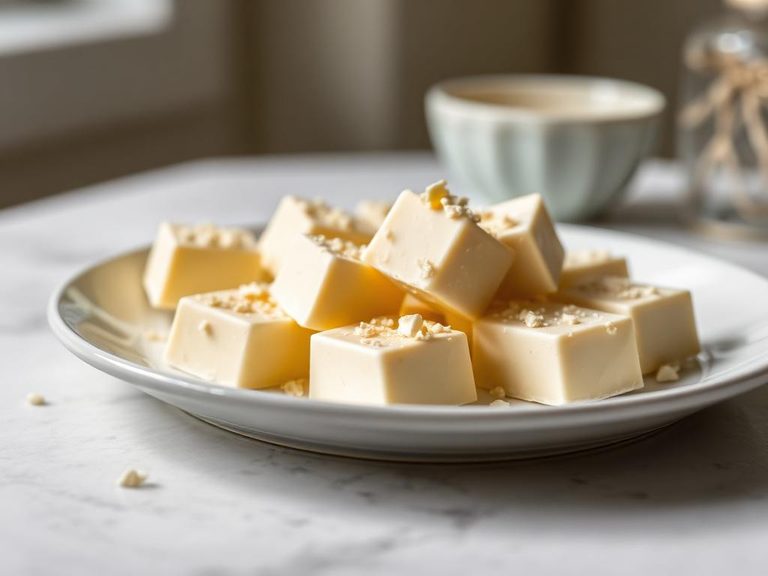


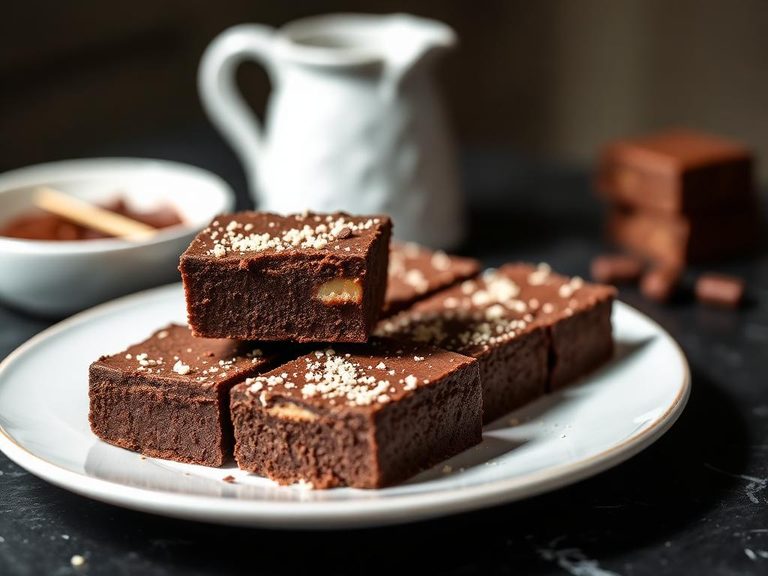

🌍 Where it's eaten
💡 Did you know?
Cocoa butter is so stable that it can last for years without going rancid, which is why it was historically used by explorers and sailors as a long-lasting, high-energy food source.
Full nutrition (USDA data · scales with serving)
| Water | 0.00 g |
| Energy | 884 kcal |
| Energy | 3699 kj |
| Protein | 0.00 g |
| Total lipid (fat) | 100 g |
| Ash | 0.00 g |
| Carbohydrate, by difference | 0.00 g |
| Fiber, total dietary | 0.00 g |
| Total Sugars | 0.00 g |
| Calcium, Ca | 0.00 mg |
| Iron, Fe | 0.00 mg |
| Magnesium, Mg | 0.00 mg |
| Phosphorus, P | 0.00 mg |
| Potassium, K | 0.00 mg |
| Sodium, Na | 0.00 mg |
| Zinc, Zn | 0.00 mg |
| Copper, Cu | 0.00 mg |
| Manganese, Mn | 0.00 mg |
| Selenium, Se | 0.00 ug |
| Vitamin C, total ascorbic acid | 0.00 mg |
| Thiamin | 0.00 mg |
| Riboflavin | 0.00 mg |
| Niacin | 0.00 mg |
| Pantothenic acid | 0.00 mg |
| Vitamin B-6 | 0.00 mg |
| Folate, total | 0.00 ug |
| Folic acid | 0.00 ug |
| Folate, food | 0.00 ug |
| Folate, DFE | 0.00 ug |
| Choline, total | 0.30 mg |
| Vitamin B-12 | 0.00 ug |
| Vitamin B-12, added | 0.00 ug |
| Vitamin A, RAE | 0.00 ug |
| Retinol | 0.00 ug |
| Carotene, beta | 0.00 ug |
| Carotene, alpha | 0.00 ug |
| Cryptoxanthin, beta | 0.00 ug |
| Vitamin A, IU | 0.00 iu |
| Lycopene | 0.00 ug |
| Lutein + zeaxanthin | 0.00 ug |
| Vitamin E (alpha-tocopherol) | 1.8 mg |
| Vitamin E, added | 0.00 mg |
| Vitamin K (phylloquinone) | 24.7 ug |
| Alcohol, ethyl | 0.00 g |
| Caffeine | 0.00 mg |
| Theobromine | 0.00 mg |
Fat & fatty acid profile (per 100g)
| Fatty acids, total saturated | 59.7 g |
| SFA 4:0 | 0.00 g |
| SFA 6:0 | 0.00 g |
| SFA 8:0 | 0.00 g |
| SFA 10:0 | 0.00 g |
| SFA 12:0 | 0.00 g |
| SFA 14:0 | 0.10 g |
| SFA 16:0 | 25.4 g |
| SFA 18:0 | 33.2 g |
| Fatty acids, total monounsaturated | 32.9 g |
| MUFA 16:1 | 0.20 g |
| MUFA 18:1 | 32.6 g |
| MUFA 20:1 | 0.00 g |
| MUFA 22:1 | 0.00 g |
| Fatty acids, total polyunsaturated | 3.0 g |
| PUFA 18:2 | 2.8 g |
| PUFA 18:3 | 0.10 g |
| PUFA 18:4 | 0.00 g |
| PUFA 20:4 | 0.00 g |
| PUFA 20:5 n-3 (EPA) | 0.00 g |
| PUFA 22:5 n-3 (DPA) | 0.00 g |
| PUFA 22:6 n-3 (DHA) | 0.00 g |
| Cholesterol | 0.00 mg |
| Phytosterols | 201 mg |
Amino acid profile (per 100g)
| Tryptophan | 0.00 g |
| Threonine | 0.00 g |
| Isoleucine | 0.00 g |
| Leucine | 0.00 g |
| Lysine | 0.00 g |
| Methionine | 0.00 g |
| Cystine | 0.00 g |
| Phenylalanine | 0.00 g |
| Tyrosine | 0.00 g |
| Valine | 0.00 g |
| Arginine | 0.00 g |
| Histidine | 0.00 g |
| Alanine | 0.00 g |
| Aspartic acid | 0.00 g |
| Glutamic acid | 0.00 g |
| Glycine | 0.00 g |
| Proline | 0.00 g |
| Serine | 0.00 g |
FAQ
Is cocoa butter the same as coconut oil?
No. While both are solid at room temperature and high in saturated fats, cocoa butter comes from cacao beans and has a distinct chocolate aroma, whereas coconut oil comes from coconuts and has a sweet, nutty scent.
Can I use cocoa butter for high-heat cooking?
Yes, cocoa butter has a relatively high smoke point (around 350°F / 177°C), making it suitable for sautéing or baking at moderate temperatures, but it's not ideal for deep-frying.
Why does cocoa butter feel so good on skin?
It's rich in fatty acids that are easily absorbed, providing deep moisturization. Its composition is similar to human sebum, making it an excellent emollient.
Nutrient density (calculated · NRF9.3)
Nutrient Rich Foods index: beneficial nutrients (protein, fiber, vitamins, minerals) minus saturated fat, added sugar & sodium, per 100 kcal.
NRF9.3 index — Fulgoni, Keast & Drewnowski, 2009. Computed from USDA nutrients.
Weight-loss friendliness (composite index)
Energy density 8.84 kcal/g · 0% calories from protein · 0.0 g fiber · 0.0 g sugar per 100 g.
Composite of energy density (Rolls et al., 1999), protein & fiber satiety, minus sugar. A calculated heuristic — ranks satiety-per-calorie, not a clinical measure.
Dietary load (calculated from USDA values)
Potential renal acid load. Positive = acid-forming, negative = alkaline-forming.
Sodium:potassium per WHO potassium guidance. Computed from USDA nutrients.