

White chocolate
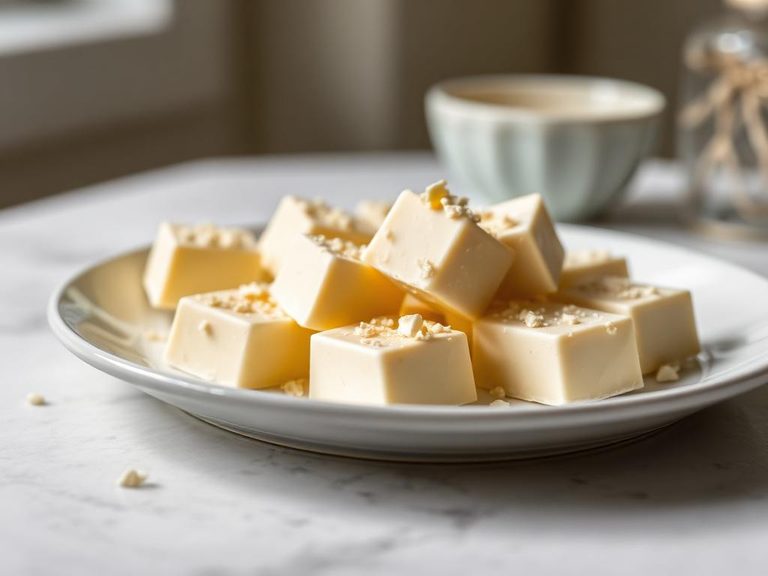
White chocolate is a creamy, sweet confection made from cocoa butter, sugar, and milk solids, without the cocoa solids that give dark and milk chocolate their color and flavor. It originated in Europe, with Switzerland often credited for its development in the 1930s, and is now enjoyed globally in bars, truffles, and as a baking ingredient.
🍽️ Nutrition at a glance
White chocolate is high in fat and sugar, providing a significant source of calories with minimal protein or fiber. A standard serving offers some calcium and phosphorus from the milk content but is generally considered an indulgent treat rather than a nutrient-dense food.
Nutrition breakdown
| Calories | 230 kcal |
| Protein | 2.5 g |
| Carbs | 25 g |
| Fat | 14 g |
| Fiber | 0 g |
| Sugar | 24 g |
| Sodium | 50 mg |
| Calcium | 60 mg |
| Phosphorus | 55 mg |
| Vitamin A | 40 IU |
| Vitamin B12 | 0.1 µg |
| Riboflavin (B2) | 0.03 mg |
| Iron | 0.1 mg |
| Magnesium | 4 mg |
| Zinc | 0.3 mg |
Per 1 bar (40 g) · estimated, varies by recipe
💡 What's interesting
Unlike other chocolates, white chocolate contains no caffeine or theobromine, making it a stimulant-free option. Its unique composition relies entirely on cocoa butter for its signature melt-in-the-mouth texture, which is prized in pastry and confectionery arts.
🍽️ Related dishes





AI estimate may be inaccurate · Terms