

Nuts, coconut milk, raw (liquid expressed from grated meat and water)
Whole food · Nut and Seed Products
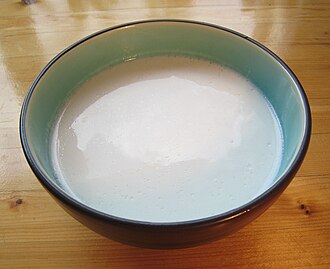
Photo: Wikipedia
Raw coconut milk is the creamy, opaque liquid pressed from fresh grated coconut meat and water. It has a rich, velvety texture and a subtly sweet, nutty flavor that carries the distinct aroma of the coconut palm. Nutritionally, it's a calorie-dense source of healthy fats, particularly medium-chain triglycerides (MCTs), with minimal protein and carbohydrates.
Calorie split: 4% protein · 9% carbs · 87% fat
↓ Full nutrition💚 Why it's loved
People cherish raw coconut milk for its luxurious, creamy mouthfeel and its ability to transform dishes with a deep, tropical richness. It's a cornerstone ingredient in countless cuisines, celebrated for its versatility in curries, desserts, and beverages.
⚠️ Watch-outs & how to enjoy it better
Its high saturated fat and calorie content can be a concern for those monitoring heart health or calorie intake. The natural sugars, though low, can still contribute to blood sugar impact when consumed in large quantities. To mitigate, use it in moderation, pair it with fiber-rich vegetables or lean proteins in savory dishes, and choose unsweetened versions to avoid added sugars.
Key benefits
- Excellent source of energy-dense healthy fats (MCTs).
- Provides essential minerals like manganese and copper.
- Naturally dairy-free and vegan alternative to cow's milk.
- Contains lauric acid, a fatty acid with antimicrobial properties.
- Adds rich, creamy texture to both sweet and savory dishes.
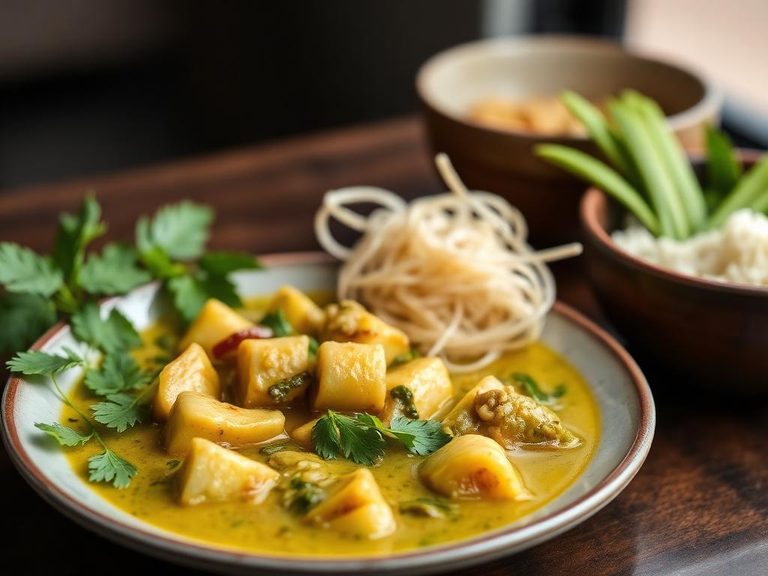
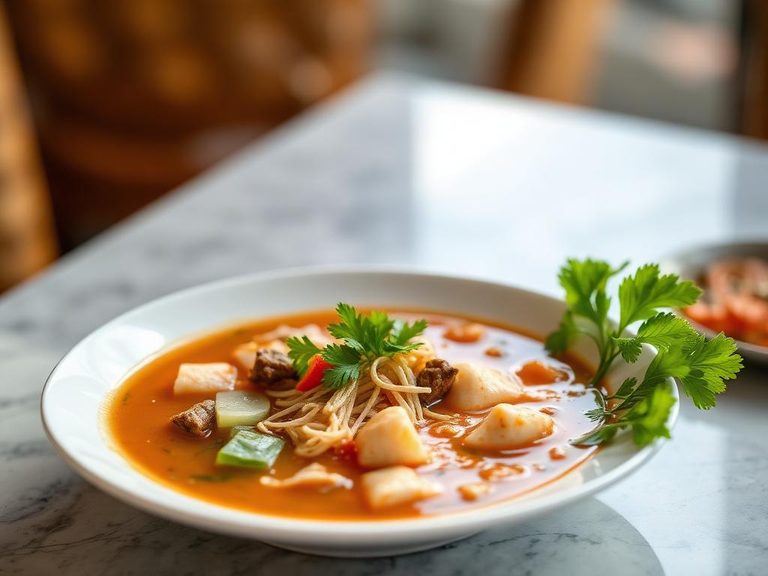
🍽️ Popular dishes


🌍 Where it's eaten
💡 Did you know?
The 'cream' that rises to the top of canned coconut milk is not a separate product but simply the thicker, fattier portion that separates due to gravity, much like cream from raw milk.
Full nutrition (USDA data · scales with serving)
| Water | 67.6 g |
| Energy | 230 kcal |
| Energy | 962 kj |
| Protein | 2.3 g |
| Total lipid (fat) | 23.8 g |
| Ash | 0.72 g |
| Carbohydrate, by difference | 5.5 g |
| Fiber, total dietary | 2.2 g |
| Total Sugars | 3.3 g |
| Calcium, Ca | 16.0 mg |
| Iron, Fe | 1.6 mg |
| Magnesium, Mg | 37.0 mg |
| Phosphorus, P | 100 mg |
| Potassium, K | 263 mg |
| Sodium, Na | 15.0 mg |
| Zinc, Zn | 0.67 mg |
| Copper, Cu | 0.27 mg |
| Manganese, Mn | 0.92 mg |
| Selenium, Se | 6.2 ug |
| Vitamin C, total ascorbic acid | 2.8 mg |
| Thiamin | 0.03 mg |
| Riboflavin | 0.00 mg |
| Niacin | 0.76 mg |
| Pantothenic acid | 0.18 mg |
| Vitamin B-6 | 0.03 mg |
| Folate, total | 16.0 ug |
| Folic acid | 0.00 ug |
| Folate, food | 16.0 ug |
| Folate, DFE | 16.0 ug |
| Choline, total | 8.5 mg |
| Vitamin B-12 | 0.00 ug |
| Vitamin B-12, added | 0.00 ug |
| Vitamin A, RAE | 0.00 ug |
| Retinol | 0.00 ug |
| Carotene, beta | 0.00 ug |
| Carotene, alpha | 0.00 ug |
| Cryptoxanthin, beta | 0.00 ug |
| Vitamin A, IU | 0.00 iu |
| Lycopene | 0.00 ug |
| Lutein + zeaxanthin | 0.00 ug |
| Vitamin E (alpha-tocopherol) | 0.15 mg |
| Vitamin E, added | 0.00 mg |
| Vitamin D (D2 + D3), International Units | 0.00 iu |
| Vitamin D (D2 + D3) | 0.00 ug |
| Vitamin K (phylloquinone) | 0.10 ug |
| Alcohol, ethyl | 0.00 g |
| Caffeine | 0.00 mg |
| Theobromine | 0.00 mg |
Fat & fatty acid profile (per 100g)
| Fatty acids, total saturated | 21.1 g |
| SFA 4:0 | 0.00 g |
| SFA 6:0 | 0.14 g |
| SFA 8:0 | 1.7 g |
| SFA 10:0 | 1.3 g |
| SFA 12:0 | 10.6 g |
| SFA 14:0 | 4.2 g |
| SFA 16:0 | 2.0 g |
| SFA 18:0 | 1.2 g |
| Fatty acids, total monounsaturated | 1.0 g |
| MUFA 16:1 | 0.00 g |
| MUFA 18:1 | 1.0 g |
| MUFA 20:1 | 0.00 g |
| MUFA 22:1 | 0.00 g |
| Fatty acids, total polyunsaturated | 0.26 g |
| PUFA 18:2 | 0.26 g |
| PUFA 18:3 | 0.00 g |
| PUFA 18:4 | 0.00 g |
| PUFA 20:4 | 0.00 g |
| PUFA 20:5 n-3 (EPA) | 0.00 g |
| PUFA 22:5 n-3 (DPA) | 0.00 g |
| PUFA 22:6 n-3 (DHA) | 0.00 g |
| Cholesterol | 0.00 mg |
| Phytosterols | 1.0 mg |
Amino acid profile (per 100g)
| Tryptophan | 0.03 g |
| Threonine | 0.08 g |
| Isoleucine | 0.09 g |
| Leucine | 0.17 g |
| Lysine | 0.10 g |
| Methionine | 0.04 g |
| Cystine | 0.04 g |
| Phenylalanine | 0.12 g |
| Tyrosine | 0.07 g |
| Valine | 0.14 g |
| Arginine | 0.38 g |
| Histidine | 0.05 g |
| Alanine | 0.12 g |
| Aspartic acid | 0.22 g |
| Glutamic acid | 0.52 g |
| Glycine | 0.11 g |
| Proline | 0.10 g |
| Serine | 0.12 g |
FAQ
What's the difference between raw and canned coconut milk?
Raw coconut milk is fresh, perishable, and has a thinner consistency. Canned coconut milk is a processed, shelf-stable product that is often thicker and more concentrated, sometimes with added stabilizers.
Is coconut milk a good source of protein?
No, it is very low in protein (about 2-3g per cup). It is primarily valued for its fat content, not as a protein source.
Can I use coconut milk in coffee?
Yes, it's a popular dairy-free creamer. Shake the can well before using, and be aware it will add a distinct coconut flavor and a significant amount of fat to your drink.
Nutrient density (calculated · NRF9.3)
Nutrient Rich Foods index: beneficial nutrients (protein, fiber, vitamins, minerals) minus saturated fat, added sugar & sodium, per 100 kcal.
NRF9.3 index — Fulgoni, Keast & Drewnowski, 2009. Computed from USDA nutrients.
Weight-loss friendliness (composite index)
Energy density 2.30 kcal/g · 4% calories from protein · 2.2 g fiber · 3.3 g sugar per 100 g.
Composite of energy density (Rolls et al., 1999), protein & fiber satiety, minus sugar. A calculated heuristic — ranks satiety-per-calorie, not a clinical measure.
Dietary load (calculated from USDA values)
Potential renal acid load. Positive = acid-forming, negative = alkaline-forming.
Sodium-to-potassium ratio: 0.06 (lower is better — aim for ≤ 1)
Sodium:potassium per WHO potassium guidance. Computed from USDA nutrients.