

Mollusks, conch, baked or broiled
Whole food · Finfish and Shellfish Products

Photo: Wikipedia
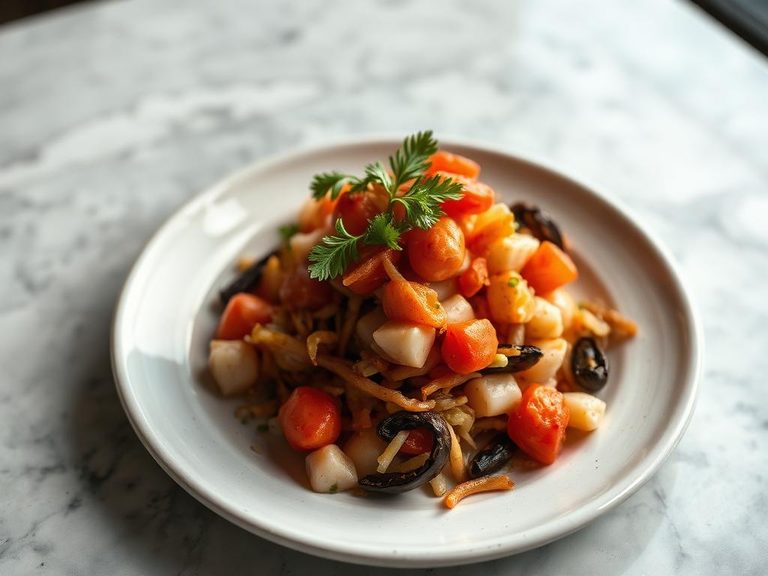
Baked or broiled conch is a firm, dense mollusk with a clean, sweet ocean flavor and a satisfying, slightly chewy texture reminiscent of a well-cooked scallop or octopus. It's a lean protein powerhouse, delivering over 26 grams of protein per 100 grams with minimal fat and carbohydrates. The preparation method highlights its natural sweetness without adding significant calories.
Calorie split: 86% protein · 6% carbs · 9% fat
↓ Full nutrition💚 Why it's loved
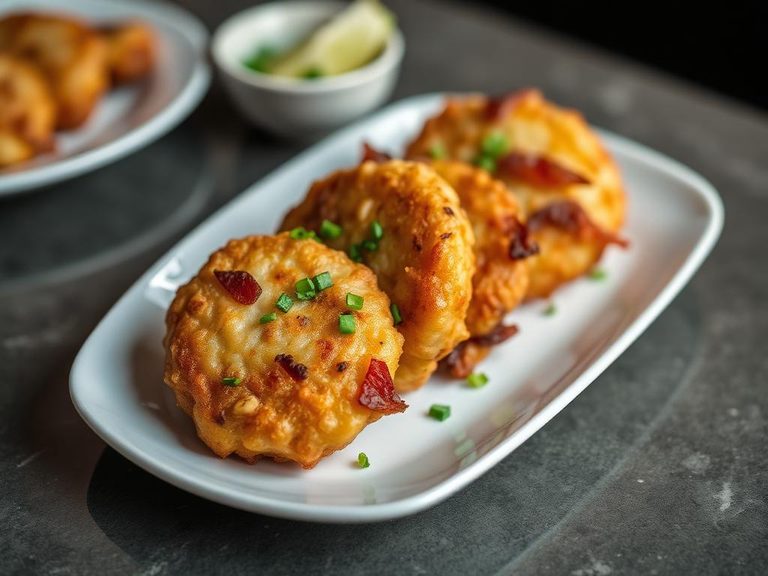
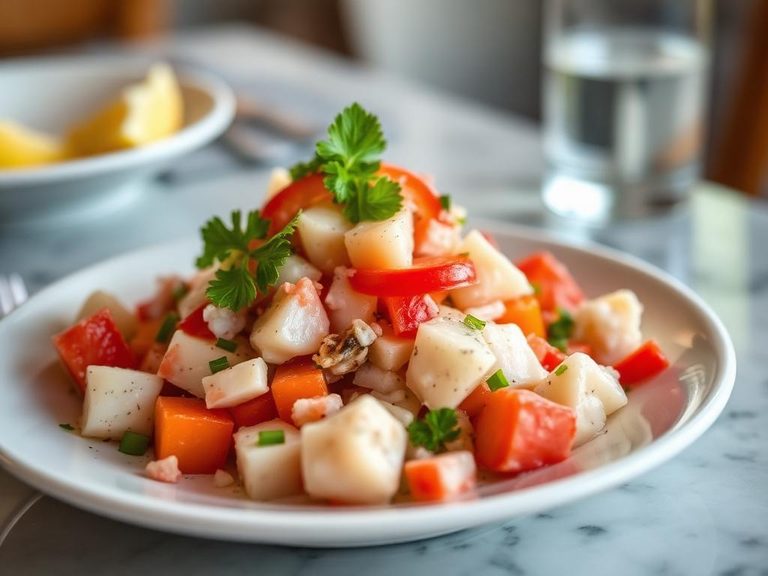
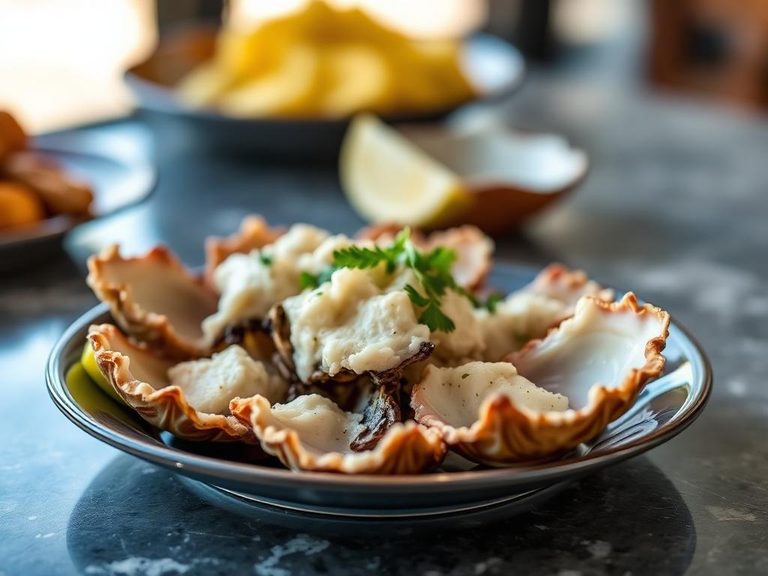
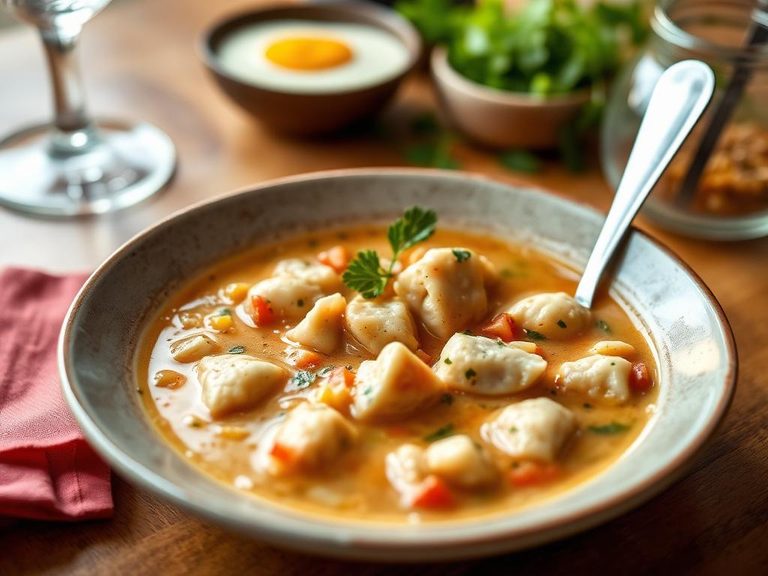
People love conch for its unique, sweet marine flavor and versatile, meaty texture that holds up beautifully to grilling, baking, and frying. It's a celebrated staple in Caribbean cuisines, often enjoyed in casual beachside settings or as a refined appetizer.
⚠️ Watch-outs & how to enjoy it better
Conch can be tough and rubbery if overcooked or not prepared properly, requiring careful pounding or tenderizing. It is a common shellfish allergen, and individuals with shellfish allergies must avoid it. To counteract toughness, slice it thinly against the grain and cook it quickly over high heat or braise it slowly; for allergies, there is no safe preparation method and it must be strictly avoided.
Key benefits
- Excellent source of high-quality, lean protein
- Very low in fat and carbohydrates
- Provides essential minerals like selenium and zinc
- Naturally free of sugar and fiber
- A low-calorie, nutrient-dense seafood option
🍽️ Popular dishes
🌍 Where it's eaten
💡 Did you know?
The large, spiral shell of the queen conch was historically used as a trumpet by indigenous Caribbean peoples and is still blown today for ceremonial purposes.
Full nutrition (USDA data · scales with serving)
| Water | 69.4 g |
| Energy | 130 kcal |
| Energy | 544 kj |
| Protein | 26.3 g |
| Total lipid (fat) | 1.2 g |
| Ash | 1.4 g |
| Carbohydrate, by difference | 1.7 g |
| Fiber, total dietary | 0.00 g |
| Total Sugars | 0.00 g |
| Calcium, Ca | 98.0 mg |
| Iron, Fe | 1.4 mg |
| Magnesium, Mg | 238 mg |
| Phosphorus, P | 217 mg |
| Potassium, K | 163 mg |
| Sodium, Na | 153 mg |
| Zinc, Zn | 1.7 mg |
| Copper, Cu | 0.43 mg |
| Selenium, Se | 40.3 ug |
| Vitamin C, total ascorbic acid | 0.00 mg |
| Thiamin | 0.06 mg |
| Riboflavin | 0.08 mg |
| Niacin | 1.0 mg |
| Vitamin B-6 | 0.06 mg |
| Folate, total | 179 ug |
| Folic acid | 0.00 ug |
| Folate, food | 179 ug |
| Folate, DFE | 179 ug |
| Choline, total | 81.0 mg |
| Vitamin B-12 | 5.3 ug |
| Vitamin B-12, added | 0.00 ug |
| Vitamin A, RAE | 7.0 ug |
| Retinol | 7.0 ug |
| Carotene, beta | 0.00 ug |
| Carotene, alpha | 0.00 ug |
| Cryptoxanthin, beta | 0.00 ug |
| Vitamin A, IU | 23.0 iu |
| Lycopene | 0.00 ug |
| Lutein + zeaxanthin | 0.00 ug |
| Vitamin E (alpha-tocopherol) | 6.3 mg |
| Vitamin E, added | 0.00 mg |
| Vitamin D (D2 + D3), International Units | 0.00 iu |
| Vitamin D (D2 + D3) | 0.00 ug |
| Vitamin D3 (cholecalciferol) | 0.00 ug |
| Vitamin K (phylloquinone) | 0.20 ug |
| Alcohol, ethyl | 0.00 g |
| Caffeine | 0.00 mg |
| Theobromine | 0.00 mg |
Fat & fatty acid profile (per 100g)
| Fatty acids, total saturated | 0.37 g |
| SFA 4:0 | 0.00 g |
| SFA 6:0 | 0.00 g |
| SFA 8:0 | 0.00 g |
| SFA 10:0 | 0.00 g |
| SFA 12:0 | 0.00 g |
| SFA 14:0 | 0.02 g |
| SFA 16:0 | 0.24 g |
| SFA 18:0 | 0.11 g |
| Fatty acids, total monounsaturated | 0.33 g |
| MUFA 16:1 | 0.06 g |
| MUFA 18:1 | 0.07 g |
| MUFA 20:1 | 0.10 g |
| MUFA 22:1 | 0.11 g |
| Fatty acids, total polyunsaturated | 0.27 g |
| PUFA 18:2 | 0.05 g |
| PUFA 18:3 | 0.00 g |
| PUFA 18:4 | 0.00 g |
| PUFA 20:4 | 0.11 g |
| PUFA 20:5 n-3 (EPA) | 0.05 g |
| PUFA 22:5 n-3 (DPA) | 0.00 g |
| PUFA 22:6 n-3 (DHA) | 0.07 g |
| Cholesterol | 65.0 mg |
Amino acid profile (per 100g)
Estimated from Mollusks, abalone, mixed species, cooked, fried — USDA does not publish this profile for Mollusks.
| Tryptophan | 0.22 g |
| Threonine | 0.84 g |
| Isoleucine | 0.85 g |
| Leucine | 1.4 g |
| Lysine | 1.4 g |
| Methionine | 0.44 g |
| Cystine | 0.26 g |
| Phenylalanine | 0.71 g |
| Tyrosine | 0.63 g |
| Valine | 0.86 g |
| Arginine | 1.4 g |
| Histidine | 0.38 g |
| Alanine | 1.2 g |
| Aspartic acid | 1.9 g |
| Glutamic acid | 2.8 g |
| Glycine | 1.2 g |
| Proline | 0.85 g |
| Serine | 0.89 g |
FAQ
How do I know when conch is cooked?
Conch cooks very quickly. When baked or broiled, it's done when the flesh turns opaque and firm, usually within 5-8 minutes depending on thickness. Overcooking makes it tough and rubbery.
Is conch the same as escargot?
No. Conch is a large marine snail (mollusk) found in warm ocean waters, while escargot refers to edible land snails, typically served in French cuisine.
Can I eat conch raw?
Yes, in dishes like conch salad, it is served raw after being meticulously cleaned and sliced. It must be very fresh and handled with strict food safety practices.
Nutrient density (calculated · NRF9.3)
Nutrient Rich Foods index: beneficial nutrients (protein, fiber, vitamins, minerals) minus saturated fat, added sugar & sodium, per 100 kcal.
NRF9.3 index — Fulgoni, Keast & Drewnowski, 2009. Computed from USDA nutrients.
Weight-loss friendliness (composite index)
Energy density 1.30 kcal/g · 81% calories from protein · 0.0 g fiber · 0.0 g sugar per 100 g.
Composite of energy density (Rolls et al., 1999), protein & fiber satiety, minus sugar. A calculated heuristic — ranks satiety-per-calorie, not a clinical measure.
Dietary load (calculated from USDA values)
Potential renal acid load. Positive = acid-forming, negative = alkaline-forming.
Sodium-to-potassium ratio: 0.94 (lower is better — aim for ≤ 1)
Sodium:potassium per WHO potassium guidance. Computed from USDA nutrients.