

Mollusks, abalone, mixed species, cooked, fried
Whole food · Finfish and Shellfish Products

Photo: Wikipedia
Fried abalone is a luxurious seafood delicacy, prized for its firm, slightly chewy texture and a sweet, briny flavor that intensifies with a golden, crisp coating. Nutritionally, it's a lean protein powerhouse, delivering nearly 20 grams of protein per 100 grams with minimal fat, making it a satisfying and nutrient-dense choice.
Calorie split: 43% protein · 24% carbs · 33% fat
↓ Full nutrition💚 Why it's loved
People cherish fried abalone for its unique, oceanic sweetness and satisfyingly meaty bite, which holds up beautifully to high-heat cooking. It's a symbol of celebration and prosperity in many cultures, often featured at banquets and special occasions.
⚠️ Watch-outs & how to enjoy it better
The frying process adds calories and fat, and the natural sodium content in shellfish can be high. To counteract this, opt for a light dusting of cornstarch or panko instead of a heavy batter, and pair it with a fresh, acidic salad or steamed vegetables to balance the meal.
Key benefits
- Excellent source of high-quality, lean protein
- Rich in essential minerals like iron, selenium, and zinc
- Contains omega-3 fatty acids for heart health
- Low in carbohydrates and naturally sugar-free
🍽️ Popular dishes
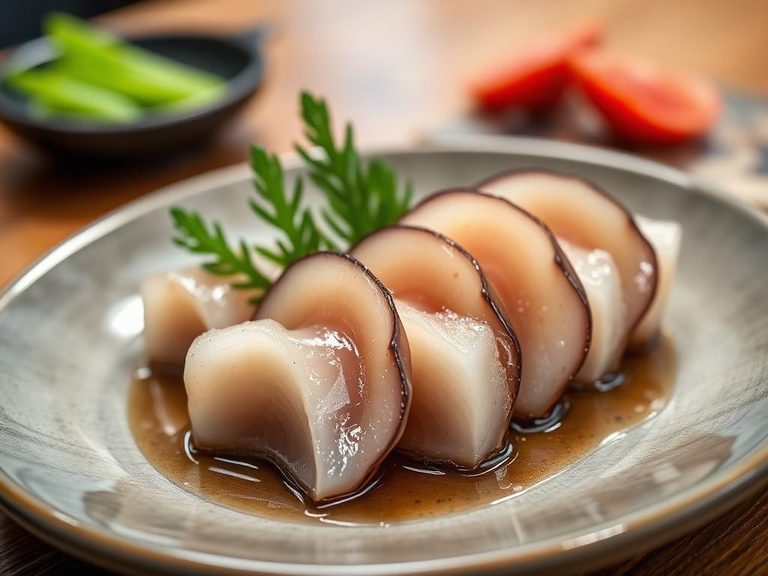
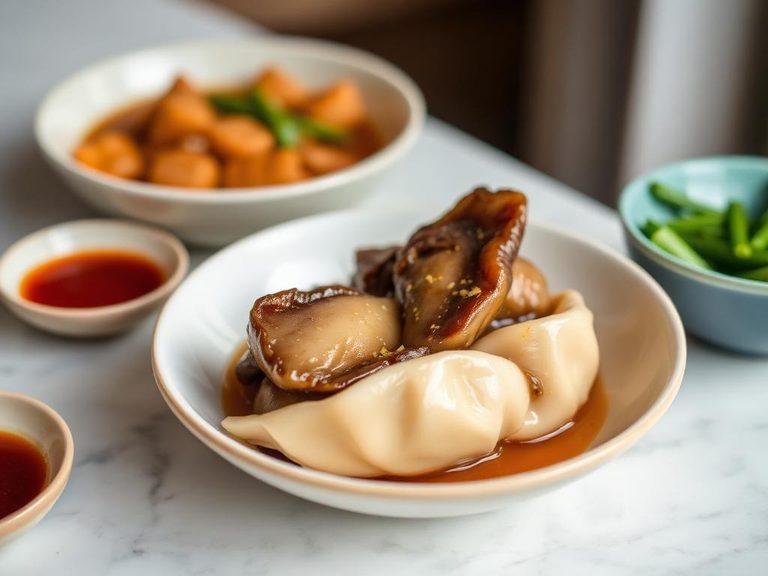

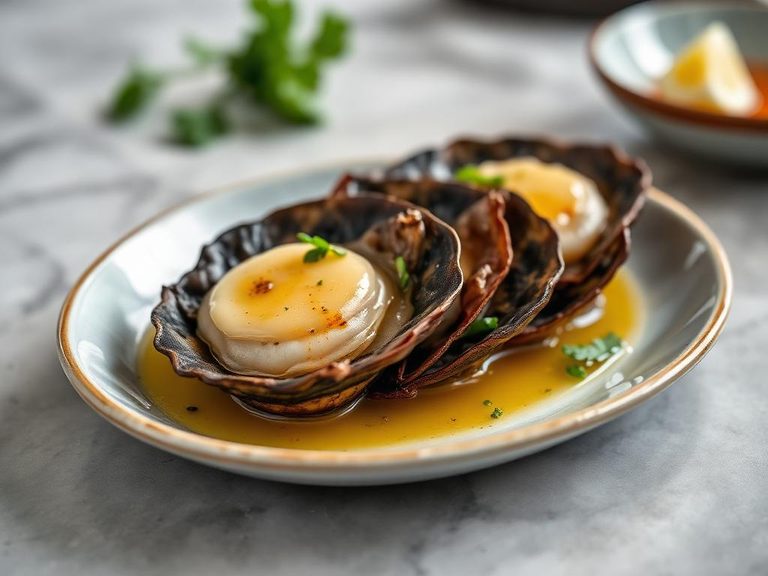
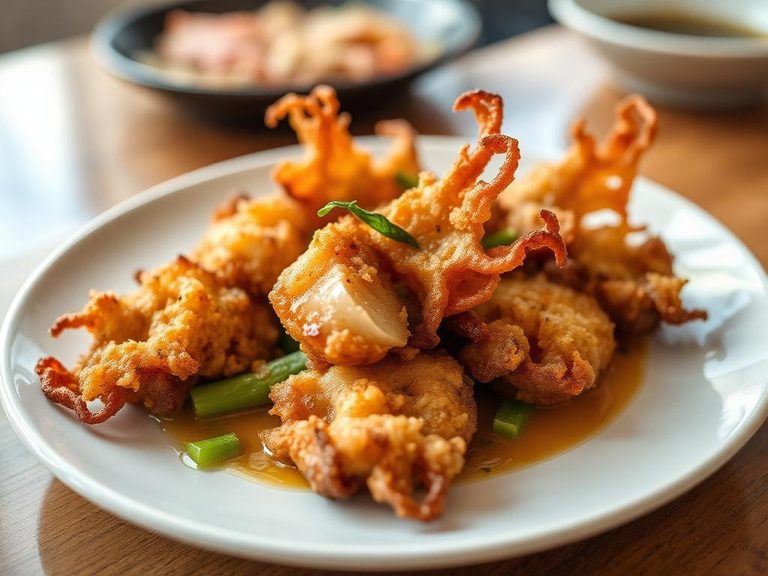
🌍 Where it's eaten
💡 Did you know?
Abalone have a unique shell structure made of microscopic calcium carbonate tiles, which makes them incredibly strong and is studied by scientists for advanced material design.
Full nutrition (USDA data · scales with serving)
| Water | 60.1 g |
| Energy | 189 kcal |
| Energy | 791 kj |
| Protein | 19.6 g |
| Total lipid (fat) | 6.8 g |
| Ash | 1.8 g |
| Carbohydrate, by difference | 11.1 g |
| Fiber, total dietary | 0.00 g |
| Calcium, Ca | 37.0 mg |
| Iron, Fe | 3.8 mg |
| Magnesium, Mg | 56.0 mg |
| Phosphorus, P | 217 mg |
| Potassium, K | 284 mg |
| Sodium, Na | 591 mg |
| Zinc, Zn | 0.95 mg |
| Copper, Cu | 0.23 mg |
| Manganese, Mn | 0.07 mg |
| Selenium, Se | 51.8 ug |
| Vitamin C, total ascorbic acid | 1.8 mg |
| Thiamin | 0.22 mg |
| Riboflavin | 0.13 mg |
| Niacin | 1.9 mg |
| Pantothenic acid | 2.9 mg |
| Vitamin B-6 | 0.15 mg |
| Folate, total | 14.0 ug |
| Folic acid | 9.0 ug |
| Folate, food | 5.0 ug |
| Folate, DFE | 20.0 ug |
| Vitamin B-12 | 0.69 ug |
| Vitamin A, RAE | 2.0 ug |
| Retinol | 2.0 ug |
| Vitamin A, IU | 5.0 iu |
Fat & fatty acid profile (per 100g)
| Fatty acids, total saturated | 1.6 g |
| SFA 14:0 | 0.05 g |
| SFA 16:0 | 0.95 g |
| SFA 18:0 | 0.65 g |
| Fatty acids, total monounsaturated | 2.7 g |
| MUFA 16:1 | 0.02 g |
| MUFA 18:1 | 2.7 g |
| Fatty acids, total polyunsaturated | 1.7 g |
| PUFA 18:2 | 1.5 g |
| PUFA 18:3 | 0.10 g |
| PUFA 18:4 | 0.01 g |
| PUFA 20:5 n-3 (EPA) | 0.05 g |
| PUFA 22:5 n-3 (DPA) | 0.05 g |
| Cholesterol | 94.0 mg |
Amino acid profile (per 100g)
| Tryptophan | 0.22 g |
| Threonine | 0.84 g |
| Isoleucine | 0.85 g |
| Leucine | 1.4 g |
| Lysine | 1.4 g |
| Methionine | 0.44 g |
| Cystine | 0.26 g |
| Phenylalanine | 0.71 g |
| Tyrosine | 0.63 g |
| Valine | 0.86 g |
| Arginine | 1.4 g |
| Histidine | 0.38 g |
| Alanine | 1.2 g |
| Aspartic acid | 1.9 g |
| Glutamic acid | 2.8 g |
| Glycine | 1.2 g |
| Proline | 0.85 g |
| Serine | 0.89 g |
FAQ
Is fried abalone healthy?
It's a nutrient-dense food, high in protein and minerals. However, frying adds fat and calories. For a healthier preparation, consider steaming or poaching it first, then a quick sear.
How do you know when abalone is cooked?
Abalone cooks very quickly. It's done when it turns opaque and firms up, usually in 1-2 minutes per side for a medium-sized piece. Overcooking makes it tough and rubbery.
Can I eat abalone if I'm allergic to other shellfish?
Abalone is a mollusk, not a crustacean (like shrimp or crab). Allergies can be specific, but cross-reactivity is possible. Always consult with an allergist before trying it.
Nutrient density (calculated · NRF9.3)
Nutrient Rich Foods index: beneficial nutrients (protein, fiber, vitamins, minerals) minus saturated fat, added sugar & sodium, per 100 kcal.
NRF9.3 index — Fulgoni, Keast & Drewnowski, 2009. Computed from USDA nutrients.
Weight-loss friendliness (composite index)
Energy density 1.89 kcal/g · 42% calories from protein · 0.0 g fiber · 0.0 g sugar per 100 g.
Composite of energy density (Rolls et al., 1999), protein & fiber satiety, minus sugar. A calculated heuristic — ranks satiety-per-calorie, not a clinical measure.
Dietary load (calculated from USDA values)
Potential renal acid load. Positive = acid-forming, negative = alkaline-forming.
Sodium-to-potassium ratio: 2.08 (lower is better — aim for ≤ 1)
Sodium:potassium per WHO potassium guidance. Computed from USDA nutrients.