Abalone Congee
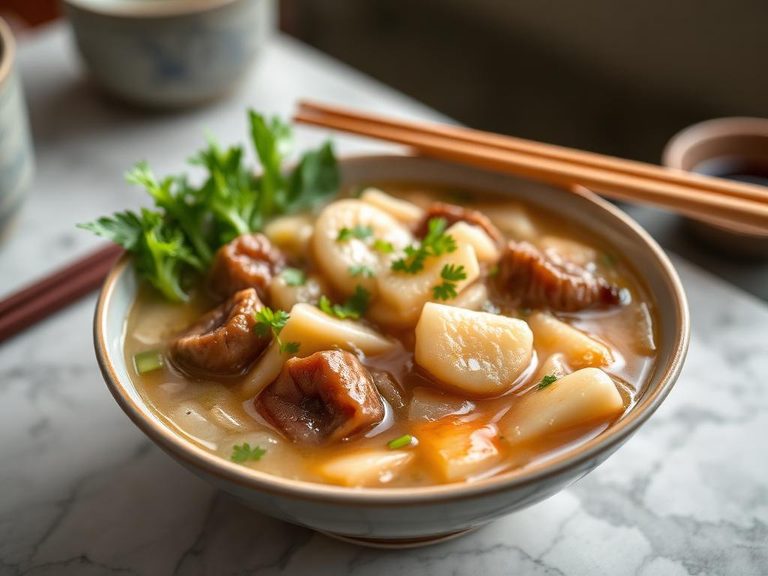
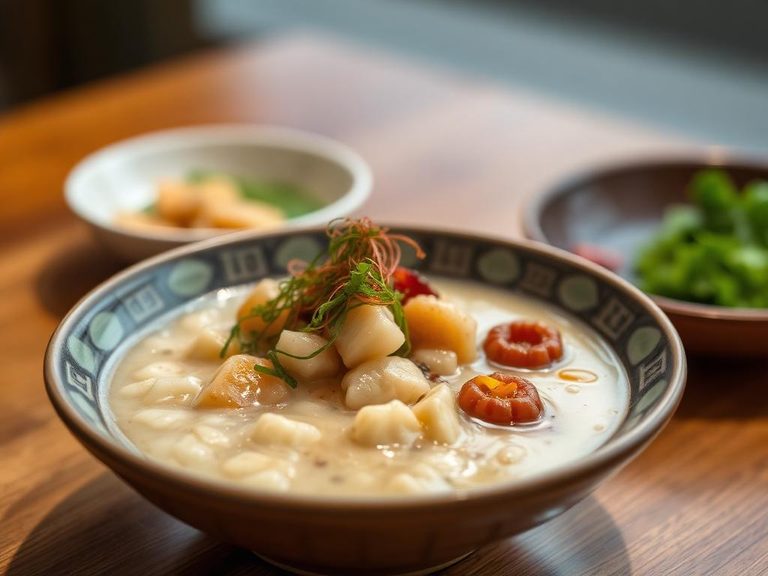
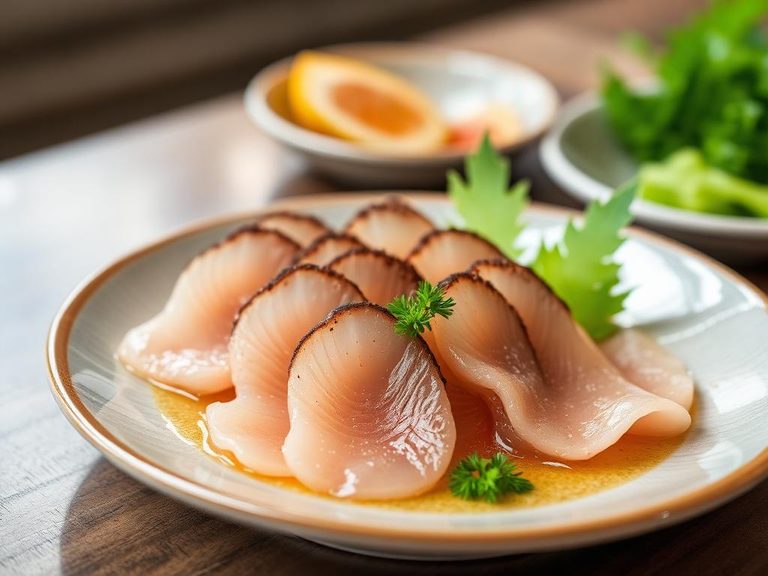
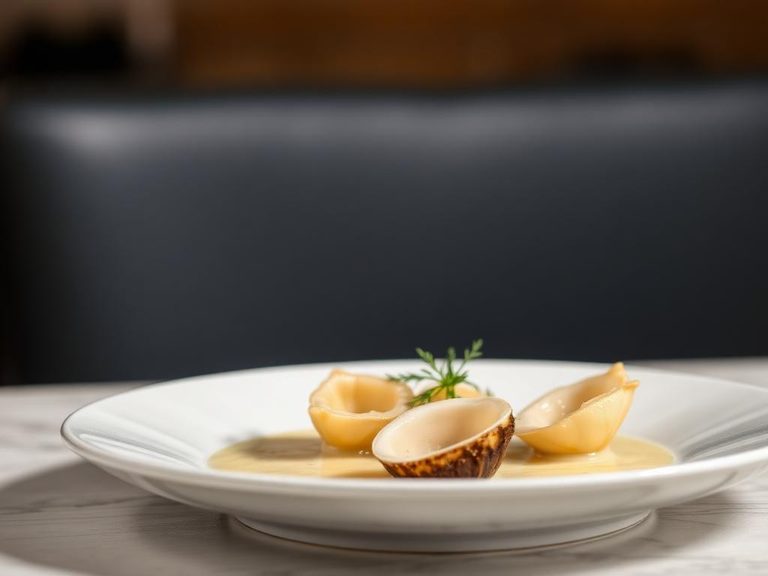
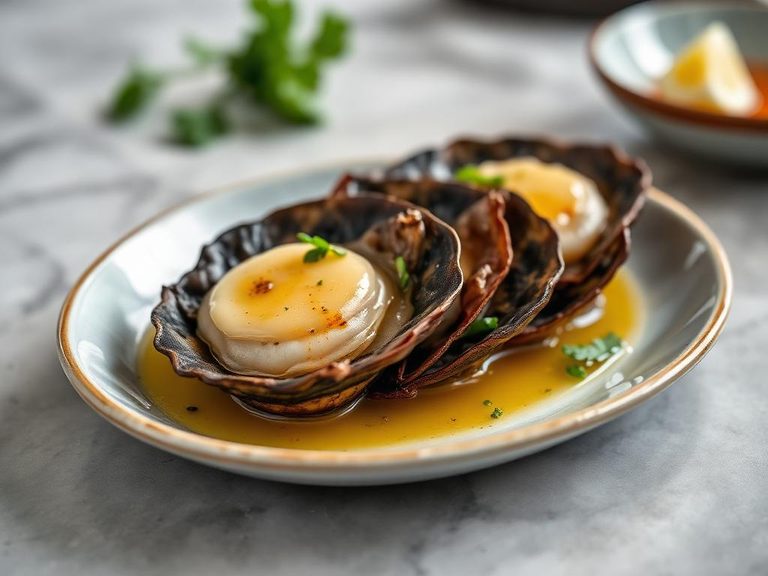
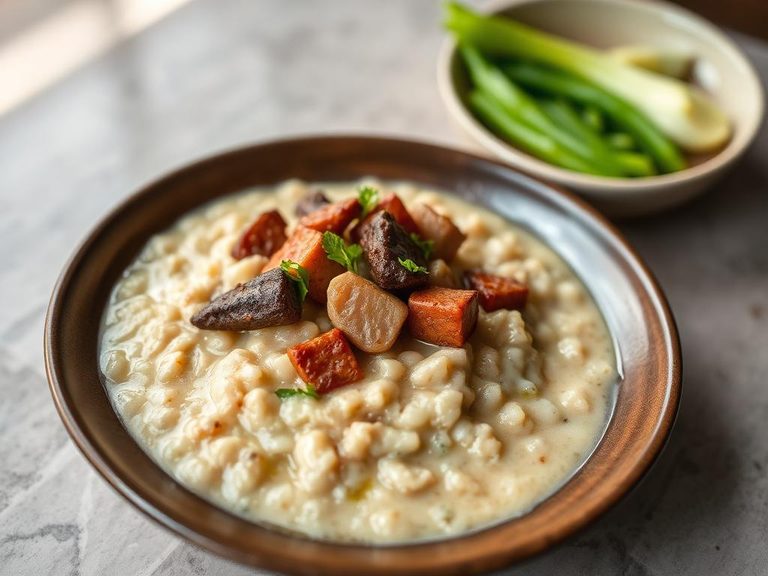
Abalone congee is a luxurious Chinese rice porridge featuring tender slices of abalone simmered in a savory, slow-cooked broth. It typically includes a base of rice, chicken or pork stock, ginger, and green onions, with the prized abalone added towards the end to preserve its delicate texture. This dish is a celebratory staple in Cantonese cuisine, often served during festivals and special occasions.
🍽️ Nutrition at a glance
This dish is primarily a source of complex carbohydrates from the rice, with a moderate amount of high-quality protein from the abalone and broth. It is generally low in fat and provides key minerals like selenium and zinc, with a typical serving containing around 250-350 calories.
Nutrition breakdown
| Calories | 300 kcal |
| Protein | 18 g |
| Carbs | 42 g |
| Fat | 5 g |
| Fiber | 1 g |
| Sugar | 2 g |
| Sodium | 650 mg |
| Selenium | 40 mcg |
| Zinc | 3.5 mg |
| Iron | 2.8 mg |
| Phosphorus | 220 mg |
| Vitamin B12 | 1.2 mcg |
| Magnesium | 45 mg |
| Niacin (B3) | 4.5 mg |
| Potassium | 320 mg |
Per 1.5 cups (360 g) · estimated, varies by recipe
💡 What's interesting
Abalone is considered a symbol of good fortune and prosperity in Chinese culture, making this congee a dish of honor and celebration. Nutritionally, abalone is an excellent source of omega-3 fatty acids and is prized for its dense, meaty texture that contrasts beautifully with the smooth porridge.