

Milk, dry, nonfat, instant, without added vitamin A and vitamin D
Whole food · Dairy and Egg Products

Photo: Wikipedia
Instant nonfat dry milk is a shelf-stable, fine white powder made by dehydrating skimmed milk. It reconstitutes into a watery, slightly sweet milk with a distinctively chalky or powdery mouthfeel. Nutritionally, it's a lean powerhouse, delivering a massive 35.1 grams of protein per 100g with virtually no fat.
Calorie split: 39% protein · 59% carbs · 2% fat
↓ Full nutrition💚 Why it's loved
People love it for its unparalleled convenience and long shelf life, making it a staple for camping, emergency kits, and baking. Its mild, sweet flavor blends seamlessly into smoothies, coffee, and recipes, providing a protein boost without added fat.
⚠️ Watch-outs & how to enjoy it better
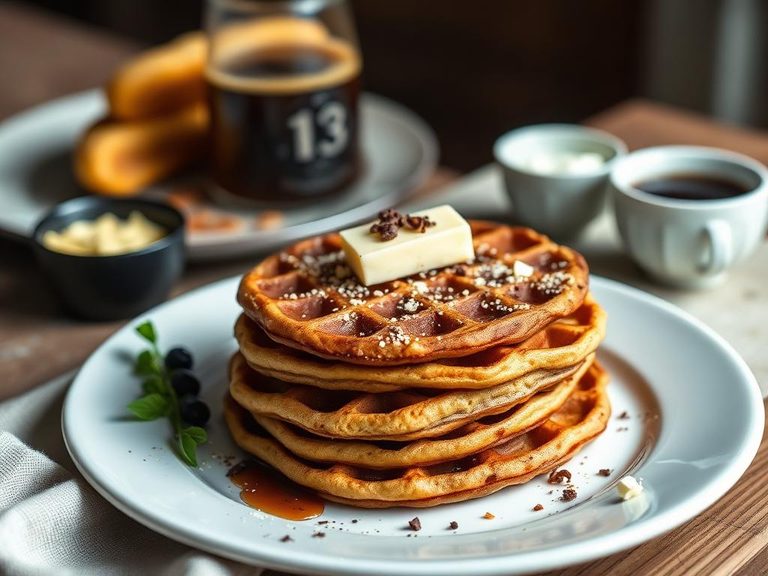
The primary downside is its chalky, sometimes metallic aftertaste and texture that many find unappealing when reconstituted as a drink. It's also a concentrated source of lactose (all carbs are sugar), which can cause digestive issues for lactose-intolerant individuals. Tip: Use it in cooked or blended dishes (like pancakes or sauces) where the texture is masked, and pair it with fiber or healthy fats if consuming as a beverage to slow sugar absorption.
Key benefits
- Exceptional source of high-quality, complete protein
- Very low in fat (less than 1g per 100g)
- Long shelf life without refrigeration
- Fortified with calcium and often vitamins
- Cost-effective way to add dairy nutrition
🍽️ Popular dishes


🌍 Where it's eaten
💡 Did you know?
The process for making modern nonfat dry milk was perfected in the 1950s, but its concept dates back to the 13th century, when Mongol warriors carried a form of dried milk as a portable, non-perishable ration.
Full nutrition (USDA data · scales with serving)
| Water | 4.0 g |
| Energy | 358 kcal |
| Energy | 1498 kj |
| Protein | 35.1 g |
| Total lipid (fat) | 0.72 g |
| Ash | 8.0 g |
| Carbohydrate, by difference | 52.2 g |
| Fiber, total dietary | 0.00 g |
| Total Sugars | 52.2 g |
| Calcium, Ca | 1231 mg |
| Iron, Fe | 0.31 mg |
| Magnesium, Mg | 117 mg |
| Phosphorus, P | 985 mg |
| Potassium, K | 1705 mg |
| Sodium, Na | 549 mg |
| Zinc, Zn | 4.4 mg |
| Copper, Cu | 0.04 mg |
| Manganese, Mn | 0.02 mg |
| Selenium, Se | 27.3 ug |
| Vitamin C, total ascorbic acid | 5.6 mg |
| Thiamin | 0.41 mg |
| Riboflavin | 1.7 mg |
| Niacin | 0.89 mg |
| Pantothenic acid | 3.2 mg |
| Vitamin B-6 | 0.34 mg |
| Folate, total | 50.0 ug |
| Folic acid | 0.00 ug |
| Folate, food | 50.0 ug |
| Folate, DFE | 50.0 ug |
| Choline, total | 168 mg |
| Vitamin B-12 | 4.0 ug |
| Vitamin B-12, added | 0.00 ug |
| Vitamin A, RAE | 4.0 ug |
| Retinol | 4.0 ug |
| Carotene, beta | 1.0 ug |
| Carotene, alpha | 0.00 ug |
| Cryptoxanthin, beta | 0.00 ug |
| Vitamin A, IU | 15.0 iu |
| Lycopene | 0.00 ug |
| Lutein + zeaxanthin | 0.00 ug |
| Vitamin E (alpha-tocopherol) | 0.01 mg |
| Vitamin E, added | 0.00 mg |
| Vitamin D (D2 + D3), International Units | 0.00 iu |
| Vitamin D (D2 + D3) | 0.00 ug |
| Vitamin D3 (cholecalciferol) | 0.00 ug |
| Vitamin K (phylloquinone) | 0.00 ug |
| Alcohol, ethyl | 0.00 g |
| Caffeine | 0.00 mg |
| Theobromine | 0.00 mg |
Fat & fatty acid profile (per 100g)
| Fatty acids, total saturated | 0.47 g |
| SFA 4:0 | 0.03 g |
| SFA 6:0 | 0.01 g |
| SFA 8:0 | 0.01 g |
| SFA 10:0 | 0.02 g |
| SFA 12:0 | 0.01 g |
| SFA 14:0 | 0.08 g |
| SFA 16:0 | 0.22 g |
| SFA 18:0 | 0.08 g |
| Fatty acids, total monounsaturated | 0.19 g |
| MUFA 16:1 | 0.02 g |
| MUFA 18:1 | 0.16 g |
| MUFA 20:1 | 0.00 g |
| MUFA 22:1 | 0.00 g |
| Fatty acids, total polyunsaturated | 0.03 g |
| PUFA 18:2 | 0.02 g |
| PUFA 18:3 | 0.01 g |
| PUFA 18:4 | 0.00 g |
| PUFA 20:4 | 0.00 g |
| PUFA 20:5 n-3 (EPA) | 0.00 g |
| PUFA 22:5 n-3 (DPA) | 0.00 g |
| PUFA 22:6 n-3 (DHA) | 0.00 g |
| Cholesterol | 18.0 mg |
Amino acid profile (per 100g)
| Tryptophan | 0.49 g |
| Threonine | 1.6 g |
| Isoleucine | 2.1 g |
| Leucine | 3.4 g |
| Lysine | 2.8 g |
| Methionine | 0.88 g |
| Cystine | 0.33 g |
| Phenylalanine | 1.7 g |
| Tyrosine | 1.7 g |
| Valine | 2.3 g |
| Arginine | 1.3 g |
| Histidine | 0.95 g |
| Alanine | 1.2 g |
| Aspartic acid | 2.7 g |
| Glutamic acid | 7.3 g |
| Glycine | 0.74 g |
| Proline | 3.4 g |
| Serine | 1.9 g |
FAQ
How do I reconstitute it?
A standard ratio is 1 part powder to 4 parts water. For a cup of milk, mix 1/4 cup (about 2 tablespoons) of powder with 3/4 cup of cold or warm water, stirring vigorously to dissolve.
Can I use it in baking?
Yes, it's excellent. Replace liquid milk in a recipe by adding the powder directly to dry ingredients and increasing the total liquid (water) by the volume of milk called for.
Is it the same as powdered whole milk?
No. This is nonfat/skim milk powder, with almost no fat. Powdered whole milk retains the milk's natural fat content, resulting in a richer flavor, higher calories, and a shorter shelf life.
Nutrient density (calculated · NRF9.3)
Nutrient Rich Foods index: beneficial nutrients (protein, fiber, vitamins, minerals) minus saturated fat, added sugar & sodium, per 100 kcal.
NRF9.3 index — Fulgoni, Keast & Drewnowski, 2009. Computed from USDA nutrients.
Weight-loss friendliness (composite index)
Energy density 3.58 kcal/g · 39% calories from protein · 0.0 g fiber · 52.2 g sugar per 100 g.
Composite of energy density (Rolls et al., 1999), protein & fiber satiety, minus sugar. A calculated heuristic — ranks satiety-per-calorie, not a clinical measure.
Dietary load (calculated from USDA values)
Potential renal acid load. Positive = acid-forming, negative = alkaline-forming.
Sodium-to-potassium ratio: 0.32 (lower is better — aim for ≤ 1)
Sodium:potassium per WHO potassium guidance. Computed from USDA nutrients.