

Bread and roll dough
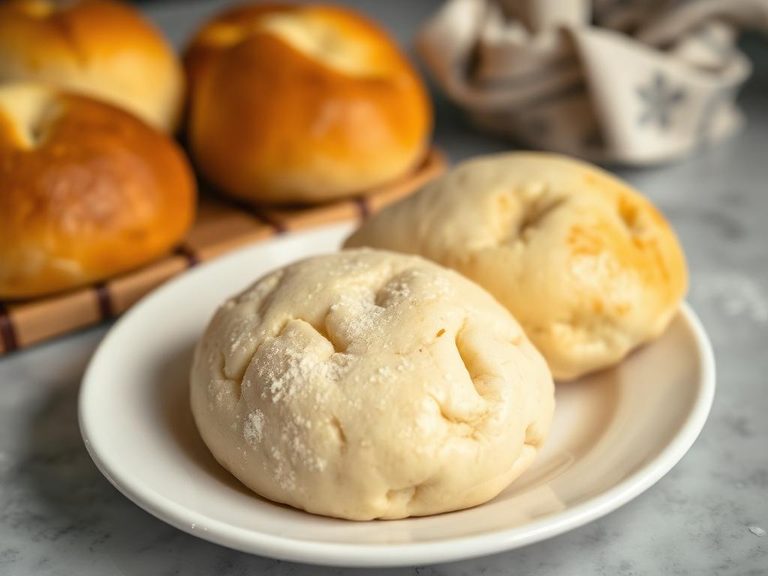
Bread and roll dough is the foundational, unbaked mixture used to create various breads and rolls. It is a simple, versatile dough typically made from flour, water, yeast (or another leavening agent), and salt, with optional additions like sugar, fat, or milk. While originating in ancient civilizations, it is a universal staple in cuisines worldwide.
🍽️ Nutrition at a glance
This dough is primarily a high-carbohydrate food, providing energy from its flour base. It is a good source of B vitamins like thiamin and niacin, and offers some iron and magnesium, with a typical serving containing around 150-200 calories.
Nutrition breakdown
| Calories | 180 kcal |
| Protein | 6 g |
| Carbs | 34 g |
| Fat | 1.5 g |
| Fiber | 1.5 g |
| Sugar | 1 g |
| Sodium | 300 mg |
| Thiamin (B1) | 0.3 mg |
| Niacin (B3) | 3.5 mg |
| Folate | 60 mcg |
| Iron | 2.0 mg |
| Magnesium | 20 mg |
| Phosphorus | 65 mg |
| Selenium | 12 mcg |
| Manganese | 0.4 mg |
Per 1 ball of dough (100 g) · estimated, varies by recipe
💡 What's interesting
The cultural significance of bread dough is immense, symbolizing sustenance and community across the globe. Nutritionally, the fermentation process from yeast can increase the bioavailability of certain minerals and produce beneficial compounds.
🍽️ Related dishes






AI estimate may be inaccurate · Terms