Spring rolls or summer rolls
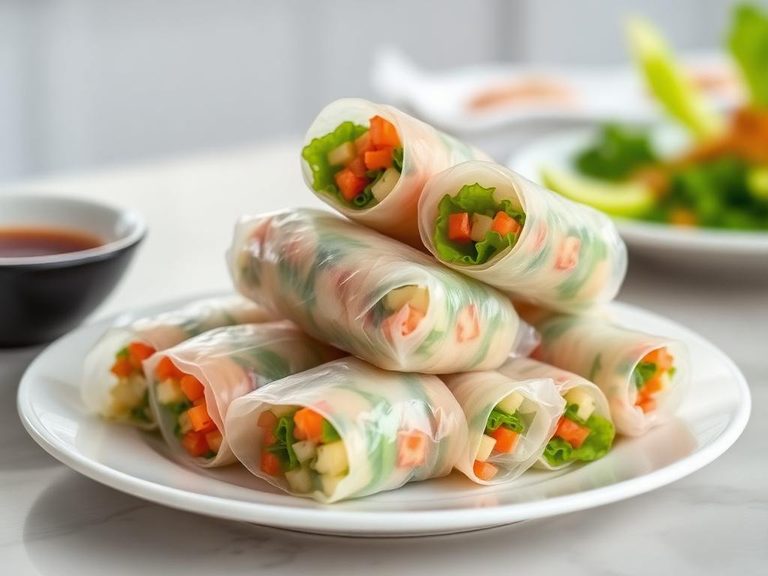
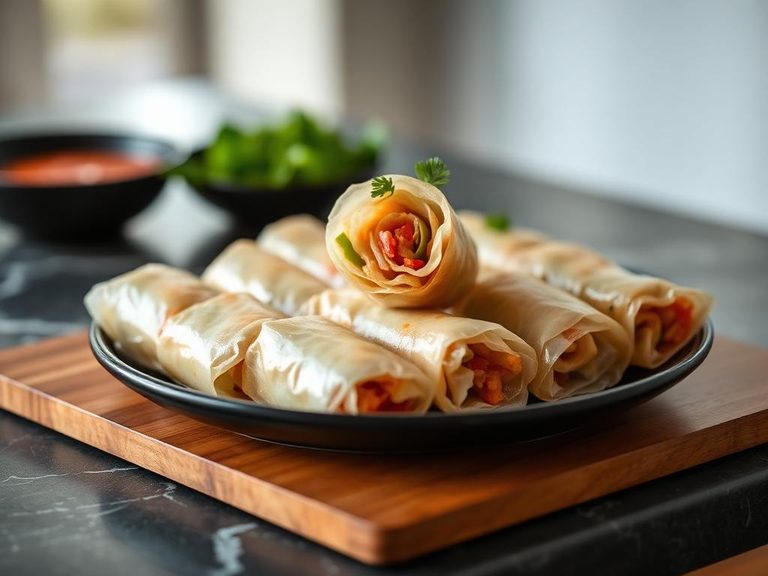
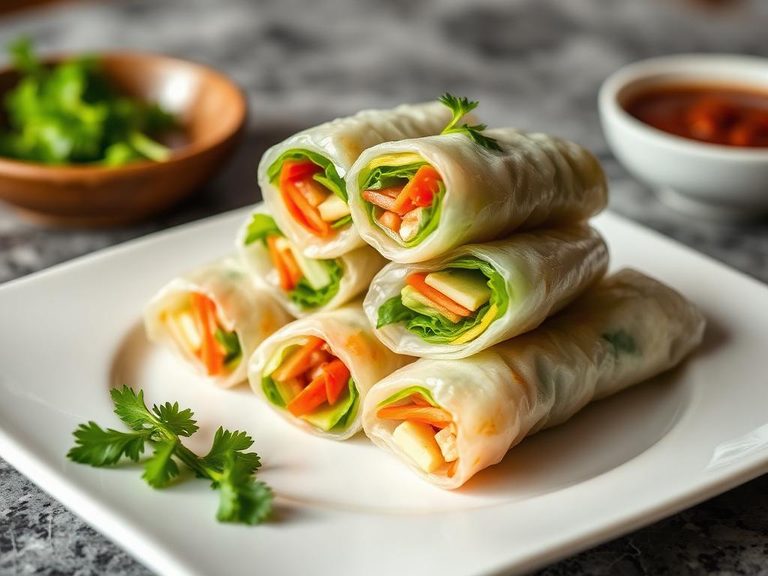
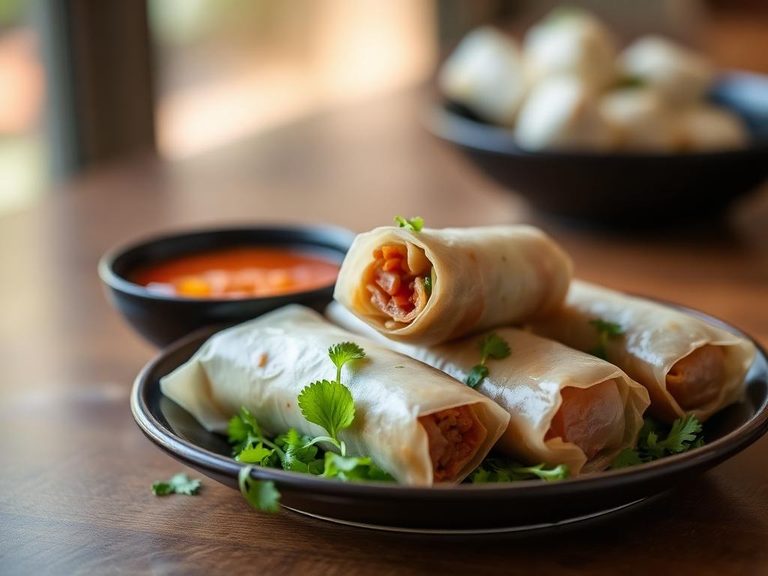
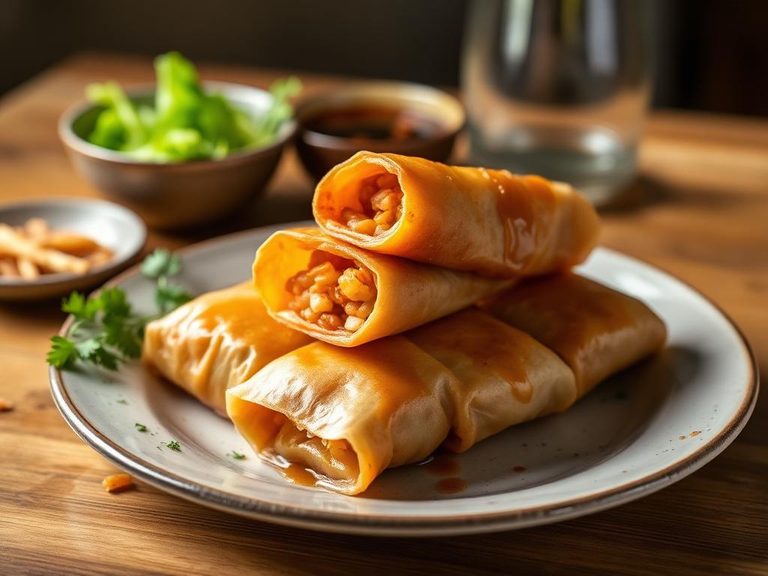
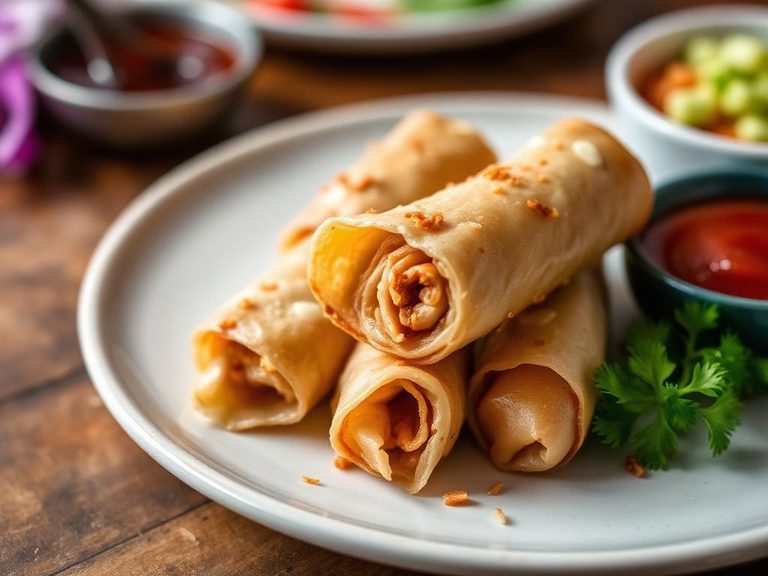
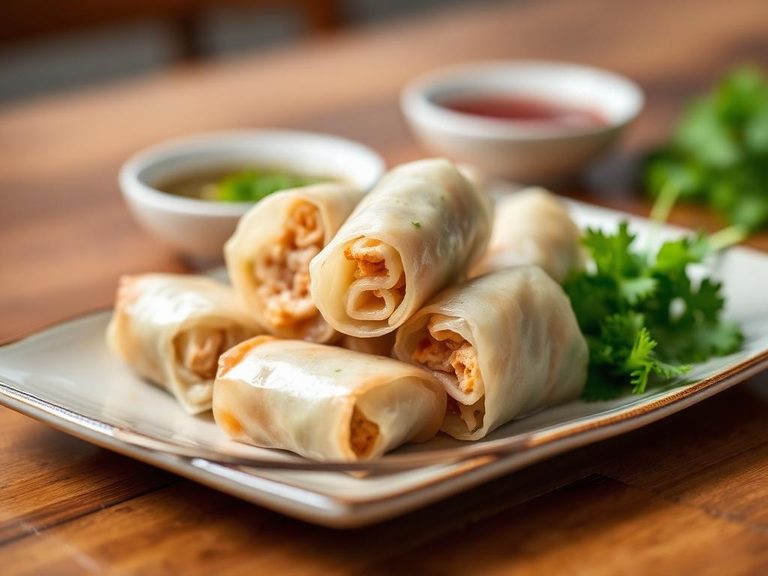
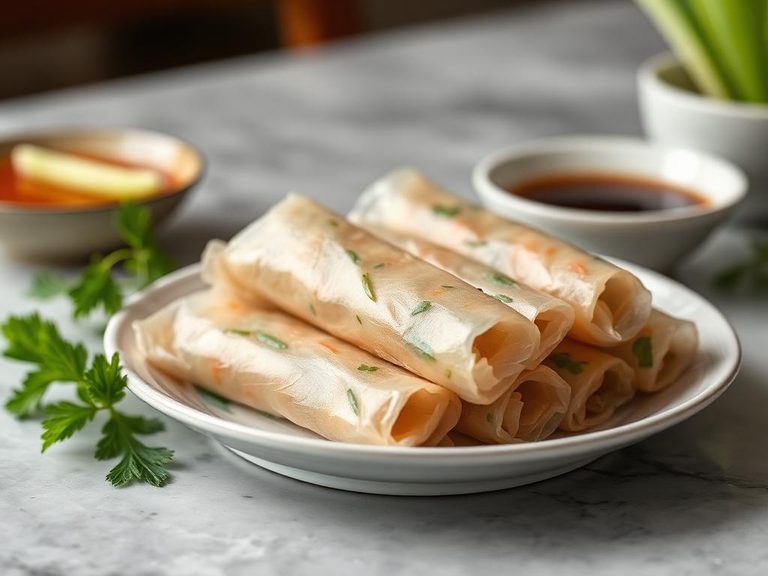
Spring rolls and summer rolls are fresh or fried rolls originating from China and popular across East and Southeast Asia. Spring rolls typically feature a thin wheat-based wrapper filled with cooked vegetables and sometimes meat, then deep-fried to a crisp, while summer rolls use a translucent rice paper wrapper filled with raw herbs, vegetables, shrimp, or pork, and served fresh.
🍽️ Nutrition at a glance
Spring rolls are higher in calories and fat due to frying, often around 150-250 calories per roll, while summer rolls are lighter at about 50-100 calories each. Both provide carbohydrates from the wrapper, with summer rolls offering more fresh vitamins and herbs, and spring rolls delivering more energy-dense fats.
Nutrition breakdown
| Calories | 200 kcal |
| Protein | 6 g |
| Carbs | 22 g |
| Fat | 10 g |
| Fiber | 2 g |
| Sugar | 3 g |
| Sodium | 400 mg |
| Vitamin C | 8 mg |
| Vitamin A | 150 mcg |
| Iron | 1.5 mg |
| Calcium | 50 mg |
| Potassium | 150 mg |
| Magnesium | 20 mg |
| Phosphorus | 60 mg |
| Zinc | 0.8 mg |
Per 2 rolls (100 g) · estimated, varies by recipe
💡 What's interesting
The names 'spring' and 'summer' reflect seasonal eating traditions, with spring rolls historically eaten during the Chinese New Year to welcome the new season. Nutritionally, summer rolls are a standout for being low-calorie and packed with fresh, raw ingredients, making them a popular choice for light, healthy meals.