

Meatballs, meatless
Whole food · Legumes and Legume Products
Meatless meatballs are a plant-based take on the classic, typically crafted from soy, wheat gluten, or legumes like lentils and chickpeas. They offer a satisfyingly firm, slightly chewy texture that closely mimics traditional meatballs, with a savory, umami-rich flavor profile. Nutritionally, they are a protein powerhouse, delivering over 20 grams of protein per 100 grams with a favorable amount of dietary fiber.
Calorie split: 43% protein · 16% carbs · 41% fat
↓ Full nutrition💚 Why it's loved
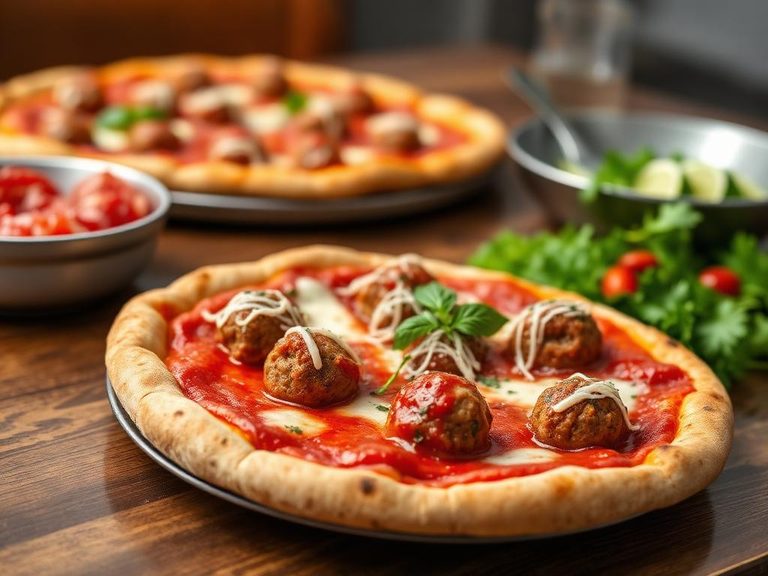
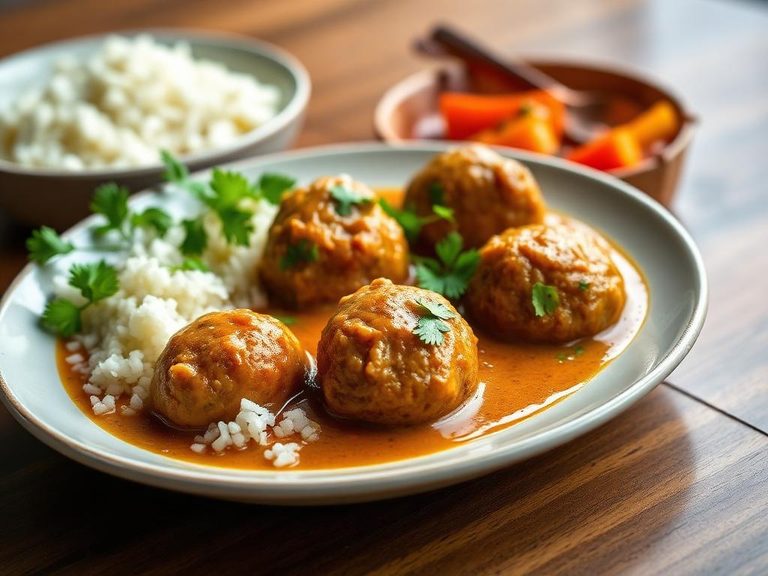
People love them for their incredible versatility and ability to absorb sauces and seasonings, making them a staple in everything from spaghetti to subs. They are celebrated as a convenient, satisfying meat substitute that fits seamlessly into familiar comfort food dishes.
⚠️ Watch-outs & how to enjoy it better
Some commercial varieties can be high in sodium and may contain common allergens like soy or wheat gluten. To counteract high sodium, rinse them briefly before cooking or pair with low-sodium sauces; for allergens, always check labels and consider homemade versions using legumes like chickpeas or black beans.
Key benefits
- High in plant-based protein for muscle maintenance
- Good source of dietary fiber for digestive health
- Lower in saturated fat than many meat-based alternatives
- Often fortified with vitamins and minerals like iron and B12
- Provides a cholesterol-free protein option
🍽️ Popular dishes
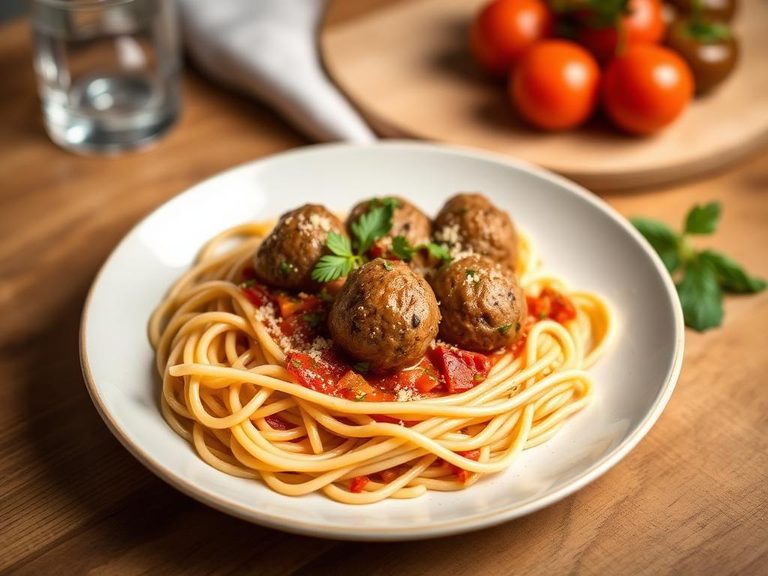
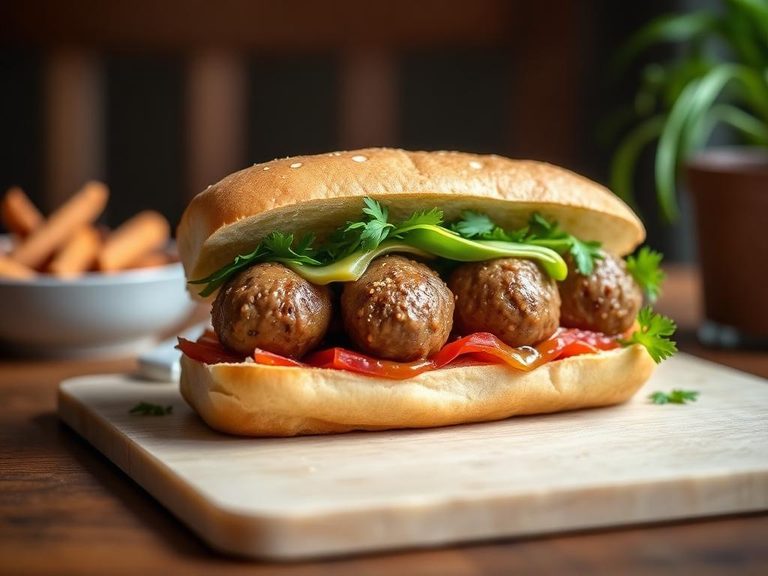
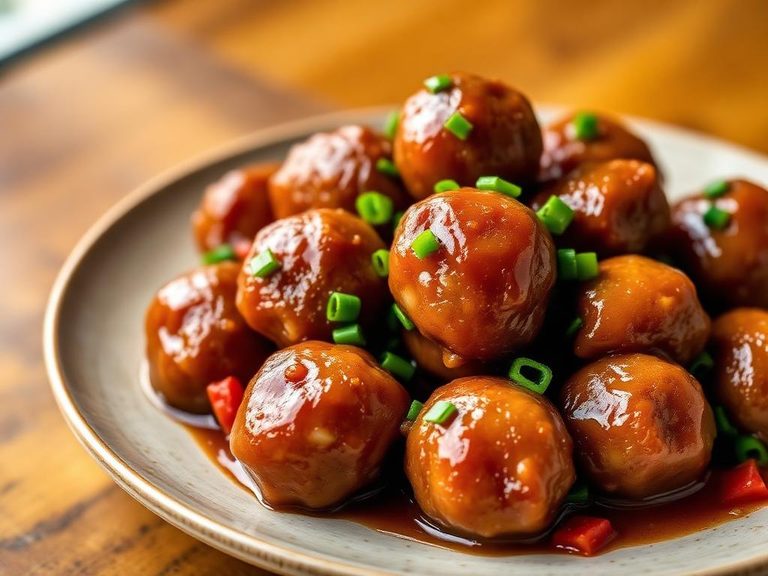
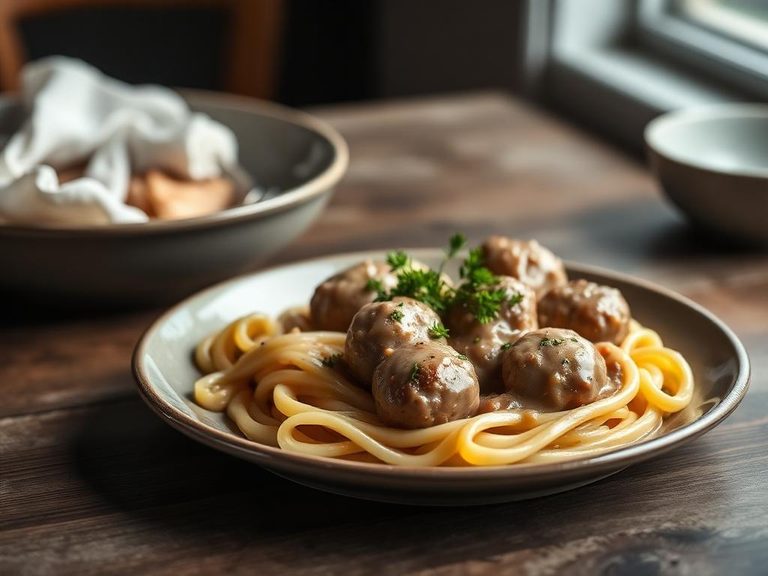
🌍 Where it's eaten
💡 Did you know?
The concept of a plant-based 'meatball' has ancient roots, with similar preparations found in historical Indian and Middle Eastern cuisines long before modern meat substitutes.
Full nutrition (USDA data · scales with serving)
| Water | 58.0 g |
| Energy | 197 kcal |
| Energy | 824 kj |
| Protein | 21.0 g |
| Total lipid (fat) | 9.0 g |
| Ash | 4.0 g |
| Carbohydrate, by difference | 8.0 g |
| Fiber, total dietary | 4.6 g |
| Total Sugars | 1.3 g |
| Calcium, Ca | 25.0 mg |
| Iron, Fe | 2.2 mg |
| Magnesium, Mg | 18.0 mg |
| Phosphorus, P | 344 mg |
| Potassium, K | 180 mg |
| Sodium, Na | 550 mg |
| Zinc, Zn | 1.8 mg |
| Copper, Cu | 0.71 mg |
| Selenium, Se | 0.80 ug |
| Vitamin C, total ascorbic acid | 0.00 mg |
| Thiamin | 0.94 mg |
| Riboflavin | 0.21 mg |
| Niacin | 2.5 mg |
| Pantothenic acid | 0.50 mg |
| Vitamin B-6 | 0.20 mg |
| Folate, total | 78.0 ug |
| Folic acid | 0.00 ug |
| Folate, food | 78.0 ug |
| Folate, DFE | 78.0 ug |
| Choline, total | 88.4 mg |
| Vitamin B-12 | 1.5 ug |
| Vitamin B-12, added | 1.5 ug |
| Vitamin A, RAE | 0.00 ug |
| Retinol | 0.00 ug |
| Carotene, beta | 0.00 ug |
| Carotene, alpha | 0.00 ug |
| Cryptoxanthin, beta | 0.00 ug |
| Vitamin A, IU | 0.00 iu |
| Lycopene | 0.00 ug |
| Lutein + zeaxanthin | 0.00 ug |
| Vitamin E (alpha-tocopherol) | 1.7 mg |
| Vitamin E, added | 0.00 mg |
| Vitamin D (D2 + D3), International Units | 0.00 iu |
| Vitamin D (D2 + D3) | 0.00 ug |
| Vitamin K (phylloquinone) | 0.00 ug |
| Alcohol, ethyl | 0.00 g |
| Caffeine | 0.00 mg |
| Theobromine | 0.00 mg |
Fat & fatty acid profile (per 100g)
| Fatty acids, total saturated | 1.4 g |
| SFA 4:0 | 0.00 g |
| SFA 6:0 | 0.00 g |
| SFA 8:0 | 0.00 g |
| SFA 10:0 | 0.00 g |
| SFA 12:0 | 0.09 g |
| SFA 14:0 | 0.04 g |
| SFA 16:0 | 0.93 g |
| SFA 18:0 | 0.37 g |
| Fatty acids, total monounsaturated | 2.2 g |
| MUFA 16:1 | 0.00 g |
| MUFA 18:1 | 2.2 g |
| MUFA 20:1 | 0.00 g |
| MUFA 22:1 | 0.00 g |
| Fatty acids, total polyunsaturated | 4.7 g |
| PUFA 18:2 | 4.1 g |
| PUFA 18:3 | 0.52 g |
| PUFA 18:4 | 0.00 g |
| PUFA 20:4 | 0.00 g |
| PUFA 20:5 n-3 (EPA) | 0.00 g |
| PUFA 22:5 n-3 (DPA) | 0.00 g |
| PUFA 22:6 n-3 (DHA) | 0.00 g |
| Fatty acids, total trans | 0.00 g |
| Cholesterol | 0.00 mg |
Amino acid profile (per 100g)
Estimated from Restaurant, family style, spaghetti and meatballs — USDA does not publish this profile for Meatballs.
| Tryptophan | 0.09 g |
| Threonine | 0.33 g |
| Isoleucine | 0.37 g |
| Leucine | 0.71 g |
| Lysine | 0.56 g |
| Methionine | 0.19 g |
| Cystine | 0.14 g |
| Phenylalanine | 0.40 g |
| Tyrosine | 0.25 g |
| Valine | 0.45 g |
| Arginine | 0.50 g |
| Histidine | 0.27 g |
| Alanine | 0.44 g |
| Aspartic acid | 0.69 g |
| Glutamic acid | 2.2 g |
| Glycine | 0.46 g |
| Proline | 0.79 g |
| Serine | 0.39 g |
| Hydroxyproline | 0.06 g |
FAQ
Are meatless meatballs a complete protein?
It depends on the base. Soy-based versions are complete proteins. Those made from legumes or grains may need to be paired with other plant foods (like rice or bread) throughout the day to ensure all essential amino acids are consumed.
How do I keep them from falling apart when cooking?
Ensure your binding agent (like flax egg, breadcrumbs, or mashed beans) is well-mixed. Chilling the mixture before forming balls helps. For pan-frying, use a non-stick pan with adequate oil and avoid moving them too soon; for baking, place them on a parchment-lined sheet.
Can I freeze cooked meatless meatballs?
Yes, they freeze exceptionally well. Allow them to cool completely, then place in a single layer on a baking sheet to flash-freeze. Transfer to a freezer bag or airtight container. They'll keep for 2-3 months and can be reheated directly from frozen in sauces or in the oven.
Nutrient density (calculated · NRF9.3)
Nutrient Rich Foods index: beneficial nutrients (protein, fiber, vitamins, minerals) minus saturated fat, added sugar & sodium, per 100 kcal.
NRF9.3 index — Fulgoni, Keast & Drewnowski, 2009. Computed from USDA nutrients.
Weight-loss friendliness (composite index)
Energy density 1.97 kcal/g · 43% calories from protein · 4.6 g fiber · 1.3 g sugar per 100 g.
Composite of energy density (Rolls et al., 1999), protein & fiber satiety, minus sugar. A calculated heuristic — ranks satiety-per-calorie, not a clinical measure.
Dietary load (calculated from USDA values)
Potential renal acid load. Positive = acid-forming, negative = alkaline-forming.
Sodium-to-potassium ratio: 3.06 (lower is better — aim for ≤ 1)
Sodium:potassium per WHO potassium guidance. Computed from USDA nutrients.