

Margarine, margarine-like vegetable oil spread, 67-70% fat, tub
Whole food · Fats and Oils

Photo: Wikipedia
Margarine is a smooth, pale yellow spread made from refined vegetable oils, designed to mimic butter. It has a creamy, spreadable texture when soft and a neutral, slightly oily flavor that won't overpower other ingredients. Nutritionally, it's almost pure fat, providing a dense source of calories with negligible protein or carbs.
Calorie split: 0% protein · 0% carbs · 100% fat
↓ Full nutrition💚 Why it's loved
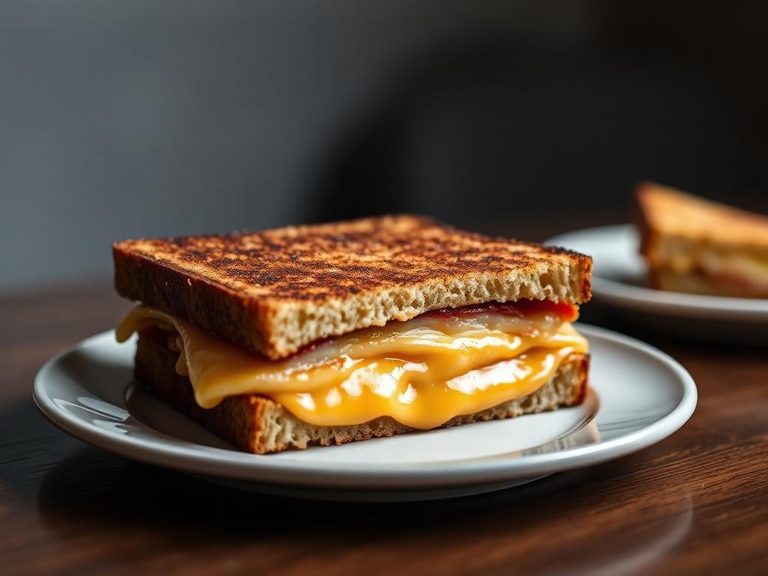
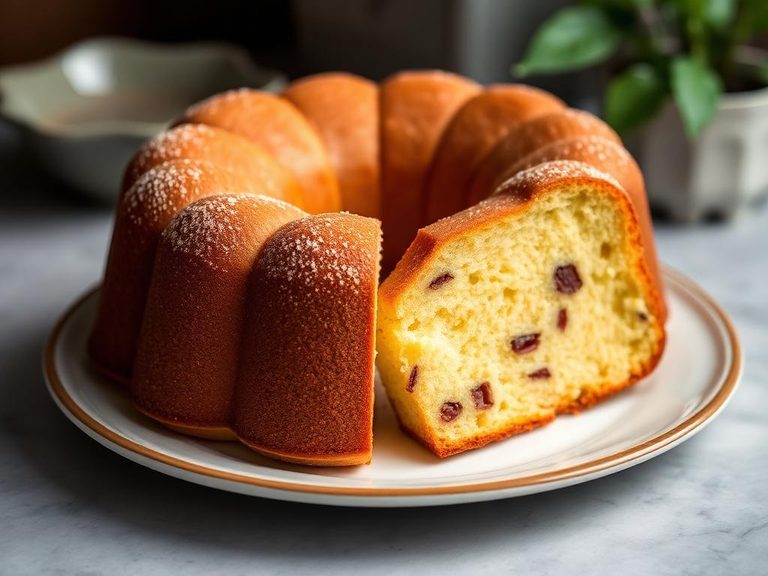
People love margarine for its convenience, affordability, and neutral taste that acts as a blank canvas in both baking and cooking. It's a cultural staple in many households as a practical, everyday spread for toast, sandwiches, and pastries.
⚠️ Watch-outs & how to enjoy it better
As a highly processed, high-fat food, overconsumption can contribute to excessive calorie intake. Some formulations may contain small amounts of trans fats from partial hydrogenation. To counteract, use it sparingly as a flavor enhancer rather than a main ingredient, and balance meals with fiber-rich vegetables and lean proteins.
Key benefits
- Dairy-free and lactose-free alternative to butter
- Often fortified with vitamins A and D
- Lower in saturated fat than butter
- Provides a source of essential fatty acids from vegetable oils
- Remains spreadable straight from the refrigerator
🍽️ Popular dishes
🌍 Where it's eaten
💡 Did you know?
Margarine was invented in 1869 by French chemist Hippolyte Mège-Mouriès in response to a challenge from Emperor Napoleon III to create a butter substitute for the armed forces and working class.
Full nutrition (USDA data · scales with serving)
| Water | 29.5 g |
| Energy | 606 kcal |
| Energy | 2537 kj |
| Protein | 0.07 g |
| Total lipid (fat) | 68.3 g |
| Ash | 1.5 g |
| Carbohydrate, by difference | 0.59 g |
| Sodium, Na | 536 mg |
| Vitamin A, IU | 3571 iu |
| Vitamin E (alpha-tocopherol) | 13.0 mg |
| Tocopherol, beta | 0.26 mg |
| Tocopherol, gamma | 29.3 mg |
| Tocopherol, delta | 9.3 mg |
| Tocotrienol, alpha | 1.4 mg |
| Tocotrienol, beta | 0.00 mg |
| Tocotrienol, gamma | 2.0 mg |
| Tocotrienol, delta | 0.00 mg |
Fat & fatty acid profile (per 100g)
| Fatty acids, total saturated | 16.7 g |
| SFA 4:0 | 0.00 g |
| SFA 6:0 | 0.00 g |
| SFA 8:0 | 0.02 g |
| SFA 10:0 | 0.08 g |
| SFA 12:0 | 0.06 g |
| SFA 14:0 | 0.24 g |
| SFA 15:0 | 0.02 g |
| SFA 16:0 | 12.3 g |
| SFA 17:0 | 0.06 g |
| SFA 18:0 | 3.5 g |
| SFA 20:0 | 0.25 g |
| SFA 22:0 | 0.17 g |
| SFA 24:0 | 0.07 g |
| Fatty acids, total monounsaturated | 24.7 g |
| MUFA 14:1 | 0.00 g |
| MUFA 15:1 | 0.00 g |
| MUFA 16:1 | 0.08 g |
| MUFA 16:1 c | 0.08 g |
| MUFA 17:1 | 0.03 g |
| MUFA 18:1 | 24.3 g |
| MUFA 18:1 c | 21.4 g |
| MUFA 20:1 | 0.34 g |
| MUFA 22:1 | 0.00 g |
| MUFA 22:1 c | 0.00 g |
| MUFA 24:1 c | 0.00 g |
| Fatty acids, total polyunsaturated | 23.8 g |
| PUFA 18:2 | 20.8 g |
| PUFA 18:2 n-6 c,c | 20.4 g |
| PUFA 18:2 CLAs | 0.04 g |
| PUFA 18:3 | 2.9 g |
| PUFA 18:3 n-3 c,c,c (ALA) | 2.9 g |
| PUFA 18:3 n-6 c,c,c | 0.01 g |
| PUFA 18:4 | 0.00 g |
| PUFA 20:2 n-6 c,c | 0.02 g |
| PUFA 20:3 | 0.01 g |
| PUFA 20:3 n-3 | 0.00 g |
| PUFA 20:3 n-6 | 0.01 g |
| PUFA 20:4 | 0.00 g |
| PUFA 20:5 n-3 (EPA) | 0.00 g |
| PUFA 22:4 | 0.00 g |
| PUFA 22:5 n-3 (DPA) | 0.00 g |
| PUFA 22:6 n-3 (DHA) | 0.00 g |
| Fatty acids, total trans | 3.3 g |
| Fatty acids, total trans-monoenoic | 2.9 g |
| TFA 16:1 t | 0.00 g |
| TFA 18:1 t | 2.9 g |
| TFA 22:1 t | 0.00 g |
| TFA 18:2 t not further defined | 0.35 g |
| Fatty acids, total trans-polyenoic | 0.35 g |
Amino acid profile (per 100g)
Estimated from Margarine, regular, hard, soybean (hydrogenated) — USDA does not publish this profile for Margarine.
| Tryptophan | 0.01 g |
| Threonine | 0.04 g |
| Isoleucine | 0.05 g |
| Leucine | 0.08 g |
| Lysine | 0.07 g |
| Methionine | 0.02 g |
| Cystine | 0.01 g |
| Phenylalanine | 0.04 g |
| Tyrosine | 0.04 g |
| Valine | 0.06 g |
| Arginine | 0.03 g |
| Histidine | 0.02 g |
| Alanine | 0.03 g |
| Aspartic acid | 0.07 g |
| Glutamic acid | 0.18 g |
| Glycine | 0.02 g |
| Proline | 0.08 g |
| Serine | 0.05 g |
FAQ
Is margarine vegan?
Most tub margarines are vegan as they are made from vegetable oils. However, some may contain trace dairy derivatives like whey or lactose, so always check the ingredient label for strict vegan diets.
Can I use margarine instead of butter in baking?
Yes, but results can differ. Margarine typically has a higher water content, which can affect texture, making baked goods less tender or more cake-like. It also lacks the distinct flavor of butter. It works well in recipes where butter's flavor isn't the star.
What does '67-70% fat' mean?
It means that by weight, the product is 67-70% fat. The remaining 30-33% is mostly water, along with small amounts of emulsifiers, salt, vitamins, and flavorings. This fat content is similar to butter and determines its spreadability and calorie density.
Weight-loss friendliness (composite index)
Energy density 6.06 kcal/g · 0% calories from protein · 0.0 g fiber · 0.0 g sugar per 100 g.
Composite of energy density (Rolls et al., 1999), protein & fiber satiety, minus sugar. A calculated heuristic — ranks satiety-per-calorie, not a clinical measure.