

Leeks, (bulb and lower leaf-portion), raw
Whole food · Vegetables and Vegetable Products

Photo: Wikipedia
The raw leek bulb and lower leaves offer a crisp, juicy texture with a milder, sweeter onion flavor than its green tops. Nutritionally, it's a low-calorie source of carbohydrates and dietary fiber, providing a satisfying crunch without significant fat. Its unique, layered structure makes it a versatile base for both raw and cooked preparations, adding a subtle, aromatic depth to dishes.
Calorie split: 9% protein · 87% carbs · 4% fat
↓ Full nutrition💚 Why it's loved
People love leeks for their gentle, sweet allium flavor that adds complexity without overwhelming a dish. They are cherished for their incredible versatility, seamlessly transitioning from a raw, crisp salad ingredient to a silky, caramelized base for soups and stews.
⚠️ Watch-outs & how to enjoy it better
The primary downside is their high fructan content, a type of fermentable carbohydrate (FODMAP) that can cause digestive distress like bloating and gas in sensitive individuals. To counteract this, those with sensitivities can limit portion size, cook them thoroughly to break down some fructans, or pair them with digestive-friendly herbs like ginger or fennel.
Key benefits
- Low in calories and fat, supporting weight management.
- Provides dietary fiber for digestive health.
- Source of vitamin K and manganese.
- Contains prebiotic compounds that may support gut health.
- Offers a mild, sweet flavor that appeals to those who dislike strong onions.
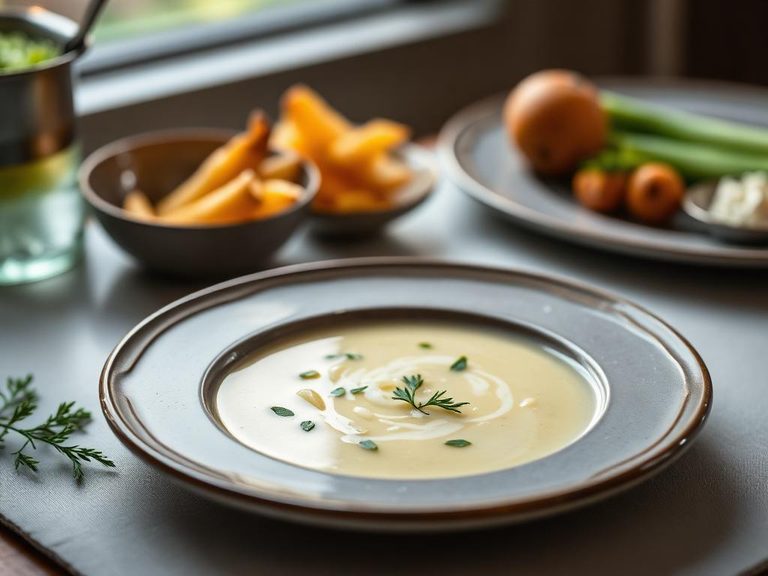
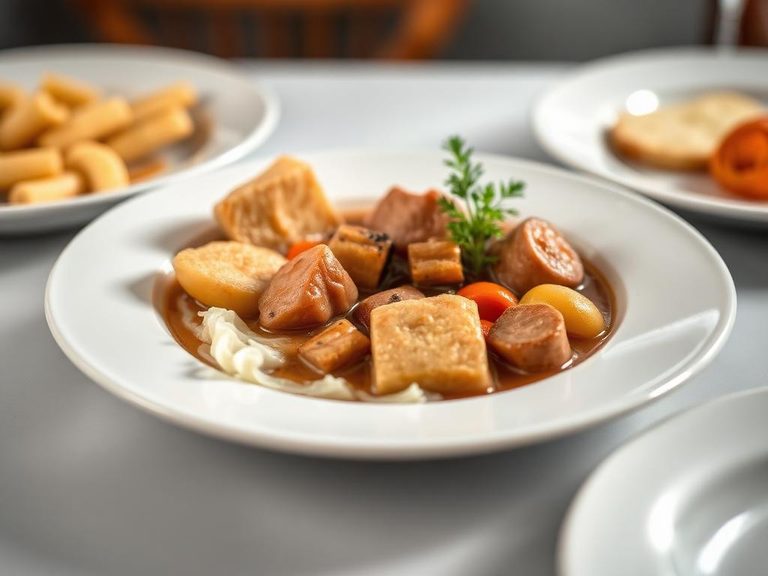
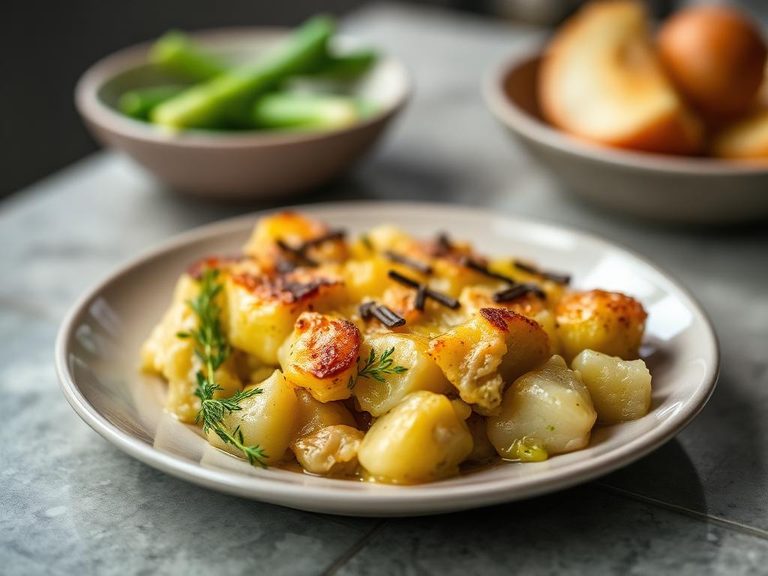
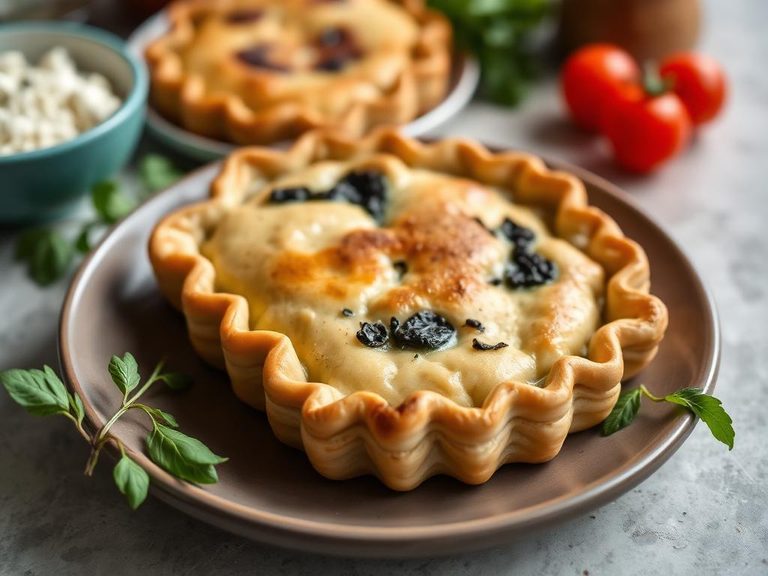
🍽️ Popular dishes
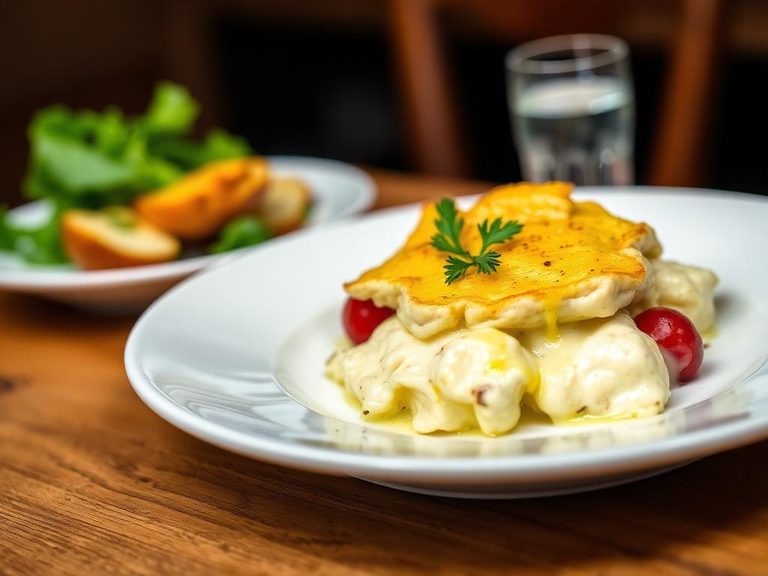
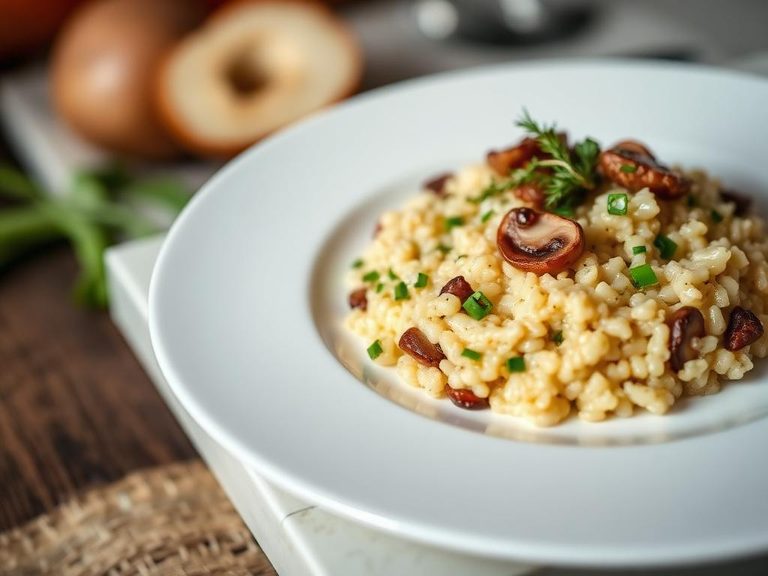
🌍 Where it's eaten
💡 Did you know?
The leek is the national emblem of Wales, famously worn by Welsh soldiers in the Battle of Crécy in 1346 to distinguish themselves from their enemies, a tradition that persists today in the emblem of the Welsh Guards.
Full nutrition (USDA data · scales with serving)
| Water | 83.0 g |
| Energy | 61.0 kcal |
| Energy | 255 kj |
| Protein | 1.5 g |
| Total lipid (fat) | 0.30 g |
| Ash | 1.1 g |
| Carbohydrate, by difference | 14.2 g |
| Fiber, total dietary | 1.8 g |
| Total Sugars | 3.9 g |
| Calcium, Ca | 59.0 mg |
| Iron, Fe | 2.1 mg |
| Magnesium, Mg | 28.0 mg |
| Phosphorus, P | 35.0 mg |
| Potassium, K | 180 mg |
| Sodium, Na | 20.0 mg |
| Zinc, Zn | 0.12 mg |
| Copper, Cu | 0.12 mg |
| Manganese, Mn | 0.48 mg |
| Selenium, Se | 1.0 ug |
| Vitamin C, total ascorbic acid | 12.0 mg |
| Thiamin | 0.06 mg |
| Riboflavin | 0.03 mg |
| Niacin | 0.40 mg |
| Pantothenic acid | 0.14 mg |
| Vitamin B-6 | 0.23 mg |
| Folate, total | 64.0 ug |
| Folic acid | 0.00 ug |
| Folate, food | 64.0 ug |
| Folate, DFE | 64.0 ug |
| Choline, total | 9.5 mg |
| Vitamin B-12 | 0.00 ug |
| Vitamin B-12, added | 0.00 ug |
| Vitamin A, RAE | 83.0 ug |
| Retinol | 0.00 ug |
| Carotene, beta | 1000 ug |
| Carotene, alpha | 0.00 ug |
| Cryptoxanthin, beta | 0.00 ug |
| Vitamin A, IU | 1667 iu |
| Lycopene | 0.00 ug |
| Lutein + zeaxanthin | 1900 ug |
| Vitamin E (alpha-tocopherol) | 0.92 mg |
| Vitamin E, added | 0.00 mg |
| Vitamin D (D2 + D3), International Units | 0.00 iu |
| Vitamin D (D2 + D3) | 0.00 ug |
| Vitamin K (phylloquinone) | 47.0 ug |
| Alcohol, ethyl | 0.00 g |
| Caffeine | 0.00 mg |
| Theobromine | 0.00 mg |
Fat & fatty acid profile (per 100g)
| Fatty acids, total saturated | 0.04 g |
| SFA 4:0 | 0.00 g |
| SFA 6:0 | 0.00 g |
| SFA 8:0 | 0.00 g |
| SFA 10:0 | 0.00 g |
| SFA 12:0 | 0.00 g |
| SFA 14:0 | 0.00 g |
| SFA 16:0 | 0.04 g |
| SFA 18:0 | 0.00 g |
| Fatty acids, total monounsaturated | 0.00 g |
| MUFA 16:1 | 0.00 g |
| MUFA 18:1 | 0.00 g |
| MUFA 20:1 | 0.00 g |
| MUFA 22:1 | 0.00 g |
| Fatty acids, total polyunsaturated | 0.17 g |
| PUFA 18:2 | 0.07 g |
| PUFA 18:3 | 0.10 g |
| PUFA 18:4 | 0.00 g |
| PUFA 20:4 | 0.00 g |
| PUFA 20:5 n-3 (EPA) | 0.00 g |
| PUFA 22:5 n-3 (DPA) | 0.00 g |
| PUFA 22:6 n-3 (DHA) | 0.00 g |
| Fatty acids, total trans | 0.00 g |
| Cholesterol | 0.00 mg |
Amino acid profile (per 100g)
| Tryptophan | 0.01 g |
| Threonine | 0.06 g |
| Isoleucine | 0.05 g |
| Leucine | 0.10 g |
| Lysine | 0.08 g |
| Methionine | 0.02 g |
| Cystine | 0.03 g |
| Phenylalanine | 0.06 g |
| Tyrosine | 0.04 g |
| Valine | 0.06 g |
| Arginine | 0.08 g |
| Histidine | 0.03 g |
| Alanine | 0.07 g |
| Aspartic acid | 0.14 g |
| Glutamic acid | 0.23 g |
| Glycine | 0.07 g |
| Proline | 0.07 g |
| Serine | 0.09 g |
FAQ
What part of the leek is the bulb?
The 'bulb' of the leek is actually the tightly packed, overlapping layers of the lower leaf sheaths, not a true bulb like an onion. It's the white and pale green portion.
Are raw leeks safe to eat?
Yes, raw leeks are safe to eat and have a crisp, mild flavor. However, they can be tough and fibrous, so they are often thinly sliced and used in salads or as a garnish. Their high fructan content may cause digestive issues for some people.
How do I clean leeks properly?
To clean leeks, slice them lengthwise, then chop or slice as desired. Rinse the pieces thoroughly under cold running water, swishing them around to remove any dirt or grit trapped between the layers. A quick soak in a bowl of water can also help.
Nutrient density (calculated · NRF9.3)
Nutrient Rich Foods index: beneficial nutrients (protein, fiber, vitamins, minerals) minus saturated fat, added sugar & sodium, per 100 kcal.
NRF9.3 index — Fulgoni, Keast & Drewnowski, 2009. Computed from USDA nutrients.
Weight-loss friendliness (composite index)
Energy density 0.61 kcal/g · 10% calories from protein · 1.8 g fiber · 3.9 g sugar per 100 g.
Composite of energy density (Rolls et al., 1999), protein & fiber satiety, minus sugar. A calculated heuristic — ranks satiety-per-calorie, not a clinical measure.
Dietary load (calculated from USDA values)
Potential renal acid load. Positive = acid-forming, negative = alkaline-forming.
Sodium-to-potassium ratio: 0.11 (lower is better — aim for ≤ 1)
Sodium:potassium per WHO potassium guidance. Computed from USDA nutrients.