

Guava sauce, cooked
Whole food · Fruits and Fruit Juices

Photo: Wikipedia
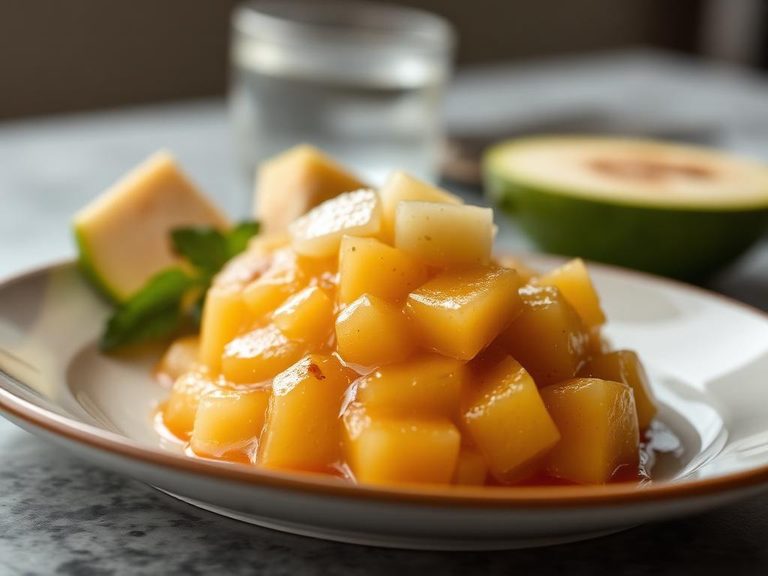
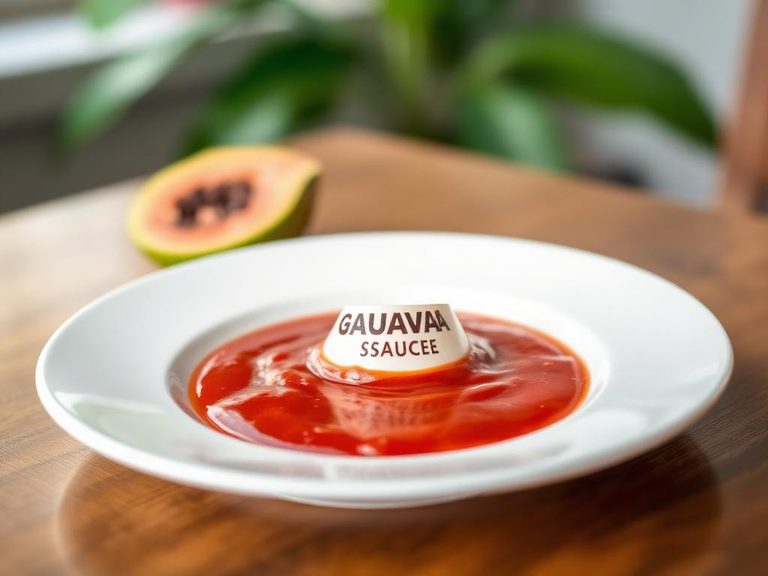
Guava sauce, cooked, is a thick, vibrant pink or yellow condiment made by simmering guava pulp with sugar. It has a smooth, jam-like texture and a sweet-tart flavor that's intensely tropical and aromatic. Nutritionally, it's a low-calorie, high-fiber option, providing nearly 4 grams of fiber per 100 grams.
Calorie split: 3% protein · 94% carbs · 3% fat
↓ Full nutrition💚 Why it's loved
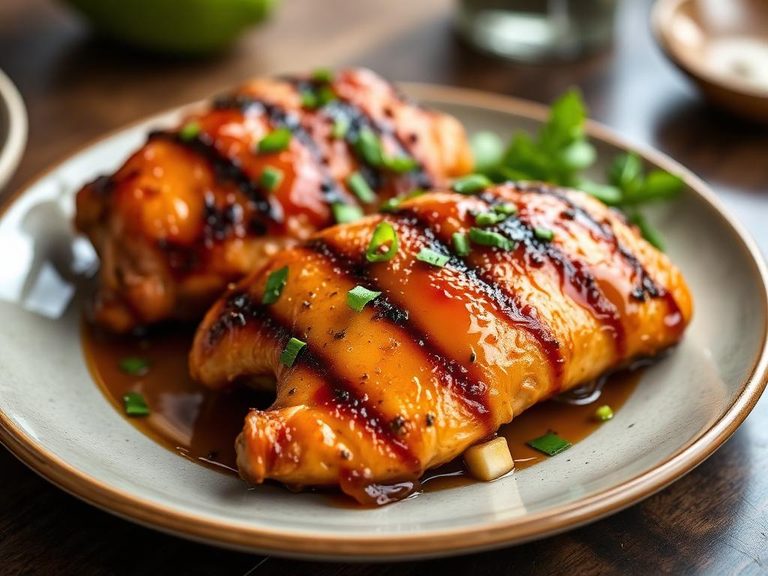
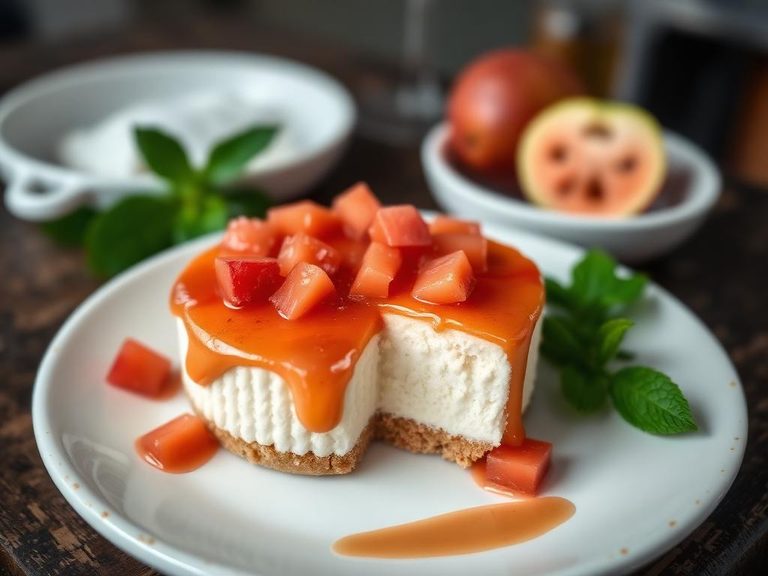
People adore it for its unique, fragrant sweetness that balances tartness perfectly, making it a nostalgic taste in many tropical cuisines. Its versatility is key—it can be a breakfast spread, a dessert topping, or a glaze for savory dishes.
⚠️ Watch-outs & how to enjoy it better
The high natural sugar content (nearly 6g per 100g) can cause blood sugar spikes, so those monitoring glucose should be cautious. To mitigate this, pair it with a source of protein or healthy fat, like Greek yogurt or nuts, and practice portion control.
Key benefits
- Excellent source of dietary fiber
- Very low in fat and calories
- Provides natural sugars for quick energy
- Contains vitamin C from the guava base
- Versatile as a spread, dip, or sauce
🍽️ Popular dishes
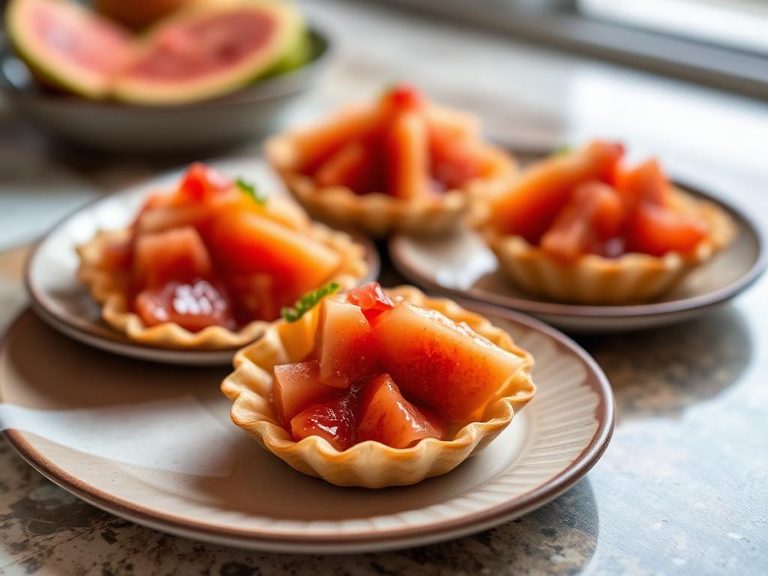
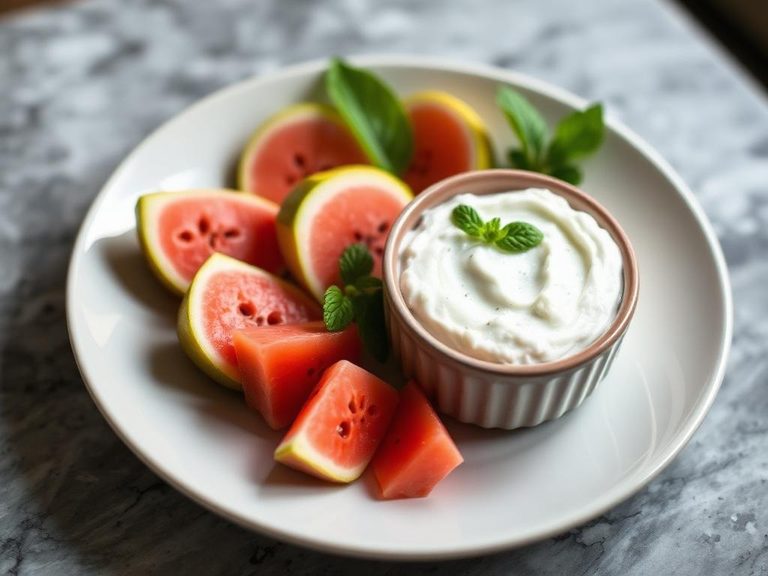
🌍 Where it's eaten
💡 Did you know?
Cooking guava sauce concentrates its pectin, a natural thickening agent, which is why it sets so well into pastes and jellies without needing added thickeners.
Full nutrition (USDA data · scales with serving)
| Water | 89.6 g |
| Energy | 36.0 kcal |
| Energy | 151 kj |
| Protein | 0.32 g |
| Total lipid (fat) | 0.14 g |
| Ash | 0.50 g |
| Carbohydrate, by difference | 9.5 g |
| Fiber, total dietary | 3.6 g |
| Total Sugars | 5.9 g |
| Calcium, Ca | 7.0 mg |
| Iron, Fe | 0.18 mg |
| Magnesium, Mg | 7.0 mg |
| Phosphorus, P | 11.0 mg |
| Potassium, K | 225 mg |
| Sodium, Na | 4.0 mg |
| Zinc, Zn | 0.17 mg |
| Copper, Cu | 0.08 mg |
| Manganese, Mn | 0.11 mg |
| Selenium, Se | 0.50 ug |
| Vitamin C, total ascorbic acid | 146 mg |
| Thiamin | 0.03 mg |
| Riboflavin | 0.01 mg |
| Niacin | 0.42 mg |
| Vitamin B-6 | 0.09 mg |
| Folate, total | 5.0 ug |
| Folic acid | 0.00 ug |
| Folate, food | 5.0 ug |
| Folate, DFE | 5.0 ug |
| Choline, total | 4.1 mg |
| Vitamin B-12 | 0.00 ug |
| Vitamin B-12, added | 0.00 ug |
| Vitamin A, RAE | 14.0 ug |
| Retinol | 0.00 ug |
| Carotene, beta | 170 ug |
| Carotene, alpha | 0.00 ug |
| Cryptoxanthin, beta | 0.00 ug |
| Vitamin A, IU | 283 iu |
| Lycopene | 3909 ug |
| Lutein + zeaxanthin | 0.00 ug |
| Vitamin E (alpha-tocopherol) | 0.55 mg |
| Vitamin E, added | 0.00 mg |
| Vitamin D (D2 + D3), International Units | 0.00 iu |
| Vitamin D (D2 + D3) | 0.00 ug |
| Vitamin K (phylloquinone) | 1.9 ug |
| Alcohol, ethyl | 0.00 g |
| Caffeine | 0.00 mg |
| Theobromine | 0.00 mg |
Fat & fatty acid profile (per 100g)
| Fatty acids, total saturated | 0.04 g |
| SFA 4:0 | 0.00 g |
| SFA 6:0 | 0.00 g |
| SFA 8:0 | 0.00 g |
| SFA 10:0 | 0.00 g |
| SFA 12:0 | 0.00 g |
| SFA 14:0 | 0.00 g |
| SFA 16:0 | 0.03 g |
| SFA 18:0 | 0.00 g |
| Fatty acids, total monounsaturated | 0.01 g |
| MUFA 16:1 | 0.00 g |
| MUFA 18:1 | 0.01 g |
| MUFA 20:1 | 0.00 g |
| MUFA 22:1 | 0.00 g |
| Fatty acids, total polyunsaturated | 0.06 g |
| PUFA 18:2 | 0.04 g |
| PUFA 18:3 | 0.02 g |
| PUFA 18:4 | 0.00 g |
| PUFA 20:4 | 0.00 g |
| PUFA 20:5 n-3 (EPA) | 0.00 g |
| PUFA 22:5 n-3 (DPA) | 0.00 g |
| PUFA 22:6 n-3 (DHA) | 0.00 g |
| Fatty acids, total trans | 0.00 g |
| Cholesterol | 0.00 mg |
Amino acid profile (per 100g)
| Tryptophan | 0.00 g |
| Threonine | 0.01 g |
| Isoleucine | 0.01 g |
| Leucine | 0.02 g |
| Lysine | 0.01 g |
| Methionine | 0.00 g |
| Phenylalanine | 0.00 g |
| Tyrosine | 0.00 g |
| Valine | 0.01 g |
| Arginine | 0.01 g |
| Histidine | 0.00 g |
| Alanine | 0.02 g |
| Aspartic acid | 0.02 g |
| Glutamic acid | 0.04 g |
| Glycine | 0.02 g |
| Proline | 0.01 g |
| Serine | 0.01 g |
FAQ
How is guava sauce different from guava jam or jelly?
Guava sauce is typically smoother and less set than jam, which contains fruit pieces. Jelly is made from strained juice and is clear and firm. Sauce is often used as a pourable condiment.
Can I use guava sauce in savory cooking?
Absolutely! It's excellent as a glaze for meats like chicken or pork, mixed into barbecue sauces, or as a sweet component in chutneys to pair with curries or cheeses.
Is store-bought guava sauce healthy?
It can be, but check labels. Look for brands with no added sugars or high-fructose corn syrup, as the fruit itself is naturally sweet. The fiber content is a genuine benefit.
Nutrient density (calculated · NRF9.3)
Nutrient Rich Foods index: beneficial nutrients (protein, fiber, vitamins, minerals) minus saturated fat, added sugar & sodium, per 100 kcal.
NRF9.3 index — Fulgoni, Keast & Drewnowski, 2009. Computed from USDA nutrients.
Weight-loss friendliness (composite index)
Energy density 0.36 kcal/g · 4% calories from protein · 3.6 g fiber · 5.9 g sugar per 100 g.
Composite of energy density (Rolls et al., 1999), protein & fiber satiety, minus sugar. A calculated heuristic — ranks satiety-per-calorie, not a clinical measure.
Dietary load (calculated from USDA values)
Potential renal acid load. Positive = acid-forming, negative = alkaline-forming.
Sodium-to-potassium ratio: 0.02 (lower is better — aim for ≤ 1)
Sodium:potassium per WHO potassium guidance. Computed from USDA nutrients.