

Fish, trout, mixed species, raw
Whole food · Finfish and Shellfish Products

Photo: Wikipedia
Raw trout is a lean, freshwater fish with a delicate, buttery flavor and a firm yet tender texture that practically melts on the tongue. Its flesh ranges from pale pink to deep coral, often marbled with fine lines of fat that promise richness without heaviness. Nutritionally, it's a powerhouse of high-quality protein and heart-healthy fats, with virtually no carbohydrates.
Calorie split: 58% protein · 0% carbs · 42% fat
↓ Full nutrition💚 Why it's loved
People adore trout for its clean, subtly sweet taste that's more refined than many stronger-flavored fish, making it a gateway for seafood novices. Its versatility allows it to shine in everything from simple pan-sears to elegant smoked preparations.
⚠️ Watch-outs & how to enjoy it better
As a freshwater fish, trout can sometimes carry a mild 'muddy' or earthy flavor if not sourced from clean waters, which some palates find off-putting. It is also a common allergen (fish allergy), and raw preparations carry a risk of parasites, so it must be properly frozen or cooked to ensure safety.
Key benefits
- Excellent source of complete, high-quality protein for muscle maintenance.
- Rich in omega-3 fatty acids (EPA and DHA) for brain and heart health.
- Provides essential nutrients like vitamin B12, selenium, and phosphorus.
- Naturally low in sodium and contains no carbohydrates or sugar.
🍽️ Popular dishes
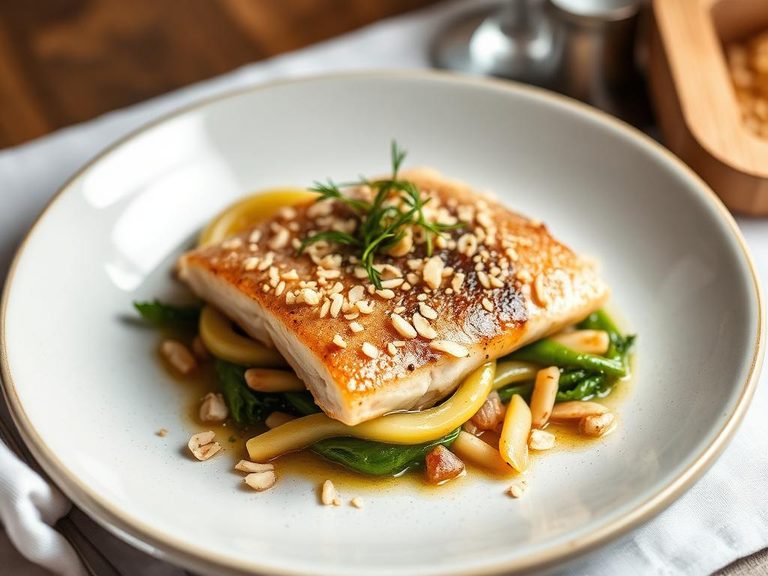
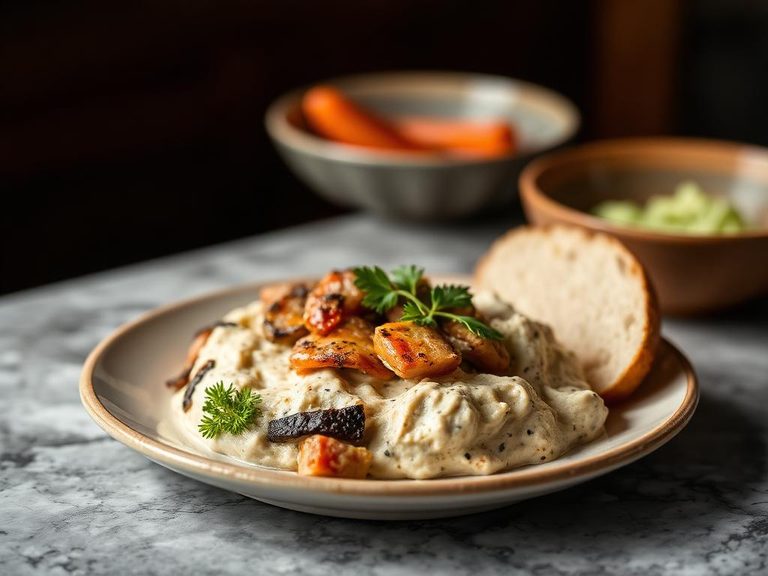
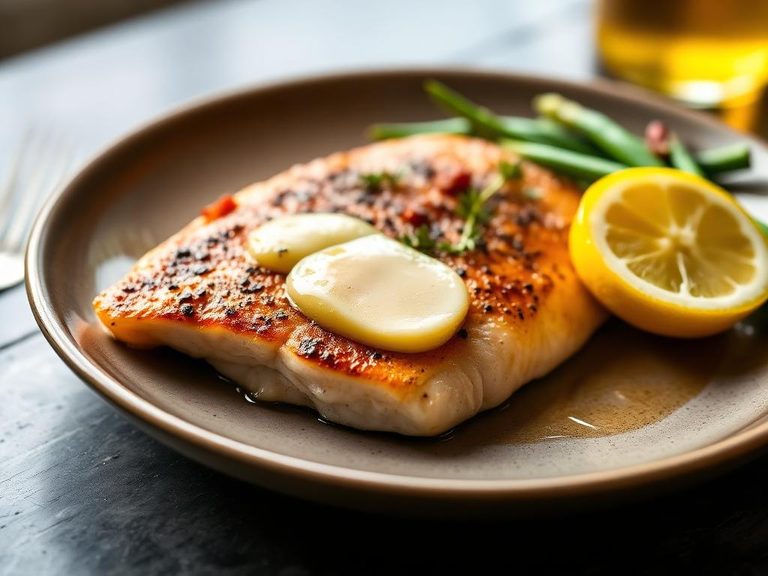
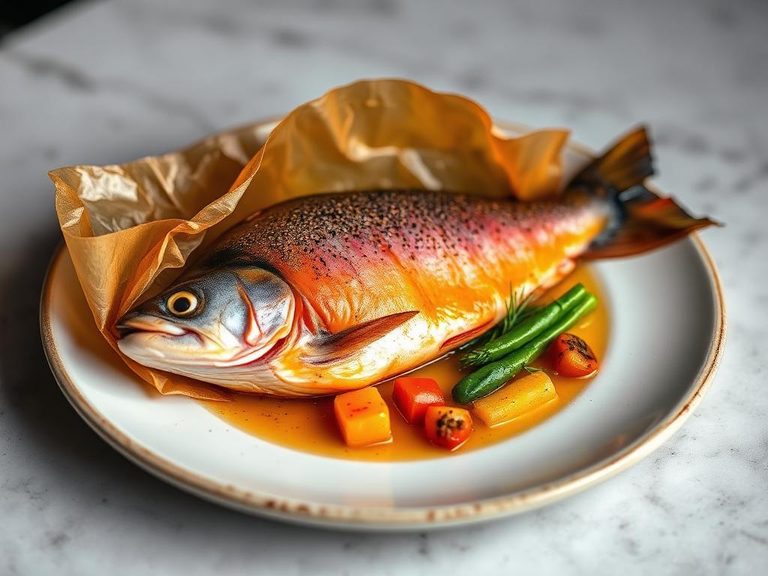
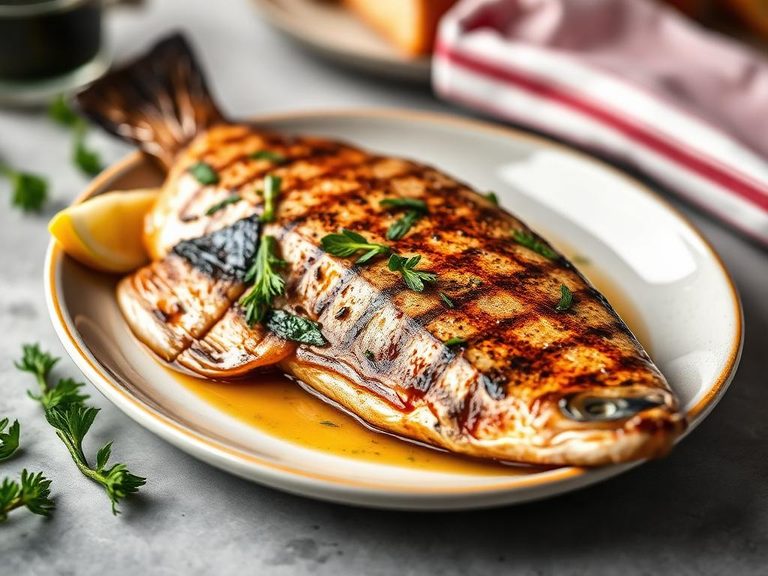
🌍 Where it's eaten
💡 Did you know?
The distinctive pink-orange color of trout flesh comes from astaxanthin, a carotenoid pigment they obtain from eating tiny crustaceans like shrimp and krill in the wild.
Full nutrition (USDA data · scales with serving)
| Water | 71.4 g |
| Energy | 148 kcal |
| Energy | 619 kj |
| Protein | 20.8 g |
| Total lipid (fat) | 6.6 g |
| Ash | 1.2 g |
| Carbohydrate, by difference | 0.00 g |
| Fiber, total dietary | 0.00 g |
| Total Sugars | 0.00 g |
| Calcium, Ca | 43.0 mg |
| Iron, Fe | 1.5 mg |
| Magnesium, Mg | 22.0 mg |
| Phosphorus, P | 245 mg |
| Potassium, K | 361 mg |
| Sodium, Na | 52.0 mg |
| Zinc, Zn | 0.66 mg |
| Copper, Cu | 0.19 mg |
| Manganese, Mn | 0.85 mg |
| Selenium, Se | 12.6 ug |
| Vitamin C, total ascorbic acid | 0.50 mg |
| Thiamin | 0.35 mg |
| Riboflavin | 0.33 mg |
| Niacin | 4.5 mg |
| Pantothenic acid | 1.9 mg |
| Vitamin B-6 | 0.20 mg |
| Folate, total | 13.0 ug |
| Folic acid | 0.00 ug |
| Folate, food | 13.0 ug |
| Folate, DFE | 13.0 ug |
| Choline, total | 65.0 mg |
| Vitamin B-12 | 7.8 ug |
| Vitamin B-12, added | 0.00 ug |
| Vitamin A, RAE | 17.0 ug |
| Retinol | 17.0 ug |
| Carotene, beta | 0.00 ug |
| Carotene, alpha | 0.00 ug |
| Cryptoxanthin, beta | 0.00 ug |
| Vitamin A, IU | 57.0 iu |
| Lycopene | 0.00 ug |
| Lutein + zeaxanthin | 0.00 ug |
| Vitamin E (alpha-tocopherol) | 0.20 mg |
| Vitamin E, added | 0.00 mg |
| Vitamin D (D2 + D3), International Units | 155 iu |
| Vitamin D (D2 + D3) | 3.9 ug |
| Vitamin D3 (cholecalciferol) | 3.9 ug |
| Vitamin K (phylloquinone) | 0.10 ug |
| Alcohol, ethyl | 0.00 g |
| Caffeine | 0.00 mg |
| Theobromine | 0.00 mg |
Fat & fatty acid profile (per 100g)
| Fatty acids, total saturated | 1.1 g |
| SFA 4:0 | 0.00 g |
| SFA 6:0 | 0.00 g |
| SFA 8:0 | 0.00 g |
| SFA 10:0 | 0.00 g |
| SFA 12:0 | 0.00 g |
| SFA 14:0 | 0.18 g |
| SFA 16:0 | 0.81 g |
| SFA 18:0 | 0.15 g |
| Fatty acids, total monounsaturated | 3.3 g |
| MUFA 16:1 | 0.70 g |
| MUFA 18:1 | 1.4 g |
| MUFA 20:1 | 0.28 g |
| MUFA 22:1 | 0.83 g |
| Fatty acids, total polyunsaturated | 1.5 g |
| PUFA 18:2 | 0.17 g |
| PUFA 18:3 | 0.15 g |
| PUFA 18:4 | 0.06 g |
| PUFA 20:4 | 0.19 g |
| PUFA 20:5 n-3 (EPA) | 0.20 g |
| PUFA 22:5 n-3 (DPA) | 0.18 g |
| PUFA 22:6 n-3 (DHA) | 0.53 g |
| Cholesterol | 58.0 mg |
Amino acid profile (per 100g)
| Tryptophan | 0.23 g |
| Threonine | 0.91 g |
| Isoleucine | 0.96 g |
| Leucine | 1.7 g |
| Lysine | 1.9 g |
| Methionine | 0.61 g |
| Cystine | 0.22 g |
| Phenylalanine | 0.81 g |
| Tyrosine | 0.70 g |
| Valine | 1.1 g |
| Arginine | 1.2 g |
| Histidine | 0.61 g |
| Alanine | 1.3 g |
| Aspartic acid | 2.1 g |
| Glutamic acid | 3.1 g |
| Glycine | 1.00 g |
| Proline | 0.73 g |
| Serine | 0.85 g |
FAQ
What's the difference between trout and salmon?
Trout and salmon are closely related. Generally, trout are freshwater fish (though some anadromous species like steelhead migrate), tend to be smaller, and have a milder flavor. Salmon are typically anadromous (born in freshwater, live in the ocean), grow larger, and have a richer, more pronounced flavor and higher fat content.
Is it safe to eat trout raw, like in sushi?
It can be, but only if the trout is labeled 'sushi-grade' or 'sashimi-grade,' meaning it has been commercially flash-frozen to kill parasites. Never consume raw trout from a standard grocery store or that hasn't been properly handled and frozen according to food safety guidelines.
How can I tell if fresh trout is good quality?
Look for firm, elastic flesh that springs back when pressed. The eyes should be clear and bright, not cloudy. The gills should be a vibrant red or pink, and the fish should smell clean and briny, like the ocean or a freshwater stream, never 'fishy' or ammonia-like.
Nutrient density (calculated · NRF9.3)
Nutrient Rich Foods index: beneficial nutrients (protein, fiber, vitamins, minerals) minus saturated fat, added sugar & sodium, per 100 kcal.
NRF9.3 index — Fulgoni, Keast & Drewnowski, 2009. Computed from USDA nutrients.
Weight-loss friendliness (composite index)
Energy density 1.48 kcal/g · 56% calories from protein · 0.0 g fiber · 0.0 g sugar per 100 g.
Composite of energy density (Rolls et al., 1999), protein & fiber satiety, minus sugar. A calculated heuristic — ranks satiety-per-calorie, not a clinical measure.
Dietary load (calculated from USDA values)
Potential renal acid load. Positive = acid-forming, negative = alkaline-forming.
Sodium-to-potassium ratio: 0.14 (lower is better — aim for ≤ 1)
Sodium:potassium per WHO potassium guidance. Computed from USDA nutrients.